Sat, Nov 14, 2026
Volume 16, Issue 4 ( Autumn 2026)
PTJ 2026, 16(4): 359-372 |
Back to browse issues page



Download citation:
BibTeX | RIS | EndNote | Medlars | ProCite | Reference Manager | RefWorks
Send citation to:


BibTeX | RIS | EndNote | Medlars | ProCite | Reference Manager | RefWorks
Send citation to:
Khaliliyan H, Bahramizadeh M, Ansari M, Ghaffari F, Sharafatvaziri A, Jouibari M F, et al . Effects of Virtual Reality Training on Perceived Instability, Postural Control, Gait, and Ankle Strength in Individuals With Chronic Ankle Instability: A Systematic Review and Meta-analysis. , PTJ. 2026; 16 (4) :359-372
URL: http://ptj.uswr.ac.ir/article-1-952-en.html
URL: http://ptj.uswr.ac.ir/article-1-952-en.html
Hanieh Khaliliyan1  , Mahmood Bahramizadeh *2 , Majid Ansari3 , Farhad Ghaffari4 , Arash Sharafatvaziri5 , Morteza Faghih Jouibari6 , Maria Grazia Maggio7 , Amelia Rizzo8
1- Department of Orthotics and Prosthetics, School of Rehabilitation Sciences, Isfahan University of Medical Sciences, Isfahan, Iran.
2- Sports Medicine Research Center, Neuroscience Institute, Tehran University of Medical Sciences, Tehran, Iran. & Neuromusculoskeletal Rehabilitation Research Center, University of Social Welfare and Rehabilitation Sciences, Tehran, Iran.
3- Sports Medicine Research Center, Neuroscience Institute, Tehran University of Medical Sciences, Tehran, Iran.
4- Orthopedic & Rehabilitation Research Center, Shiraz University of Medical Sciences, Shiraz, Iran.
5- Center for Orthopedic Trans-Disciplinary Applied Research, Tehran University of Medical Sciences, Tehran, Iran.
6- Department of Neurosurgery, Shariati Hospital, Tehran University of Medical Sciences, Tehran, Iran.
7- Centro Neurolesi Bonino Pulejo, Messina, Italy.
8- National Institute of Social Welfare (INPS), Medical Legal Centre of Messina, Messina, Italy.
2- Sports Medicine Research Center, Neuroscience Institute, Tehran University of Medical Sciences, Tehran, Iran. & Neuromusculoskeletal Rehabilitation Research Center, University of Social Welfare and Rehabilitation Sciences, Tehran, Iran.
3- Sports Medicine Research Center, Neuroscience Institute, Tehran University of Medical Sciences, Tehran, Iran.
4- Orthopedic & Rehabilitation Research Center, Shiraz University of Medical Sciences, Shiraz, Iran.
5- Center for Orthopedic Trans-Disciplinary Applied Research, Tehran University of Medical Sciences, Tehran, Iran.
6- Department of Neurosurgery, Shariati Hospital, Tehran University of Medical Sciences, Tehran, Iran.
7- Centro Neurolesi Bonino Pulejo, Messina, Italy.
8- National Institute of Social Welfare (INPS), Medical Legal Centre of Messina, Messina, Italy.
Full-Text [PDF 3166 kb]
(468 Downloads)
| Abstract (HTML) (1188 Views)
Risk of bias assessment results
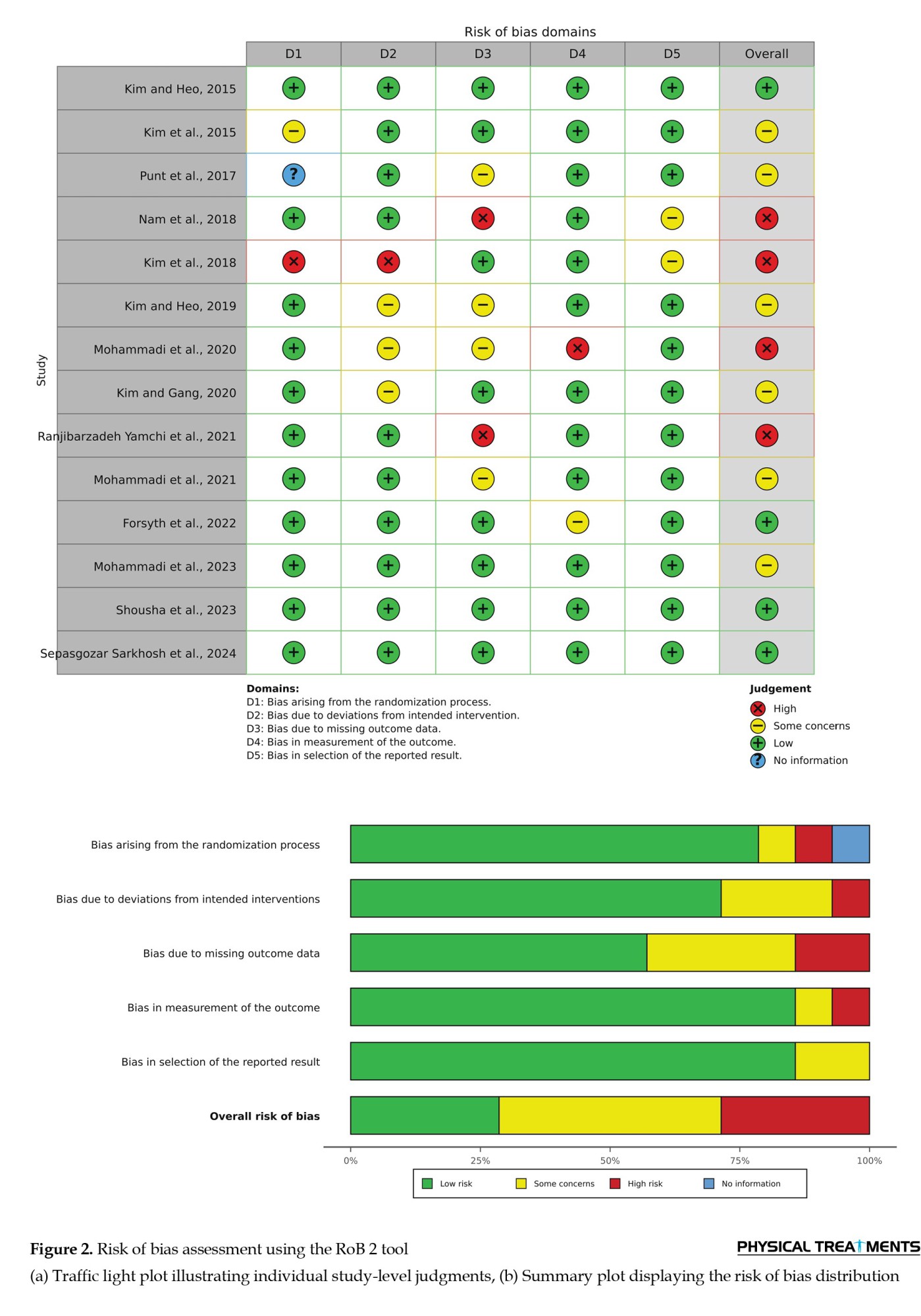
The risk of bias assessment of the included studies using the Cochrane Risk of Bias 2.0 tool revealed heterogeneous methodological quality across the 14 studies. Overall, four studies demonstrated low risk of bias [25, 35, 37, 38], six studies raised some concerns [26, 27, 30, 32, 34, 36], and four studies exhibited high risk of bias [28, 29, 31, 33]. Figure 2 shows the details of the study’s risk of bias assessment.
References
Full-Text: (90 Views)
Introduction
Lateral ankle sprains (LAS) are one of the most prevalent types of musculoskeletal injuries, constituting approximately 20% of all sports injuries. LASs account for approximately 75-85% of all ankle injuries [1]. First-time ankle sprains raise the chance of recurring sprains. In active individuals, 40% of LASs develop chronic ankle instability (CAI) [2]. CAI is a condition observed in persons who have sustained severe ankle sprains and experience recurrent instability, numbness, sprains, loose ligaments, pain, swelling, and reduced ankle functioning [3]. CAI results from one or more of the following elements: Mechanoreceptor damage, motor distortions and balance disturbances [4]. Patients with CAI report poor quality of life, which translates into a less active lifestyle [4, 5]. All these issues become causes of disability and reduced functional abilities and increase the risks of injury relapse [2, 3].
If not treated, CAI may result in long-term pain, muscle weakness, repeated instability, and the onset of arthritis [3]. Nonsurgical techniques are always recommended as the first line of treatment [5-8]. Balance exercises are regularly employed in rehabilitation programs for patients with CAI [5, 9] because this treatment assists the body in increasing the sensors’ activity, which consequently activates the motion perception system [9]. Proprioceptive training and peroneal strengthening help stabilize the ankle and hindfoot by improving ankle position when external forces are applied to it [9, 10]. The peroneal muscle reaction time is significantly longer in patients with ankle instability. These patients may be slower to use their peroneal muscles and may not be able to prevent inversion and reinjury of the ankle [11].
Poor adherence to exercise programs, especially home programs, and poor implementation of exercise techniques are two main problems [9]. Transportation costs and difficulties, along with the highly repetitive nature of the exercises, are among the reasons cited for poor adherence in supervised exercise programs. Creating motivation and excitement during exercise is essential for maintaining compliance. Some studies have demonstrated the benefits of using interactive video games to provide greater stimulation during rehabilitation sessions, as well as to reduce costs and encourage exercise [11, 12].
Virtual reality (VR) systems have recently become an emerging trend in the field of exercise and rehabilitation [13]. VR systems allow for active play in either an immersive or non-immersive environment. In an immersive environment, the user experiences a realistic 3D simulation by wearing a head-mounted display. However, in a non-immersive environment, the user experiences a less realistic experience in a computer-generated environment [14]. Along with these different simulation technologies, VR systems are also entertaining and challenging. In some cases, they provide graded feedback on performance, which motivates the patient to continue participating for a long time [15]. In addition, since the patient performs therapeutic exercises while playing the games, this compensates for the repetitiveness of some rehabilitation activities. Therefore, VR systems can also provide effective treatment by stimulating imagination and motivation [13, 14].
Review studies have examined the effects of VR systems on healthy individuals and those with neurological disorders. For example, Andrade et al. (2019) found that VR systems are more attractive to overweight or obese children and adolescents and can improve intrinsic motivation, self-esteem, and self-efficacy [15]. Fang et al. (2020) showed VR systems can significantly improve balance and self-confidence in older adults, suggesting their integration into traditional balance training [16]. VR systems have also been effective for managing Parkinson’s disease progression and automated assessment [17]. Staiano et al. (2014) indicated VR systems are acceptable and enjoyable, offering a tool for balance rehabilitation [18]. Another study found VR systems are at least as effective as balance training for improving balance in stroke patients [19]. Overall, previous reviews suggest VR systems have positive therapeutic effects on balance in both healthy individuals and those with neurological disorders [15-19]. While some studies have explored VR systems for balance in ankle sprains, their results are heterogeneous [13]. No review has evaluated the strength of evidence for VR systems in individuals with CAI. Due to the promising findings for neurological disorders, it is likely that individuals with ankle instability could also benefit from VR-based interventions for balance and postural control. Although previous systematic reviews have explored the effects of VR on ankle injuries [14], a comprehensive updated meta-analysis is required to address gaps in the current literature. Prior reviews primarily focused on general functional outcomes or lacked a detailed analysis of neuromuscular adaptations. This updated review adds novel outcome dimensions by evaluating perceived instability using the cumberland ankle instability tool (CAIT) and dissecting ankle muscle strength into specific isokinetic planes (plantar flexion/inversion versus dorsiflexion/eversion). This study provides a more nuanced understanding of how VR interventions differentially affect subjective joint stability and directional muscle deficits in individuals with CAI. Therefore, this study aimed to review the effectiveness of VR-based rehabilitation on postural control, perceived instability, gait, and ankle strength in patients with CAI.
Materials and Methods
This review was conducted using the preferred reporting items for systematic reviews and meta-analyses (PRISMA) protocol [20]. Before the study began, the protocol was registered on the International Prospective Register of Systematic Reviews (PROSPERO) website and is available at CRD420261455550.
Information sources and search strategy
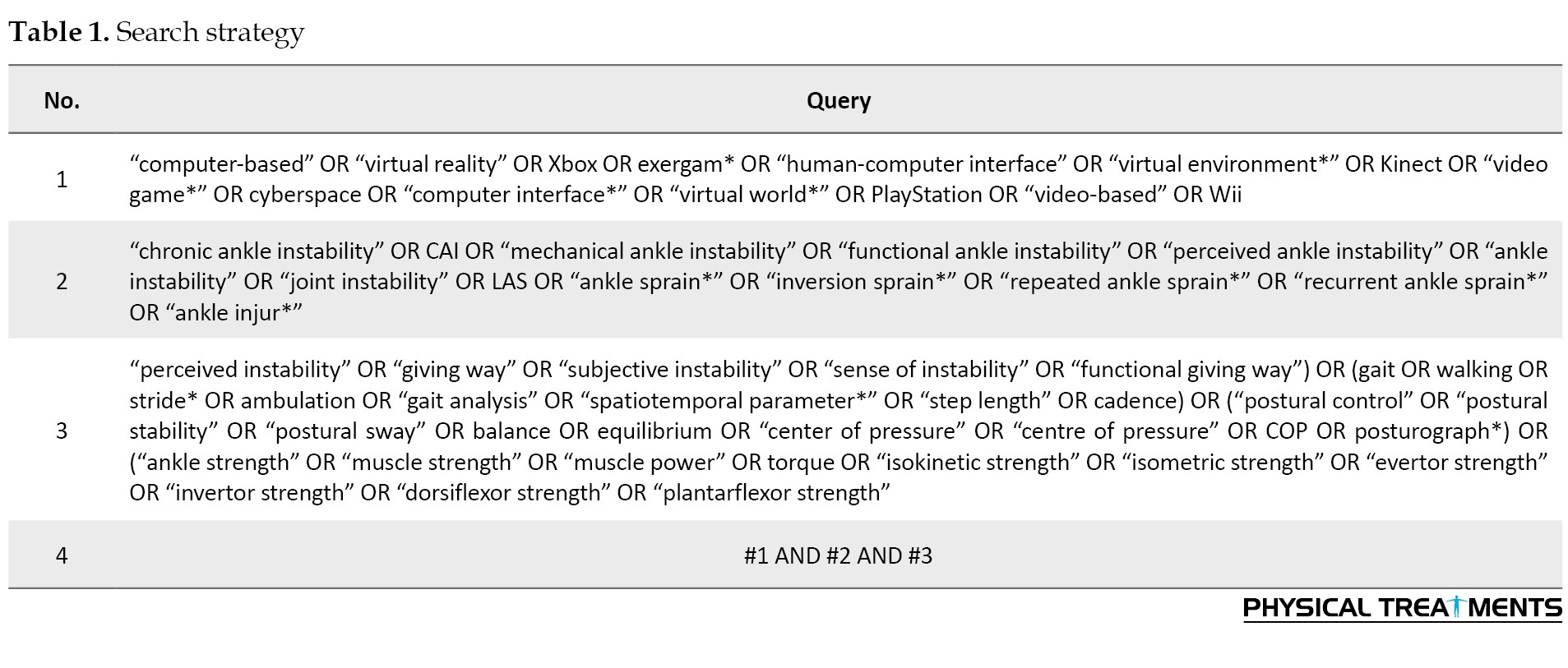
Relevant articles were identified by searching three health and biomedical databases, including PubMed, Web of Science, and Scopus. The article search was conducted by two independent researchers with no time limit until May 27, 2026. No filters or restrictions were applied during the database search. Relevant keywords were combined using Boolean operators and applied at three search levels. Table 1 lists the search terms used.
Selection process and eligibility criteria
After the search, citations were imported from databases into EndNote software, version 20, (Clarivate, USA), and duplicate sources were removed. Two researchers independently reviewed titles and abstracts. The full text of the remaining articles was then reviewed by the same two researchers, again using the eligibility criteria. The criteria were defined based on the PICOS framework. Randomized controlled trials (RCTs) with parallel designs were included. Study participants were individuals with CAI without any underlying disease. Interventions of interest were VR-based treatments, either standalone or as an adjunct. A control group receiving no intervention or a placebo was required. Outcomes included all variables measuring perceived instability, gait, postural control, and ankle strength, provided instruments with established validity and reliability assessed them. We excluded articles with pretest-posttest or non-randomized designs, those published in languages other than English, studies using VR systems solely as an assessment tool, research examining psychological and social outcomes, and conference papers for which only abstracts were available.
Data collection process and data items
The data collection process was conducted by two separate researchers from the articles entered. For this purpose, a form consisting of PICO items was designed in Excel software. Both reviewers independently extracted data. Also, the Mean±SD of the variables were extracted for the effect measures. Information related to the author, year, sample size, demographic characteristics of the participants, interventions of each group (intervention characteristics, duration of each session, number of sessions, and total duration of the study), outcomes, and main findings were extracted. In cases where the required information was not available in the full text, the corresponding author was contacted via email.
Risk of bias assessment
The methodological quality of the included RCTs was independently evaluated by two reviewers using the revised cochrane risk-of-bias tool for randomized trials (RoB 2) [21]. Any discrepancies or disagreements between the primary assessors during the appraisal process were resolved through consensus or, if necessary, via consultation with a third investigator. No automation tools were utilized for risk of bias assessment. The results of the RoB 2 assessment were visualized using a summary plot to illustrate the overall quality of the evidence. In addition to the RoB 2 tool, the methodological quality of the included RCTs was independently assessed by two reviewers using the physiotherapy evidence database (PEDro) scale. The PEDro scale consists of 11 criteria (10 of which are scored). Discrepancies were resolved by consensus.
Synthesis method
Trials were grouped based on the outcome measures. Studies were considered eligible for quantitative synthesis if they provided sufficient numerical data (Mean±SD) for perceived instability, postural control, gait parameters, or ankle strength. For studies reporting outcomes as medians and ranges (or interquartile ranges), the Mean±SD were estimated using the methods described by Chi et al. [22]. Forest plots were generated for each outcome to visually display the effect sizes and 95% confidence intervals (CIs) of individual studies alongside the pooled estimate. Meta-analyses were conducted using a random-effects model (DerSimonian and Laird method) to account for potential variations in intervention protocols and participant characteristics across RCTs. Statistical heterogeneity was quantified using the I2 index and the Cochran’s Q test, where I2>50% was considered indicative of significant heterogeneity. All statistical analyses were performed using comprehensive meta-analysis (V4, Biostat, Inc., USA) [23]. For outcome measures reported in only one included study, we computed Cohen’s d effect sizes with 95% CIs to estimate the standardized mean difference (SMD) between experimental and control groups [24]. Due to the limited number of included studies for specific outcome measures, formal subgroup analyses or meta-regression were not performed. Conducting such analyses with an insufficient number of studies per subgroup would lack statistical power and could yield unreliable or spurious estimates of between-study variance, in accordance with methodological guidelines for meta-analytic synthesis.
Results
Study selection
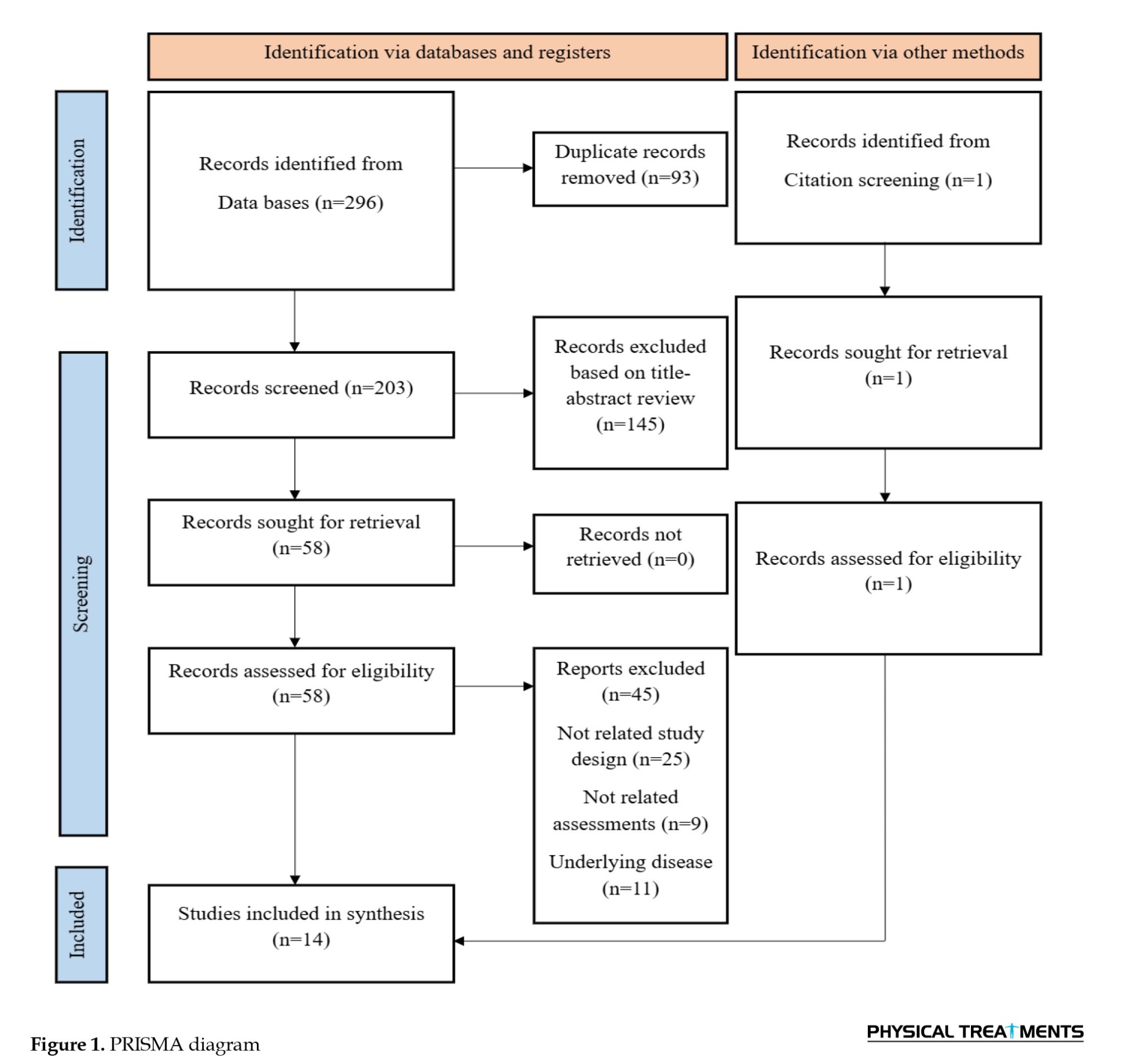
The search identified 296 records, of which 93 duplicates were removed. Following title and abstract screening of the remaining 203 records, 145 were excluded, leaving 58 articles for full-text assessment. Ultimately, 45 studies were excluded due to ineligible study design (n=25), irrelevant outcomes (n=9), or confounding comorbidities (n=11), resulting in 14 studies included in the final synthesis (Figure 1) [25-38].
Lateral ankle sprains (LAS) are one of the most prevalent types of musculoskeletal injuries, constituting approximately 20% of all sports injuries. LASs account for approximately 75-85% of all ankle injuries [1]. First-time ankle sprains raise the chance of recurring sprains. In active individuals, 40% of LASs develop chronic ankle instability (CAI) [2]. CAI is a condition observed in persons who have sustained severe ankle sprains and experience recurrent instability, numbness, sprains, loose ligaments, pain, swelling, and reduced ankle functioning [3]. CAI results from one or more of the following elements: Mechanoreceptor damage, motor distortions and balance disturbances [4]. Patients with CAI report poor quality of life, which translates into a less active lifestyle [4, 5]. All these issues become causes of disability and reduced functional abilities and increase the risks of injury relapse [2, 3].
If not treated, CAI may result in long-term pain, muscle weakness, repeated instability, and the onset of arthritis [3]. Nonsurgical techniques are always recommended as the first line of treatment [5-8]. Balance exercises are regularly employed in rehabilitation programs for patients with CAI [5, 9] because this treatment assists the body in increasing the sensors’ activity, which consequently activates the motion perception system [9]. Proprioceptive training and peroneal strengthening help stabilize the ankle and hindfoot by improving ankle position when external forces are applied to it [9, 10]. The peroneal muscle reaction time is significantly longer in patients with ankle instability. These patients may be slower to use their peroneal muscles and may not be able to prevent inversion and reinjury of the ankle [11].
Poor adherence to exercise programs, especially home programs, and poor implementation of exercise techniques are two main problems [9]. Transportation costs and difficulties, along with the highly repetitive nature of the exercises, are among the reasons cited for poor adherence in supervised exercise programs. Creating motivation and excitement during exercise is essential for maintaining compliance. Some studies have demonstrated the benefits of using interactive video games to provide greater stimulation during rehabilitation sessions, as well as to reduce costs and encourage exercise [11, 12].
Virtual reality (VR) systems have recently become an emerging trend in the field of exercise and rehabilitation [13]. VR systems allow for active play in either an immersive or non-immersive environment. In an immersive environment, the user experiences a realistic 3D simulation by wearing a head-mounted display. However, in a non-immersive environment, the user experiences a less realistic experience in a computer-generated environment [14]. Along with these different simulation technologies, VR systems are also entertaining and challenging. In some cases, they provide graded feedback on performance, which motivates the patient to continue participating for a long time [15]. In addition, since the patient performs therapeutic exercises while playing the games, this compensates for the repetitiveness of some rehabilitation activities. Therefore, VR systems can also provide effective treatment by stimulating imagination and motivation [13, 14].
Review studies have examined the effects of VR systems on healthy individuals and those with neurological disorders. For example, Andrade et al. (2019) found that VR systems are more attractive to overweight or obese children and adolescents and can improve intrinsic motivation, self-esteem, and self-efficacy [15]. Fang et al. (2020) showed VR systems can significantly improve balance and self-confidence in older adults, suggesting their integration into traditional balance training [16]. VR systems have also been effective for managing Parkinson’s disease progression and automated assessment [17]. Staiano et al. (2014) indicated VR systems are acceptable and enjoyable, offering a tool for balance rehabilitation [18]. Another study found VR systems are at least as effective as balance training for improving balance in stroke patients [19]. Overall, previous reviews suggest VR systems have positive therapeutic effects on balance in both healthy individuals and those with neurological disorders [15-19]. While some studies have explored VR systems for balance in ankle sprains, their results are heterogeneous [13]. No review has evaluated the strength of evidence for VR systems in individuals with CAI. Due to the promising findings for neurological disorders, it is likely that individuals with ankle instability could also benefit from VR-based interventions for balance and postural control. Although previous systematic reviews have explored the effects of VR on ankle injuries [14], a comprehensive updated meta-analysis is required to address gaps in the current literature. Prior reviews primarily focused on general functional outcomes or lacked a detailed analysis of neuromuscular adaptations. This updated review adds novel outcome dimensions by evaluating perceived instability using the cumberland ankle instability tool (CAIT) and dissecting ankle muscle strength into specific isokinetic planes (plantar flexion/inversion versus dorsiflexion/eversion). This study provides a more nuanced understanding of how VR interventions differentially affect subjective joint stability and directional muscle deficits in individuals with CAI. Therefore, this study aimed to review the effectiveness of VR-based rehabilitation on postural control, perceived instability, gait, and ankle strength in patients with CAI.
Materials and Methods
This review was conducted using the preferred reporting items for systematic reviews and meta-analyses (PRISMA) protocol [20]. Before the study began, the protocol was registered on the International Prospective Register of Systematic Reviews (PROSPERO) website and is available at CRD420261455550.
Information sources and search strategy
Relevant articles were identified by searching three health and biomedical databases, including PubMed, Web of Science, and Scopus. The article search was conducted by two independent researchers with no time limit until May 27, 2026. No filters or restrictions were applied during the database search. Relevant keywords were combined using Boolean operators and applied at three search levels. Table 1 lists the search terms used.
Selection process and eligibility criteria
After the search, citations were imported from databases into EndNote software, version 20, (Clarivate, USA), and duplicate sources were removed. Two researchers independently reviewed titles and abstracts. The full text of the remaining articles was then reviewed by the same two researchers, again using the eligibility criteria. The criteria were defined based on the PICOS framework. Randomized controlled trials (RCTs) with parallel designs were included. Study participants were individuals with CAI without any underlying disease. Interventions of interest were VR-based treatments, either standalone or as an adjunct. A control group receiving no intervention or a placebo was required. Outcomes included all variables measuring perceived instability, gait, postural control, and ankle strength, provided instruments with established validity and reliability assessed them. We excluded articles with pretest-posttest or non-randomized designs, those published in languages other than English, studies using VR systems solely as an assessment tool, research examining psychological and social outcomes, and conference papers for which only abstracts were available.
Data collection process and data items
The data collection process was conducted by two separate researchers from the articles entered. For this purpose, a form consisting of PICO items was designed in Excel software. Both reviewers independently extracted data. Also, the Mean±SD of the variables were extracted for the effect measures. Information related to the author, year, sample size, demographic characteristics of the participants, interventions of each group (intervention characteristics, duration of each session, number of sessions, and total duration of the study), outcomes, and main findings were extracted. In cases where the required information was not available in the full text, the corresponding author was contacted via email.
Risk of bias assessment
The methodological quality of the included RCTs was independently evaluated by two reviewers using the revised cochrane risk-of-bias tool for randomized trials (RoB 2) [21]. Any discrepancies or disagreements between the primary assessors during the appraisal process were resolved through consensus or, if necessary, via consultation with a third investigator. No automation tools were utilized for risk of bias assessment. The results of the RoB 2 assessment were visualized using a summary plot to illustrate the overall quality of the evidence. In addition to the RoB 2 tool, the methodological quality of the included RCTs was independently assessed by two reviewers using the physiotherapy evidence database (PEDro) scale. The PEDro scale consists of 11 criteria (10 of which are scored). Discrepancies were resolved by consensus.
Synthesis method
Trials were grouped based on the outcome measures. Studies were considered eligible for quantitative synthesis if they provided sufficient numerical data (Mean±SD) for perceived instability, postural control, gait parameters, or ankle strength. For studies reporting outcomes as medians and ranges (or interquartile ranges), the Mean±SD were estimated using the methods described by Chi et al. [22]. Forest plots were generated for each outcome to visually display the effect sizes and 95% confidence intervals (CIs) of individual studies alongside the pooled estimate. Meta-analyses were conducted using a random-effects model (DerSimonian and Laird method) to account for potential variations in intervention protocols and participant characteristics across RCTs. Statistical heterogeneity was quantified using the I2 index and the Cochran’s Q test, where I2>50% was considered indicative of significant heterogeneity. All statistical analyses were performed using comprehensive meta-analysis (V4, Biostat, Inc., USA) [23]. For outcome measures reported in only one included study, we computed Cohen’s d effect sizes with 95% CIs to estimate the standardized mean difference (SMD) between experimental and control groups [24]. Due to the limited number of included studies for specific outcome measures, formal subgroup analyses or meta-regression were not performed. Conducting such analyses with an insufficient number of studies per subgroup would lack statistical power and could yield unreliable or spurious estimates of between-study variance, in accordance with methodological guidelines for meta-analytic synthesis.
Results
Study selection
The search identified 296 records, of which 93 duplicates were removed. Following title and abstract screening of the remaining 203 records, 145 were excluded, leaving 58 articles for full-text assessment. Ultimately, 45 studies were excluded due to ineligible study design (n=25), irrelevant outcomes (n=9), or confounding comorbidities (n=11), resulting in 14 studies included in the final synthesis (Figure 1) [25-38].
Risk of bias assessment results
The risk of bias assessment of the included studies using the Cochrane Risk of Bias 2.0 tool revealed heterogeneous methodological quality across the 14 studies. Overall, four studies demonstrated low risk of bias [25, 35, 37, 38], six studies raised some concerns [26, 27, 30, 32, 34, 36], and four studies exhibited high risk of bias [28, 29, 31, 33]. Figure 2 shows the details of the study’s risk of bias assessment.
Also, Table 2 presents the PEDro scores.
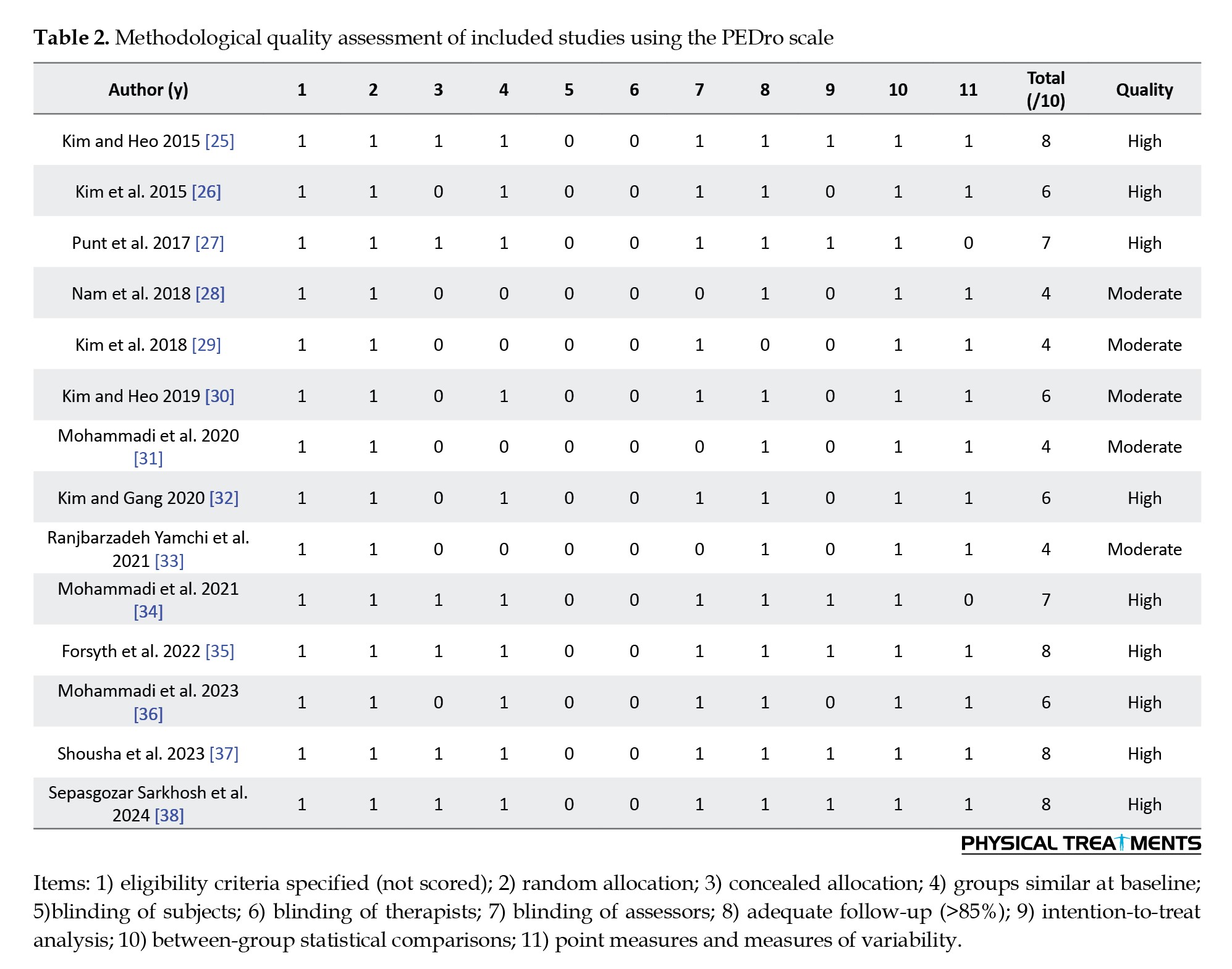
Score: 1, yes; 0, no/unclear. Total score is out of 10.
Study characteristics
The mean age of the participants ranged from 15.4 years in adolescent athletes [37] to 34.3 years in adults with ankle sprains [27], with the majority of studies focusing on young adult athletes in their early twenties [24, 25, 28–36, 38]. The pooled sample comprised 377 males and 151 females, reflecting a higher representation of male athletes, particularly in studies recruiting basketball, soccer, and volleyball players [31, 33, 34, 36, 37].
VR training was delivered using the Nintendo Wii Fit Plus console and balance board, which was utilized in 10 of the 14 included studies [25, 26, 29–34, 36, 37]. Alternative VR technologies included a visual feedback balance trainer (Bal Pro) [28], a motion capture system integrated with D-Flow software for real-time avatar visualization [35], and the Wii Balance Board utilized for exergaming [38]. The VR interventions primarily consisted of interactive balance and strengthening games (e.g. ski slalom, table tilt, tightrope walk, and single-leg extensions) designed to challenge postural control and lower-limb muscle strength [25, 26, 29–34, 36–38]. The duration of the VR interventions ranged from 4 to 12 weeks, with most protocols prescribing three sessions per week [25, 26, 28–34, 36–38]. Session durations varied between 20 [25, 26, 29, 30, 32] and 60 [37, 38] minutes.
The comparator groups across the studies were heterogeneous. Six studies compared VR training against conventional rehabilitation programs, which included TheraBand resistance exercises, proprioceptive training, and unstable surface balance exercises [28–30, 34, 36, 37]. Three studies utilized a no-intervention or standard care control group [27, 31, 32]. One study compared VR to Biodex balance training [37], and two studies compared different types of VR games (balance-focused vs. strength-focused) [25, 26]. Additionally, one study investigated the additive effect of kinesio taping combined with VR training [32]. Table 3 summarizes detailed characteristics of included studies.
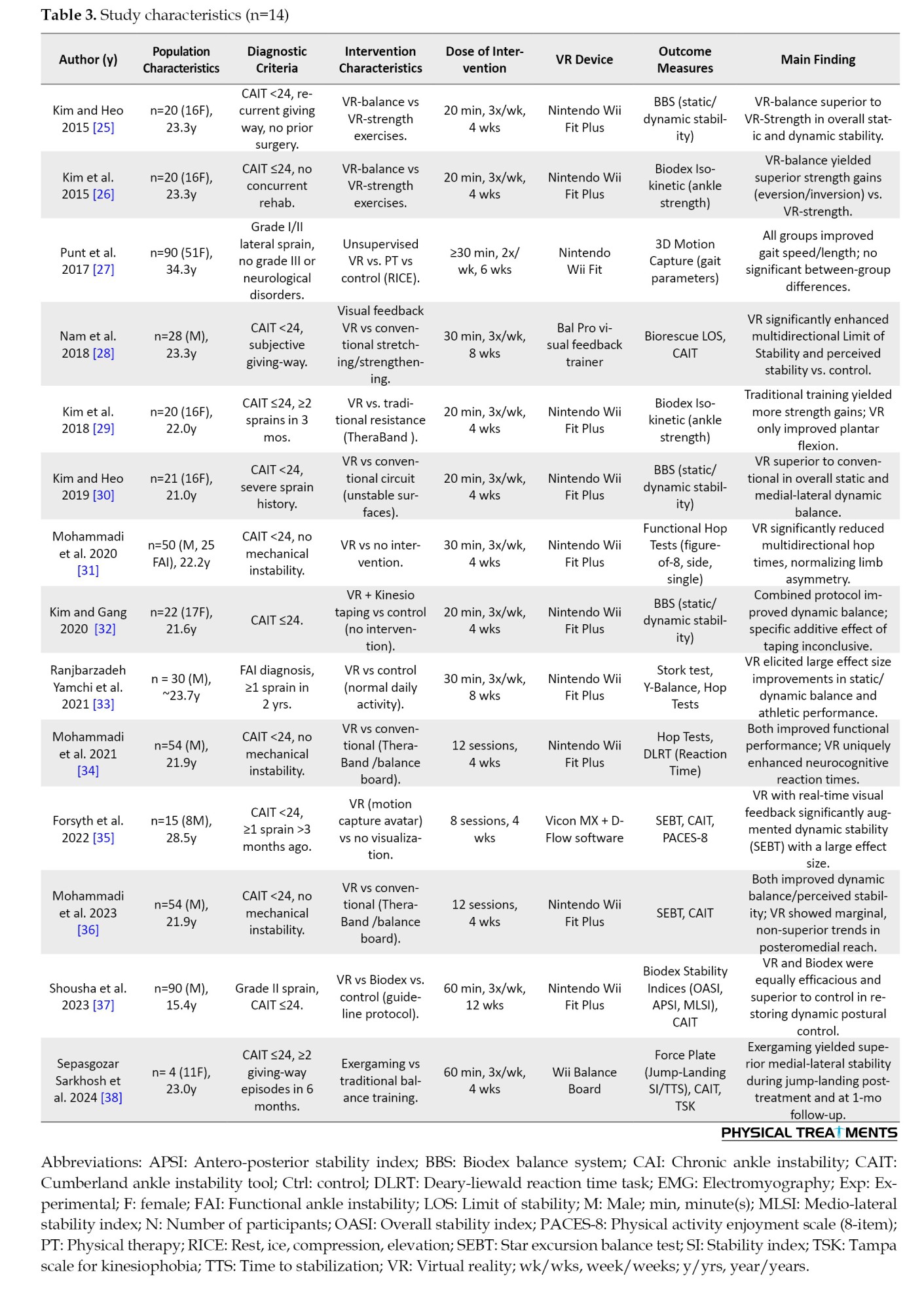
Results of analysis
We categorized the synthesis results by outcome.
Perceived instability: Perceived ankle instability was assessed using the CAIT across four RCTs [28, 31, 36-38] (Figure 3a).
Score: 1, yes; 0, no/unclear. Total score is out of 10.
Study characteristics
The mean age of the participants ranged from 15.4 years in adolescent athletes [37] to 34.3 years in adults with ankle sprains [27], with the majority of studies focusing on young adult athletes in their early twenties [24, 25, 28–36, 38]. The pooled sample comprised 377 males and 151 females, reflecting a higher representation of male athletes, particularly in studies recruiting basketball, soccer, and volleyball players [31, 33, 34, 36, 37].
VR training was delivered using the Nintendo Wii Fit Plus console and balance board, which was utilized in 10 of the 14 included studies [25, 26, 29–34, 36, 37]. Alternative VR technologies included a visual feedback balance trainer (Bal Pro) [28], a motion capture system integrated with D-Flow software for real-time avatar visualization [35], and the Wii Balance Board utilized for exergaming [38]. The VR interventions primarily consisted of interactive balance and strengthening games (e.g. ski slalom, table tilt, tightrope walk, and single-leg extensions) designed to challenge postural control and lower-limb muscle strength [25, 26, 29–34, 36–38]. The duration of the VR interventions ranged from 4 to 12 weeks, with most protocols prescribing three sessions per week [25, 26, 28–34, 36–38]. Session durations varied between 20 [25, 26, 29, 30, 32] and 60 [37, 38] minutes.
The comparator groups across the studies were heterogeneous. Six studies compared VR training against conventional rehabilitation programs, which included TheraBand resistance exercises, proprioceptive training, and unstable surface balance exercises [28–30, 34, 36, 37]. Three studies utilized a no-intervention or standard care control group [27, 31, 32]. One study compared VR to Biodex balance training [37], and two studies compared different types of VR games (balance-focused vs. strength-focused) [25, 26]. Additionally, one study investigated the additive effect of kinesio taping combined with VR training [32]. Table 3 summarizes detailed characteristics of included studies.
Results of analysis
We categorized the synthesis results by outcome.
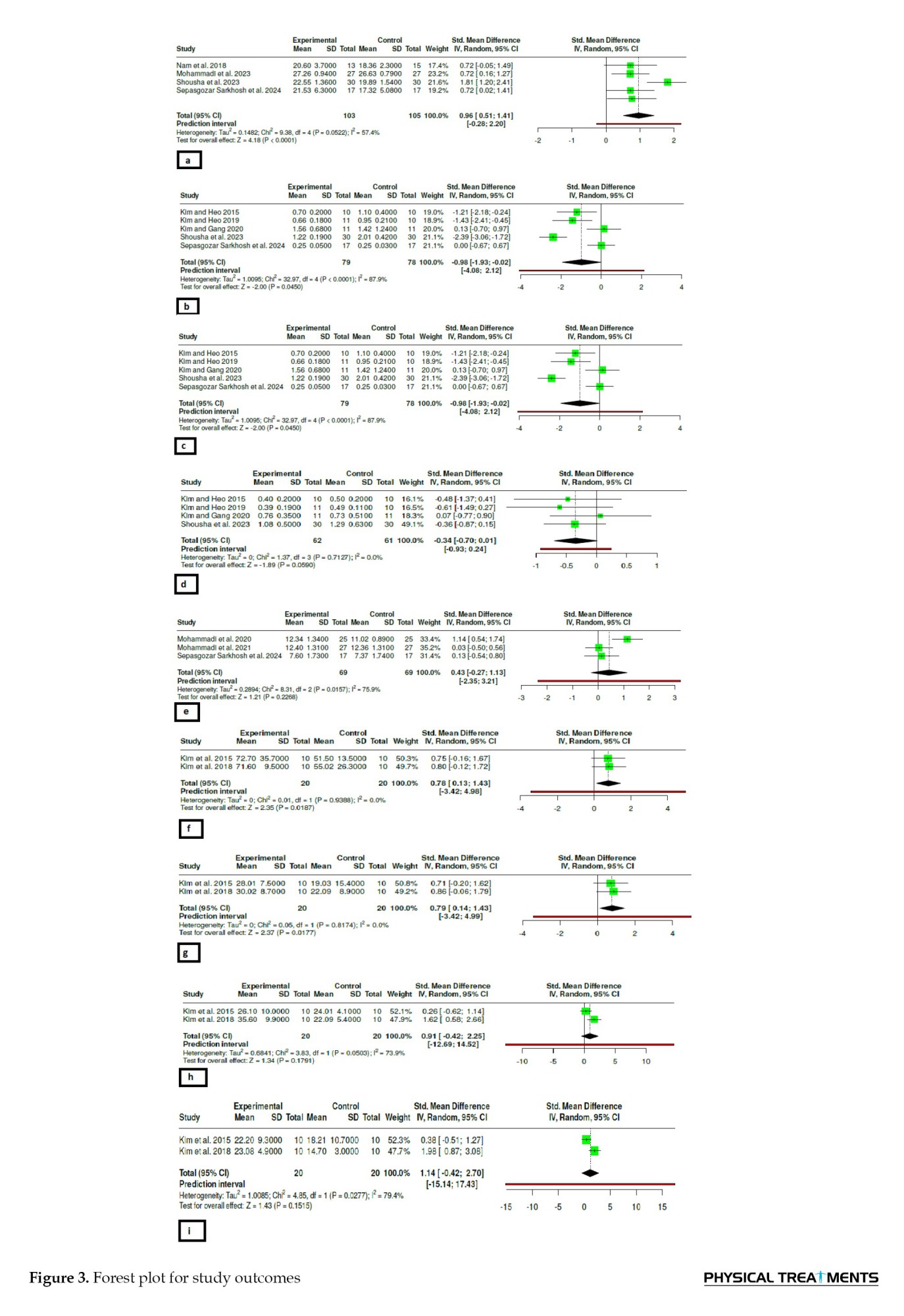
Perceived instability: Perceived ankle instability was assessed using the CAIT across four RCTs [28, 31, 36-38] (Figure 3a).
The pooled meta-analysis demonstrated a significant, large effect size favoring the VR interventions over the comparator groups (SMD=0.96; 95% CI, 0.51%, 1.41%; P<0.0001). This finding indicates an improvement in the subjective sense of ankle stability following VR-based training. However, the analysis revealed moderate to substantial heterogeneity among the included studies (I²=57.4%; P=0.052). The wide 95% prediction interval (-0.28-2.20) suggests that while the overall pooled effect is positive, the true effect size may vary considerably across different clinical settings, patient populations, and training protocols.
Postural control
Postural control was assessed in 11 studies using laboratory devices and clinical tests.
Stability index: Five studies reported stability indices via the Biodex Balance System. Meta-analysis of the Overall stability index across five studies (n=157 participants) (Figure 3b) demonstrated a significant moderate effect favoring VR training over conventional interventions (SMD=-0.98; 95% CI, -1.93%, -0.02%; P=0.045), indicating superior improvements in overall postural stability [25, 30, 32, 37, 38]. However, heterogeneity was observed (I²=87.9%; P<0.001). For the Anteroposterior Stability Index (Figure 3c), pooled data from five studies (n=157) revealed a non-significant small-to-moderate effect (SMD=-0.66; 95% CI, -1.51%, 0.19%; P=0.129), with considerable heterogeneity (I²=86.1%; P<0.001) (Figure 2b) [25, 30, 32, 37, 38]. Similarly, the Mediolateral Stability Index analysis of four studies (n=127) showed a non-significant small effect (SMD=-0.36; 95% CI, -0.87%, 0.15%; P=0.059), though heterogeneity was negligible (I²=0.0%; P=0.713) (Figure 3d) [25, 30, 32, 37]. The direction of effects consistently favored VR interventions across all stability indices, though statistical significance was achieved only for the overall stability index.
Limit of stability: The limit of stability (LOS) was assessed in a study [28] involving 28 participants with ankle instability. Effect size calculation revealed large effect sizes favoring the visual feedback VR training in multiple LOS directions. Significant improvements were observed in LOS right (Cohen’s d=1.07; 95% CI, 0.23%, 1.91%) and LOS back (Cohen’s d=0.82; 95% CI, 0.01%, 1.63%), with both demonstrating large effect magnitudes. The LOS Left also showed a large effect size (Cohen’s d=0.89; 95% CI, 0.07%, 1.71%), though the CI approached the lower threshold. A medium effect was observed for LOS Front (Cohen’s d=0.55; 95% CI, -0.24%, 1.34%), with the CI crossing zero, indicating potential non-significance.
Hop tests: The pooled meta-analysis indicated no significant difference in side hop test completion times between VR and comparator groups (SMD=0.43; 95% CI, -0.27%, 1.13%; P=0.227) (Figure 3e) [31, 34, 38]. The analysis revealed statistical heterogeneity among the included studies (I²=75.9%; P=0.016; Tau²=0.289). This variability was further underscored by a wide 95% prediction interval (-2.35 to 3.21), suggesting that the true effect size may vary considerably across different clinical settings and populations.
For the Figure-of-8 Hop test, the effect sizes ranged from trivial to small (Cohen’s d=-0.05, 95% CI, -0.61%, 0.51% [31]; and d=0.29, 95% CI, -0.25%, 0.83% [34]), with CIs consistently crossing zero, indicating no definitive advantage of VR over conventional training in this multidirectional task. Similarly, the Single Hop Test demonstrated trivial effect magnitudes across two studies (d=0.00, 95% CI, -0.56%, 0.56% [31]; and d=-0.04, 95% CI, -0.58%, 0.50% [34]), suggesting comparable sagittal plane jumping capabilities. Results for the Side Hop Test were notably inconsistent. While one study reported a large effect favoring the VR intervention (d=1.03, 95% CI, 0.40%, 1.66%) [31], two other studies yielded trivial effects (d=0.03, 95% CI, -0.51%, 0.57% [34]; and d=0.13, 95% CI, -0.54%, 0.80% [38]), reflecting high variability in frontal plane agility gains depending on the training protocol. A single study investigating explosive multi-planar performance reported exceptionally large effect sizes favoring the VR group for both the Triple Hop Test (d=2.92, 95% CI, 1.87%, 3.97%) and the Lateral Jump test (d=-3.89, 95% CI, -5.26%, -2.52%, where negative values denote superior speed and shorter completion times in the VR group) [33].
Excursion balance tests: Regarding the star excursion balance test (SEBT), Forsyth et al. [35] reported trivial to small effect sizes across all eight reach directions (Cohen’s d ranging from -0.06 to 0.42), with 95% CIs consistently crossing zero, indicating no definitive advantage of visual feedback VR over non-visualized stability training. Similarly, Mohammadi et al. [36] observed small to medium effect sizes favoring the VR intervention, particularly in the posterior (d=0.57, 95% CI, 0.02 %, 1.12%) and posteromedial (d=0.53, 95% CI, -0.02%, 1.08%) directions. However, the anterior and medial directions demonstrated trivial effects (d=0.48 and 0.00, respectively), with mostCIs bordering or crossing zero. Regarding the Y-balance test, Ranjbarzadeh Yamchi et al. [33] demonstrated a very large effect size favoring the VR group for the general composite score (d=1.55, 95% CI, 0.71%, 2.39%), suggesting substantial improvements in overall dynamic reach.
Gait
Spatiotemporal and kinematic gait parameters were evaluated in a single study [27]. Analysis of the calculated effect sizes revealed trivial to small magnitudes across all assessed gait metrics, with 95% CIs consistently crossing zero, indicating no definitive advantage of VR training over conventional or no-exercise comparators. Spatiotemporal parameters demonstrated trivial effect sizes for gait speed (Cohen’s d=0.15, 95% CI, -0.52%, 0.82%), cadence (d =0.14, 95% CI, -0.53%, 0.81%), and step length (d=0.13, 95% CI: -0.54 to 0.80). A small effect size was observed for single support time (d=0.22, 95% CI, -0.45%, 0.89), though it remained non-significant. Regarding kinematic variables, maximum dorsiflexion exhibited a medium effect size (d=-0.57, 95% CI, -1.27%, 0.13%), while maximum plantar flexion showed a trivial effect (d=-0.01, 95% CI, -0.67%, 0.65%) [27].
Ankle strength
Ankle muscle strength was evaluated in two RCTs [26, 29], including a total of 40 participants (20 allocated to VR interventions and 20 to conventional strengthening exercises). A meta-analysis of isokinetic ankle strength at an angular velocity of 60°/s revealed heterogeneous outcomes across different muscle groups. VR training yielded significant, moderate-to-large improvements in plantar flexion (Figure 3f) (SMD=0.78; 95% CI, 0.13%, 1.43%; P=0.019) and inversion strength (SMD=0.79; 95% CI, 0.14%, 1.43%; P=0.018) (Figure 3g), with no heterogeneity observed in either analysis (I²=0.0%). Conversely, despite large pooled effect sizes favoring VR groups, the improvements in dorsiflexion (SMD=0.91; 95% CI, -0.42%, 2.25%; P=0.179; I²=73.9%) (Figure 3h) and eversion strength (SMD=1.14; 95% CI, -0.42%, 2.70%; P=0.152; I²=79.4%) (Figure 3i) did not reach significance. Crucially, it must be emphasized that these strength-related findings are derived from only two RCTs comprising a total of 40 participants. Therefore, the statistically significant effects observed for plantar flexion and inversion should be interpreted with extreme caution as preliminary evidence, rather than definitive proof of efficacy.
Discussion
Patients with CAI often report giving way due to deficient proprioception and fear of movement. The VR interventions offer continuous visual and auditory feedback that challenges the center of pressure displacement. The feedback mechanism redirects attention to the task and, as a result, facilitates motor learning. Moreover, the immersive nature of video games helps overcome the common demotivators associated with standard rehabilitation, including repetitive and monotonous exercises [34, 37].
A consideration in interpreting our findings is the large effect size for perceived ankle instability (CAIT score, SMD=0.96), which is influenced by the methodological quality of the included trials. Our risk of bias assessment revealed that only four studies had a low risk of bias, while the majority raised some concerns or exhibited a high risk. The nature of VR interventions inherently precludes blinding of participants and therapists, introducing a significant performance bias. This lack of blinding likely inflated subjective, patient-reported primary outcomes such as the CAIT score. Patients aware of their allocation to a novel, engaging VR intervention may have experienced a placebo effect or response bias, artificially enhancing their perceived stability. Therefore, the robust improvements in subjective outcomes should be interpreted with caution, whereas objective laboratory measures (e.g. Biodex stability indices) are less susceptible to this specific bias. In terms of postural stability, the VR interventions revealed a moderate and significant effect on the Overall Stability Index compared to standard rehabilitation or control groups. In contrast, the Anteroposterior and Mediolateral stability directions showed inconsistent and non-significant results, possibly due to heterogeneity (I²>86%) [30, 33]. The stability directions were probably not significant due to the nature of the VR tasks. The games require participants to perform multidirectional weight shifts, which challenges stability in multiple directions simultaneously. The overall stability index, in turn, reflects the composite stability in all directions. The analysis of individual studies also revealed that VR interventions could improve dynamic stability in specific reach directions, including the posteromedial direction in SEBT [36] and Y-Balance [33]. The external focus of attention in VR is associated with enhanced automaticity of postural control compared to balance board exercises [35].
Regarding spatiotemporal gait parameters, it is crucial to emphasize that the current evidence is insufficient to draw definitive conclusions, as only a single study evaluated these outcomes. Therefore, the trivial to small effect sizes observed in this single study should not be interpreted as evidence of equivalence or an absence of benefit of VR on gait in patients with CAI.
However, regarding high-speed functional hop tests, the lack of significant transfer from static and dynamic laboratory postural improvements can be hypothesized to be primarily attributed to the principle of training specificity. Commercial VR and visual feedback tasks predominantly challenge postural control at slow to moderate speeds within a predictable, closed-loop environment. These tasks enhance conscious, cognitively mediated postural adjustments and expand static/dynamic stability limits. Conversely, functional hop tests require rapid, automatic, and explosive plyometric muscle activations and high-velocity proprioceptive feedback. Fatigue-induced alterations in lower-extremity landing mechanics, particularly increased ankle inversion, may further compromise dynamic ankle stability during high-speed tasks [40]. The neuromuscular adaptations induced by slow-speed VR tasks might not adequately translate to the high-velocity, open-loop demands of hopping. Furthermore, the cognitive load during VR is heavily directed toward visual target acquisition and game rules, which may not replicate the complex, multi-sensory integration and anticipatory postural adjustments required for automated gait and explosive athletic tasks. Consequently, while VR is highly effective for foundational postural control, it may need to be combined with high-speed, plyometric, and sport-specific perturbations to improve functional and spatiotemporal outcomes.
The VR interventions led to moderate improvements in plantar flexion and inversion strength at 60 °/s with no heterogeneity. The VR interventions typically involve weight-bearing postural control tasks that require continuous activation of the gastrocnemius-soleus and peroneal muscles to maintain balance [26, 29]. In contrast, the improvements in dorsiflexion and eversion strength were heterogeneous (I²>73%) and insignificant. The VR interventions may be insufficient to induce improvements in the dorsiflexion and eversion strength due to the nature of the tasks. The VR tasks involve a closed kinetic chain that requires continuous activation of plantar flexion and inversion muscles. In contrast, the dorsiflexion and eversion muscles are intermittently active to maintain stability. Therefore, the VR interventions could be effective for global postural control, but they may not be sufficient to target the specific ankle muscles. Recent studies also suggest that the VR interventions are beneficial for neurocognitive response, but the traditional perturbation training may be superior in terms of anticipatory postural adjustments for the proximal stabilizers, such as the gluteus medius [39].
The main limitation of this study is that the interventions varied in terms of VR equipment and compared different types of control conditions. In addition, most of the included studies used short interventions, typically 4 weeks, and small sample sizes. The age range of the participants was also limited to young males. Finally, the commercial VR equipment is not designed for rehabilitation, which introduces significant variability in interventions and outcome measures.
Conclusion
The use of VR for training can be an effective method to improve patients’ perception of ankle stability in the CAI group. Thus, VR can offer a beneficial impact on several functions related to balance control that are not entirely addressed by training. However, it should also be noted that the intervention is not better than therapeutic interventions in the case of high-speed movements or exercises aimed at strengthening muscles. It is recommended that future research make use of well-designed RCTs aiming to determine the optimal dose of VR for the patient group, as well as analyze its combined application with cutting-edge functional training techniques.
Ethical Considerations
Compliance with ethical guidelines
This article is a meta-analysis with no human or animal sample.
Funding
This research did not receive any grant from funding agencies in the public, commercial, or non-profit sectors.
Authors' contributions
Conceptualization: Hanieh Khaliliyan and Mahmood Bahramizadeh; Methodology: Hanieh Khaliliyan, Mahmood Bahramizadeh, and Majid Ansari; Software: Hanieh Khaliliyan and Farhad Ghaffari; Validation: Arash Sharafatvaziri, Morteza Faghih Jouibari, and Maria Grazia Maggio; Formal analysis: Hanieh Khaliliyan and Farhad Ghaffari; Investigation: Hanieh Khaliliyan, Majid Ansari, Maria Grazia Maggio, and Amelia Rizzo; Resources: Mahmood Bahramizadeh and Arash Sharafatvaziri; Data curation: Hanieh Khaliliyan, Majid Ansari, and Amelia Rizzo; Writing the original draft: Hanieh Khaliliyan; Review & editing: Mahmood Bahramizadeh, Majid Ansari, Farhad Ghaffari, Arash Sharafatvaziri, Morteza Faghih Jouibari, Maria Grazia Maggio, and Amelia Rizzo; Visualization: Hanieh Khaliliyan and Farhad Ghaffari; Supervision: Mahmood Bahramizadeh; Project administration: Mahmood Bahramizadeh and Hanieh Khaliliyan; Funding acquisition: Mahmood Bahramizadeh.
Conflict of interest
The authors declared no conflict of interest.
Acknowledgments
The authors would like to express their sincere gratitude to Kavita Batra for her expert guidance and invaluable contribution to the critical review of the statistical analyses presented in this manuscript. Her insights significantly improved the rigor and clarity of the meta-analytical findings.
Postural control
Postural control was assessed in 11 studies using laboratory devices and clinical tests.
Stability index: Five studies reported stability indices via the Biodex Balance System. Meta-analysis of the Overall stability index across five studies (n=157 participants) (Figure 3b) demonstrated a significant moderate effect favoring VR training over conventional interventions (SMD=-0.98; 95% CI, -1.93%, -0.02%; P=0.045), indicating superior improvements in overall postural stability [25, 30, 32, 37, 38]. However, heterogeneity was observed (I²=87.9%; P<0.001). For the Anteroposterior Stability Index (Figure 3c), pooled data from five studies (n=157) revealed a non-significant small-to-moderate effect (SMD=-0.66; 95% CI, -1.51%, 0.19%; P=0.129), with considerable heterogeneity (I²=86.1%; P<0.001) (Figure 2b) [25, 30, 32, 37, 38]. Similarly, the Mediolateral Stability Index analysis of four studies (n=127) showed a non-significant small effect (SMD=-0.36; 95% CI, -0.87%, 0.15%; P=0.059), though heterogeneity was negligible (I²=0.0%; P=0.713) (Figure 3d) [25, 30, 32, 37]. The direction of effects consistently favored VR interventions across all stability indices, though statistical significance was achieved only for the overall stability index.
Limit of stability: The limit of stability (LOS) was assessed in a study [28] involving 28 participants with ankle instability. Effect size calculation revealed large effect sizes favoring the visual feedback VR training in multiple LOS directions. Significant improvements were observed in LOS right (Cohen’s d=1.07; 95% CI, 0.23%, 1.91%) and LOS back (Cohen’s d=0.82; 95% CI, 0.01%, 1.63%), with both demonstrating large effect magnitudes. The LOS Left also showed a large effect size (Cohen’s d=0.89; 95% CI, 0.07%, 1.71%), though the CI approached the lower threshold. A medium effect was observed for LOS Front (Cohen’s d=0.55; 95% CI, -0.24%, 1.34%), with the CI crossing zero, indicating potential non-significance.
Hop tests: The pooled meta-analysis indicated no significant difference in side hop test completion times between VR and comparator groups (SMD=0.43; 95% CI, -0.27%, 1.13%; P=0.227) (Figure 3e) [31, 34, 38]. The analysis revealed statistical heterogeneity among the included studies (I²=75.9%; P=0.016; Tau²=0.289). This variability was further underscored by a wide 95% prediction interval (-2.35 to 3.21), suggesting that the true effect size may vary considerably across different clinical settings and populations.
For the Figure-of-8 Hop test, the effect sizes ranged from trivial to small (Cohen’s d=-0.05, 95% CI, -0.61%, 0.51% [31]; and d=0.29, 95% CI, -0.25%, 0.83% [34]), with CIs consistently crossing zero, indicating no definitive advantage of VR over conventional training in this multidirectional task. Similarly, the Single Hop Test demonstrated trivial effect magnitudes across two studies (d=0.00, 95% CI, -0.56%, 0.56% [31]; and d=-0.04, 95% CI, -0.58%, 0.50% [34]), suggesting comparable sagittal plane jumping capabilities. Results for the Side Hop Test were notably inconsistent. While one study reported a large effect favoring the VR intervention (d=1.03, 95% CI, 0.40%, 1.66%) [31], two other studies yielded trivial effects (d=0.03, 95% CI, -0.51%, 0.57% [34]; and d=0.13, 95% CI, -0.54%, 0.80% [38]), reflecting high variability in frontal plane agility gains depending on the training protocol. A single study investigating explosive multi-planar performance reported exceptionally large effect sizes favoring the VR group for both the Triple Hop Test (d=2.92, 95% CI, 1.87%, 3.97%) and the Lateral Jump test (d=-3.89, 95% CI, -5.26%, -2.52%, where negative values denote superior speed and shorter completion times in the VR group) [33].
Excursion balance tests: Regarding the star excursion balance test (SEBT), Forsyth et al. [35] reported trivial to small effect sizes across all eight reach directions (Cohen’s d ranging from -0.06 to 0.42), with 95% CIs consistently crossing zero, indicating no definitive advantage of visual feedback VR over non-visualized stability training. Similarly, Mohammadi et al. [36] observed small to medium effect sizes favoring the VR intervention, particularly in the posterior (d=0.57, 95% CI, 0.02 %, 1.12%) and posteromedial (d=0.53, 95% CI, -0.02%, 1.08%) directions. However, the anterior and medial directions demonstrated trivial effects (d=0.48 and 0.00, respectively), with mostCIs bordering or crossing zero. Regarding the Y-balance test, Ranjbarzadeh Yamchi et al. [33] demonstrated a very large effect size favoring the VR group for the general composite score (d=1.55, 95% CI, 0.71%, 2.39%), suggesting substantial improvements in overall dynamic reach.
Gait
Spatiotemporal and kinematic gait parameters were evaluated in a single study [27]. Analysis of the calculated effect sizes revealed trivial to small magnitudes across all assessed gait metrics, with 95% CIs consistently crossing zero, indicating no definitive advantage of VR training over conventional or no-exercise comparators. Spatiotemporal parameters demonstrated trivial effect sizes for gait speed (Cohen’s d=0.15, 95% CI, -0.52%, 0.82%), cadence (d =0.14, 95% CI, -0.53%, 0.81%), and step length (d=0.13, 95% CI: -0.54 to 0.80). A small effect size was observed for single support time (d=0.22, 95% CI, -0.45%, 0.89), though it remained non-significant. Regarding kinematic variables, maximum dorsiflexion exhibited a medium effect size (d=-0.57, 95% CI, -1.27%, 0.13%), while maximum plantar flexion showed a trivial effect (d=-0.01, 95% CI, -0.67%, 0.65%) [27].
Ankle strength
Ankle muscle strength was evaluated in two RCTs [26, 29], including a total of 40 participants (20 allocated to VR interventions and 20 to conventional strengthening exercises). A meta-analysis of isokinetic ankle strength at an angular velocity of 60°/s revealed heterogeneous outcomes across different muscle groups. VR training yielded significant, moderate-to-large improvements in plantar flexion (Figure 3f) (SMD=0.78; 95% CI, 0.13%, 1.43%; P=0.019) and inversion strength (SMD=0.79; 95% CI, 0.14%, 1.43%; P=0.018) (Figure 3g), with no heterogeneity observed in either analysis (I²=0.0%). Conversely, despite large pooled effect sizes favoring VR groups, the improvements in dorsiflexion (SMD=0.91; 95% CI, -0.42%, 2.25%; P=0.179; I²=73.9%) (Figure 3h) and eversion strength (SMD=1.14; 95% CI, -0.42%, 2.70%; P=0.152; I²=79.4%) (Figure 3i) did not reach significance. Crucially, it must be emphasized that these strength-related findings are derived from only two RCTs comprising a total of 40 participants. Therefore, the statistically significant effects observed for plantar flexion and inversion should be interpreted with extreme caution as preliminary evidence, rather than definitive proof of efficacy.
Discussion
Patients with CAI often report giving way due to deficient proprioception and fear of movement. The VR interventions offer continuous visual and auditory feedback that challenges the center of pressure displacement. The feedback mechanism redirects attention to the task and, as a result, facilitates motor learning. Moreover, the immersive nature of video games helps overcome the common demotivators associated with standard rehabilitation, including repetitive and monotonous exercises [34, 37].
A consideration in interpreting our findings is the large effect size for perceived ankle instability (CAIT score, SMD=0.96), which is influenced by the methodological quality of the included trials. Our risk of bias assessment revealed that only four studies had a low risk of bias, while the majority raised some concerns or exhibited a high risk. The nature of VR interventions inherently precludes blinding of participants and therapists, introducing a significant performance bias. This lack of blinding likely inflated subjective, patient-reported primary outcomes such as the CAIT score. Patients aware of their allocation to a novel, engaging VR intervention may have experienced a placebo effect or response bias, artificially enhancing their perceived stability. Therefore, the robust improvements in subjective outcomes should be interpreted with caution, whereas objective laboratory measures (e.g. Biodex stability indices) are less susceptible to this specific bias. In terms of postural stability, the VR interventions revealed a moderate and significant effect on the Overall Stability Index compared to standard rehabilitation or control groups. In contrast, the Anteroposterior and Mediolateral stability directions showed inconsistent and non-significant results, possibly due to heterogeneity (I²>86%) [30, 33]. The stability directions were probably not significant due to the nature of the VR tasks. The games require participants to perform multidirectional weight shifts, which challenges stability in multiple directions simultaneously. The overall stability index, in turn, reflects the composite stability in all directions. The analysis of individual studies also revealed that VR interventions could improve dynamic stability in specific reach directions, including the posteromedial direction in SEBT [36] and Y-Balance [33]. The external focus of attention in VR is associated with enhanced automaticity of postural control compared to balance board exercises [35].
Regarding spatiotemporal gait parameters, it is crucial to emphasize that the current evidence is insufficient to draw definitive conclusions, as only a single study evaluated these outcomes. Therefore, the trivial to small effect sizes observed in this single study should not be interpreted as evidence of equivalence or an absence of benefit of VR on gait in patients with CAI.
However, regarding high-speed functional hop tests, the lack of significant transfer from static and dynamic laboratory postural improvements can be hypothesized to be primarily attributed to the principle of training specificity. Commercial VR and visual feedback tasks predominantly challenge postural control at slow to moderate speeds within a predictable, closed-loop environment. These tasks enhance conscious, cognitively mediated postural adjustments and expand static/dynamic stability limits. Conversely, functional hop tests require rapid, automatic, and explosive plyometric muscle activations and high-velocity proprioceptive feedback. Fatigue-induced alterations in lower-extremity landing mechanics, particularly increased ankle inversion, may further compromise dynamic ankle stability during high-speed tasks [40]. The neuromuscular adaptations induced by slow-speed VR tasks might not adequately translate to the high-velocity, open-loop demands of hopping. Furthermore, the cognitive load during VR is heavily directed toward visual target acquisition and game rules, which may not replicate the complex, multi-sensory integration and anticipatory postural adjustments required for automated gait and explosive athletic tasks. Consequently, while VR is highly effective for foundational postural control, it may need to be combined with high-speed, plyometric, and sport-specific perturbations to improve functional and spatiotemporal outcomes.
The VR interventions led to moderate improvements in plantar flexion and inversion strength at 60 °/s with no heterogeneity. The VR interventions typically involve weight-bearing postural control tasks that require continuous activation of the gastrocnemius-soleus and peroneal muscles to maintain balance [26, 29]. In contrast, the improvements in dorsiflexion and eversion strength were heterogeneous (I²>73%) and insignificant. The VR interventions may be insufficient to induce improvements in the dorsiflexion and eversion strength due to the nature of the tasks. The VR tasks involve a closed kinetic chain that requires continuous activation of plantar flexion and inversion muscles. In contrast, the dorsiflexion and eversion muscles are intermittently active to maintain stability. Therefore, the VR interventions could be effective for global postural control, but they may not be sufficient to target the specific ankle muscles. Recent studies also suggest that the VR interventions are beneficial for neurocognitive response, but the traditional perturbation training may be superior in terms of anticipatory postural adjustments for the proximal stabilizers, such as the gluteus medius [39].
The main limitation of this study is that the interventions varied in terms of VR equipment and compared different types of control conditions. In addition, most of the included studies used short interventions, typically 4 weeks, and small sample sizes. The age range of the participants was also limited to young males. Finally, the commercial VR equipment is not designed for rehabilitation, which introduces significant variability in interventions and outcome measures.
Conclusion
The use of VR for training can be an effective method to improve patients’ perception of ankle stability in the CAI group. Thus, VR can offer a beneficial impact on several functions related to balance control that are not entirely addressed by training. However, it should also be noted that the intervention is not better than therapeutic interventions in the case of high-speed movements or exercises aimed at strengthening muscles. It is recommended that future research make use of well-designed RCTs aiming to determine the optimal dose of VR for the patient group, as well as analyze its combined application with cutting-edge functional training techniques.
Ethical Considerations
Compliance with ethical guidelines
This article is a meta-analysis with no human or animal sample.
Funding
This research did not receive any grant from funding agencies in the public, commercial, or non-profit sectors.
Authors' contributions
Conceptualization: Hanieh Khaliliyan and Mahmood Bahramizadeh; Methodology: Hanieh Khaliliyan, Mahmood Bahramizadeh, and Majid Ansari; Software: Hanieh Khaliliyan and Farhad Ghaffari; Validation: Arash Sharafatvaziri, Morteza Faghih Jouibari, and Maria Grazia Maggio; Formal analysis: Hanieh Khaliliyan and Farhad Ghaffari; Investigation: Hanieh Khaliliyan, Majid Ansari, Maria Grazia Maggio, and Amelia Rizzo; Resources: Mahmood Bahramizadeh and Arash Sharafatvaziri; Data curation: Hanieh Khaliliyan, Majid Ansari, and Amelia Rizzo; Writing the original draft: Hanieh Khaliliyan; Review & editing: Mahmood Bahramizadeh, Majid Ansari, Farhad Ghaffari, Arash Sharafatvaziri, Morteza Faghih Jouibari, Maria Grazia Maggio, and Amelia Rizzo; Visualization: Hanieh Khaliliyan and Farhad Ghaffari; Supervision: Mahmood Bahramizadeh; Project administration: Mahmood Bahramizadeh and Hanieh Khaliliyan; Funding acquisition: Mahmood Bahramizadeh.
Conflict of interest
The authors declared no conflict of interest.
Acknowledgments
The authors would like to express their sincere gratitude to Kavita Batra for her expert guidance and invaluable contribution to the critical review of the statistical analyses presented in this manuscript. Her insights significantly improved the rigor and clarity of the meta-analytical findings.
References
- Herzog MM, Kerr ZY, Marshall SW, Wikstrom EA. Epidemiology of ankle sprains and chronic ankle instability. Journal of Athletic Training. 2019; 54(6):603-10. [DOI:10.4085/1062-6050-447-17] [PMID] [PMCID]
- Doherty C, Bleakley C, Hertel J, Caulfield B, Ryan J, Delahunt E. Recovery from a first-time lateral ankle sprain and the predictors of chronic ankle instability: A prospective cohort analysis. The American Journal of Sports Medicine. 2016; 44(4):995-1003. [DOI:10.1177/0363546516628870] [PMID] [PMCID]
- Poor MH, Rajabi R, Alizadeh MH, Zandi S, Ebrahimi E. Neuromuscular characteristics of individuals with chronic ankle instability during unilateral landing tasks: A meta-analysis of electromyographic studies. Journal of Orthopaedic Surgery and Research. 2026; 21(1):576. [DOI:10.1186/s13018-026-07106-6.] [PMID]
- Arnold BL, Wright CJ, Ross SE. Functional ankle instability and health-related quality of life. Journal of Athletic Training. 2011; 46(6):634-41. [DOI:10.4085/1062-6050-46.6.634] [PMID] [PMCID]
- Shahani O, Shamsi Majelan A, Khoshraftar Yazdi N. Enhancing balance in athletes with chronic ankle instability: The power of visual feedback. Iranian Rehabilitation Journal. 2025; 23(1):95-104. [DOI:10.32598/irj.23.1.2311.1]
- Christakou A, Gkikopoulou A, Iosif E, Gioftsos G. The effectiveness of focus of attention in static balance and functional ability of chronic ankle instability: A pilot study. Iranian Rehabilitation Journal. 2024; 22(4):709-71. [DOI:10.32598/irj.22.4.2214.1]
- Mansoori M H, Ardakani M K, Omidi M, Gholami F. Visual reliance to restore balance in healthy, prone to injury, coper, and chronic ankle instability individuals. Iranian Rehabilitation Journal. 2024; 22(1):63-74. [DOI:10.32598/irj.22.1.1406.4]
- Khaliliyan H, Bahramizadeh M, Vahab Kashani R, Vahedi M. Effects of the custom mold with a raised ridge around the perimeter foot orthoses on dynamic postural control in chronic ankle instability. Iranian Rehabilitation Journal. 2023; 21(3):451-60. [DOI:10.32598/irj.21.3.1719.2]
- Guo Y, Cheng T, Yang Z, Huang Y, Li M, Wang T. A systematic review and meta-analysis of balance training in patients with chronic ankle instability. Systematic Reviews. 2024; 13(1):64. [DOI:10.1186/s13643-024-02455-x] [PMID] [PMCID]
- O’Driscoll J, Delahunt E. Neuromuscular training to enhance sensorimotor and functional deficits in subjects with chronic ankle instability: A systematic review and best evidence synthesis. Sports Medicine, Arthroscopy, Rehabilitation, Therapy & Technology. 2011; 3(1):19. [DOI:10.1186/1758-2555-3-19] [PMID] [PMCID]
- Munn J, Sullivan SJ, Schneiders AG. Evidence of sensorimotor deficits in functional ankle instability: A systematic review with meta-analysis. Journal of Science and Medicine in Sport. 2010; 13(1):2-12. [DOI:10.1016/j.jsams.2009.03.004] [PMID]
- Holt CJ, McKay CD, Truong LK, Le CY, Gross DP, Whittaker JL. Sticking to it: A scoping review of adherence to exercise therapy interventions in children and adolescents with musculoskeletal conditions. Journal of Orthopaedic & Sports Physical Therapy. 2020; 50(9):503-15. [DOI:10.2519/jospt.2020.9715] [PMID]
- Ebrahimi E, Sheikhhoseini R, Kozinc Ž, Nourbakhsh SA. The effect of gamification-based exercises on foot posture in children and adolescents with flatfoot: A systematic review and meta-analysis. Journal of Orthopaedic Surgery. 2025; 33(3):10225536251394468. [DOI:10.1177/10225536251394468] [PMID]
- Lin H, Han K, Ruan B. Effect of virtual reality on functional ankle instability rehabilitation: A systematic review. Journal of Healthcare Engineering. 2021; 2021(1):7363403. [DOI:10.1155/2021/7363403] [PMID]
- Andrade A, Correia CK, Coimbra DR. The psychological effects of exergames for children and adolescents with obesity: A systematic review and metaanalysis. Cyberpsychology, Behavior, and Social Networking. 2019; 22(11):724-3. [DOI:10.1089/cyber.2019.0341] [PMID] [PMCID]
- Fang Q, Ghanouni P, Anderson SE, Touchett H, Shirley R, Fang F, et al. Effects of exergaming on balance of healthy older adults: A systematic review and metaanalysis of randomized controlled trials. Games for Health Journal. 2020; 9(1):11-23. [DOI:10.1089/g4h.2019.0016] [PMID]
- Rovini E, Maremmani C, Cavallo F. Automated systems based on wearable sensors for the management of Parkinson’s disease at home: A systematic review. Telemedicine and e-Health. 2019; 25(3):167-83. [DOI:10.1089/tmj.2018.0035] [PMID]
- Staiano AE, Flynn R. Therapeutic uses of active videogames: A systematic review. Games for Health Journal. 2014; 3(6):351-65. [DOI:10.1089/g4h.2013.0100] [PMID] [PMCID]
- Garcia-Munoz C, Casuso-Holgado M. Effectiveness of wii fit balance board in comparison with other interventions for post-stroke balance rehabilitation. Systematic review and meta-analysis. Revista de Neurologia. 2019; 69(7):271-9. [DOI:10.33588/rn.6907.2019091] [PMID]
- Page MJ, McKenzie JE, Bossuyt PM, Boutron I, Hoffmann TC, Mulrow CD, et al. The PRISMA 2020 statement: An updated guideline for reporting systematic reviews. BMJ. 2021; 372:n71. [DOI:10.1136/bmj.n71] [PMID]
- Flemyng E, Dwan K, Moore TH, Page MJ, Higgins JP. Risk of bias 2 in Cochrane reviews: A phased approach for the introduction of new methodology. The Cochrane Database of Systematic Reviews. 2020; 2020(11):ED000148. [DOI:10.1002/14651858.ED000148]
- Chi KY, Li MY, Chen C, Kang E, Cochrane Taiwan. Ten circumstances and solutions for finding the sample mean and standard deviation for meta-analysis. Systematic Reviews. 2023; 12(1):62. [DOI:10.1186/s13643-023-02217-1] [PMID] [PMCID]
- Trikalinos TA, Salanti G, Zintzaras E, Ioannidis JP. Meta‐analysis methods. Advances in Genetics. 2008; 60:311-34. [DOI:10.1016/S0065-2660(07)00413-0] [PMID]
- Goulet-Pelletier JC, Cousineau D. A review of effect sizes and their confidence intervals, Part I: The Cohen’sd family. The Quantitative Methods for Psychology. 2018; 14(4):242-65. [DOI:10.20982/tqmp.14.4.p242] [PMCID]
- Kim KJ, Heo M. Effects of virtual reality programs on balance in functional ankle instability. Journal of Physical Therapy Science. 2015; 27(10):3097-101. [DOI:10.1589/jpts.27.3097] [PMID] [PMCID]
- Kim KJ, Jun HJ, Heo M. Effects of nintendo wii fit plus training on ankle strength with functional ankle instability. Journal of Physical Therapy Science. 2015; 27(11):3381-5. [DOI:10.1589/jpts.27.3381] [PMID] [PMCID]
- Punt IM, Armand S, Ziltener JL, Allet L. Effect of wii fit™ exercise therapy on gait parameters in ankle sprain patients: A randomized controlled trial. Gait & Posture. 2017; 58:52-8. [DOI:10.1016/j.gaitpost.2017.06.284] [PMID]
- Nam SM, Kim K, Do YL. Effects of visual feedback balance training on the balance and ankle instability in adult men with functional ankle instability. Journal of Physical Therapy Science. 2018; 30(1):113-5. [DOI:10.1589/jpts.30.113] [PMID] [PMCID]
- Kim K, Choi B, Lim W. The efficacy of virtual reality assisted versus traditional rehabilitation intervention on individuals with functional ankle instability: A pilot randomized controlled trial. Disability and Rehabilitation: Assistive Technology. 2019; 14(3):276-80. [DOI:10.1080/17483107.2018.1429501] [PMID]
- Kim KJ, Heo M. Comparison of virtual reality exercise versus conventional exercise on balance in patients with functional ankle instability: A randomized controlled trial. Journal of Back and Musculoskeletal Rehabilitation. 2019; 32(6):905-11. [DOI:10.3233/BMR-181376] [PMID]
- Mohammadi N, Hadian MR, Olyaei G. The effects of Wii Fit Plus training on functional ability in athletes with functional ankle instability. Sports Orthopaedics and Traumatology. 2020; 36(1):52-9. [DOI:10.1016/j.orthtr.2020.01.003]
- Kim KJ, Gang MY. Effect of taping and virtual reality combined exercise on static and dynamic balance with functional ankle instability. Physical Therapy Korea. 2020; 27(4):292-7. [DOI:10.12674/ptk.2020.27.4.292]
- Ranjbarzadeh Yamchi F, Letafatkar A, Esmaeilpour S. The effect of 8 weeks virtual reality training on static and dynamic balance and performance in male athletes with functional ankle instabilit. Physical Treatments. 2021; 11(1):45-54. [DOI:10.32598/ptj.11.1.453.1]
- Mohammadi N, Hadian MR, Olyaei GR. Comparison of the effects of Wii and conventional training on functional abilities and neurocognitive function in basketball-players with functional ankle instability: Matched randomized clinical trial. Clinical Rehabilitation. 2021; 35(10):1454-64. [DOI:10.1177/02692155211010249] [PMID]
- Forsyth L, Bonacci J, Childs C. A pilot randomised control trial of the efficacy of stability-based training with visualisation for people with chronic ankle instability. Medical & Biological Engineering & Computing. 2022; 60(4):1199-209. [DOI:10.1007/s11517-022-02533-z] [PMID] [PMCID]
- Mohammadi N, Hadian MR, Olyaei GR. Compare the effect of traditional and virtual reality training on subjective-sense of instability and balance in basketball-players with functional ankle instability: Matched randomized clinical trial. Journal of Biomedical Physics & Engineering. 2023; 13(3):269. [DOI:10.31661/jbpe.v0i0.2007-1146]
- Shousha TM, Abo-Zaid NA, Hamada HA, Abdelsamee MYA, Behiry MA. Virtual reality versus Biodex training in adolescents with chronic ankle instability: A randomized controlled trial. Archives of Medical Science. 2021; 19(4):1059-68. [DOI:10.5114/aoms/134635] [PMID]
- Sepasgozar Sarkhosh S, Khanmohammadi R, Shiravi Z. Comparison of the effects of exergaming and balance training on dynamic postural stability during jump-landing in recreational athletes with chronic ankle instability. PloS One. 2024; 19(12):e0314686. [DOI:10.1371/journal.pone.0314686] [PMID] [PMCID]
- Faghihi R, Khanmohammadi R. Comparing virtual reality and balance training effects on postural strategies during ball kicking in soccer players with chronic ankle instability. Scientific Reports. 2024; 14(1):31448. [DOI:10.1038/s41598-024-83071-6] [PMID] [PMCID]
- Salsali M, Sayyadi P, Rajabi E, Sheikhhoseini R, Ebrahimi E, Guess T M. Fatigue-induced changes in lower extremity landing kinematics: A systematic review and meta-analysis. Iranian Rehabilitation Journal. 2026; 24(1):27-50. [DOI:10.32598/irj.2026.753.2]
Type of Study: Systematic Review |
Subject:
Sport injury and corrective exercises
Received: 2026/07/27 | Accepted: 2026/07/1 | Published: 2026/10/18
Received: 2026/07/27 | Accepted: 2026/07/1 | Published: 2026/10/18
Send email to the article author
| Rights and permissions | |
 |
This work is licensed under a Creative Commons Attribution-NonCommercial 4.0 International License. |

This is an open access article distributed under the terms of the Creative Commons Attribution-NonCommercial 4.0 (CC-By-NC 4.0), which permits use, distribution, and reproduction in any medium, provided the original work is properly cited and is not used for commercial purposes.
Contact Information