Tue, Oct 27, 2026
Volume 16, Issue 4 ( Autumn 2026)
PTJ 2026, 16(4): 393-408 |
Back to browse issues page


Ethics code: IR.BASU.REC.1404.019


Download citation:
BibTeX | RIS | EndNote | Medlars | ProCite | Reference Manager | RefWorks
Send citation to:


BibTeX | RIS | EndNote | Medlars | ProCite | Reference Manager | RefWorks
Send citation to:
Abdollahi S, Anbarian M, Sheikhhoseini R. Neuromuscular Interactions and Interlimb Asymmetry in Athletes Following Hamstring Graft Anterior Cruciate Ligament Reconstruction. PTJ 2026; 16 (4) :393-408
URL: http://ptj.uswr.ac.ir/article-1-887-en.html
URL: http://ptj.uswr.ac.ir/article-1-887-en.html

1- Department of Sport Biomechanics, Faculty of Sports Sciences, Bu-Ali Sina University, Hamedan, Iran.
2- Department of Corrective Exercise and Sport Injury, Faculty of Physical Education and Sport Sciences, Allameh Tabataba'i University, Tehran, Iran.
2- Department of Corrective Exercise and Sport Injury, Faculty of Physical Education and Sport Sciences, Allameh Tabataba'i University, Tehran, Iran.
Keywords: Anterior cruciate ligament reconstruction (ACLR), Electroencephalography, (EEG) Electromyography (EMG), Motor control, Sensorimotor cortex
Full-Text [PDF 2801 kb]
(257 Downloads)
| Abstract (HTML) (1026 Views)
Signal preprocessing
EEG and EMG signals were pre-processed using a standardized signal-processing pipeline prior to corticomuscular coupling analyses. EEG recordings were band-pass filtered to remove slow baseline drifts and high-frequency noise. Lower and upper cutoff frequencies were selected based on the physiological frequency range relevant to CMC analysis, with the aim of preserving neural oscillations within the beta (13-30 Hz) and gamma (30-60 Hz) bands while attenuating low-frequency movement-related artifacts and high-frequency non-neural noise. Notch filtering was applied where necessary to suppress power line interference.
EMG signals were high-pass filtered to reduce motion artifacts and low-frequency baseline fluctuations, followed by low-pass filtering to limit high-frequency noise and aliasing prior to envelope extraction and coupling analyses. Filter settings for both EEG and EMG were chosen in accordance with established recommendations in EEG-EMG coupling and CMC literature, ensuring that the selected cutoff frequencies did not distort phase relationships or artificially inflate coherence estimates.
Following filtering, EEG data were re-referenced using a common average reference and visually inspected to identify segments affected by excessive artifacts, including gross movement, electrode detachment, or high-amplitude transients. Artifact-contaminated segments were excluded from further analysis, and only epochs corresponding to the steady force plateau phase of the task were retained for subsequent processing.
Surface EMG from the semitendinosus was band-pass filtered to remove motion artifacts and high-frequency noise and then demeaned to remove DC offsets. EMG quality was verified by confirming a clear task-related activation pattern and the absence of signal saturation or discontinuities. When required for coupling estimation, EMG was rectified, and its envelope was derived using low-pass filtering to provide a stable amplitude representation while preserving physiologically meaningful modulation. All preprocessing steps, parameter settings, and epoch selection criteria were applied identically across participants and limbs to ensure comparability and reproducibility of cortico-semitendinosus interaction estimates.
Cortico-semitendinosus interaction analysis
Cortico-semitendinosus interactions were characterized using CMC to quantify the frequency-specific functional coupling between cortical activity and semitendinosus muscle activation during the steady force plateau phase of the task. EEG signals from sensorimotor regions were paired with the simultaneously recorded semitendinosus EMG, and coupling was estimated separately for each limb.
For each participant and limb, artifact-free plateau epochs were segmented into fixed-length windows with overlap to improve the stability of spectral estimates. Autospectra for EEG and EMG and the corresponding cross-spectrum were computed using Welch’s method. Magnitude squared coherence was then calculated as:
Where and denote the EEG and EMG power spectral densities, respectively, and denotes the cross-spectral density between EEG and EMG at frequency . Coherence values range from 0 to 1, with higher values indicating stronger linear coupling at a given frequency.
Based on established sensorimotor coupling literature and the analytical framework of this study, coherence was summarized within predefined frequency bands relevant to motor control (beta: 13-30 Hz; gamma: 30-60 Hz). For each band, band-averaged coherence and peak coherence were extracted as primary outcomes. To ensure that coupling estimates reflected genuine corticomuscular interactions rather than spurious correlations, coherence was evaluated against a statistical confidence limit derived from the number of independent segments contributing to the estimate, and only values exceeding this limit were considered physiologically meaningful. All analysis steps and parameter settings were applied consistently across participants and limbs.
This approach was selected to provide a mechanistic, descriptive characterization of how sensorimotor cortical oscillations couple with semitendinosus activation and how this coupling differs between limbs and between the ACLR and healthy groups.
Interlimb asymmetry quantification
Interlimb asymmetry was quantified by comparing limb-specific neuromuscular interaction outcomes within each participant. In the ACLR group, the surgically reconstructed limb was defined as the involved limb and the contralateral limb as the uninvolved limb. In the healthy group, the dominant limb was designated as the involved equivalent limb and the non-dominant limb as the uninvolved equivalent limb.
For each cortico-semitendinosus interaction outcome, limb-specific values were extracted separately. In addition to cortico-semitendinosus coupling outcomes, force steadiness was assessed using the coefficient of variation of force (ForceCV) during the same isometric knee flexion task. Because force steadiness reflects the precision of neural drive and the regulation of motor output during sustained contraction, ForceCV was treated as a task-level functional correlate of neuromuscular control rather than as a balance-specific construct. Accordingly, asymmetry was interpreted primarily with respect to Cortico semitendinosus interaction metrics, with ForceCV serving as a secondary functional indicator to contextualize limb-specific control.
Interlimb asymmetry for each outcome was calculated using a normalized asymmetry index to minimize the influence of inter-individual differences in absolute magnitude and enable meaningful within-subject comparisons. The asymmetry index was computed as:
As an exploratory analysis, limb difference values were computed to characterize between-limb patterns across outcomes. Involved and Uninvolved correspond to the limb-specific values for the given outcome (i.e. involved vs. uninvolved in the ACLR group, or involved equivalent vs. uninvolved equivalent in the healthy group). Positive values indicate greater cortico-semitendinosus coupling (or higher task-level values for ForceCV, when applicable) in the involved (or involved equivalent) limb. In contrast, negative values indicate greater values in the uninvolved limb.
No predefined clinical cut-off values or risk-based classifications were applied. Instead, asymmetry was treated as a continuous variable reflecting limb-specific differences in neuromuscular organization. This normalization approach expresses asymmetry relative to the mean bilateral value rather than as an absolute difference, thereby reducing the impact of inter-individual variability and facilitating mechanistic interpretation of limb-specific control strategies. All asymmetry calculations were performed consistently across participants to ensure comparability between groups.
Statistical analysis
Statistical analyses were performed to examine differences in cortico-semitendinosus interaction measures and interlimb asymmetry between groups and limbs. Prior to inferential analyses, all variables were assessed for normality using the Shapiro-Wilk test. Descriptive statistics are reported as Mean±SD.
Limb-based comparisons were conducted using within-subject analyses. A mixed design analysis of variance (ANOVA) was used with group (ACLR, healthy) as the between-subject factor and limb (involved vs. uninvolved) as the within-subject factor. This approach was selected to evaluate group differences, limb differences, and group-by-limb interactions within a unified statistical framework consistent with the descriptive objectives of the study.
When appropriate, post hoc comparisons were performed using paired-sample or independent-samples t-tests. Given the limited sample size and the hypothesis-driven focus on a priori defined frequency bands and outcomes, no formal adjustment for multiple comparisons was applied. Instead, results from secondary and limb difference analyses are explicitly interpreted as exploratory. Effect sizes were calculated to complement P values and to facilitate interpretation of the magnitude of observed effects. Partial eta squared (η²ₚ) was reported for ANOVA effects, and Cohen’s d was reported for pairwise comparisons.
Statistical significance was set a priori at α=0.05. All statistical analyses were conducted using standard statistical software. The results are interpreted as descriptive indicators of group- and limb-related differences rather than as evidence of causal relationships.
Results
Participant characteristics
A total of 24 athletes participated in the study, including 12 athletes who underwent unilateral ACLR with a hamstring tendon autograft (ACLR group) and 12 uninjured athletes with no history of ACL injury (healthy group). Table 1 presents descriptive characteristics for each group.
The two groups were similar in age, height, body mass, and body mass index, with no significant between-group differences in these variables (all P>0.05). Athletes in the ACLR group were tested at a mean of 10.0±2.0 months post-surgery.
Task performance and data quality
All participants completed the experimental task as instructed, and no testing sessions were terminated prematurely. Force signals were successfully recorded for all trials, and no trials were excluded due to task non-compliance.
Force steadiness was quantified using the ForceCV. Figure 2 illustrates the distribution of ForceCV values during the steady force plateau phase for the healthy and ACLR groups.
Group differences in force steadiness
Group differences in force steadiness were evaluated by comparing the ForceCV between the healthy and ACLR groups. As summarized in Table 2, the ACLR group exhibited significantly greater force output variability during the steady contraction than the healthy group.
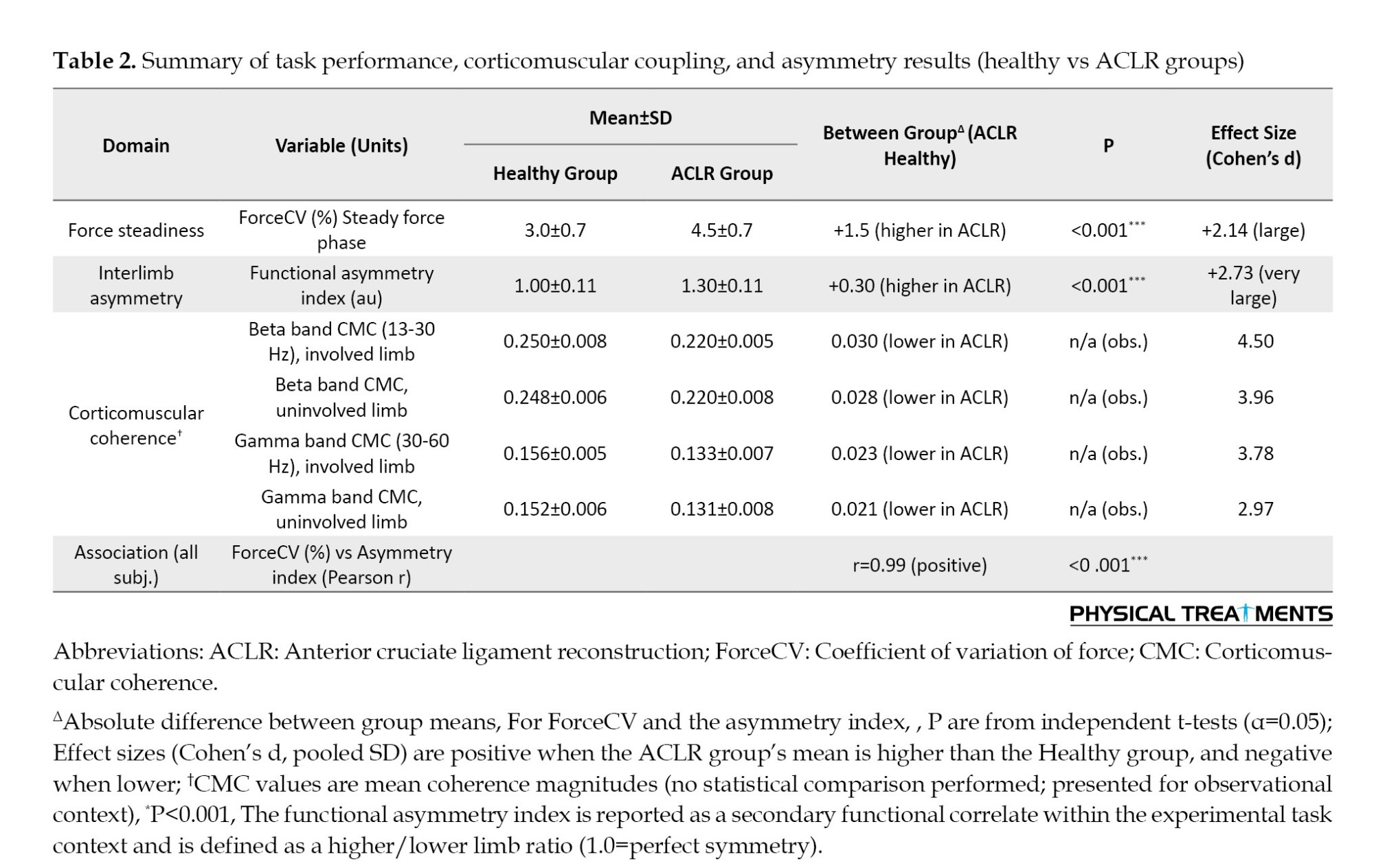
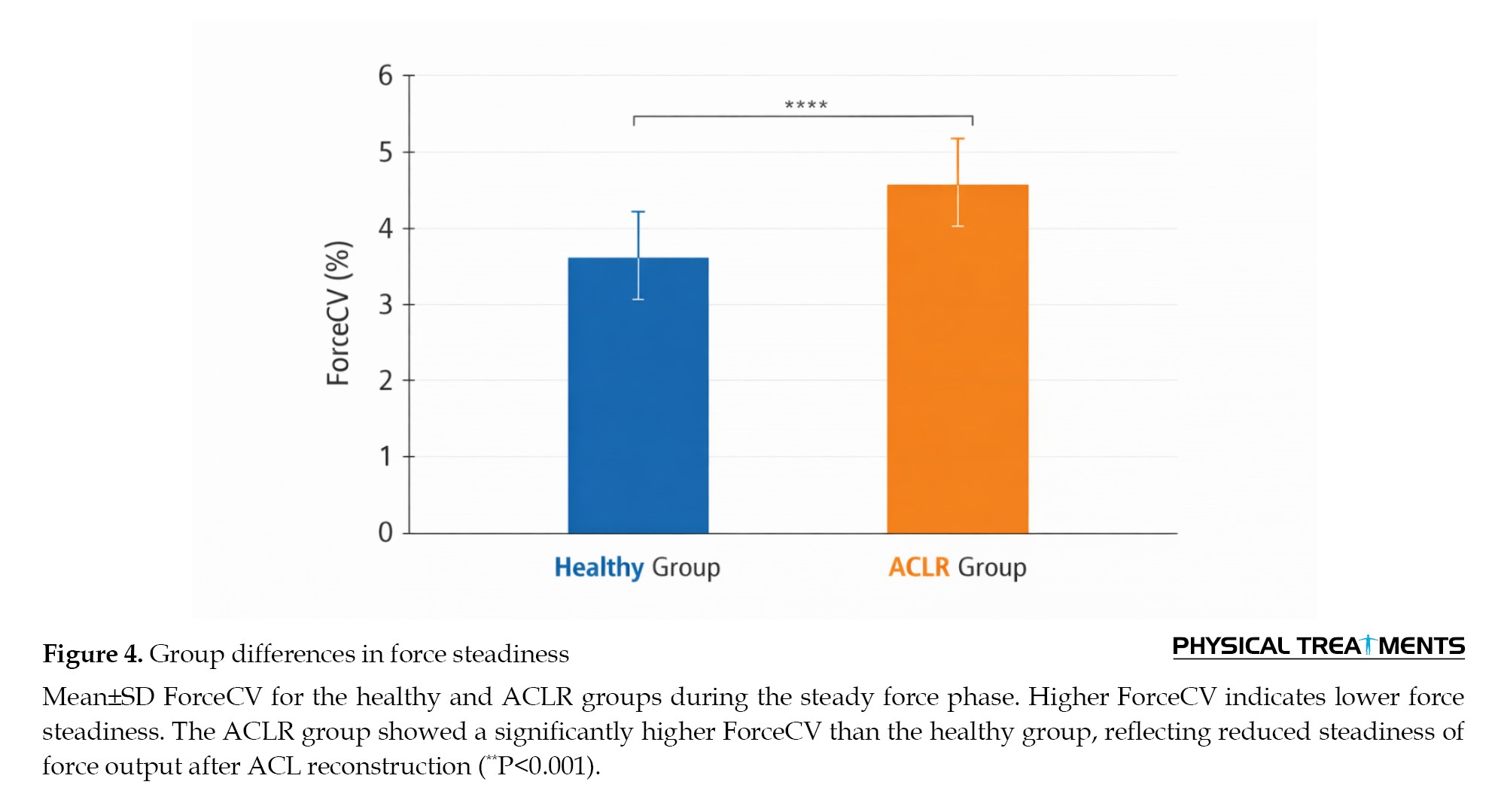
The mean ForceCV in the ACLR group was 4.5±0.7%, compared to 3.0±0.7% in the healthy group. This corresponds to an absolute difference of approximately +1.5 percentage points (ACLR minus healthy), which was statistically significant (P<0.001). The effect size for this difference was very large (Cohen’s d≈2.14), indicating a substantial reduction in force steadiness in the ACLR group relative to healthy controls. In practical terms, athletes with ACL reconstruction were less steady in maintaining the target force, showing more fluctuation in force output. Figure 4 presents a visual comparison of group mean ForceCV values, illustrating the lower steadiness (higher ForceCV) in the ACLR group.
Group differences in interlimb asymmetry and associations
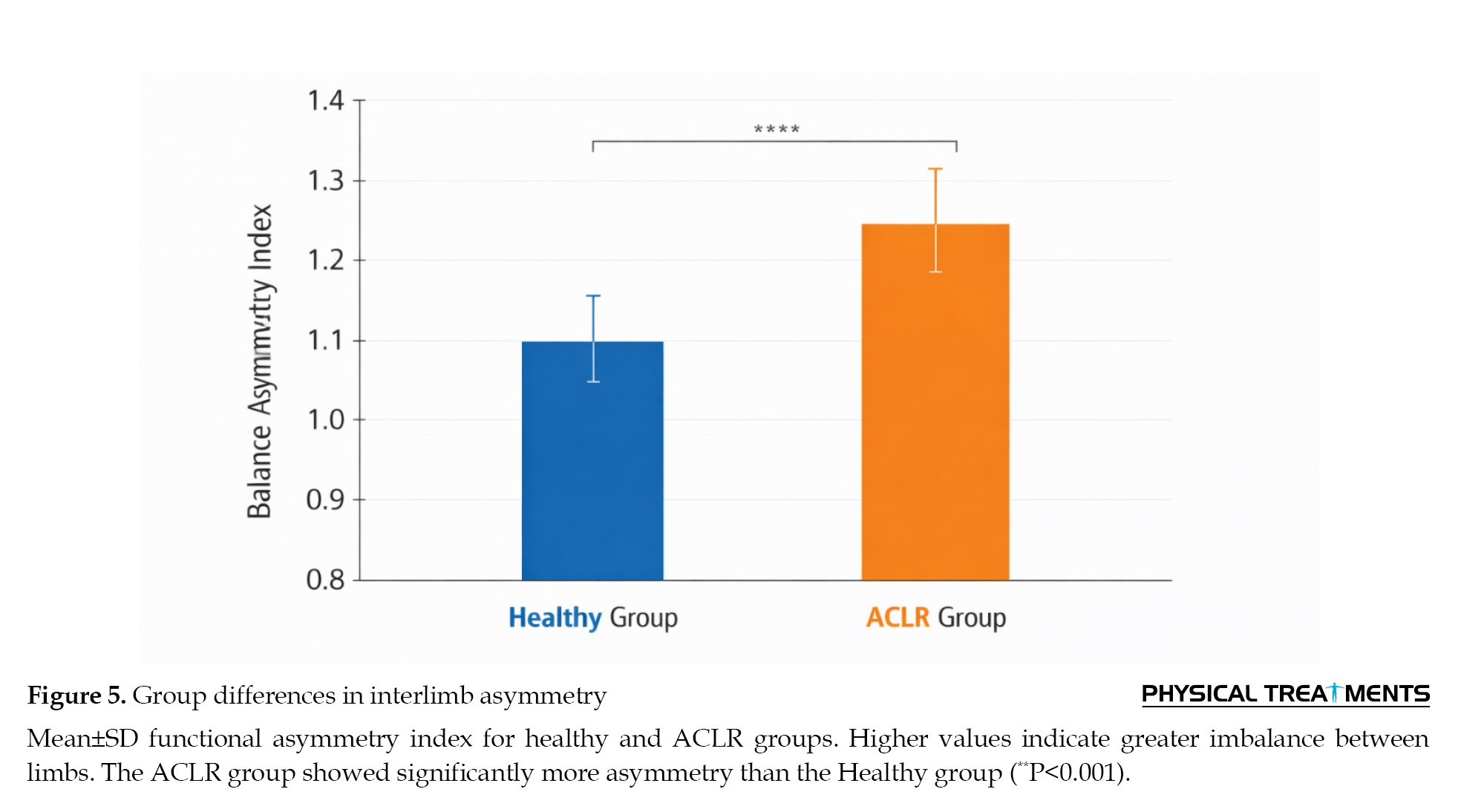
Interlimb functional asymmetry was quantified using a functional asymmetry ratio, where 1.0 denotes perfect symmetry between limbs. The ratio was computed as the higher limb value divided by the lower-limb value (higher/lower) for the task-level performance metric; therefore, values >1.0 indicate greater between-limb imbalance. As shown in Table 2, the healthy group had an asymmetry ratio of 1.00±0.11, whereas the ACLR group had a significantly higher asymmetry ratio of 1.30±0.11. This between-group difference was statistically significant (P<0.001) and associated with a very large effect size (d=2.73). Figure 5 illustrates this group difference, with a higher asymmetry ratio in the ACLR group, indicating greater interlimb imbalance during the task.
Discussion
The present findings were consistent with the proposed hypotheses. Specifically, compared with healthy individuals, athletes following ACL reconstruction with a hamstring graft demonstrated lower CMC in the beta- and gamma-band in the reconstructed limb, greater variability in isometric force control (higher ForceCV), and greater interlimb functional asymmetry during task execution [2, 19]. Collectively, these results suggest that neuromuscular control characteristics differ between reconstructed and healthy limbs, even after completion of rehabilitation and return-to-sport.
Rather than implying causality, these patterns may reflect persistent alterations in neuromuscular organization following ACL reconstruction, which are associated with interlimb asymmetry during motor performance. Such findings are consistent with previous evidence indicating that structural restoration does not necessarily correspond to complete functional recovery, and that many athletes do not return to their pre-injury performance level after ACL reconstruction [2]. Contemporary return to sport frameworks further emphasize that recovery is multidimensional, encompassing physical, skill-based, and psychological components and that meeting conventional clearance criteria can coexist with subtle neuromuscular differences relevant to performance and reinjury risk [19].
Reduced cortico-semitendinosus coherence in the beta and gamma frequency bands in the reconstructed limb is consistent with altered functional connectivity between cortical motor regions and hamstring musculature following ACL reconstruction. Beta-band coherence is commonly interpreted as reflecting the contribution of cortical oscillations to the regulation of steady motor output [13, 14]; therefore, reduced beta coherence may indicate less synchronized corticospinal communication between cortical drive and the semitendinosus motor pool during sustained force production. Similarly, gamma-band coherence, often associated with faster and more integrated sensorimotor processing, was reduced in the involved limb and may reflect differences in the integration of sensory input with motor commands during task execution.
Importantly, these observations should not be interpreted as solely attributable to ACL reconstruction itself. Alternative explanations should be considered, including changes in proximal motor control, compensatory recruitment strategies involving adjacent muscle groups, or task-specific adaptations that reduce reliance on the reconstructed limb. In addition, altered corticomuscular coupling patterns may reflect adaptive neural strategies aimed at maintaining task performance despite residual mechanical or sensory constraints. These interpretations are consistent with evidence indicating that ACL injury and reconstruction are associated with altered afferent signaling and sensorimotor control, including changes in proprioceptive processing related to ligament mechanoreception and joint sensory function [6]. More recent work highlights neuroplastic adaptations after ACL injury and advocates for rehabilitation strategies that explicitly address altered neural control [8]. In line with this, a recent systematic review synthesizing neuroimaging findings after ACLR supports the notion that changes in brain structure/activation characteristics can persist postoperatively and may have clinical implications for motor control and rehabilitation design [20]. Moreover, nonlinear/dynamical approaches have shown meaningful between-limb asymmetries in brain-muscle coordination after ACLR, supporting the interpretation that neuromuscular coupling can remain disrupted even after return-to-sport [17].
Reduced force steadiness and increased ForceCV in the ACLR group constituted another key finding. Athletes with ACLR exhibited higher force variability than healthy counterparts, indicating reduced uniformity of force production in the reconstructed limb. Isometric force steadiness reflects the ability of the neuromuscular system to maintain stable output under load; increased ForceCV suggests reduced precision in force regulation and greater involuntary fluctuations in muscle activation.
One plausible contributor is the semitendinosus tendon harvest. A systematic review indicated that hamstring tendon regeneration may occur, but the extent and functional quality of regenerated tissue can be heterogeneous [9]. Importantly, new high-resolution ultrasound evidence (2025) further confirms variability in morphological/structural tendon outcomes after harvest, reinforcing that tissue restoration may be incomplete or inconsistent across individuals [10]. Functionally, persistent hamstring-related deficits have been reported following semitendinosus harvest in ACL surgery [11], and compensatory strategies such as increased reliance on other hamstring components (e.g. biceps femoris) have been demonstrated in athletic populations using muscle functional MRI [12]. Consequently, reduced force steadiness in the reconstructed limb may reflect a combined effect of altered muscle tendon unit properties and persistent changes in neural activation patterns, with potential downstream consequences for fine motor control and stability during sport-specific demands.
Interlimb functional asymmetry represented another important dimension of the results. In the present study, ForceCV and the functional asymmetry index were interpreted as secondary functional correlates that provide contextual insight into corticomuscular interaction patterns, rather than as standalone balance-specific outcomes. The ACLR group exhibited significantly greater asymmetry than the healthy group, indicating that functional load distribution between the reconstructed and contralateral limbs may remain unequal despite rehabilitation completion. Such persistent asymmetry is clinically relevant because neuromuscular control and postural stability deficits have been prospectively linked to second ACL injury risk after ACLR and return to sport [5]. From a return-to-sport perspective, decision rule evidence also suggests that timing and more symmetrical function before return can meaningfully reduce reinjury rates [4].
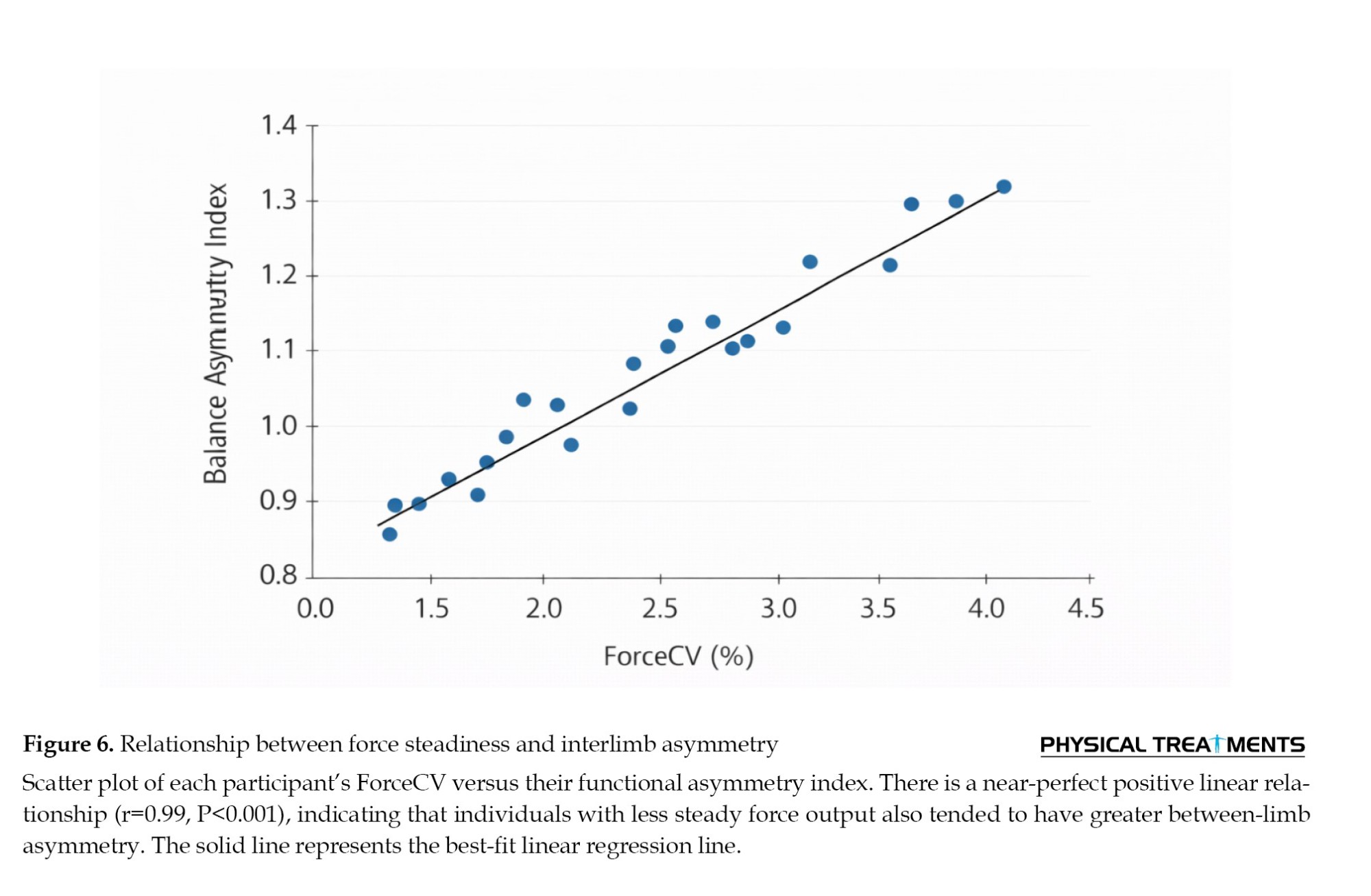
Notably, the exceptionally strong association observed between force output variability and interlimb functional asymmetry indicates that athletes with poorer force control tend to exhibit greater between-limb differences during task execution. However, the exceptionally high correlation should be interpreted with caution given the small sample size and the fact that both measures were derived from the same task context. This finding suggests that force control stability and bilateral functional symmetry may, at least in part, reflect shared central peripheral sensorimotor coordination processes. While contemporary motor control theories recognize that variability can represent adaptability (“motor abundance”), the coexistence of elevated force variability with increased functional asymmetry in the present context is more consistent with reduced control precision rather than beneficial flexibility [18].
Clinical implications
The present findings may have potential implications for rehabilitation strategies and return-to-sport decision-making, within the context of neuromuscular control and interlimb asymmetry assessed in this study. First, altered corticomuscular coupling suggests that rehabilitation should not focus exclusively on peripheral strength restoration, but also include strategies that target neural control and sensory-cognitive integration [8]. Second, the observed association between force steadiness and functional symmetry suggests that the quality of force control is an important characteristic of neuromuscular performance following ACL reconstruction. Within the context of the present findings, this relationship is consistent with the notion that force control during sustained and dynamic tasks may warrant consideration alongside traditional strength- or distance-based measures, such as maximal force output or hop performance. However, the present study did not directly evaluate the effects of specific training interventions; therefore, these interpretations should be considered exploratory.
Third, the presence of interlimb asymmetry in neuromuscular control measures despite return-to-sport is consistent with contemporary perspectives suggesting that return-to-sport evaluation may extend beyond conventional performance metrics alone. Recent reviews have emphasized multidimensional, criteria-based approaches that incorporate physical, psychological, and sport-specific factors to support decision-making and optimize outcomes. The current findings align with these frameworks, while not directly assessing return-to-sport criteria or clinical decision processes [19]. Practically, integrating objective movement quality metrics (e.g. variability, coordination, symmetry) and, where feasible, neurophysiological measures may better detect residual deficits that standard tests miss.
Limitations and future research
Despite the novelty and relevance of this study, several limitations should be considered. Most notably, the study did not include detailed muscle activity quantification beyond the semitendinosus, nor did it incorporate joint-level loading or kinetic measures. As a result, the extent to which the observed corticomuscular coupling patterns relate to broader neuromuscular coordination strategies or to mechanical loading at the knee joint cannot be determined.
The absence of comprehensive multi-muscle activation profiles and joint-level loading measures limits interpretation of how neural-muscular interactions translate into functional movement mechanics. Future studies incorporating multi-muscle EMG and biomechanical assessments of joint loading may help clarify the relationship between corticomuscular coupling, force control, and joint-level function following ACL reconstruction.
The cross-sectional design, with assessments conducted at a single postoperative time point (10 months), limits causal interpretation and does not allow evaluation of recovery trajectories over time. Consequently, it remains unclear whether the observed neuromuscular deficits represent pre-existing characteristics or persistent adaptations following ACL reconstruction. In addition, the relatively small sample size may limit generalizability and reduce sensitivity to detect more subtle neurophysiological effects, particularly for CMC measures that exhibit high inter-individual variability. Furthermore, neuromuscular coupling was assessed using a controlled isometric task targeting the semitendinosus muscle. While this approach enhances measurement reliability, it may not fully reflect neuromuscular behavior during dynamic and sport-specific tasks, such as jumping, landing, or rapid changes of direction. The focus on the medial hamstrings also represents a limitation, as knee joint function depends on coordinated activation across multiple muscle groups. Moreover, because all participants underwent hamstring graft ACL reconstruction, the findings may not be generalizable to other graft types. Finally, the absence of long-term clinical outcome measures, such as return-to-sport success or reinjury incidence, limits interpretation of how the observed neuromuscular differences translate into real-world functional performance or injury risk. Therefore, the present findings should be interpreted as indicators of altered neuromuscular control characteristics rather than predictors of clinical outcomes. Similarly, the lack of dynamic functional tasks and joint-level loading measures constrains interpretation of whether the identified corticomuscular coupling patterns reflect compensatory strategies, task-specific adaptations, or mechanisms directly related to functional demands encountered during sport participation.
Consequently, conclusions regarding the clinical relevance of the observed deficits require caution. Future research adopting longitudinal designs, incorporating dynamic and sport-specific tasks, evaluating different graft types and athlete subgroups, and integrating neurophysiological measures with clinical and biomechanical outcomes is required to clarify the extent to which neuromuscular control characteristics influence recovery trajectories, return-to-sport outcomes, and reinjury risk following ACL reconstruction.
Conclusion
Overall, the present discussion provides a coherent and clinically relevant interpretation of the study findings. Integrating evidence from neurophysiology, motor control, and related clinical literature, the results are consistent with the presence of persistent alterations in neuromuscular control characteristics following ACL reconstruction with a hamstring graft. These interpretations are offered within the context of the study’s cross-sectional design and measurement scope, and therefore reflect associations rather than definitive evidence of impairment. Specifically, the convergence of reduced CMC, increased force output variability, and greater interlimb asymmetry is consistent with measurable differences in neuromuscular control assessed in the present study, beyond peripheral or structural characteristics alone. Importantly, these findings indicate that such differences can be detected after completion of rehabilitation and return-to-sport, within the scope of the neurophysiological and task-level measures evaluated here.
Such deficits are likely to contribute to persistent asymmetries and compromised movement quality, which may not be adequately captured by traditional strength- or performance-based RTS criteria. By framing force steadiness and functional symmetry as interconnected manifestations of neuromuscular control quality, this study highlights a unifying mechanism that may underlie ongoing functional limitations and elevated reinjury risk in athletes following ACL reconstruction. From a broader perspective, the results reinforce the growing recognition that successful ACL rehabilitation requires more than restoration of muscle strength or joint stability. Addressing neural control, coordination, and movement quality is essential for achieving truly symmetrical and robust functional recovery, supporting a shift toward more neurologically informed rehabilitation and assessment strategies.
Ethical Considerations
Compliance with ethical guidelines
This study was approved by the Ethics Committee of Bu Ali Sina University, Hamedan, Iran (Code: IR.BASU.REC.1404.019). All procedures were conducted in accordance with the Declaration of Helsinki. Written informed consent was obtained from all participants prior to data collection. For participants younger than 18 years, consent was obtained from a parent/guardian in addition to participant assent.
Funding
This research did not receive any grant from funding agencies in the public, commercial, or non-profit sectors.
Authors' contributions
Conceptualization, methodology, and manuscript drafting: Sajjad Abdollahi; Study design and data collection: Mehrdad Anbarian; Data analysis, visualization, and interpretation: Rahman Sheikhhoseini; review the manuscript and final approval: All authors.
Conflict of interest
The authors declared no conflicts of interest.
Acknowledgments
The authors thank the athletes for their participation and the coaches and club staff for their cooperation during data collection. The authors also acknowledge the assistance of the research team members who contributed to data acquisition and data organization.
Full-Text: (10 Views)
Introduction
Anterior cruciate ligament reconstruction (ACLR) is routinely performed to restore knee stability and support return to sports after ACL rupture, particularly in athletes exposed to high-demand actions, such as cutting, pivoting, and rapid deceleration [1, 2]. Among graft options, hamstring tendon autografts, most commonly involving the semitendinosus, alone or combined with the gracilis, remain widely used in clinical practice [3]. Nevertheless, a substantial proportion of athletes report ongoing functional limitations after ACLR, and the risk of subsequent injury remains elevated, indicating that successful structural restoration does not always equate to full functional recovery [2, 4]. These persistent problems often include altered neuromuscular control and interlimb asymmetries that may remain evident even after completion of formal rehabilitation and return-to-sport testing [4, 5].
Beyond its mechanical contribution to knee stability, ACL injury and subsequent reconstruction can disrupt sensorimotor function through changes in proprioceptive input and central motor control [6, 7]. The ACL contains mechanoreceptors that contribute to afferent signaling and sensorimotor regulation; disruption of these pathways has been linked to altered reflexive activation patterns and impaired movement coordination [7, 8]. Growing evidence suggests that ACL injury is associated with neurophysiological adaptations, including changes in cortical excitability and sensorimotor integration, which may influence motor planning and coordination during athletic tasks [8]. Together, these findings support the view that ACLR recovery involves central and peripheral adaptations rather than purely peripheral restoration.
This perspective may be especially relevant in hamstring graft ACLR because tendon harvesting directly involves the semitendinosus muscle tendon unit. The semitendinosus is not only clinically relevant as a graft source but also functionally important for dynamic knee stabilization as part of the hamstring group. Evidence from imaging and systematic reviews indicates that semitendinosus tendon regeneration after harvest is common but variable in quality and completeness, with ongoing remodeling and heterogeneous structural outcomes across individuals [9, 10]. Correspondingly, persistent hamstring-related strength deficits and asymmetries have been reported after hamstring graft ACLR, potentially affecting movement strategies in athletic tasks [11]. In some athletes, compensatory patterns may emerge, including greater reliance on other hamstring components (e.g. biceps femoris) to offset semitendinosus alterations, which may further contribute to interlimb differences in motor control [12].
Within this context, cortico-muscular interactions provide a mechanistic framework for examining how the central nervous system couples with peripheral muscle activity during movement [13, 14]. Measures such as cortico-muscular coherence (CMC) and related coupling metrics have been widely used to characterize functional connectivity between motor cortical activity and muscle activation and are sensitive to task demands, movement precision, and neuromuscular integrity [15, 16]. Importantly, emerging nonlinear approaches have further demonstrated that cortico-muscular dynamics can reveal between-limb differences in motor control following ACL reconstruction, highlighting the potential value of coupling-based analyses for understanding post-ACLR asymmetry [17].
A persistent clinical challenge after ACLR is inter-limb asymmetry, commonly assessed using strength measures, hop tests, and biomechanical metrics, and consistently associated with risk of subsequent injury and incomplete return to previous performance levels [4, 5]. However, limb asymmetry is unlikely to be explained by peripheral factors alone; it may also reflect altered central-peripheral coordination and differences in neural strategies used to control the operated limb compared to the contralateral side [8]. Despite increasing recognition of these mechanisms, semitendinosus-specific investigations that integrate cortical muscle coupling with interlimb asymmetry in athletes following hamstring graft ACLR remain limited.
A multilevel approach is well suited to address this gap because motor behavior arises from dynamic interactions among cortical processes, neural drive to the musculature, and peripheral motor output rather than from isolated subsystems [18]. Accordingly, evaluating cortico-semitendinosus interactions alongside inter-limb asymmetry may provide a more comprehensive account of how hamstring graft ACLR influences central-peripheral coordination and may help connect neurophysiological adaptations to clinically meaningful functional outcomes.
Therefore, this study aimed to provide a multilevel characterization of cortico-semitendinosus interactions and inter-limb asymmetry in athletes following hamstring graft ACL reconstruction. It was hypothesized that athletes after hamstring graft ACLR would demonstrate altered cortico-semitendinosus coupling accompanied by persistent inter-limb asymmetry, reflecting disrupted coordination between central and peripheral components of the motor system.
Materials and Methods
Study design
This study adopted a cross-sectional, observational design to examine corticomuscular interactions and interlimb asymmetry in athletes. Consequently, the findings are limited to differences observed at a single time point and do not permit causal interpretation. Importantly, interlimb asymmetry prior to injury was not available, and therefore the present results cannot determine whether the observed asymmetries existed before ACL injury or developed following ACLR.
Although limb dominance was considered in the healthy group, the interlimb differences observed in the ACLR group cannot be attributed exclusively to ACLR and may reflect pre-existing or sport-specific dominance patterns. These factors were not controlled in the present study and therefore limited the interpretation of the observed corticomuscular coupling patterns, rather than providing evidence of ACLR-specific neural adaptations.
All measurements were performed under standardized conditions without experimental manipulation or intervention. Accordingly, the findings should be interpreted strictly as descriptive characteristics of neuromuscular organization in athletes following ACL reconstruction, while recognizing that longitudinal or pre-injury study designs are required to clarify the origin of the observed asymmetry and corticomuscular coupling patterns.
Participants
Athletes with a history of ACLR using a hamstring tendon autograft (ACLR group) and healthy athletes with no history of ACL injury (healthy group) were recruited to participate in this study. ACLR status was confirmed through self-reported medical history and verification of surgical details (graft type and date of surgery). All ACLR participants had completed formal postoperative rehabilitation and returned to regular sports participation at the time of testing. Healthy athletes reported no previous ACL injury or knee surgery and no current lower-limb musculoskeletal injury.
All participants were physically active at the time of testing and engaged in regular sports training or competitive activities.
To be included in the ACLR group, participants were required to have undergone unilateral ACLR using a hamstring tendon autograft (semitendinosus with or without gracilis), completed formal rehabilitation, and returned to regular sports participation at the time of data collection. ACLR status was confirmed based on self-reported medical history, including confirmation of surgical procedure, graft type, and date of surgery. Testing was conducted at a mean of 10.0±2.0 months post-surgery. This post-surgical timeframe was selected to ensure completion of formal rehabilitation and return to regular physical activity, while allowing for the presence of potential residual neuromuscular adaptations associated with hamstring tendon harvesting and ACL reconstruction.
Participants were excluded if they reported a history of revision ACL surgery, concomitant ligament injuries requiring surgical intervention, or any additional lower limb surgery affecting either limb.
Healthy participants were included if they had no history of ACL injury, lower extremity surgery, or neurological disorders and were matched to the ACLR group based on general characteristics such as age, sex, and activity level. Exclusion criteria for both groups included any current musculoskeletal injury, pain affecting lower limb function at the time of testing, or known neurological conditions that could influence motor control.
For limb-based analyses, the operated limb was defined as the involved limb in the ACLR group, and the contralateral limb was defined as the uninvolved limb. In the Healthy group, the dominant limb was designated as the involved equivalent limb and the non-dominant limb as the uninvolved equivalent limb. Limb dominance was determined based on the preferred leg used to kick a ball.
All participants provided written informed consent prior to participation, and the study protocol was approved by the local institutional ethics committee in accordance with the Declaration of Helsinki. Assessors were not blinded to group assignment or limb status during data acquisition due to the visible presence of surgical scars and the requirements of electroencephalography (EEG) and electromyography (EMG) electrode placement. However, EEG and EMG preprocessing and cortico-muscular coupling analyses were performed using standardized and automated procedures, and datasets were coded to mask group and limb identity during signal processing and analysis.
Experimental task
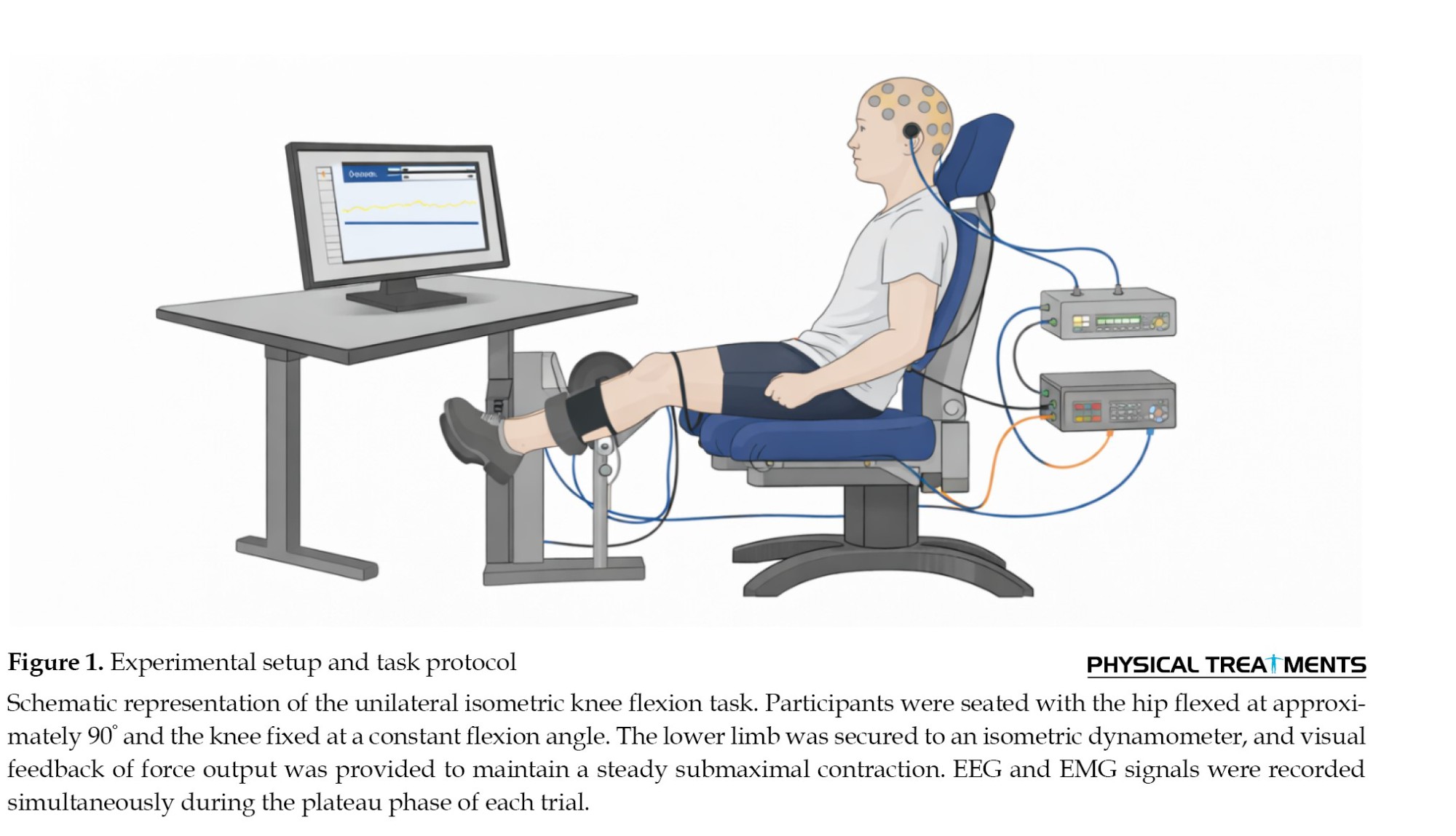
A controlled unilateral isometric knee flexion task was used to elicit stable activation of the semitendinosus muscle while enabling reliable assessment of corticomuscular interactions. The task was intentionally designed to be simple, steady, and highly repeatable to minimize movement-related artifacts and enhance the reliability of EEG-EMG coupling measures.
Participants were seated on an isometric dynamometer with the hip flexed to approximately 90° and the knee fixed at a flexion angle of approximately 30-45°. The tested limb was secured to the dynamometer lever arm to prevent joint movement, ensuring purely isometric force production. The task was performed unilaterally to allow limb-specific analysis and to maximize the involvement of the semitendinosus muscle, which plays a key role in knee flexion and dynamic stabilization following hamstring graft ACLR.
Prior to the experimental trials, maximum voluntary contraction (MVC) was assessed separately for each limb. The target force level for the task was set at a submaximal intensity (20-30% of MVC) to avoid fatigue, excessive force variability, and movement-related EEG artifacts. This submaximal level was selected to promote stable motor output and sustained neuromuscular coupling rather than maximal force generation.
Each trial followed a trapezoidal force profile consisting of a ramp-up phase (2-3 s), a steady plateau phase (6-10 s), and a ramp-down phase (2-3 s). Real-time visual feedback of force output was provided on a monitor positioned at eye level, allowing participants to match and maintain the target force during the plateau phase. The plateau phase was used for subsequent analyses of cortico-semitendinosus interactions and force steadiness. Multiple trials were performed for each limb, with sufficient rest periods between trials to minimize fatigue effects. The order of limb testing was counterbalanced across participants.
This task configuration was selected to ensure consistent and selective activation of the semitendinosus muscle, provide a stable temporal window suitable for corticomuscular coupling analysis, and enhance the reliability of interlimb comparisons by minimizing task-related variability (Figure 1).
Signal preprocessing
EEG and EMG signals were pre-processed using a standardized signal-processing pipeline prior to corticomuscular coupling analyses. EEG recordings were band-pass filtered to remove slow baseline drifts and high-frequency noise. Lower and upper cutoff frequencies were selected based on the physiological frequency range relevant to CMC analysis, with the aim of preserving neural oscillations within the beta (13-30 Hz) and gamma (30-60 Hz) bands while attenuating low-frequency movement-related artifacts and high-frequency non-neural noise. Notch filtering was applied where necessary to suppress power line interference.
EMG signals were high-pass filtered to reduce motion artifacts and low-frequency baseline fluctuations, followed by low-pass filtering to limit high-frequency noise and aliasing prior to envelope extraction and coupling analyses. Filter settings for both EEG and EMG were chosen in accordance with established recommendations in EEG-EMG coupling and CMC literature, ensuring that the selected cutoff frequencies did not distort phase relationships or artificially inflate coherence estimates.
Following filtering, EEG data were re-referenced using a common average reference and visually inspected to identify segments affected by excessive artifacts, including gross movement, electrode detachment, or high-amplitude transients. Artifact-contaminated segments were excluded from further analysis, and only epochs corresponding to the steady force plateau phase of the task were retained for subsequent processing.
Surface EMG from the semitendinosus was band-pass filtered to remove motion artifacts and high-frequency noise and then demeaned to remove DC offsets. EMG quality was verified by confirming a clear task-related activation pattern and the absence of signal saturation or discontinuities. When required for coupling estimation, EMG was rectified, and its envelope was derived using low-pass filtering to provide a stable amplitude representation while preserving physiologically meaningful modulation. All preprocessing steps, parameter settings, and epoch selection criteria were applied identically across participants and limbs to ensure comparability and reproducibility of cortico-semitendinosus interaction estimates.
Cortico-semitendinosus interaction analysis
Cortico-semitendinosus interactions were characterized using CMC to quantify the frequency-specific functional coupling between cortical activity and semitendinosus muscle activation during the steady force plateau phase of the task. EEG signals from sensorimotor regions were paired with the simultaneously recorded semitendinosus EMG, and coupling was estimated separately for each limb.
For each participant and limb, artifact-free plateau epochs were segmented into fixed-length windows with overlap to improve the stability of spectral estimates. Autospectra for EEG and EMG and the corresponding cross-spectrum were computed using Welch’s method. Magnitude squared coherence was then calculated as:
Where and denote the EEG and EMG power spectral densities, respectively, and denotes the cross-spectral density between EEG and EMG at frequency . Coherence values range from 0 to 1, with higher values indicating stronger linear coupling at a given frequency.
Based on established sensorimotor coupling literature and the analytical framework of this study, coherence was summarized within predefined frequency bands relevant to motor control (beta: 13-30 Hz; gamma: 30-60 Hz). For each band, band-averaged coherence and peak coherence were extracted as primary outcomes. To ensure that coupling estimates reflected genuine corticomuscular interactions rather than spurious correlations, coherence was evaluated against a statistical confidence limit derived from the number of independent segments contributing to the estimate, and only values exceeding this limit were considered physiologically meaningful. All analysis steps and parameter settings were applied consistently across participants and limbs.
This approach was selected to provide a mechanistic, descriptive characterization of how sensorimotor cortical oscillations couple with semitendinosus activation and how this coupling differs between limbs and between the ACLR and healthy groups.
Interlimb asymmetry quantification
Interlimb asymmetry was quantified by comparing limb-specific neuromuscular interaction outcomes within each participant. In the ACLR group, the surgically reconstructed limb was defined as the involved limb and the contralateral limb as the uninvolved limb. In the healthy group, the dominant limb was designated as the involved equivalent limb and the non-dominant limb as the uninvolved equivalent limb.
For each cortico-semitendinosus interaction outcome, limb-specific values were extracted separately. In addition to cortico-semitendinosus coupling outcomes, force steadiness was assessed using the coefficient of variation of force (ForceCV) during the same isometric knee flexion task. Because force steadiness reflects the precision of neural drive and the regulation of motor output during sustained contraction, ForceCV was treated as a task-level functional correlate of neuromuscular control rather than as a balance-specific construct. Accordingly, asymmetry was interpreted primarily with respect to Cortico semitendinosus interaction metrics, with ForceCV serving as a secondary functional indicator to contextualize limb-specific control.
Interlimb asymmetry for each outcome was calculated using a normalized asymmetry index to minimize the influence of inter-individual differences in absolute magnitude and enable meaningful within-subject comparisons. The asymmetry index was computed as:
As an exploratory analysis, limb difference values were computed to characterize between-limb patterns across outcomes. Involved and Uninvolved correspond to the limb-specific values for the given outcome (i.e. involved vs. uninvolved in the ACLR group, or involved equivalent vs. uninvolved equivalent in the healthy group). Positive values indicate greater cortico-semitendinosus coupling (or higher task-level values for ForceCV, when applicable) in the involved (or involved equivalent) limb. In contrast, negative values indicate greater values in the uninvolved limb.
No predefined clinical cut-off values or risk-based classifications were applied. Instead, asymmetry was treated as a continuous variable reflecting limb-specific differences in neuromuscular organization. This normalization approach expresses asymmetry relative to the mean bilateral value rather than as an absolute difference, thereby reducing the impact of inter-individual variability and facilitating mechanistic interpretation of limb-specific control strategies. All asymmetry calculations were performed consistently across participants to ensure comparability between groups.
Statistical analysis
Statistical analyses were performed to examine differences in cortico-semitendinosus interaction measures and interlimb asymmetry between groups and limbs. Prior to inferential analyses, all variables were assessed for normality using the Shapiro-Wilk test. Descriptive statistics are reported as Mean±SD.
Limb-based comparisons were conducted using within-subject analyses. A mixed design analysis of variance (ANOVA) was used with group (ACLR, healthy) as the between-subject factor and limb (involved vs. uninvolved) as the within-subject factor. This approach was selected to evaluate group differences, limb differences, and group-by-limb interactions within a unified statistical framework consistent with the descriptive objectives of the study.
When appropriate, post hoc comparisons were performed using paired-sample or independent-samples t-tests. Given the limited sample size and the hypothesis-driven focus on a priori defined frequency bands and outcomes, no formal adjustment for multiple comparisons was applied. Instead, results from secondary and limb difference analyses are explicitly interpreted as exploratory. Effect sizes were calculated to complement P values and to facilitate interpretation of the magnitude of observed effects. Partial eta squared (η²ₚ) was reported for ANOVA effects, and Cohen’s d was reported for pairwise comparisons.
Statistical significance was set a priori at α=0.05. All statistical analyses were conducted using standard statistical software. The results are interpreted as descriptive indicators of group- and limb-related differences rather than as evidence of causal relationships.
Results
Participant characteristics
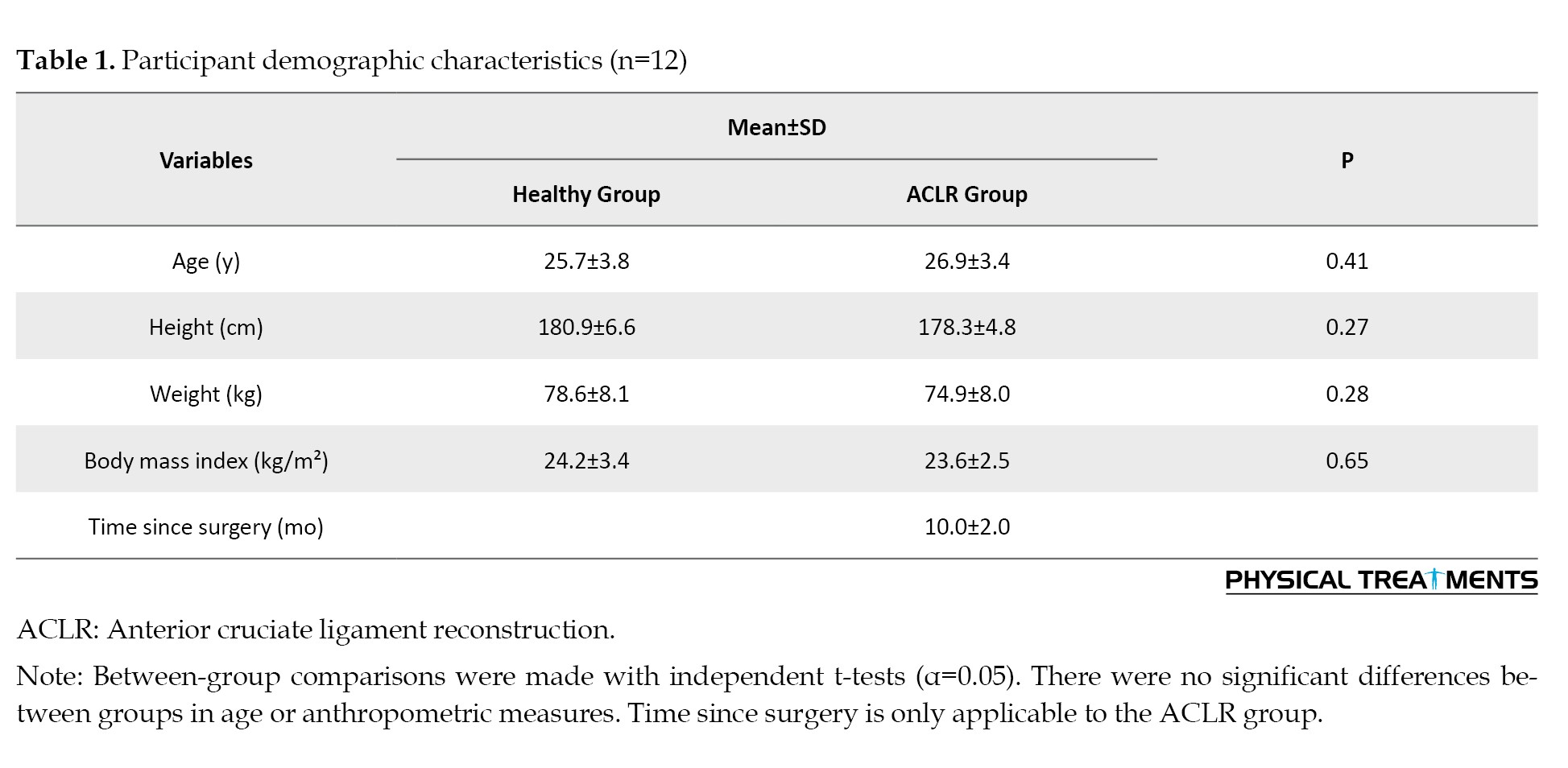
A total of 24 athletes participated in the study, including 12 athletes who underwent unilateral ACLR with a hamstring tendon autograft (ACLR group) and 12 uninjured athletes with no history of ACL injury (healthy group). Table 1 presents descriptive characteristics for each group.
The two groups were similar in age, height, body mass, and body mass index, with no significant between-group differences in these variables (all P>0.05). Athletes in the ACLR group were tested at a mean of 10.0±2.0 months post-surgery.
Task performance and data quality
All participants completed the experimental task as instructed, and no testing sessions were terminated prematurely. Force signals were successfully recorded for all trials, and no trials were excluded due to task non-compliance.
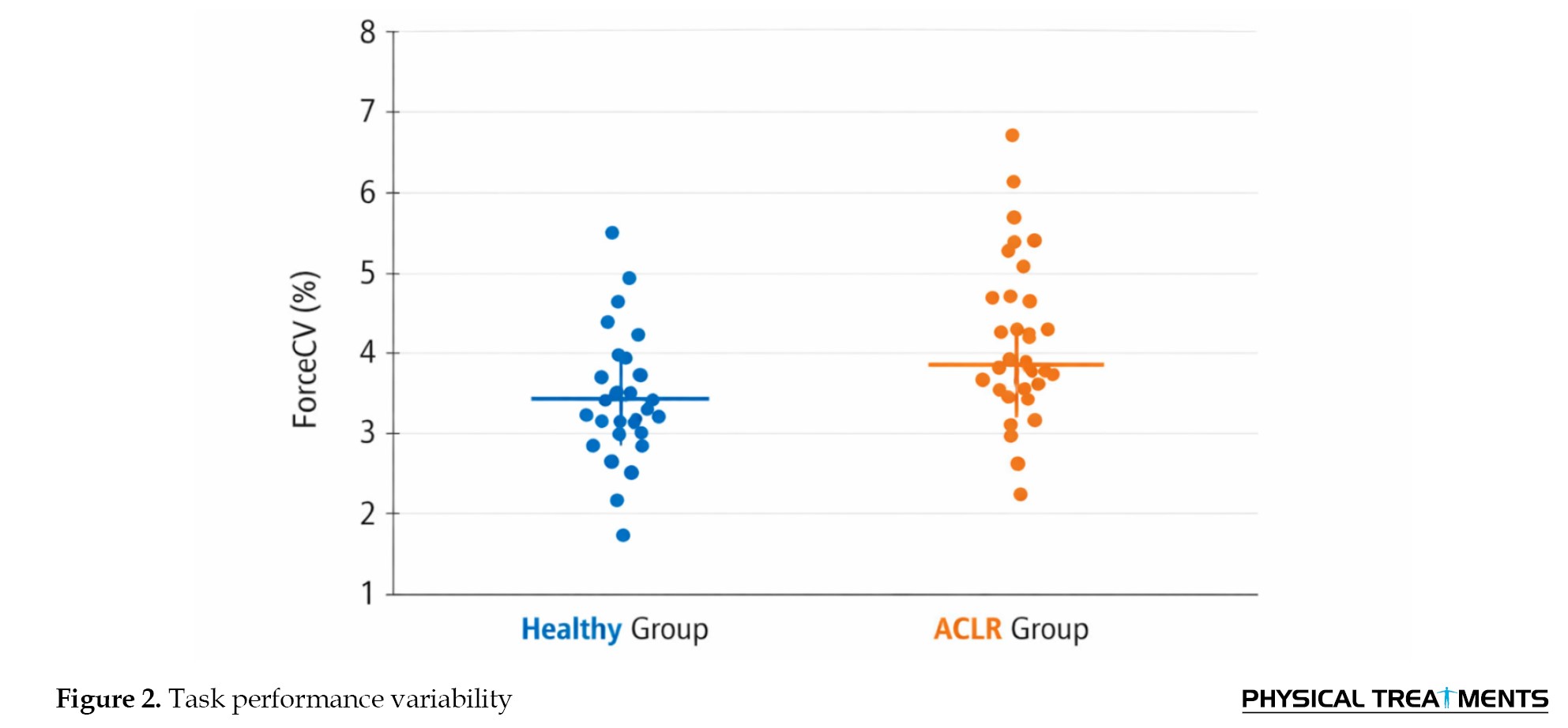
Force steadiness was quantified using the ForceCV. Figure 2 illustrates the distribution of ForceCV values during the steady force plateau phase for the healthy and ACLR groups.
The mean ForceCV was 3.0±0.7% (95% CI, 2.56%, 3.44%) in the healthy group and 4.5±0.7% (95% CI, 4.06%, 4.94%) in the ACLR group. The between-group difference in ForceCV was statistically significant (P<0.001).
Cortico-semitendinosus interaction
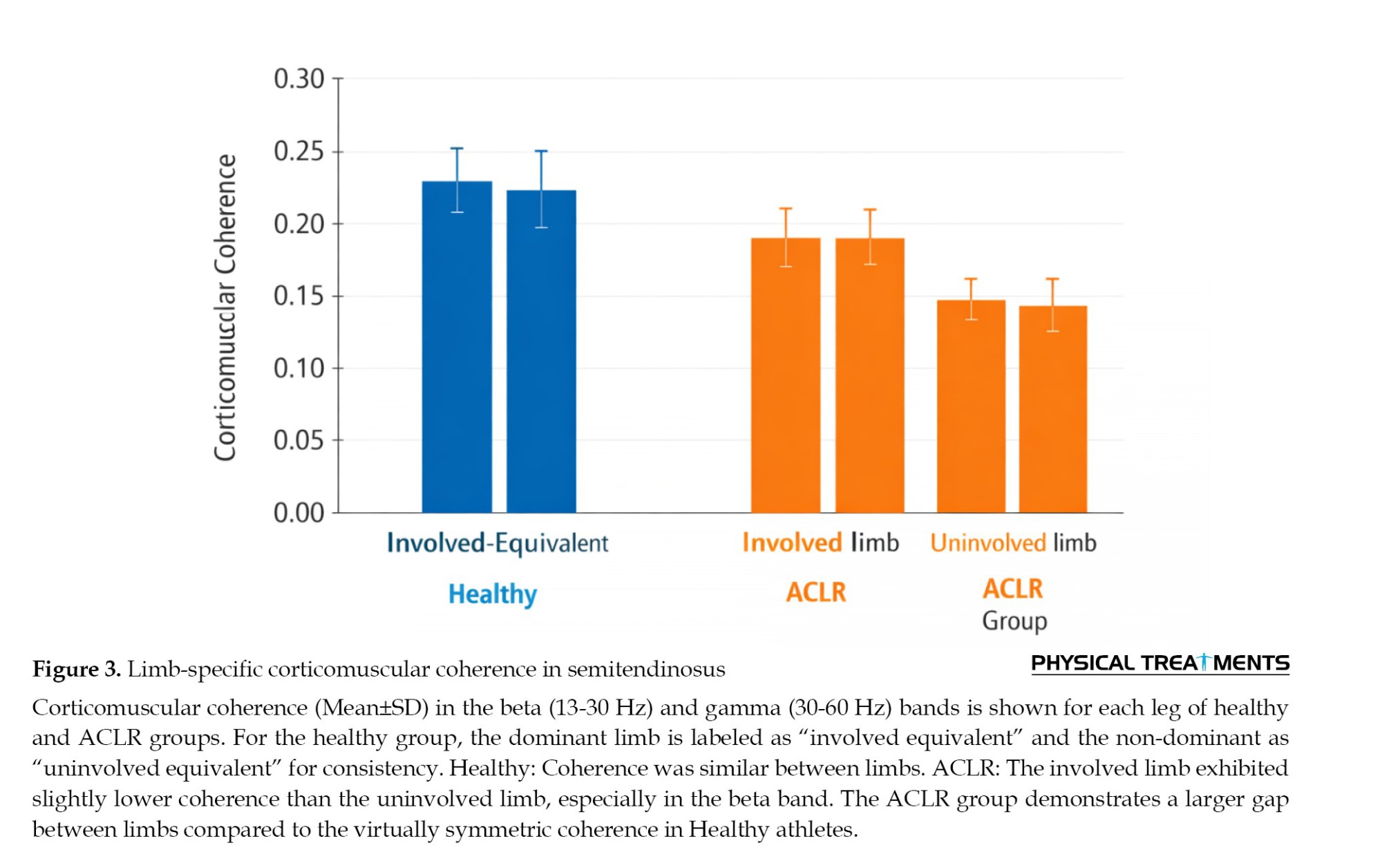
Corticomuscular interaction between the brain and the semitendinosus muscle was assessed using CMC in the beta (13-30 Hz) and gamma (30-60 Hz) frequency bands. We compared CMC for each limb, considering the involved vs. uninvolved limb in the ACLR group and, for an equivalent comparison, the dominant vs. non-dominant limb in the healthy group. Distinct limb-specific CMC patterns emerged in the two groups. In the healthy group, CMC levels were similar between the dominant and non-dominant legs. In contrast, the ACLR group showed noticeable differences between the surgically involved limb and the contralateral (uninvolved) limb. This discrepancy was most pronounced in the beta-band coherence: The ACLR athletes tended to have lower beta-band CMC in their reconstructed (involved) limb than in their uninvolved limb, whereas healthy athletes showed nearly symmetrical beta CMC between legs. A similar but smaller trend was observed in the gamma band. These limb-specific coherence differences suggest altered neuromuscular coupling in the ACLR limb. Figure 3 illustrates these coherence patterns, highlighting that the between-limb difference in CMC was greater in the ACLR group than in the healthy group, particularly for beta frequencies.
Group differences in force steadiness
Group differences in force steadiness were evaluated by comparing the ForceCV between the healthy and ACLR groups. As summarized in Table 2, the ACLR group exhibited significantly greater force output variability during the steady contraction than the healthy group.
The mean ForceCV in the ACLR group was 4.5±0.7%, compared to 3.0±0.7% in the healthy group. This corresponds to an absolute difference of approximately +1.5 percentage points (ACLR minus healthy), which was statistically significant (P<0.001). The effect size for this difference was very large (Cohen’s d≈2.14), indicating a substantial reduction in force steadiness in the ACLR group relative to healthy controls. In practical terms, athletes with ACL reconstruction were less steady in maintaining the target force, showing more fluctuation in force output. Figure 4 presents a visual comparison of group mean ForceCV values, illustrating the lower steadiness (higher ForceCV) in the ACLR group.
Group differences in interlimb asymmetry and associations
Interlimb functional asymmetry was quantified using a functional asymmetry ratio, where 1.0 denotes perfect symmetry between limbs. The ratio was computed as the higher limb value divided by the lower-limb value (higher/lower) for the task-level performance metric; therefore, values >1.0 indicate greater between-limb imbalance. As shown in Table 2, the healthy group had an asymmetry ratio of 1.00±0.11, whereas the ACLR group had a significantly higher asymmetry ratio of 1.30±0.11. This between-group difference was statistically significant (P<0.001) and associated with a very large effect size (d=2.73). Figure 5 illustrates this group difference, with a higher asymmetry ratio in the ACLR group, indicating greater interlimb imbalance during the task.
Across all participants (n=24), ForceCV was strongly positively associated with the functional asymmetry ratio (Pearson r=0.99, P<0.001), such that greater force variability (reduced steadiness) corresponded to greater interlimb imbalance. Figure 6 presents this relationship, demonstrating a near-linear increase in asymmetry ratio with increasing ForceCV.
Discussion
The present findings were consistent with the proposed hypotheses. Specifically, compared with healthy individuals, athletes following ACL reconstruction with a hamstring graft demonstrated lower CMC in the beta- and gamma-band in the reconstructed limb, greater variability in isometric force control (higher ForceCV), and greater interlimb functional asymmetry during task execution [2, 19]. Collectively, these results suggest that neuromuscular control characteristics differ between reconstructed and healthy limbs, even after completion of rehabilitation and return-to-sport.
Rather than implying causality, these patterns may reflect persistent alterations in neuromuscular organization following ACL reconstruction, which are associated with interlimb asymmetry during motor performance. Such findings are consistent with previous evidence indicating that structural restoration does not necessarily correspond to complete functional recovery, and that many athletes do not return to their pre-injury performance level after ACL reconstruction [2]. Contemporary return to sport frameworks further emphasize that recovery is multidimensional, encompassing physical, skill-based, and psychological components and that meeting conventional clearance criteria can coexist with subtle neuromuscular differences relevant to performance and reinjury risk [19].
Reduced cortico-semitendinosus coherence in the beta and gamma frequency bands in the reconstructed limb is consistent with altered functional connectivity between cortical motor regions and hamstring musculature following ACL reconstruction. Beta-band coherence is commonly interpreted as reflecting the contribution of cortical oscillations to the regulation of steady motor output [13, 14]; therefore, reduced beta coherence may indicate less synchronized corticospinal communication between cortical drive and the semitendinosus motor pool during sustained force production. Similarly, gamma-band coherence, often associated with faster and more integrated sensorimotor processing, was reduced in the involved limb and may reflect differences in the integration of sensory input with motor commands during task execution.
Importantly, these observations should not be interpreted as solely attributable to ACL reconstruction itself. Alternative explanations should be considered, including changes in proximal motor control, compensatory recruitment strategies involving adjacent muscle groups, or task-specific adaptations that reduce reliance on the reconstructed limb. In addition, altered corticomuscular coupling patterns may reflect adaptive neural strategies aimed at maintaining task performance despite residual mechanical or sensory constraints. These interpretations are consistent with evidence indicating that ACL injury and reconstruction are associated with altered afferent signaling and sensorimotor control, including changes in proprioceptive processing related to ligament mechanoreception and joint sensory function [6]. More recent work highlights neuroplastic adaptations after ACL injury and advocates for rehabilitation strategies that explicitly address altered neural control [8]. In line with this, a recent systematic review synthesizing neuroimaging findings after ACLR supports the notion that changes in brain structure/activation characteristics can persist postoperatively and may have clinical implications for motor control and rehabilitation design [20]. Moreover, nonlinear/dynamical approaches have shown meaningful between-limb asymmetries in brain-muscle coordination after ACLR, supporting the interpretation that neuromuscular coupling can remain disrupted even after return-to-sport [17].
Reduced force steadiness and increased ForceCV in the ACLR group constituted another key finding. Athletes with ACLR exhibited higher force variability than healthy counterparts, indicating reduced uniformity of force production in the reconstructed limb. Isometric force steadiness reflects the ability of the neuromuscular system to maintain stable output under load; increased ForceCV suggests reduced precision in force regulation and greater involuntary fluctuations in muscle activation.
One plausible contributor is the semitendinosus tendon harvest. A systematic review indicated that hamstring tendon regeneration may occur, but the extent and functional quality of regenerated tissue can be heterogeneous [9]. Importantly, new high-resolution ultrasound evidence (2025) further confirms variability in morphological/structural tendon outcomes after harvest, reinforcing that tissue restoration may be incomplete or inconsistent across individuals [10]. Functionally, persistent hamstring-related deficits have been reported following semitendinosus harvest in ACL surgery [11], and compensatory strategies such as increased reliance on other hamstring components (e.g. biceps femoris) have been demonstrated in athletic populations using muscle functional MRI [12]. Consequently, reduced force steadiness in the reconstructed limb may reflect a combined effect of altered muscle tendon unit properties and persistent changes in neural activation patterns, with potential downstream consequences for fine motor control and stability during sport-specific demands.
Interlimb functional asymmetry represented another important dimension of the results. In the present study, ForceCV and the functional asymmetry index were interpreted as secondary functional correlates that provide contextual insight into corticomuscular interaction patterns, rather than as standalone balance-specific outcomes. The ACLR group exhibited significantly greater asymmetry than the healthy group, indicating that functional load distribution between the reconstructed and contralateral limbs may remain unequal despite rehabilitation completion. Such persistent asymmetry is clinically relevant because neuromuscular control and postural stability deficits have been prospectively linked to second ACL injury risk after ACLR and return to sport [5]. From a return-to-sport perspective, decision rule evidence also suggests that timing and more symmetrical function before return can meaningfully reduce reinjury rates [4].
Notably, the exceptionally strong association observed between force output variability and interlimb functional asymmetry indicates that athletes with poorer force control tend to exhibit greater between-limb differences during task execution. However, the exceptionally high correlation should be interpreted with caution given the small sample size and the fact that both measures were derived from the same task context. This finding suggests that force control stability and bilateral functional symmetry may, at least in part, reflect shared central peripheral sensorimotor coordination processes. While contemporary motor control theories recognize that variability can represent adaptability (“motor abundance”), the coexistence of elevated force variability with increased functional asymmetry in the present context is more consistent with reduced control precision rather than beneficial flexibility [18].
Clinical implications
The present findings may have potential implications for rehabilitation strategies and return-to-sport decision-making, within the context of neuromuscular control and interlimb asymmetry assessed in this study. First, altered corticomuscular coupling suggests that rehabilitation should not focus exclusively on peripheral strength restoration, but also include strategies that target neural control and sensory-cognitive integration [8]. Second, the observed association between force steadiness and functional symmetry suggests that the quality of force control is an important characteristic of neuromuscular performance following ACL reconstruction. Within the context of the present findings, this relationship is consistent with the notion that force control during sustained and dynamic tasks may warrant consideration alongside traditional strength- or distance-based measures, such as maximal force output or hop performance. However, the present study did not directly evaluate the effects of specific training interventions; therefore, these interpretations should be considered exploratory.
Third, the presence of interlimb asymmetry in neuromuscular control measures despite return-to-sport is consistent with contemporary perspectives suggesting that return-to-sport evaluation may extend beyond conventional performance metrics alone. Recent reviews have emphasized multidimensional, criteria-based approaches that incorporate physical, psychological, and sport-specific factors to support decision-making and optimize outcomes. The current findings align with these frameworks, while not directly assessing return-to-sport criteria or clinical decision processes [19]. Practically, integrating objective movement quality metrics (e.g. variability, coordination, symmetry) and, where feasible, neurophysiological measures may better detect residual deficits that standard tests miss.
Limitations and future research
Despite the novelty and relevance of this study, several limitations should be considered. Most notably, the study did not include detailed muscle activity quantification beyond the semitendinosus, nor did it incorporate joint-level loading or kinetic measures. As a result, the extent to which the observed corticomuscular coupling patterns relate to broader neuromuscular coordination strategies or to mechanical loading at the knee joint cannot be determined.
The absence of comprehensive multi-muscle activation profiles and joint-level loading measures limits interpretation of how neural-muscular interactions translate into functional movement mechanics. Future studies incorporating multi-muscle EMG and biomechanical assessments of joint loading may help clarify the relationship between corticomuscular coupling, force control, and joint-level function following ACL reconstruction.
The cross-sectional design, with assessments conducted at a single postoperative time point (10 months), limits causal interpretation and does not allow evaluation of recovery trajectories over time. Consequently, it remains unclear whether the observed neuromuscular deficits represent pre-existing characteristics or persistent adaptations following ACL reconstruction. In addition, the relatively small sample size may limit generalizability and reduce sensitivity to detect more subtle neurophysiological effects, particularly for CMC measures that exhibit high inter-individual variability. Furthermore, neuromuscular coupling was assessed using a controlled isometric task targeting the semitendinosus muscle. While this approach enhances measurement reliability, it may not fully reflect neuromuscular behavior during dynamic and sport-specific tasks, such as jumping, landing, or rapid changes of direction. The focus on the medial hamstrings also represents a limitation, as knee joint function depends on coordinated activation across multiple muscle groups. Moreover, because all participants underwent hamstring graft ACL reconstruction, the findings may not be generalizable to other graft types. Finally, the absence of long-term clinical outcome measures, such as return-to-sport success or reinjury incidence, limits interpretation of how the observed neuromuscular differences translate into real-world functional performance or injury risk. Therefore, the present findings should be interpreted as indicators of altered neuromuscular control characteristics rather than predictors of clinical outcomes. Similarly, the lack of dynamic functional tasks and joint-level loading measures constrains interpretation of whether the identified corticomuscular coupling patterns reflect compensatory strategies, task-specific adaptations, or mechanisms directly related to functional demands encountered during sport participation.
Consequently, conclusions regarding the clinical relevance of the observed deficits require caution. Future research adopting longitudinal designs, incorporating dynamic and sport-specific tasks, evaluating different graft types and athlete subgroups, and integrating neurophysiological measures with clinical and biomechanical outcomes is required to clarify the extent to which neuromuscular control characteristics influence recovery trajectories, return-to-sport outcomes, and reinjury risk following ACL reconstruction.
Conclusion
Overall, the present discussion provides a coherent and clinically relevant interpretation of the study findings. Integrating evidence from neurophysiology, motor control, and related clinical literature, the results are consistent with the presence of persistent alterations in neuromuscular control characteristics following ACL reconstruction with a hamstring graft. These interpretations are offered within the context of the study’s cross-sectional design and measurement scope, and therefore reflect associations rather than definitive evidence of impairment. Specifically, the convergence of reduced CMC, increased force output variability, and greater interlimb asymmetry is consistent with measurable differences in neuromuscular control assessed in the present study, beyond peripheral or structural characteristics alone. Importantly, these findings indicate that such differences can be detected after completion of rehabilitation and return-to-sport, within the scope of the neurophysiological and task-level measures evaluated here.
Such deficits are likely to contribute to persistent asymmetries and compromised movement quality, which may not be adequately captured by traditional strength- or performance-based RTS criteria. By framing force steadiness and functional symmetry as interconnected manifestations of neuromuscular control quality, this study highlights a unifying mechanism that may underlie ongoing functional limitations and elevated reinjury risk in athletes following ACL reconstruction. From a broader perspective, the results reinforce the growing recognition that successful ACL rehabilitation requires more than restoration of muscle strength or joint stability. Addressing neural control, coordination, and movement quality is essential for achieving truly symmetrical and robust functional recovery, supporting a shift toward more neurologically informed rehabilitation and assessment strategies.
Ethical Considerations
Compliance with ethical guidelines
This study was approved by the Ethics Committee of Bu Ali Sina University, Hamedan, Iran (Code: IR.BASU.REC.1404.019). All procedures were conducted in accordance with the Declaration of Helsinki. Written informed consent was obtained from all participants prior to data collection. For participants younger than 18 years, consent was obtained from a parent/guardian in addition to participant assent.
Funding
This research did not receive any grant from funding agencies in the public, commercial, or non-profit sectors.
Authors' contributions
Conceptualization, methodology, and manuscript drafting: Sajjad Abdollahi; Study design and data collection: Mehrdad Anbarian; Data analysis, visualization, and interpretation: Rahman Sheikhhoseini; review the manuscript and final approval: All authors.
Conflict of interest
The authors declared no conflicts of interest.
Acknowledgments
The authors thank the athletes for their participation and the coaches and club staff for their cooperation during data collection. The authors also acknowledge the assistance of the research team members who contributed to data acquisition and data organization.
References
- Griffin LY, Albohm MJ, Arendt EA, Bahr R, Beynnon BD, Demaio M, et al. Understanding and preventing noncontact anterior cruciate ligament injuries: A review of the Hunt Valley II meeting, January 2005. The American Journal of Sports Medicine. 2006; 34(9):1512-32. [DOI:10.1177/0363546506286866] [PMID]
- Ardern CL, Webster KE, Taylor NF, Feller JA. Return to sport following anterior cruciate ligament reconstruction surgery: A systematic review and meta analysis of the state of play. British Journal of Sports Medicine. 2011; 45(7):596-606. [DOI:10.1136/bjsm.2010.076364] [PMID]
- Olivos Meza A, Suarez Ahedo C, Jiménez Aroche CA, Pantanali N, Valdez Chávez MV, Pérez Jiménez FJ, et al. Anatomic considerations in hamstring tendon harvesting for ligament reconstruction. Arthroscopy Techniques. 2020; 9(1):e191-8. [DOI:10.1016/j.eats.2019.09.021] [PMID] [PMCID]
- Grindem H, Snyder Mackler L, Moksnes H, Engebretsen L, Risberg MA. Simple decision rules can reduce reinjury risk by 84% after ACL reconstruction: The delaware oslo ACL cohort study. British Journal of Sports Medicine. 2016; 50(13):804-8. [DOI:10.1136/bjsports-2016-096031] [PMID] [PMCID]
- Paterno MV, Schmitt LC, Ford KR, Rauh MJ, Myer GD, Huang B, et al. Biomechanical measures during landing and postural stability predict second anterior cruciate ligament injury after anterior cruciate ligament reconstruction and return to sport. The American Journal of Sports Medicine. 2010; 38(10):1968-78. [DOI:10.1177/0363546510376053] [PMID] [PMCID]
- Johansson H, Sjölander P, Sojka P. A sensory role for the cruciate ligaments. Clinical Orthopaedics & Related Research. 1991; 268:161-78. [Link]
- Lephart SM, Pincivero DM, Giraldo JL, Fu FH. The role of proprioception in the management and rehabilitation of athletic injuries. The American Journal of Sports Medicine. 1997; 25(1):130-7. [DOI:10.1177/036354659702500126] [PMID]
- Grooms D, Appelbaum G, Onate J. Neuroplasticity following anterior cruciate ligament injury: A framework for visual motor training approaches in rehabilitation. The Journal of Orthopaedic and Sports Physical Therapy. 2015; 45(5):381-93. [DOI:10.2519/jospt.2015.5549] [PMID]
- Papalia R, Franceschi F, D’Adamio S, Diaz Balzani L, Maffulli N, Denaro V. Hamstring tendon regeneration after harvest for anterior cruciate ligament reconstruction: A systematic review. Arthroscopy. 2015; 31(6):1169-83. [DOI:10.1016/j.arthro.2014.11.015] [PMID]
- Becciolini M, Bisogni M, Stella SM, Trompetto C, Mori L, Puce L, et al. Ultrasound evaluation of the regenerating tendon of the semitendinosus after harvest for anterior cruciate ligament reconstruction. Journal of Clinical Medicine. 2025; 14(21):7862. [DOI:10.3390/jcm14217862] [PMID] [PMCID]
- Eriksson K, Hamberg P, Jansson E, Larsson H, Shalabi A, Wredmark T. Semitendinosus muscle in anterior cruciate ligament surgery: Morphology and function. Arthroscopy. 2001; 17(8):808-17. [DOI:10.1053/jars.2001.20961] [PMID]
- Tampere T, Victor J, Luyckx T, Vermue H, Arnout N, Witvrouw E, et al. Biceps femoris compensates for semitendinosus after anterior cruciate ligament reconstruction with a hamstring autograft: A muscle functional magnetic resonance imaging study in male soccer players. The American Journal of Sports Medicine. 2021; 49(6):1470-81. [DOI:10.1177/03635465211003309] [PMID]
- Baker SN. Oscillatory interactions between sensorimotor cortex and the periphery. Current Opinion in Neurobiology. 2007; 17(6):649-55. [DOI:10.1016/j.conb.2008.01.007] [PMID] [PMCID]
- Conway BA, Halliday DM, Farmer SF, Shahani U, Maas P, Weir AI, et al. Synchronization between motor cortex and spinal motoneuronal pool during the performance of a maintained motor task in man. The Journal of Physiology. 1995; 489(Pt 3):917-24. [DOI:10.1113/jphysiol.1995.sp021104] [PMID] [PMCID]
- Boonstra TW. The potential of Cortico muscular and intermuscular coherence for research on human motor control. Frontiers in Human Neuroscience. 2013; 7:855. [DOI:10.3389/fnhum.2013.00855] [PMID] [PMCID]
- Masakado Y, Nielsen JB. Task and phase related changes in Cortico muscular coherence. The Keio journal of medicine. 2008;57(1):50 6. [DOI:10.2302/kjm.57.50] [PMID]
- Riehm CD, Bonnette S, Rush JL, Diekfuss JA, Koohestani M, Myer GD, et al. Cortico muscular cross recurrence analysis reveals between limb differences in motor control among individuals with ACL reconstruction. Experimental Brain Research. 2024; 242(2):355-65. [DOI:10.1007/s00221-023-06751-1] [PMID] [PMCID]
- Latash ML. The bliss (not the problem) of motor abundance (not redundancy). Experimental Brain Research. 2012; 217(1):1-5. [DOI:10.1007/s00221-012-3000-4] [PMCID]
- Foley A, Confino J, Halvorson R, Petrie K, Torres A, Feeley B. Return to sport following ACL reconstruction. Current Reviews in Musculoskeletal Medicine. 2025; 18(12):599-610. [DOI:10.1007/s12178-025-09989-0] [PMID] [PMCID]
- Wang J, Jia Y, Li Q, Li L, Dong Q, Fu Q. Advances in research on brain structure and activation characteristics in patients with anterior cruciate ligament reconstruction: A systematic review. Brain Sciences. 2025; 15(8):831. [DOI:10.3390/brainsci15080831] [PMID] [PMCID]
Type of Study: Research |
Subject:
Sports biomechanics
Received: 2025/11/24 | Accepted: 2026/05/4 | Published: 2026/10/18
Received: 2025/11/24 | Accepted: 2026/05/4 | Published: 2026/10/18
Send email to the article author
| Rights and permissions | |
 |
This work is licensed under a Creative Commons Attribution-NonCommercial 4.0 International License. |

This is an open access article distributed under the terms of the Creative Commons Attribution-NonCommercial 4.0 (CC-By-NC 4.0), which permits use, distribution, and reproduction in any medium, provided the original work is properly cited and is not used for commercial purposes.
Contact Information