Sat, Sep 26, 2026
Volume 16 - Special Issue(Exercise Therapy in Action)
PTJ 2026, 16 - Special Issue(Exercise Therapy in Action): 413-422 |
Back to browse issues page



Download citation:
BibTeX | RIS | EndNote | Medlars | ProCite | Reference Manager | RefWorks
Send citation to:


BibTeX | RIS | EndNote | Medlars | ProCite | Reference Manager | RefWorks
Send citation to:
Nadeem S, Fawad M, Sheraz S, Farooq V, Malik S, Tariq M I. Otago Exercise Versus Circuit Training for Balance and Quality of Life in COPD: A Randomized Controlled Trial. PTJ 2026; 16 (S1) :413-422
URL: http://ptj.uswr.ac.ir/article-1-824-en.html
URL: http://ptj.uswr.ac.ir/article-1-824-en.html
Saba Nadeem1  , Muhammad Fawad *2 , Suman Sheraz1 , Varda Farooq2 , Saima Malik1 , Muhammad Iqbal Tariq1
, Muhammad Fawad *2 , Suman Sheraz1 , Varda Farooq2 , Saima Malik1 , Muhammad Iqbal Tariq1
1- Riphah College of Rehabilitation and Allied Health Sciences, Islamabad Campus, Riphah International University, Islamabad, Pakistan.
2- Department of Physical Therapy, Faculty of Allied Health & Biological Sciences, Ibadat International University, Islamabad, Pakistan
2- Department of Physical Therapy, Faculty of Allied Health & Biological Sciences, Ibadat International University, Islamabad, Pakistan
Keywords: Chronic obstructive pulmonary disease (COPD), Balance, Otago exercise program (OEP), Circuit training (CT) exercises, Pulmonary rehabilitation (PR)
Full-Text [PDF 804 kb]
(127 Downloads)
| Abstract (HTML) (373 Views)
Full-Text: (11 Views)
Introduction
Chronic obstructive pulmonary disease (COPD) is a respiratory condition that causes respiratory discomfort and a progressive airflow restriction [1, 2]. The economic and social effects of COPD are substantial and growing. It is the third most common cause of morbidity and mortality worldwide, according to the World Health Organization (WHO) [3, 4]. By 2030, COPD ranks as the fourth most prevalent cause of death and the seventh most common factor contributing to disability [5]. There is evidence linking increased COPD mortality to the severity of airway obstruction, body mass index (BMI), dyspnea, exercise capacity, and quantitative severity of emphysema [6]. Those over 40 who smoke cigarettes and those exposed to higher levels of biomass are more likely to have it [7]. Emphysema and chronic bronchitis are its two primary constituents [8, 9].
Identifying risk variables linked to the incidence and recurrence of COPD episodes has significant clinical and societal implications [10]. Another risk factor that might lead to recurrent airflow restriction is asthma and airway hyperreactivity. Additional risk factors include exposure to outdoor and occupational pollution, aging, childhood passive smoking, a history of pulmonary tuberculosis, a genetic tendency to recurrent chest infections, and female gender [9, 11]. Another study found that exposure to farm animals, especially pigs, poultry, and cattle, was associated with a higher frequency of COPD [12]. COPD symptoms include dyspnea, chronic cough, sputum production, and exercise intolerance [13].
Exercise training, education, self-management treatments, behavioral change encouragement, and a stimulus to physical activity are all part of pulmonary rehabilitation (PR), which is an essential aspect of controlling COPD. PR has been shown to decrease hospitalizations and improve symptoms, exercise tolerance, and overall health-related quality of life (QoL) [14]. To attain maximal community independence and function, it also includes fitness training, psychological support, and patient education [7]. PR is applied to stabilize or reverse the disease’s pathophysiological and psychopathological symptoms while also attempting to restore the patient’s maximum functional capacity [15]. In COPD, pursed lip breathing (PLB) and diaphragmatic breathing (DB) are important because they are widely used for breathing training strategies [16]. The core objective of the PR program has been to use prescribed exercise to break the cycle of dyspnea and deconditioning [17]. Both low-intensity and high-intensity exercise programs have been shown to improve the functional status and health-related QoL of individuals with COPD [18]. Balance function has significantly and clinically improved in patients with COPD as a result of adding balance training to PR, which addressed the unique profile of balance impairments [7]. Strong balance control is believed to be necessary for maintaining functional independence in day-to-day tasks [19].
Balance-specialized circuit training (CT) improves balance in older adult patients with COPD and includes functional strength, stance, and transition gait exercises [20]. CT improves the strength of upper and lower extremities and abdominal muscles. When balance training is paired with PR, balance performance, self-reported physical function, and lower-extremity muscular strength all improve [21]. CT is a group workout that takes less than ten minutes to complete each circuit. Multiple stations or posts, each with a unique set of exercises, make up the training methodology. Due to its time efficiency and variety of exercises, CT is suitable for people who are not physically active and for improving dynamic balance [22].
The Otago exercise program (OEP) is a research-based intervention that improves balance function in healthy older adults living in the community and at home, while lowering falls in the elderly. OTAGO is a walking-based strength and balance retraining program [23]. Exercises aimed at strengthening lower extremity muscles, being performed predominantly in standing positions, adhering to an organized and progressive intensity plan, and incorporating balance-related obstacles are all necessary for the most effective interventions for people at risk of falling [24].
CT has been shown to help COPD patients with dyspnea and QoL [25]. Improvements in the Berg balance scale (BBS) and other tests linked to balance have demonstrated that balance training significantly enhances balance and lowers the risk of falls in people with COPD [26].
An intervention that can improve balance, lower the risk of falls, and improve general health status is necessary because COPD is a chronic illness that severely compromises physical function and QoL. Though their relative efficacy in treating COPD patients is unknown, OEP and CT have demonstrated potential in these specific areas.
According to prior research, the benefits of combining balance training with traditional PR are higher than those of standard therapy alone [19, 27].
However, to date, no studies have directly compared the effectiveness of the OEP against CT specifically in the COPD population.
If this home-based exercise is shown to be just as effective as or even more effective than supervised exercise, it could improve QoL by allowing patients to exercise on their own, easing the load of frequent hospital stays, and lowering the demand on medical resources.
Materials and Methods
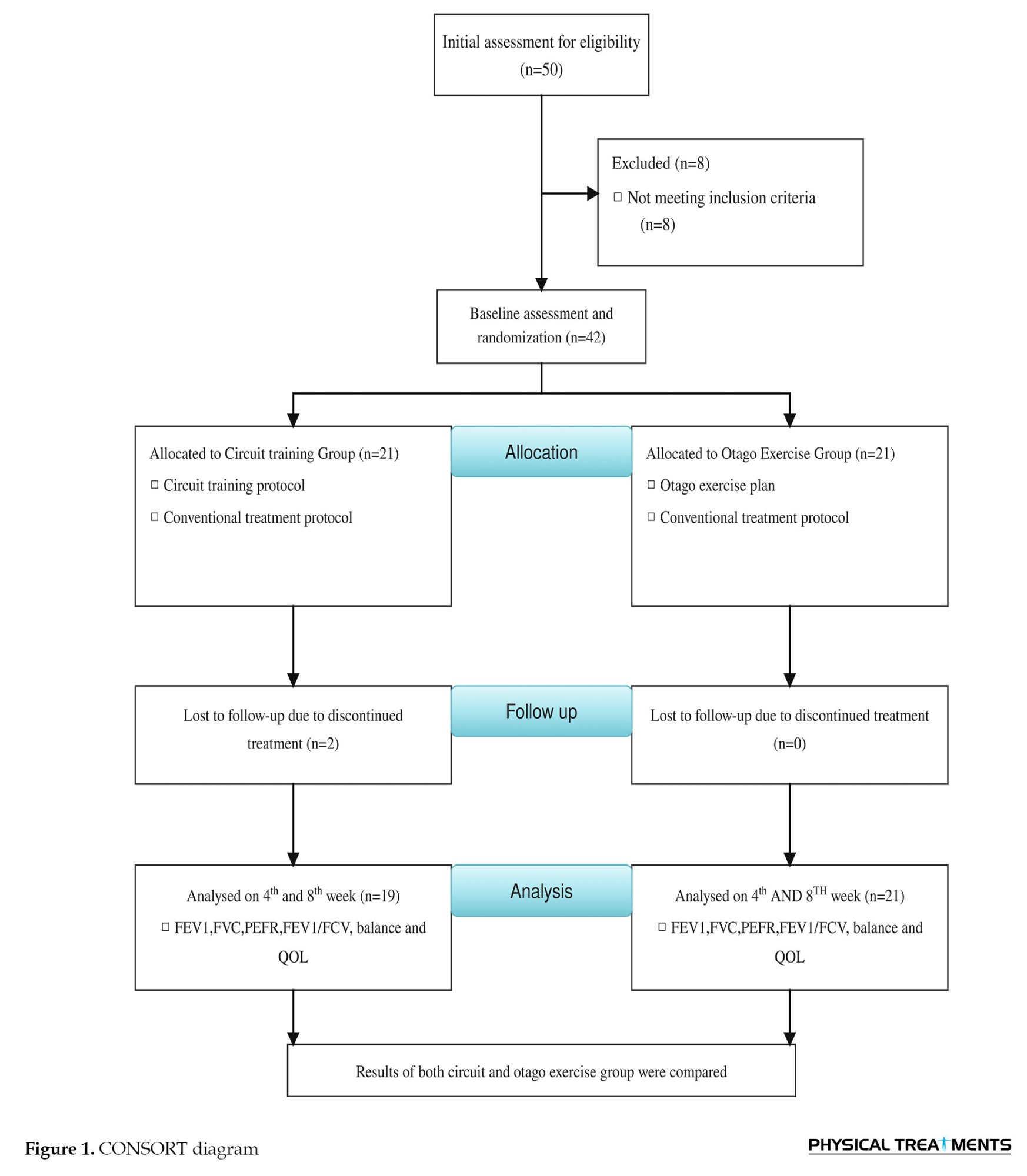
The study was a randomized clinical trial registered on ClinicalTrials.gov and had an ethical approval letter number REC/00960 from the Institutional Research Review Board. The study setting was District Headquarters Hospital Haripur, and the study duration was 1 year (from February 2021 to February 2022). A total of 42 patients were included after sample size calculation from the OpenEpi online calculator. The control group was the CT group (CTG), and the experimental group included the Otago exercise group (OEG). Participants were selected based on specific eligibility criteria (as mentioned below) and a sealed-envelope randomization approach. All eligible patients presenting during the recruitment window were approached using a consecutive sampling. Patients selected the envelope and were enrolled in the exercise plan written on the envelope. The sealed envelopes were opened only after baseline assessments were completed. This study used a single-blind design in which participants were blinded to group allocation. Ethical approval for the study was obtained from the hospital’s institutional review board, and written informed consent was acquired from all participants prior to enrollment. A total of 42 patients were recruited using an OpenEpi online calculator based on inclusion and exclusion criteria. The patients aged 50-70 years with a clinical diagnosis of moderate to severe COPD according to the global initiative for chronic obstructive lung disease criteria, a history of at least one fall (within the last year, self-reported by participants), and who were capable of independent ambulation were included. Patients who required mechanical ventilation, those with musculoskeletal or neurological disorders impacting balance, those with cognitive impairments (e.g. dementia), and patients with unstable cardiovascular conditions were excluded from this study. However, two participants dropped out of the CTG group for personal reasons, leaving a final sample size of 40 (CTG: 19, OEG: 21). Sessions were conducted three times per week for 8 weeks (Figure 1).
Chronic obstructive pulmonary disease (COPD) is a respiratory condition that causes respiratory discomfort and a progressive airflow restriction [1, 2]. The economic and social effects of COPD are substantial and growing. It is the third most common cause of morbidity and mortality worldwide, according to the World Health Organization (WHO) [3, 4]. By 2030, COPD ranks as the fourth most prevalent cause of death and the seventh most common factor contributing to disability [5]. There is evidence linking increased COPD mortality to the severity of airway obstruction, body mass index (BMI), dyspnea, exercise capacity, and quantitative severity of emphysema [6]. Those over 40 who smoke cigarettes and those exposed to higher levels of biomass are more likely to have it [7]. Emphysema and chronic bronchitis are its two primary constituents [8, 9].
Identifying risk variables linked to the incidence and recurrence of COPD episodes has significant clinical and societal implications [10]. Another risk factor that might lead to recurrent airflow restriction is asthma and airway hyperreactivity. Additional risk factors include exposure to outdoor and occupational pollution, aging, childhood passive smoking, a history of pulmonary tuberculosis, a genetic tendency to recurrent chest infections, and female gender [9, 11]. Another study found that exposure to farm animals, especially pigs, poultry, and cattle, was associated with a higher frequency of COPD [12]. COPD symptoms include dyspnea, chronic cough, sputum production, and exercise intolerance [13].
Exercise training, education, self-management treatments, behavioral change encouragement, and a stimulus to physical activity are all part of pulmonary rehabilitation (PR), which is an essential aspect of controlling COPD. PR has been shown to decrease hospitalizations and improve symptoms, exercise tolerance, and overall health-related quality of life (QoL) [14]. To attain maximal community independence and function, it also includes fitness training, psychological support, and patient education [7]. PR is applied to stabilize or reverse the disease’s pathophysiological and psychopathological symptoms while also attempting to restore the patient’s maximum functional capacity [15]. In COPD, pursed lip breathing (PLB) and diaphragmatic breathing (DB) are important because they are widely used for breathing training strategies [16]. The core objective of the PR program has been to use prescribed exercise to break the cycle of dyspnea and deconditioning [17]. Both low-intensity and high-intensity exercise programs have been shown to improve the functional status and health-related QoL of individuals with COPD [18]. Balance function has significantly and clinically improved in patients with COPD as a result of adding balance training to PR, which addressed the unique profile of balance impairments [7]. Strong balance control is believed to be necessary for maintaining functional independence in day-to-day tasks [19].
Balance-specialized circuit training (CT) improves balance in older adult patients with COPD and includes functional strength, stance, and transition gait exercises [20]. CT improves the strength of upper and lower extremities and abdominal muscles. When balance training is paired with PR, balance performance, self-reported physical function, and lower-extremity muscular strength all improve [21]. CT is a group workout that takes less than ten minutes to complete each circuit. Multiple stations or posts, each with a unique set of exercises, make up the training methodology. Due to its time efficiency and variety of exercises, CT is suitable for people who are not physically active and for improving dynamic balance [22].
The Otago exercise program (OEP) is a research-based intervention that improves balance function in healthy older adults living in the community and at home, while lowering falls in the elderly. OTAGO is a walking-based strength and balance retraining program [23]. Exercises aimed at strengthening lower extremity muscles, being performed predominantly in standing positions, adhering to an organized and progressive intensity plan, and incorporating balance-related obstacles are all necessary for the most effective interventions for people at risk of falling [24].
CT has been shown to help COPD patients with dyspnea and QoL [25]. Improvements in the Berg balance scale (BBS) and other tests linked to balance have demonstrated that balance training significantly enhances balance and lowers the risk of falls in people with COPD [26].
An intervention that can improve balance, lower the risk of falls, and improve general health status is necessary because COPD is a chronic illness that severely compromises physical function and QoL. Though their relative efficacy in treating COPD patients is unknown, OEP and CT have demonstrated potential in these specific areas.
According to prior research, the benefits of combining balance training with traditional PR are higher than those of standard therapy alone [19, 27].
However, to date, no studies have directly compared the effectiveness of the OEP against CT specifically in the COPD population.
If this home-based exercise is shown to be just as effective as or even more effective than supervised exercise, it could improve QoL by allowing patients to exercise on their own, easing the load of frequent hospital stays, and lowering the demand on medical resources.
Materials and Methods
The study was a randomized clinical trial registered on ClinicalTrials.gov and had an ethical approval letter number REC/00960 from the Institutional Research Review Board. The study setting was District Headquarters Hospital Haripur, and the study duration was 1 year (from February 2021 to February 2022). A total of 42 patients were included after sample size calculation from the OpenEpi online calculator. The control group was the CT group (CTG), and the experimental group included the Otago exercise group (OEG). Participants were selected based on specific eligibility criteria (as mentioned below) and a sealed-envelope randomization approach. All eligible patients presenting during the recruitment window were approached using a consecutive sampling. Patients selected the envelope and were enrolled in the exercise plan written on the envelope. The sealed envelopes were opened only after baseline assessments were completed. This study used a single-blind design in which participants were blinded to group allocation. Ethical approval for the study was obtained from the hospital’s institutional review board, and written informed consent was acquired from all participants prior to enrollment. A total of 42 patients were recruited using an OpenEpi online calculator based on inclusion and exclusion criteria. The patients aged 50-70 years with a clinical diagnosis of moderate to severe COPD according to the global initiative for chronic obstructive lung disease criteria, a history of at least one fall (within the last year, self-reported by participants), and who were capable of independent ambulation were included. Patients who required mechanical ventilation, those with musculoskeletal or neurological disorders impacting balance, those with cognitive impairments (e.g. dementia), and patients with unstable cardiovascular conditions were excluded from this study. However, two participants dropped out of the CTG group for personal reasons, leaving a final sample size of 40 (CTG: 19, OEG: 21). Sessions were conducted three times per week for 8 weeks (Figure 1).
CT group (CTG): Participants in this group underwent a structured CT program focused on balance and muscle strengthening exercises. The training included functional strength training, stance exercises (single-leg stance, tandem stance, etc.), and gait training (side walking, reverse walking, and tandem walking over obstacles) [28]. A senior physiotherapist oversaw the 45-60 minute sessions, which took place three times a week, with one therapist for every participant. Because of the circuit stations’ natural design, exercise intensity increased as task difficulty increased. Participants progressed from activities with upper limb support to those without, from stable to unstable surfaces, and from bilateral to unilateral stance. Ankle weights were used to gradually increase the resistance for strengthening exercises in increments of 0.5 kg after participants were able to do 12 repetitions with correct technique. Based on individual achievement, progression was standardized and applied every two weeks (Table 1).
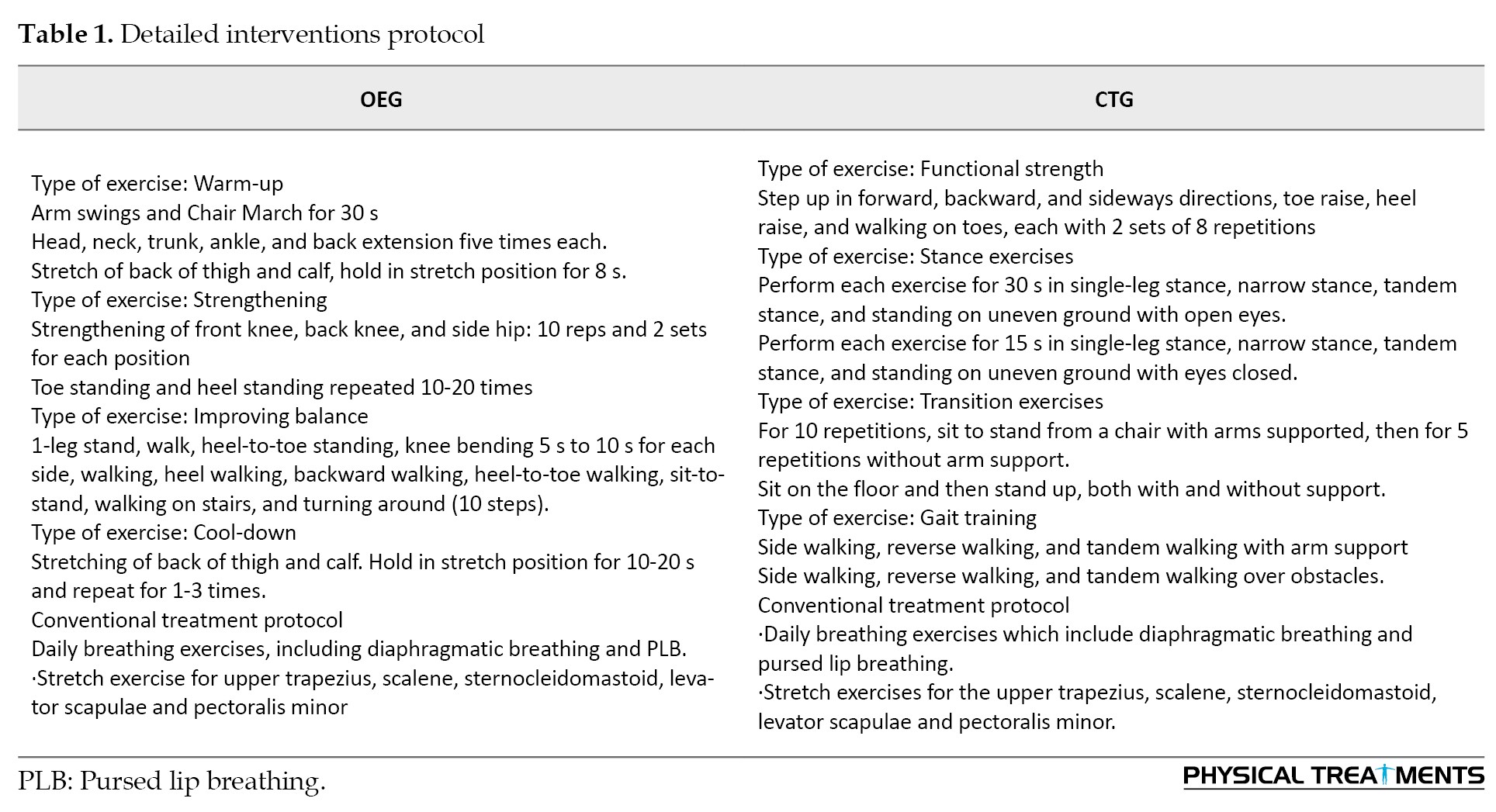
OEG: The OEG balance training program was performed at home and was designed specifically for older adults at risk of falling. Participants in the OEG were provided with a set of exercise templates, with instructions to complete the exercises at home under the supervision of a patient’s attendant [20]. A qualified physiotherapist conducted the program’s first home visit, providing each participant with a set of ankle weights starting at 1 kg and an exercise manual with illustrations. Each session lasted roughly half an hour, and participants were expected to complete the recommended exercises on their own at least three times a week. Participants’ ability to complete activities with little effort served as the basis for progression. Ankle weight resistance was raised in 0.5 kg increments after participants could easily complete the maximum number of suggested repetitions (up to 10 each exercise). Repetitions were then reset to a lower baseline to maintain progressive overload. Weekly phone calls were used to track adherence and development, providing participants with direction and encouraging them to voice any issues. At week 6, a follow-up home visit was conducted to review exercise technique and make any required prescription adjustments. As a result, supervision was restricted to one mid-point house visit, weekly phone calls, and the first educational visit (Table 1).
Participants were contacted weekly via phone to ensure adherence.
Both groups continued to receive PR, which included breathing exercises such as diaphragmatic breathing (DB) and pursed-lip breathing to optimize lung function. Lung volume and capacity were assessed using a spirometer.
Outcome measures
The primary outcome was balance, assessed using the BBS, which is a validated tool for measuring static and dynamic balance. Scores range from 0 to 56, with higher scores indicating better balance. The BBS exhibits high relative inter-rater reliability (intraclass correlation coefficient [ICC]=0.97; 95%) and intra-rater reliability (ICC=0.98; 95% CI, 0.97%, 0.99%) [29].
The secondary outcome was QoL, assessed using the St. George’s respiratory questionnaire (SGRQ). This disease-specific instrument measures the impact of respiratory disease on overall health, daily life, and perceived well-being. The SGRQ includes three components: symptoms, activity, and impact. The reliability coefficient of this scale was 0.94, with 0.72 for the “symptoms,” 0.89 for “activity,” and 0.89 for the “impacts” subscales [30].
Pulmonary function was measured using the digital spirometer as a secondary outcome measure. It includes forced vital capacity (FVC), forced expiratory volume in 1 second (FEV₁), FEV₁/FVC ratio, and peak expiratory flow rate (PEFR).
Statistical analysis was conducted using SPSS software. Data were checked for normality using the Shapiro-Wilk test. A 3×2 mixed-model analysis of variance (ANOVA) was used to assess changes in BBS and SGRQ scores over time (baseline, 4 weeks, and 8 weeks) between the two groups. The significance level was set at 0.05, and 95% confidence intervals (CIs) were calculated. Detailed illustrations of the study are described in the CONSORT diagram (Figure 1).
Results
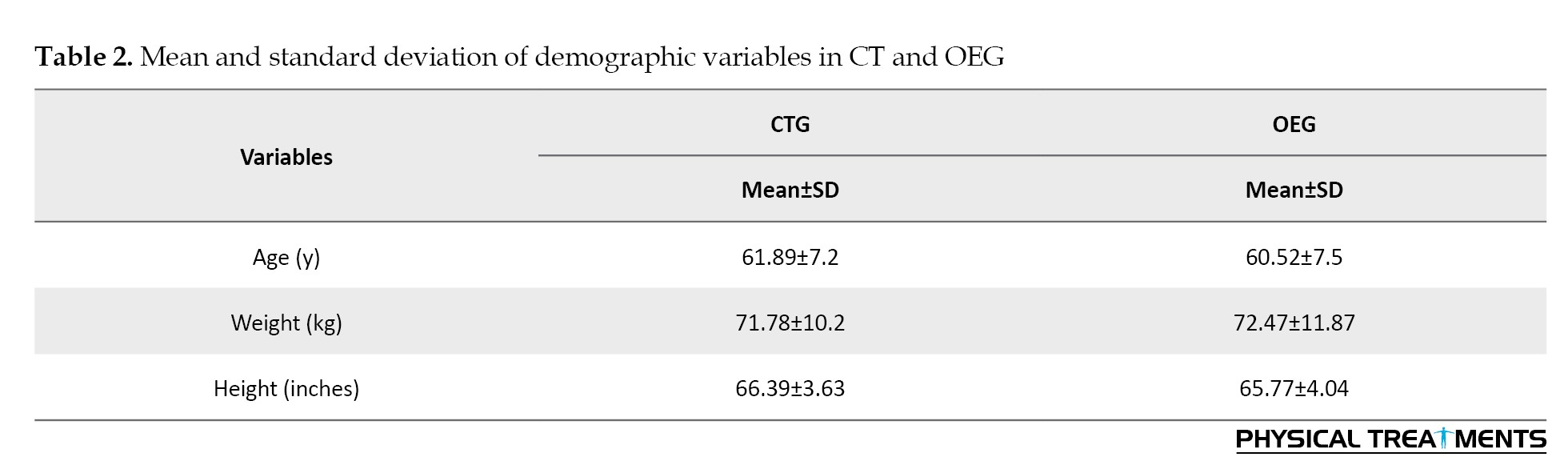
Of the 40 individuals who completed the study, 62.5% were women and 37.5% were men. Table 2 presents the Mean±SD of age, weight, and height.
All participants had mean FEV₁, with a Mean±SD of 39.47±4.95%.
Table 2 presents the BBS score improvements as Mean±SD in both groups for baseline, fourth week, and eighth week. In the CTG, the mean BBS score increased from 37.21±5.78 at baseline to 40.84±5.16 at the end of the intervention. Similarly, the OEG showed an improvement in mean BBS score from 35.71±9.24 to 39.71±8.28 (Table 3).
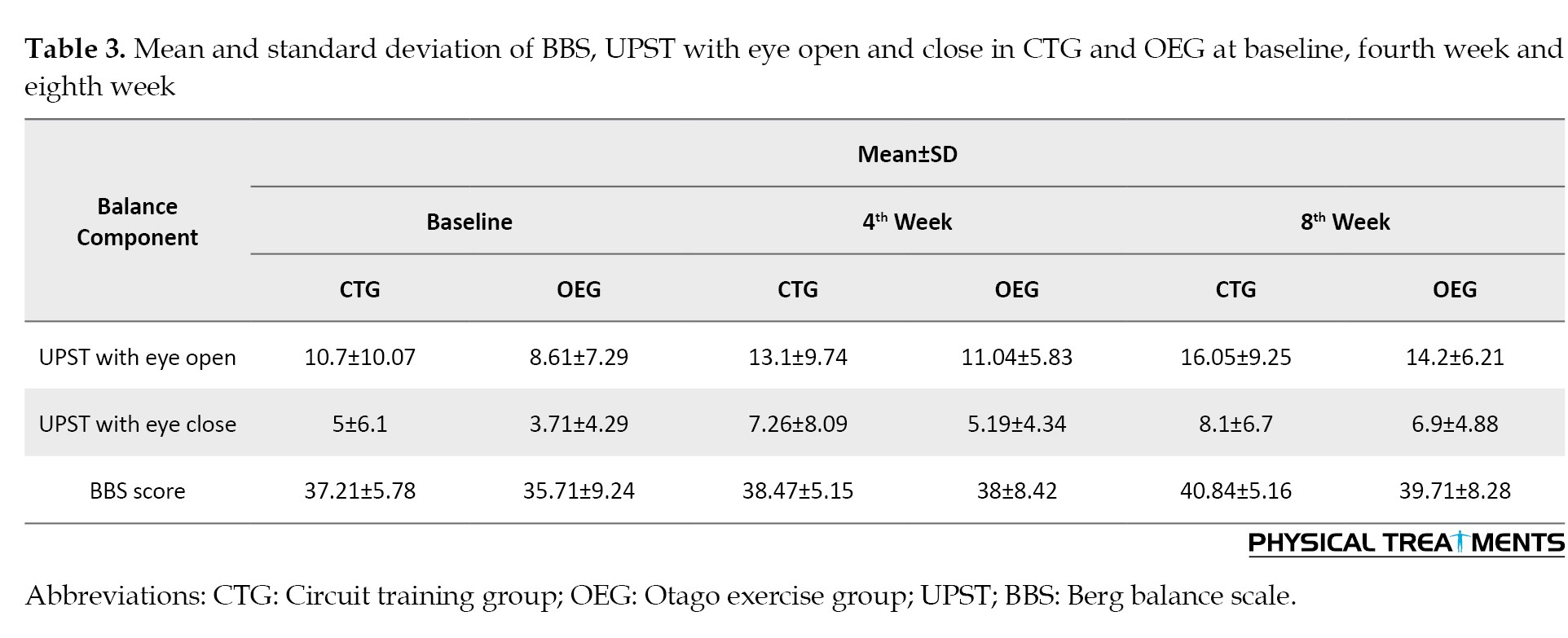
However, no statistically significant difference was found between the two groups (P>0.05), indicating that both interventions were equally effective in improving balance in patients with COPD.
QoL improved in both groups, as reflected in the reduction of SGRQ scores. In the CTG, the total SGRQ score decreased from 70.14±13.3 to 58.98±10.21. For OEG, total SGRQ scores also decreased from 68.25±16.06 to 58.57±13.6 by the end of the study (Table 4).
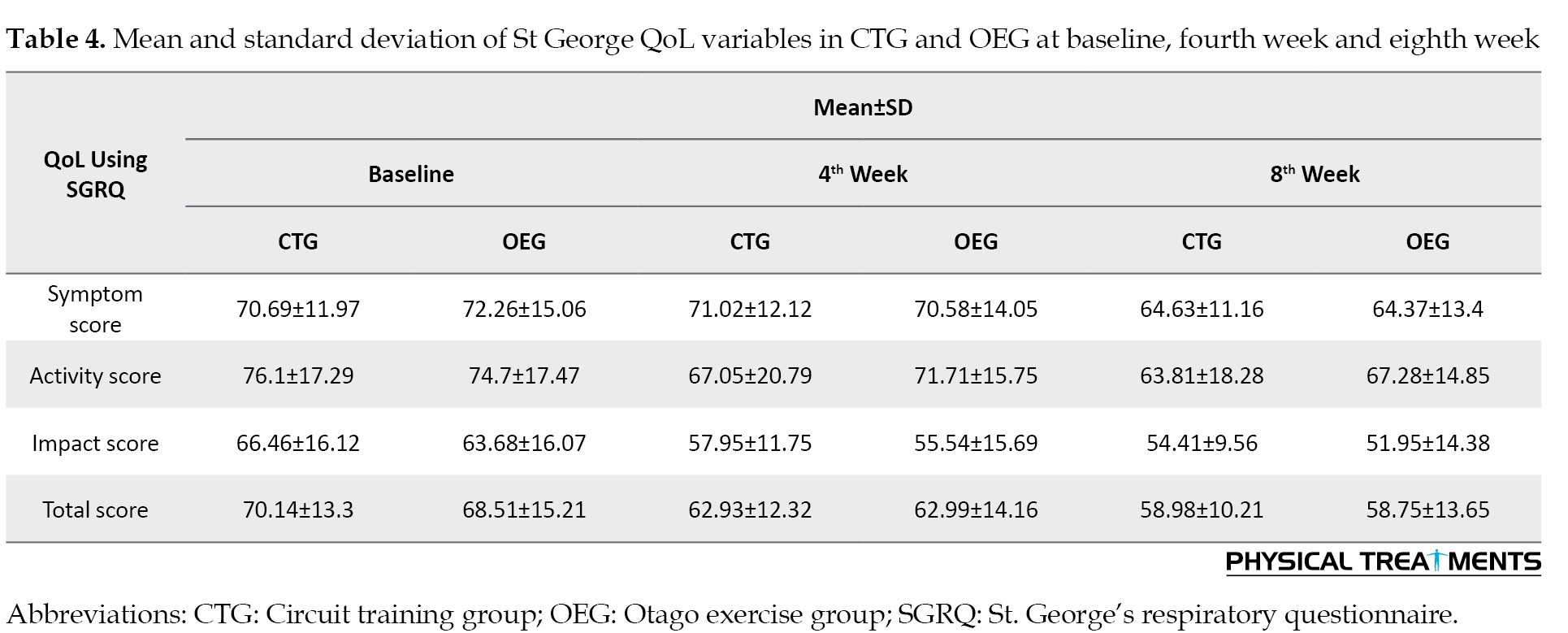
Within-group analysis of St George’s total scores, using a mixed-model ANOVA, revealed a significant effect of respiratory symptoms in both interventional groups. Between-group comparison showed no significant difference in quality-of-life improvements (P>0.05).
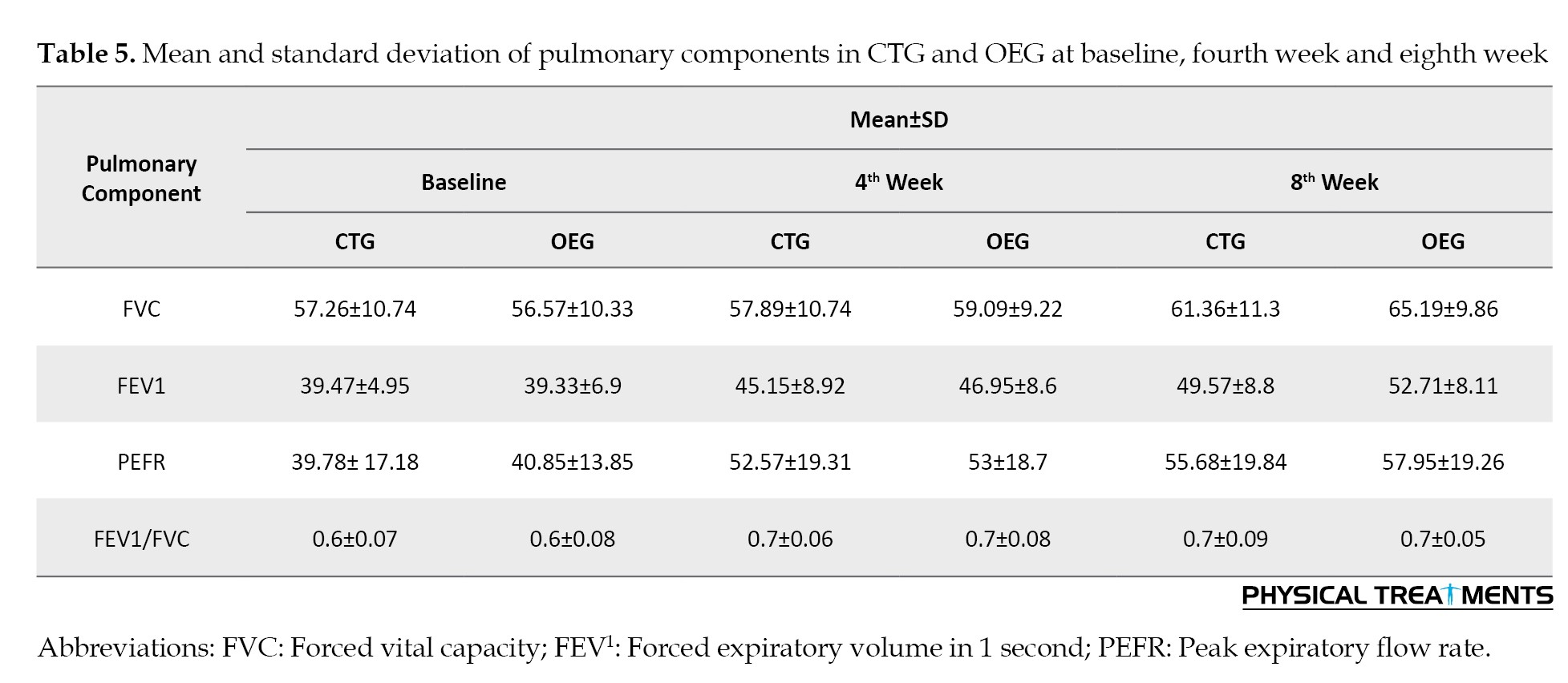
According to a mixed model of ANOVA, there was a significant improvement over time in both interventions, including FVC, forced expiratory volume, PEFR, and FEV1/FEV ratio, in patients in both groups, assessed using a spirometry. Between-group comparison showed no significant difference in FVC, forced expiratory volume, and PEFR between OEP and CTG (Table 5).
Discussion
The study findings suggest that both the OEP and CT are associated with improvements in balance and QoL in COPD patients. These findings align with previous research emphasizing the importance of balance training in reducing fall risk and improving functional mobility in older adults and those with chronic diseases, such as COPD.
Although balance impairment is a well-known issue in patients with COPD, it is often under-addressed in traditional PR programs. Our study highlights the potential benefits of incorporating balance-specific exercises into COPD management strategies. Both OEP and CT were shown to improve balance, as measured by the BBS, and improve the QoL, as reflected in the SGRQ scores.
The lack of significant between-group differences suggests that the home-based OEP is as effective as the hospital-based CT in improving balance. This is particularly important in resource-limited settings or during periods when access to healthcare facilities is restricted, such as the COVID-19 pandemic. The OEP offers a feasible and effective alternative for patients with COPD who are unable to attend regular hospital-based rehabilitation sessions.
The study by Mounir et al. investigated the impact of CT within PR for older patients with COPD, finding that it significantly improved overall body balance and reduced falls [21]. Mkacher’s research evaluated the impact of a CT program within PR on balance in COPD patients. The study found that integrating CT significantly enhanced balance measurements and exercise capacity [31]. This study also demonstrates how CT greater balance improvements were observed in COPD patients.
Another randomized controlled trial examining the effects of balance training in individuals with COPD at risk of falling found that adding balance training to PR significantly improved balance, lower-extremity strength, and self-reported physical function. The thrice-weekly regimen was found to be practicable and sustainable in patients with mild-to-severe COPD [21]. The current study, which included patients with moderate to severe COPD, observed remarkable refinements in balance and pulmonary function in both groups that received balance training alongside PR.
The strengths of this study include the randomized controlled design, the use of validated outcome measures, and the inclusion of both men and women with moderate to severe COPD. However, this study has several limitations. First, the sample size was relatively small, which may have limited the ability to detect subtle differences between the two interventions. Second, the study was conducted over a relatively short period, and the long-term effects of these interventions remain unknown. This study did not properly evaluate intervention fidelity. The home-based OEP depended on participant self-report and weekly phone conversations, without any direct monitoring of exercise performance, whereas a physiotherapist oversaw CT sessions to guarantee proper execution.
Although spirometry is the gold standard for evaluating pulmonary function, it cannot capture gains in dynamic balance or functional exercise capacity. Our capacity to identify subtle changes and comprehend the mechanics behind balance improvements is restricted by the lack of objective biomechanical measurements, such as posturography or wearable inertial sensors. More sensitive, instrumented outcome measures should be used in future research to supplement clinical evaluations. Future research should also explore the sustainability of balance improvements and the potential impact of these interventions on fall rates over a longer follow-up period in COPD patients.
Conclusion
Balance and QoL among COPD patients were significantly improved within groups by both CT and the OEP, whereas no significant changes were found across groups. Given the feasibility and accessibility of home-based interventions, the OEP is an attractive option for COPD patients who are unable to attend hospital-based rehabilitation. Future studies should investigate the long-term impact of these interventions and their potential role in reducing fall rates among COPD patients.
Ethical Considerations
Compliance with ethical guidelines
This study was approved by the Research Ethics Committee of Riphah International University Islamabad, Islamabad, Pakistan (Code: Riphah/RCRS/REC/00968). Before being enrolled in the study, each participant provided written informed consent. The complete study protocols were conducted in compliance with relevant institutional and Declaration of Helsinki ethical principles for research involving human subjects.
Funding
This study was extracted from the master's thesis of Saba Nadeem, approved by the Department of Physical Therapy, Faculty of Rehabilitation and Allied Health Sciences, Riphah International University, Islamabad, Pakistan. This research did not receive any grant from funding agencies in the public, commercial, or non-profit sectors.
Authors' contributions
Conceptualization and supervision: Suman Sheraz; Study design: Saba Nadeem; Investigation: Saba Nadeem and Varda Farooq; Data collection: Varda Farooq; Methodology, statistical analysis, and data interpretation: Muhammad Iqbal Tariq; Writing the original draft: Saima Malik; Data curation, review and editing: Muhammad Fawad: Final approval: All authors.
Conflict of interest
The authors declared no conflict of interest.
Acknowledgments
The authors express their gratitude to Saima Shaheen of DHQ Hospital Haripur for her outstanding assistance and collaboration during the study’s data collection phase. Her support and encouragement were crucial to the research’s successful conclusion. We also want to express our gratitude to the hospital staff for their ongoing support and encouragement.
OEG: The OEG balance training program was performed at home and was designed specifically for older adults at risk of falling. Participants in the OEG were provided with a set of exercise templates, with instructions to complete the exercises at home under the supervision of a patient’s attendant [20]. A qualified physiotherapist conducted the program’s first home visit, providing each participant with a set of ankle weights starting at 1 kg and an exercise manual with illustrations. Each session lasted roughly half an hour, and participants were expected to complete the recommended exercises on their own at least three times a week. Participants’ ability to complete activities with little effort served as the basis for progression. Ankle weight resistance was raised in 0.5 kg increments after participants could easily complete the maximum number of suggested repetitions (up to 10 each exercise). Repetitions were then reset to a lower baseline to maintain progressive overload. Weekly phone calls were used to track adherence and development, providing participants with direction and encouraging them to voice any issues. At week 6, a follow-up home visit was conducted to review exercise technique and make any required prescription adjustments. As a result, supervision was restricted to one mid-point house visit, weekly phone calls, and the first educational visit (Table 1).
Participants were contacted weekly via phone to ensure adherence.
Both groups continued to receive PR, which included breathing exercises such as diaphragmatic breathing (DB) and pursed-lip breathing to optimize lung function. Lung volume and capacity were assessed using a spirometer.
Outcome measures
The primary outcome was balance, assessed using the BBS, which is a validated tool for measuring static and dynamic balance. Scores range from 0 to 56, with higher scores indicating better balance. The BBS exhibits high relative inter-rater reliability (intraclass correlation coefficient [ICC]=0.97; 95%) and intra-rater reliability (ICC=0.98; 95% CI, 0.97%, 0.99%) [29].
The secondary outcome was QoL, assessed using the St. George’s respiratory questionnaire (SGRQ). This disease-specific instrument measures the impact of respiratory disease on overall health, daily life, and perceived well-being. The SGRQ includes three components: symptoms, activity, and impact. The reliability coefficient of this scale was 0.94, with 0.72 for the “symptoms,” 0.89 for “activity,” and 0.89 for the “impacts” subscales [30].
Pulmonary function was measured using the digital spirometer as a secondary outcome measure. It includes forced vital capacity (FVC), forced expiratory volume in 1 second (FEV₁), FEV₁/FVC ratio, and peak expiratory flow rate (PEFR).
Statistical analysis was conducted using SPSS software. Data were checked for normality using the Shapiro-Wilk test. A 3×2 mixed-model analysis of variance (ANOVA) was used to assess changes in BBS and SGRQ scores over time (baseline, 4 weeks, and 8 weeks) between the two groups. The significance level was set at 0.05, and 95% confidence intervals (CIs) were calculated. Detailed illustrations of the study are described in the CONSORT diagram (Figure 1).
Results
Of the 40 individuals who completed the study, 62.5% were women and 37.5% were men. Table 2 presents the Mean±SD of age, weight, and height.
All participants had mean FEV₁, with a Mean±SD of 39.47±4.95%.
Table 2 presents the BBS score improvements as Mean±SD in both groups for baseline, fourth week, and eighth week. In the CTG, the mean BBS score increased from 37.21±5.78 at baseline to 40.84±5.16 at the end of the intervention. Similarly, the OEG showed an improvement in mean BBS score from 35.71±9.24 to 39.71±8.28 (Table 3).
However, no statistically significant difference was found between the two groups (P>0.05), indicating that both interventions were equally effective in improving balance in patients with COPD.
QoL improved in both groups, as reflected in the reduction of SGRQ scores. In the CTG, the total SGRQ score decreased from 70.14±13.3 to 58.98±10.21. For OEG, total SGRQ scores also decreased from 68.25±16.06 to 58.57±13.6 by the end of the study (Table 4).
Within-group analysis of St George’s total scores, using a mixed-model ANOVA, revealed a significant effect of respiratory symptoms in both interventional groups. Between-group comparison showed no significant difference in quality-of-life improvements (P>0.05).
According to a mixed model of ANOVA, there was a significant improvement over time in both interventions, including FVC, forced expiratory volume, PEFR, and FEV1/FEV ratio, in patients in both groups, assessed using a spirometry. Between-group comparison showed no significant difference in FVC, forced expiratory volume, and PEFR between OEP and CTG (Table 5).
Discussion
The study findings suggest that both the OEP and CT are associated with improvements in balance and QoL in COPD patients. These findings align with previous research emphasizing the importance of balance training in reducing fall risk and improving functional mobility in older adults and those with chronic diseases, such as COPD.
Although balance impairment is a well-known issue in patients with COPD, it is often under-addressed in traditional PR programs. Our study highlights the potential benefits of incorporating balance-specific exercises into COPD management strategies. Both OEP and CT were shown to improve balance, as measured by the BBS, and improve the QoL, as reflected in the SGRQ scores.
The lack of significant between-group differences suggests that the home-based OEP is as effective as the hospital-based CT in improving balance. This is particularly important in resource-limited settings or during periods when access to healthcare facilities is restricted, such as the COVID-19 pandemic. The OEP offers a feasible and effective alternative for patients with COPD who are unable to attend regular hospital-based rehabilitation sessions.
The study by Mounir et al. investigated the impact of CT within PR for older patients with COPD, finding that it significantly improved overall body balance and reduced falls [21]. Mkacher’s research evaluated the impact of a CT program within PR on balance in COPD patients. The study found that integrating CT significantly enhanced balance measurements and exercise capacity [31]. This study also demonstrates how CT greater balance improvements were observed in COPD patients.
Another randomized controlled trial examining the effects of balance training in individuals with COPD at risk of falling found that adding balance training to PR significantly improved balance, lower-extremity strength, and self-reported physical function. The thrice-weekly regimen was found to be practicable and sustainable in patients with mild-to-severe COPD [21]. The current study, which included patients with moderate to severe COPD, observed remarkable refinements in balance and pulmonary function in both groups that received balance training alongside PR.
The strengths of this study include the randomized controlled design, the use of validated outcome measures, and the inclusion of both men and women with moderate to severe COPD. However, this study has several limitations. First, the sample size was relatively small, which may have limited the ability to detect subtle differences between the two interventions. Second, the study was conducted over a relatively short period, and the long-term effects of these interventions remain unknown. This study did not properly evaluate intervention fidelity. The home-based OEP depended on participant self-report and weekly phone conversations, without any direct monitoring of exercise performance, whereas a physiotherapist oversaw CT sessions to guarantee proper execution.
Although spirometry is the gold standard for evaluating pulmonary function, it cannot capture gains in dynamic balance or functional exercise capacity. Our capacity to identify subtle changes and comprehend the mechanics behind balance improvements is restricted by the lack of objective biomechanical measurements, such as posturography or wearable inertial sensors. More sensitive, instrumented outcome measures should be used in future research to supplement clinical evaluations. Future research should also explore the sustainability of balance improvements and the potential impact of these interventions on fall rates over a longer follow-up period in COPD patients.
Conclusion
Balance and QoL among COPD patients were significantly improved within groups by both CT and the OEP, whereas no significant changes were found across groups. Given the feasibility and accessibility of home-based interventions, the OEP is an attractive option for COPD patients who are unable to attend hospital-based rehabilitation. Future studies should investigate the long-term impact of these interventions and their potential role in reducing fall rates among COPD patients.
Ethical Considerations
Compliance with ethical guidelines
This study was approved by the Research Ethics Committee of Riphah International University Islamabad, Islamabad, Pakistan (Code: Riphah/RCRS/REC/00968). Before being enrolled in the study, each participant provided written informed consent. The complete study protocols were conducted in compliance with relevant institutional and Declaration of Helsinki ethical principles for research involving human subjects.
Funding
This study was extracted from the master's thesis of Saba Nadeem, approved by the Department of Physical Therapy, Faculty of Rehabilitation and Allied Health Sciences, Riphah International University, Islamabad, Pakistan. This research did not receive any grant from funding agencies in the public, commercial, or non-profit sectors.
Authors' contributions
Conceptualization and supervision: Suman Sheraz; Study design: Saba Nadeem; Investigation: Saba Nadeem and Varda Farooq; Data collection: Varda Farooq; Methodology, statistical analysis, and data interpretation: Muhammad Iqbal Tariq; Writing the original draft: Saima Malik; Data curation, review and editing: Muhammad Fawad: Final approval: All authors.
Conflict of interest
The authors declared no conflict of interest.
Acknowledgments
The authors express their gratitude to Saima Shaheen of DHQ Hospital Haripur for her outstanding assistance and collaboration during the study’s data collection phase. Her support and encouragement were crucial to the research’s successful conclusion. We also want to express our gratitude to the hospital staff for their ongoing support and encouragement.
References
- Crişan AF, Oancea C, Timar B, Fira-Mladinescu O, Tudorache V. Balance impairment in patients with COPD. PLoS One. 2015; 10(3):e0120573. [DOI:10.1371/journal.pone.0120573] [PMID] [PMCID]
- McLay R, O’Hoski S, Beauchamp MK. Role of muscle strength in balance assessment and treatment in chronic obstructive pulmonary disease. Cardiopulmonary Physical Therapy Journal. 2019; 30(1):35-43. [DOI:10.1097/CPT.0000000000000093]
- Gloeckl R, Schneeberger T, Jarosch I, Kenn K. Pulmonary rehabilitation and exercise training in chronic obstructive pulmonary disease. Deutsches Ärzteblatt International. 2018; 115(8):117. [DOI:10.3238/arztebl.2018.0117] [PMID] [PMCID]
- Ding Y, Xu J, Yao J, Chen Y, He P, Ouyang Y, et al. The analyses of risk factors for COPD in the Li ethnic group in Hainan, People’s Republic of China. International Journal of Chronic Obstructive Pulmonary Disease. 2015; 2593-600. [DOI:10.2147/COPD.S86402] [PMID] [PMCID]
- Zeng Y, Jiang F, Chen Y, Chen P, Cai S. Exercise assessments and trainings of pulmonary rehabilitation in COPD: A literature review. International Journal of Chronic Obstructive Pulmonary disease. 2018; 13:2013-23. [DOI:10.2147/COPD.S167098] [PMID] [PMCID]
- Lynch DA, Moore CM, Wilson C, Nevrekar D, Jennermann T, Humphries SM, et al. CT-based visual classification of emphysema: Association with mortality in the COPDGene study. Radiology. 2018; 288(3):859-66. [DOI:10.1148/radiol.2018172294] [PMID] [PMCID]
- Beauchamp MK, Brooks D, Ellerton C, Lee A, Alison J, Camp PG, et al. Pulmonary rehabilitation with balance training for fall reduction in chronic obstructive pulmonary disease: Protocol for a randomized controlled trial. JMIR Research Protocols. 2017; 6(11):e8178. [DOI:10.2196/resprot.8178] [PMID] [PMCID]
- Kim V, Crapo J, Zhao H, Jones PW, Silverman EK, Comellas A, et al. Comparison between an alternative and the classic definition of chronic bronchitis in COPDGene. Annals of the American Thoracic Society. 2015; 12(3):332-9. [DOI:10.1513/AnnalsATS.201411-518OC] [PMID] [PMCID]
- Kesimer M, Ford AA, Ceppe A, Radicioni G, Cao R, Davis CW, et al. Airway mucin concentration as a marker of chronic bronchitis. New England Journal of Medicine. 2017; 377(10):911-22. [DOI:10.1056/NEJMoa1701632] [PMID] [PMCID]
- Müllerova H, Maselli DJ, Locantore N, Vestbo J, Hurst JR, Wedzicha JA, et al. Hospitalized exacerbations of COPD: risk factors and outcomes in the ECLIPSE cohort. Chest. 2015; 147(4):999-1007. [DOI:10.1378/chest.14-0655] [PMID] [PMCID]
- Hoesein FAM, van Rikxoort E, van Ginneken B, de Jong PA, Prokop M, Lammers J-WJ, et al. Computed tomography-quantified emphysema distribution is associated with lung function decline. European Respiratory Journal. 2012; 40(4):844-50. [DOI:10.1183/09031936.00186311] [PMID]
- Guillien A, Puyraveau M, Soumagne T, Guillot S, Rannou F, Marquette D, et al. Prevalence and risk factors for COPD in farmers: A cross-sectional controlled study. European Respiratory Journal. 2016; 47(1):95-103. [DOI:10.1183/13993003.00153-2015] [PMID]
- Poole P, Chong J, Cates CJ. Mucolytic agents versus placebo for chronic bronchitis or chronic obstructive pulmonary disease. The Cochrane Database of Systematic Reviews. 2015; (7):CD001287. [DOI:10.1002/14651858.cd001287.pub5] [PMID]
- Mendes LPS, Moraes KS, Hoffman M, Vieira DSR, Ribeiro-Samora GA, Lage SM, et al. Effects of diaphragmatic breathing with and without pursed-lips breathing in subjects with COPD. Respiratory Care. 2019; 64(2):136-44. [DOI:10.4187/respcare.06319] [PMID]
- Wouters EFM, Wouters BBREF, Augustin IML, Houben-Wilke S, Vanfleteren LEGW, Franssen FME. Personalised pulmonary rehabilitation in COPD. European respiratory revie. 2018; 27(147):170125. [DOI:10.1183/16000617.0125-2017] [PMID] [PMCID]
- Yang Y, Wei L, Wang S, Ke L, Zhao H, Mao J, et al. The effects of pursed lip breathing combined with diaphragmatic breathing on pulmonary function and exercise capacity in patients with COPD: A systematic review and meta-analysis. Physiotherapy Theory and Practice. 2022; 38(7):847-57. [DOI:10.1080/09593985.2020.1805834] [PMID]
- Egan C, Deering BM, Blake C, Fullen BM, McCormack NM, Spruit MA, et al. Short term and long term effects of pulmonary rehabilitation on physical activity in COPD. Respiratory Medicine. 2012; 106(12):1671-9. [DOI:10.1016/j.rmed.2012.08.016] [PMID]
- Probst VS, Kovelis D, Hernandes NA, Camillo CA, Cavalheri V, Pitta F. Effects of 2 exercise training programs on physical activity in daily life in patients with COPD. Respiratory Care. 2011; 56(11):1799-807. [DOI:10.4187/respcare.01110] [PMID]
- Delbressine JM, Vaes AW, Goërtz YM, Sillen MJ, Kawagoshi A, Meijer K, et al. Effects of exercise-based interventions on fall risk and balance in patients with chronic obstructive pulmonary disease: a systematic review. Journal of Cardiopulmonary Rehabilitation and Prevention. 2020; 40(3):152-63. [DOI:10.1097/HCR.0000000000000513] [PMID]
- Mounir KM, Elserty NS, Obaya HE. Balance training: Its influence on pulmonary rehabilitation. Bulletin of Faculty of Physical Therapy. 2019; 24:8-13. [DOI:10.4103/bfpt.bfpt_14_18]
- Beauchamp MK, Janaudis-Ferreira T, Parreira V, Romano JM, Woon L, Goldstein RS, et al. A randomized controlled trial of balance training during pulmonary rehabilitation for individuals with COPD. Chest. 2013; 144(6):1803-10. [DOI:10.1378/chest.13-1093] [PMID]
- Amarihati KA, Purwoko Y, Cayami FK, Kumaidah E. Difference in body's dynamic balance before and after conducting circuit training of students at medical faculty of Diponegoro University. Jurnal Kedokteran Diponegoro. 2020; 9(2):120-6. [Link]
- Dadgari A, Hamid TA, Hakim MN, Chaman R, Mousavi SA, Hin LP, et al. Randomized control trials on Otago exercise program (OEP) to reduce falls among elderly community dwellers in Shahroud, Iran. Iranian Red Crescent Medical Journal. 2016; 18(5):e26340. [DOI:10.5812/ircmj.26340] [PMID] [PMCID]
- Kyrdalen IL, Moen K, Røysland AS, Helbostad JL. The Otago exercise program performed as group training versus home training in fall‐prone older people: A randomized controlled trial. Physiotherapy Research International. 2014; 19(2):108-16. [DOI:10.1002/pri.1571] [PMID]
- Delgado Acosta H, Acuña Corrales E. Efecto de un programa de ejercicio aeróbico y un programa de circuito con pesas sobre la calidad de vida, disnea y resistencia cardiorrespiratoria en sujetos con enfermedad pulmonar crónica. Movimiento Humano y Salud 2007; 4:1-8. [DOI:10.15359/mhs.4-1.1]
- Reddy SB, Srinivasan NM, T AK, babu V, Alaparthi GK, Bairapareddy KC. The effect of balance training and conventional pulmonary rehabilitation in patients with moderate chronic obstructive pulmonary disease. International Journal of Research in Pharmaceutical Sciences 2021; 12:757-67. [DOI:10.26452/ijrps.v12i1.4179]
- Marques A, Jácome C, Cruz J, Gabriel R, Figueiredo D. Effects of a pulmonary rehabilitation program with balance training on patients with COPD. Journal of Cardiopulmonary Rehabilitation and Prevention 2015; 35:154-8. [DOI:10.1097/HCR.0000000000000097] [PMID]
- Ferraro FV, Gavin JP, Wainwright TW, McConnell AK. Comparison of balance changes after inspiratory muscle or Otago exercise training. Plos One. 2020; 15(1):1-16. [DOI:10.1371/journal.pone.0227379] [PMID] [PMCID]
- Barr JT, Schumacher GE, Freeman S, LeMoine M, Bakst AW, Jones PW. American translation, modification, and validation of the St. George’s Respiratory Questionnaire. Clinical Therapeutics. 2000; 22(9):1121-45 [DOI:10.1016/S0149-2918(00)80089-2] [PMID] [PMCID]
- Downs S, Marquez J, Chiarelli P. The Berg Balance Scale has high intra- and inter-rater reliability but absolute reliability varies across the scale: A systematic review. Journal of Physiotherapy. 2013; 59(2):93-9. [DOI:10.1016/S1836-9553(13)70161-9] [PMID]
- Mkacher W, Mekki M, Tabka Z, Trabelsi Y. Effect of 6 months of balance training during pulmonary rehabilitation in patients with COPD. Journal of Cardiopulmonary Rehabilitation and Prevention. 2015; 35(3):207-13. [DOI:10.1097/HCR.0000000000000109] [PMID]
Type of Study: Research |
Subject:
Physical Therapy
Received: 2025/09/11 | Accepted: 2026/03/6 | Published: 2026/06/22
Received: 2025/09/11 | Accepted: 2026/03/6 | Published: 2026/06/22
Send email to the article author
| Rights and permissions | |
 |
This work is licensed under a Creative Commons Attribution-NonCommercial 4.0 International License. |

This is an open access article distributed under the terms of the Creative Commons Attribution-NonCommercial 4.0 (CC-By-NC 4.0), which permits use, distribution, and reproduction in any medium, provided the original work is properly cited and is not used for commercial purposes.
Contact Information