Thu, Nov 12, 2026
Volume 16, Issue 4 ( Autumn 2026)
PTJ 2026, 16(4): 445-452 |
Back to browse issues page


Download citation:
BibTeX | RIS | EndNote | Medlars | ProCite | Reference Manager | RefWorks
Send citation to:


BibTeX | RIS | EndNote | Medlars | ProCite | Reference Manager | RefWorks
Send citation to:
Mazloum V, Honarvar A, Matin M, Mohajer S. Immediate Effects of Upper Trapezius Trigger Point Release With and Without Kinesio Taping in Patients With Chronic Neck Pain. PTJ 2026; 16 (4) :445-452
URL: http://ptj.uswr.ac.ir/article-1-778-en.html
URL: http://ptj.uswr.ac.ir/article-1-778-en.html

1- Department of Sport Injuries and Corrective Exercises, Ka. C, Islamic Azad University, Karaj, Iran.
2- Department of Physiotherapy, Rehabilitation Research Center, School of Rehabilitation Sciences, Iran University of Medical Sciences, Tehran, Iran.
2- Department of Physiotherapy, Rehabilitation Research Center, School of Rehabilitation Sciences, Iran University of Medical Sciences, Tehran, Iran.
Keywords: Neck pain, Myofascial release, Kinesio taping, Range of motion, Musculoskeletal manipulations
Full-Text [PDF 983 kb]
(1367 Downloads)
| Abstract (HTML) (2601 Views)
Full-Text: (85 Views)
Introduction
Neck pain commonly affects people worldwide, with nearly one in five experiencing it at any time and around 70% facing it during their lifetime [1]. It is currently ranked as the fourth most significant cause of disability-related years, according to the global burden of disease study [2]. Despite its prevalence, the etiology of mechanical neck pain remains unclear, though myofascial trigger points (MTrPs) are considered an important contributing factor [1]. The upper trapezius is the most frequently affected muscle, with reported prevalence rates exceeding 90% [3-5].
Several therapeutic strategies have been proposed for MTrP management. Myofascial release techniques, including manual therapy and massage, aim to reduce tissue tension, alleviate pain, and restore mobility [6, 7]. A practical form of self-administered myofascial release is tennis ball (TE) pressure, which applies direct force to trigger points and has been suggested to improve flexibility, circulation, and movement efficiency [8-10]. Another emerging intervention is inhibitory Kinesio taping, which is noninvasive and easy to apply. However, evidence regarding its efficacy is inconsistent, with some studies reporting benefits and others finding minimal effects [11-13]. These conflicting results may stem from methodological variations across studies, such as differences in taping techniques, duration of application, and outcome measures, making it difficult to draw firm conclusions [11].
According to the reviewed studies, no prior studies have directly compared the immediate effects of upper trapezius trigger point release with and without Kinesio taping on pain and range of motion (ROM) in individuals with chronic neck pain. The common presence of MTrPs in the upper trapezius, combined with conflicting evidence on the efficacy of available treatments, highlights the need for further research. Notably, both trigger point releases with a TE and Kinesio taping are noninvasive, low-cost interventions that can often be performed by patients themselves, making them highly accessible options in both clinical and home settings.
We hypothesized that the combination of trigger point release and Kinesio taping would lead to greater improvements in pain reduction and ROM compared to trigger point release alone. Identifying the most effective of these approaches may assist clinicians in recommending practical, evidence-based strategies for managing chronic neck pain.
Materials and Methods
This study was conducted as a randomized, double-blind, pre-test, post-test clinical trial. The target population comprised middle-aged women (aged 40 to 55 years) residing in Karaj City, Iran, in 2024, who experienced active MTrP pain in the upper trapezius muscle. The inclusion criteria included the presence of a palpable trigger point in the upper trapezius. Participants were excluded if they had any musculoskeletal abnormalities or injuries that could potentially influence the study outcomes. Written informed consent was obtained from all participants before their inclusion in the study. The study received ethical approval, and all procedures were performed in accordance with the Declaration of Helsinki.
Outcome measures were assessed at baseline and immediately following the intervention. In addition to the assessors and the statistical analysis team, participants were also blinded to the study purpose. To eliminate potential psychological bias related to the application of Kinesio taping, tape was applied not only to the tennis ball exercise group combined with Kinesio taping (TEKE) group with therapeutic tension but also to the other groups without any tension or therapeutic effect. This approach ensured that all participants received a similar taping experience and were blinded to the study purpose.
After completion of the intervention, participants were asked to indicate whether they believed they had received the actual Kinesio taping or a sham intervention. The responses indicated that the majority of participants could not accurately identify their group allocation, suggesting that participant blinding was successfully maintained. For the sham condition, the same brand of tape was used as in the intervention group (Sports Tex “Kinesiology Tape”, 5 cm×5 m, CAMO, Single Roll; Made in Korea). The tape was applied without tension to a neutral area of the upper back while participants were seated. The tape remained in place for 24 hours in both groups, and the post-test was conducted immediately after the tape was removed to ensure consistent conditions across groups.
The sample size was calculated using G*Power software, version 3.1.9.2, based on parameters for one-way analysis of variance (ANOVA): A medium effect size (f=0.25), a power of 0.80, and an alpha of 0.05. The choice of effect size was justified by Amjad et al. (2023), who adopted a comparable medium effect size in their study [6]. The required sample size was estimated to be 60 participants (n=20 per group), who were randomly assigned to three matched groups of 20 individuals each: 1) a control group with no intervention (C), 2) a TE release group, and 3) a TEKE.
Pain measurement
Pain intensity was measured using the visual analog scale (VAS), a validated and widely employed instrument for assessing subjective pain levels. The VAS consisted of a 10-centimeter horizontal line anchored by descriptors indicating the extremes of pain (0=no pain, 10=worst imaginable pain). Although categorical cutoffs (1–3 mild, 4–6 moderate, 7–10 severe) were described for explanatory purposes, all statistical analyses were conducted on continuous VAS scores (0–100 mm). Accordingly, results are reported as Mean±SD. The VAS has demonstrated high validity and reliability, with a reported test–re-test reliability coefficient of 0.92 [14].
Range of motion
Cervical ROM was evaluated using a standard goniometer. All assessments were conducted with the participant seated on a chair, maintaining an upright posture with the spine supported by the backrest and the head in a neutral anatomical position. Each motion was measured twice, and the average of the two readings was considered the final value [15]. To ensure measurement reliability, all assessments were performed by the same trained assessor. According to Zamani et al. (2016), intraclass correlation coefficients for intra-examiner reliability of the goniometer were 0.93 for flexion, 0.94 for extension, 0.92 for left lateral flexion, 0.90 for right lateral flexion, 0.88 for right rotation, and 0.89 for left rotation [16].
Neck flexion
For flexion assessment, the goniometer’s axis was positioned at the level of the external auditory meatus. The stationary arm was kept perpendicular to the ground in alignment with the torso, while the moving arm followed the nasal bridge. The participants were asked to bend their neck forward to the maximum extent, and the resulting angle was documented.
Neck extension
The extension measurement followed the same anatomical reference points as flexion. The participants extended their neck backward as far as possible, and the corresponding ROM angle was noted.
Lateral flexion
To evaluate lateral bending, the goniometer’s axis was centered over the spinous process of C7. The stationary arm was vertically aligned along the thoracic spine, and the moving arm was aligned with the midline of the back of the head, passing through the external occipital protuberance. Participants performed side bending to each side, and the measured angle was recorded for both directions.
Neck rotation
For rotational movement, the axis of the goniometer was placed at the top of the skull (cranial vault). The stationary arm was aligned with a virtual line connecting the acromion processes, while the movable arm extended toward the nasal tip, aligned parallel to a tongue depressor. The participants rotated their head maximally to both sides, and the resulting ROM was recorded [15].
Study interventions
Trigger point release using a tennis ball
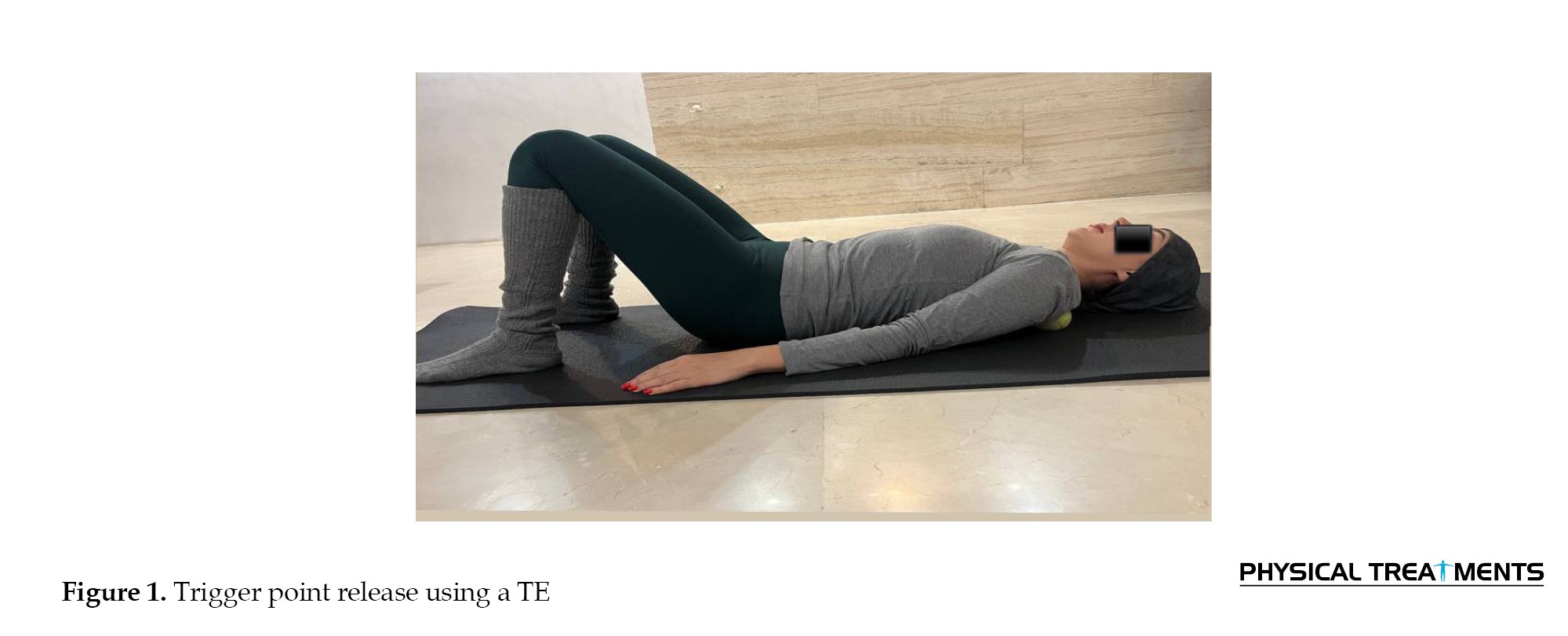
The participants in group 2 received a self-myofascial release (SMR) intervention using a TE. In this method, each participant was instructed to lie supine with their hips and knees flexed, and feet flat on the floor. They were guided to gently roll a TE over the upper trapezius to identify the most painful trigger point. Once the trigger point was located, they were instructed to remain on that spot and lift their hips slightly to apply pressure to the trigger point using body weight (Figure 1).
Neck pain commonly affects people worldwide, with nearly one in five experiencing it at any time and around 70% facing it during their lifetime [1]. It is currently ranked as the fourth most significant cause of disability-related years, according to the global burden of disease study [2]. Despite its prevalence, the etiology of mechanical neck pain remains unclear, though myofascial trigger points (MTrPs) are considered an important contributing factor [1]. The upper trapezius is the most frequently affected muscle, with reported prevalence rates exceeding 90% [3-5].
Several therapeutic strategies have been proposed for MTrP management. Myofascial release techniques, including manual therapy and massage, aim to reduce tissue tension, alleviate pain, and restore mobility [6, 7]. A practical form of self-administered myofascial release is tennis ball (TE) pressure, which applies direct force to trigger points and has been suggested to improve flexibility, circulation, and movement efficiency [8-10]. Another emerging intervention is inhibitory Kinesio taping, which is noninvasive and easy to apply. However, evidence regarding its efficacy is inconsistent, with some studies reporting benefits and others finding minimal effects [11-13]. These conflicting results may stem from methodological variations across studies, such as differences in taping techniques, duration of application, and outcome measures, making it difficult to draw firm conclusions [11].
According to the reviewed studies, no prior studies have directly compared the immediate effects of upper trapezius trigger point release with and without Kinesio taping on pain and range of motion (ROM) in individuals with chronic neck pain. The common presence of MTrPs in the upper trapezius, combined with conflicting evidence on the efficacy of available treatments, highlights the need for further research. Notably, both trigger point releases with a TE and Kinesio taping are noninvasive, low-cost interventions that can often be performed by patients themselves, making them highly accessible options in both clinical and home settings.
We hypothesized that the combination of trigger point release and Kinesio taping would lead to greater improvements in pain reduction and ROM compared to trigger point release alone. Identifying the most effective of these approaches may assist clinicians in recommending practical, evidence-based strategies for managing chronic neck pain.
Materials and Methods
This study was conducted as a randomized, double-blind, pre-test, post-test clinical trial. The target population comprised middle-aged women (aged 40 to 55 years) residing in Karaj City, Iran, in 2024, who experienced active MTrP pain in the upper trapezius muscle. The inclusion criteria included the presence of a palpable trigger point in the upper trapezius. Participants were excluded if they had any musculoskeletal abnormalities or injuries that could potentially influence the study outcomes. Written informed consent was obtained from all participants before their inclusion in the study. The study received ethical approval, and all procedures were performed in accordance with the Declaration of Helsinki.
Outcome measures were assessed at baseline and immediately following the intervention. In addition to the assessors and the statistical analysis team, participants were also blinded to the study purpose. To eliminate potential psychological bias related to the application of Kinesio taping, tape was applied not only to the tennis ball exercise group combined with Kinesio taping (TEKE) group with therapeutic tension but also to the other groups without any tension or therapeutic effect. This approach ensured that all participants received a similar taping experience and were blinded to the study purpose.
After completion of the intervention, participants were asked to indicate whether they believed they had received the actual Kinesio taping or a sham intervention. The responses indicated that the majority of participants could not accurately identify their group allocation, suggesting that participant blinding was successfully maintained. For the sham condition, the same brand of tape was used as in the intervention group (Sports Tex “Kinesiology Tape”, 5 cm×5 m, CAMO, Single Roll; Made in Korea). The tape was applied without tension to a neutral area of the upper back while participants were seated. The tape remained in place for 24 hours in both groups, and the post-test was conducted immediately after the tape was removed to ensure consistent conditions across groups.
The sample size was calculated using G*Power software, version 3.1.9.2, based on parameters for one-way analysis of variance (ANOVA): A medium effect size (f=0.25), a power of 0.80, and an alpha of 0.05. The choice of effect size was justified by Amjad et al. (2023), who adopted a comparable medium effect size in their study [6]. The required sample size was estimated to be 60 participants (n=20 per group), who were randomly assigned to three matched groups of 20 individuals each: 1) a control group with no intervention (C), 2) a TE release group, and 3) a TEKE.
Pain measurement
Pain intensity was measured using the visual analog scale (VAS), a validated and widely employed instrument for assessing subjective pain levels. The VAS consisted of a 10-centimeter horizontal line anchored by descriptors indicating the extremes of pain (0=no pain, 10=worst imaginable pain). Although categorical cutoffs (1–3 mild, 4–6 moderate, 7–10 severe) were described for explanatory purposes, all statistical analyses were conducted on continuous VAS scores (0–100 mm). Accordingly, results are reported as Mean±SD. The VAS has demonstrated high validity and reliability, with a reported test–re-test reliability coefficient of 0.92 [14].
Range of motion
Cervical ROM was evaluated using a standard goniometer. All assessments were conducted with the participant seated on a chair, maintaining an upright posture with the spine supported by the backrest and the head in a neutral anatomical position. Each motion was measured twice, and the average of the two readings was considered the final value [15]. To ensure measurement reliability, all assessments were performed by the same trained assessor. According to Zamani et al. (2016), intraclass correlation coefficients for intra-examiner reliability of the goniometer were 0.93 for flexion, 0.94 for extension, 0.92 for left lateral flexion, 0.90 for right lateral flexion, 0.88 for right rotation, and 0.89 for left rotation [16].
Neck flexion
For flexion assessment, the goniometer’s axis was positioned at the level of the external auditory meatus. The stationary arm was kept perpendicular to the ground in alignment with the torso, while the moving arm followed the nasal bridge. The participants were asked to bend their neck forward to the maximum extent, and the resulting angle was documented.
Neck extension
The extension measurement followed the same anatomical reference points as flexion. The participants extended their neck backward as far as possible, and the corresponding ROM angle was noted.
Lateral flexion
To evaluate lateral bending, the goniometer’s axis was centered over the spinous process of C7. The stationary arm was vertically aligned along the thoracic spine, and the moving arm was aligned with the midline of the back of the head, passing through the external occipital protuberance. Participants performed side bending to each side, and the measured angle was recorded for both directions.
Neck rotation
For rotational movement, the axis of the goniometer was placed at the top of the skull (cranial vault). The stationary arm was aligned with a virtual line connecting the acromion processes, while the movable arm extended toward the nasal tip, aligned parallel to a tongue depressor. The participants rotated their head maximally to both sides, and the resulting ROM was recorded [15].
Study interventions
Trigger point release using a tennis ball
The participants in group 2 received a self-myofascial release (SMR) intervention using a TE. In this method, each participant was instructed to lie supine with their hips and knees flexed, and feet flat on the floor. They were guided to gently roll a TE over the upper trapezius to identify the most painful trigger point. Once the trigger point was located, they were instructed to remain on that spot and lift their hips slightly to apply pressure to the trigger point using body weight (Figure 1).
The protocol included three repetitions of one-minute pressure application with a 30-second rest between repetitions. The same procedure was then repeated on the opposite side. Each session lasted approximately 15 minutes, including three repetitions per side [17].
Trigger point release plus kinesio taping
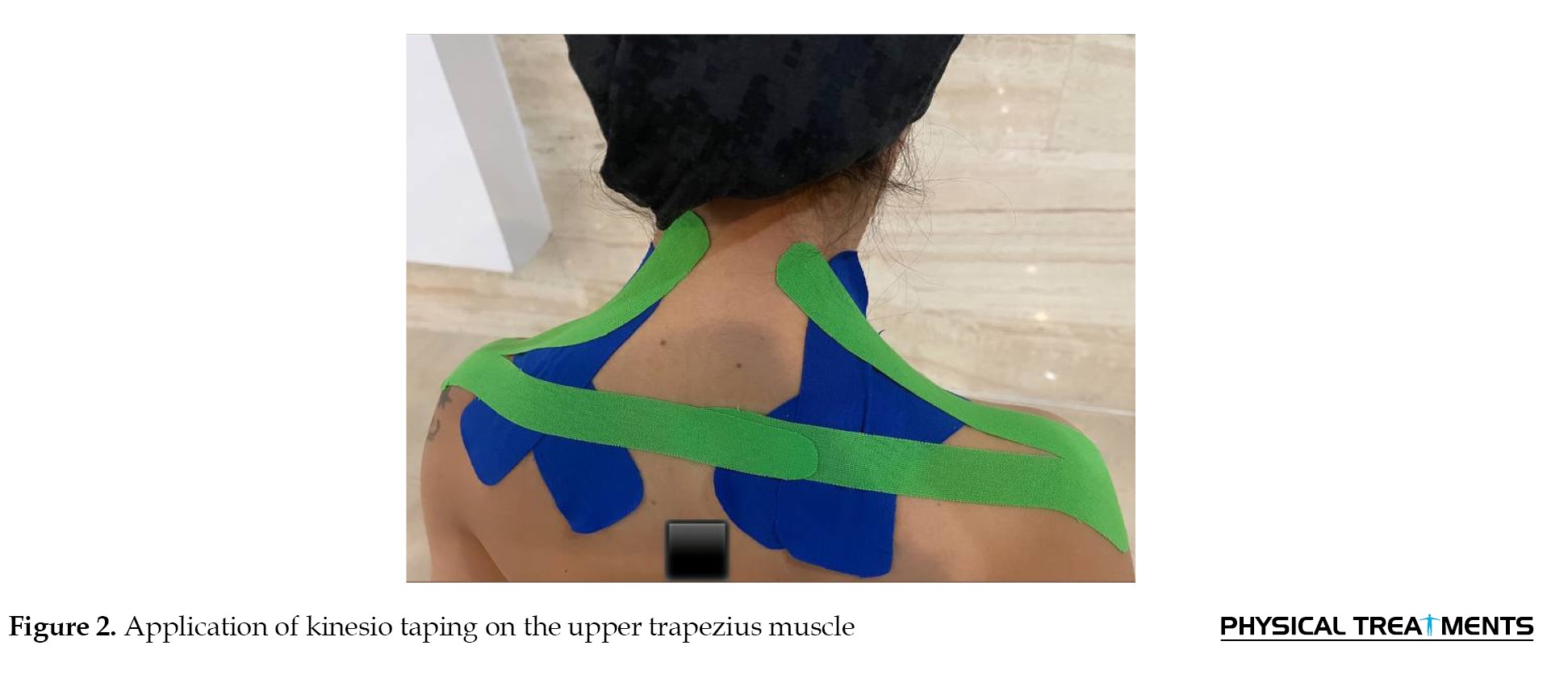
Participants in Group 3 received both the TE SMR protocol as described for Group 2, and Kinesio taping. The Kinesio tape was applied using the space correction technique directly over the painful point on the upper trapezius muscle in a crisscross pattern with approximately 30% stretch. In addition, the muscle inhibition technique was applied from the inferior aspect of the acromion (the muscle insertion) to the superior portion of the spine near the hairline (muscle origin) with approximately 25% stretch (Figure 2).
Trigger point release plus kinesio taping
Participants in Group 3 received both the TE SMR protocol as described for Group 2, and Kinesio taping. The Kinesio tape was applied using the space correction technique directly over the painful point on the upper trapezius muscle in a crisscross pattern with approximately 30% stretch. In addition, the muscle inhibition technique was applied from the inferior aspect of the acromion (the muscle insertion) to the superior portion of the spine near the hairline (muscle origin) with approximately 25% stretch (Figure 2).
In Groups 1 and 2 (control groups), to eliminate psychological effects, sham Kinesio taping was applied with similar appearance and placement but without stretch and without following the therapeutic Kinesio taping techniques [18].
Statistical Analysis
Data distribution was evaluated using the Kolmogorov–Smirnov test to assess normality, while Levene’s test was employed to verify the homogeneity of variances among the groups. Group comparisons were conducted using one-way ANOVA. A P<0.05 was considered indicative of statistical significance. All analyses were performed using SPSS software, version 22. The required number of participants was determined using G*Power software, version 3.1.9.2, based on appropriate statistical parameters to ensure sufficient power. Random allocation was used to assign participants to groups. Additionally, both the assessors and those performing the measurements were blinded to group allocation to minimize potential bias.
Results
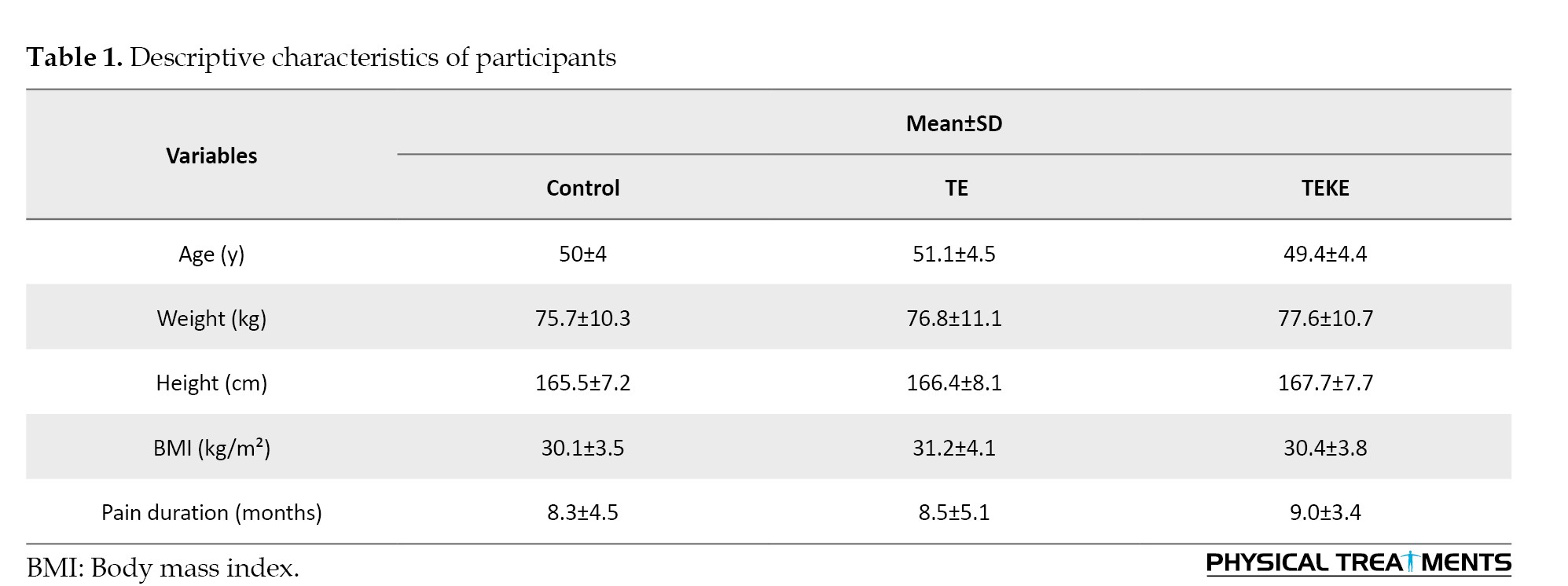
Baseline characteristics (age, weight, BMI, and duration of neck pain) showed no significant differences among the three groups (P>0.05) (Table 1).
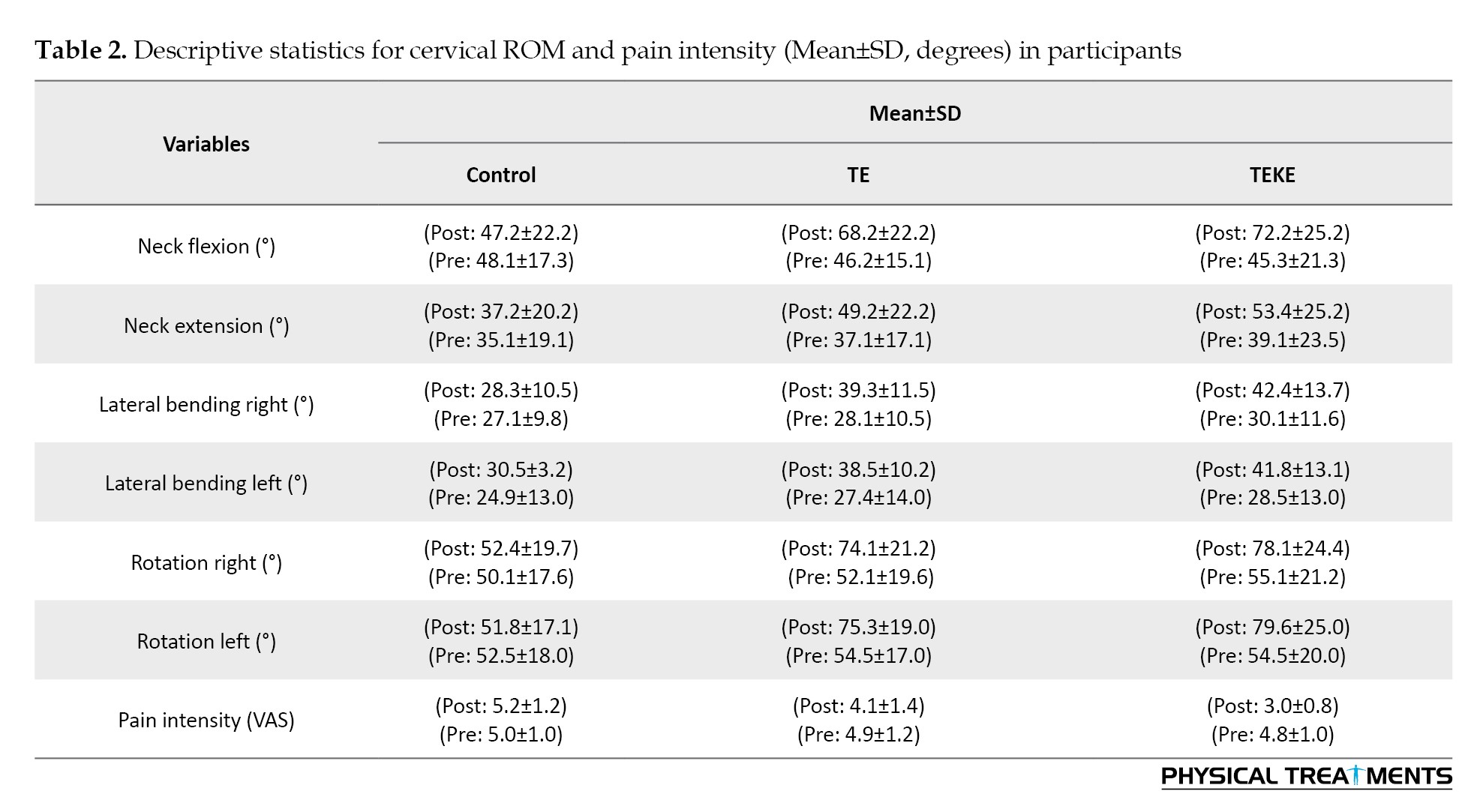
One-way ANOVA revealed that group means differed significantly. This was observed in post-test outcomes for neck pain intensity and cervical ROM. Tukey’s post-hoc analysis indicated that both the TE and TEKE showed significantly reduced neck pain and improved cervical ROM compared to the control group (P<0.05). Effect sizes (partial η²) for post-test differences were 0.46 for neck pain intensity and 0.42 for cervical ROM, indicating a large effect of the interventions compared to the control. No statistically significant differences were found between the TE and TEKE groups across any of the measured variables (P>0.05). Table 2 presents pre-test and post-test Mean±SD for cervical ROM and pain intensity.
All post-test assessments were conducted immediately after the completion of the final intervention to capture the immediate effects of the interventions.
Discussion
The results of this study showed that participants who received myofascial release using a TE, either alone or in combination with Kinesio taping, experienced significant improvements in their condition. These improvements included reduced neck pain and increased ROM in various directions of cervical movement. In contrast, those in the control group who received no intervention showed no significant improvement. Overall, the findings suggest that these simple and accessible techniques may be effective for managing nonspecific chronic neck pain.
Previous research has shown that SMR using a TE can reduce muscle tension, alleviate pain, and improve flexibility and ROM. Wilke et al. (2016) reported in a systematic review that applying myofascial release to superficial muscles enhances flexibility, while studies in patients with chronic stroke have found improvements in muscle function, overall physical capacity, and daily activities [19]. Similarly, MacLennan et al. (2023) highlighted that small tools, such as TEs, are particularly effective for targeting localized areas of discomfort and may support mobility and resistance training performance [20]. These reports are consistent with the present study, in which both intervention groups (TE and TEKE) achieved significant short-term improvements.
Several factors may explain these results. Pressure applied with a TE can make the fascia softer and more flexible, which helps improve movement and stretch tolerance. It may also affect the nervous system by relaxing muscles, increasing parasympathetic activity, reducing stress signals, and raising pain tolerance [21, 22]. However, since these mechanisms were not directly measured in our study, they should only be considered as possible explanations.
The present results align with those of Matinfard et al. (2024), who reported that both therapist-delivered massage and SMR reduced pain and improved cervical ROM in women with trapezius myofascial pain syndrome [21]. Importantly, their study compared professional massage to SMR, whereas the current study focused specifically on TE SMR, with or without Kinesio taping. Although manual massage may induce more immediate relief, SMR represents a practical, low-cost, and self-directed alternative for managing MTrPs. Similarly, Bingölbali et al. (2024) found that deep-tissue massage significantly improved pain, disability, and ROM in individuals with MTrPs [7]. While both studies involved therapist-administered techniques, our findings extend the literature by showing comparable short-term benefits of self-administered SMR, highlighting its feasibility and accessibility.
Regarding Kinesio taping, no additional benefit was observed when it was combined with TE SMR. This finding is consistent with prior work by Assudani et al. (2021), who reported that both Kinesio taping and ischemic compression improved cervical lateral flexion and pain in patients with trapezius trigger points, with no clear superiority between techniques [22]. Similarly, Yasar et al. (2021) compared KT and dry needling and found improvements in pain and disability for both interventions, but without significant differences between them [23]. These results suggest that while KT may provide beneficial effects, its immediate impact may be modest compared to the more pronounced mechanical and sensory stimulation from SMR. The absence of an additive effect in the current study may also be related to the short intervention duration, variability in taping response, or the possibility that KT benefits are more evident during functional or dynamic tasks rather than static ROM assessments.
In summary, this study demonstrated that TE SMR, with or without Kinesio taping, produced significant short-term reductions in pain and improvements in cervical ROM among women with nonspecific chronic neck pain. While these results highlight the potential of SMR as a low-cost, accessible intervention, the absence of additional effects from KT suggests that SMR alone may be sufficient for immediate improvements.
The present study has several limitations that should be considered when interpreting the findings. First, the single-session design and absence of long-term follow-up limit conclusions regarding the durability of the effects. Second, only female participants were included, which restricts generalizability to broader populations. Third, participants’ daily activities outside the study were not controlled, which may have influenced outcomes. Finally, the relatively small sample size and narrow age range may further limit the applicability of the results. Therefore, future research should use larger and more diverse samples, include objective measures, and examine long-term effects through well-controlled study designs.
Conclusion
TE SMR demonstrated short-term benefits in reducing neck pain and improving cervical ROM in women with nonspecific chronic neck pain. While both intervention groups improved compared to the control group, the addition of Kinesio taping did not provide superior outcomes. These findings suggest that SMR may serve as a simple, low-cost adjunct for short-term management of neck pain. Further studies are needed to evaluate its long-term effectiveness and applicability across diverse populations.
Ethical Considerations
Compliance with ethical guidelines
This study was conducted in accordance with the ethical principles of the Declaration of Helsinki and was approved by the Ethics Committee of Islamic Azad University, Karaj Branch, Karaj, Iran (Code: IR.IAU.K.REC.1404.037). The clinical trial was registered in the Iranian Registry of Clinical Trials (IRCT) (Code: IRCT20240907062968N6). Written informed consent was obtained from all participants before enrollment in the study. Participants were informed of the purpose and procedures of the study, and participation was entirely voluntary. All participants had the right to withdraw from the study at any time without any consequences.
Funding
This research received no specific grants from any funding agency in the public, commercial, or not-for-profit sectors.
Authors' contributions
Data collection: Ali Honarvar and Shiva Mohajer; Conceptualization, methodology, supervision: Vahid Mazloum; Formal analysis, and writing the original draft: Ali Honarvar; Formal analysis, validation: Masoume Matin; Review and editing: Shiva Mohajer; Review the manuscript and final approval: All authors.
Conflict of interest
The authors declared no conflicts of interest.
Acknowledgments
The authors thank all participants who took part in this study for their time, cooperation, and commitment.
Statistical Analysis
Data distribution was evaluated using the Kolmogorov–Smirnov test to assess normality, while Levene’s test was employed to verify the homogeneity of variances among the groups. Group comparisons were conducted using one-way ANOVA. A P<0.05 was considered indicative of statistical significance. All analyses were performed using SPSS software, version 22. The required number of participants was determined using G*Power software, version 3.1.9.2, based on appropriate statistical parameters to ensure sufficient power. Random allocation was used to assign participants to groups. Additionally, both the assessors and those performing the measurements were blinded to group allocation to minimize potential bias.
Results
Baseline characteristics (age, weight, BMI, and duration of neck pain) showed no significant differences among the three groups (P>0.05) (Table 1).
One-way ANOVA revealed that group means differed significantly. This was observed in post-test outcomes for neck pain intensity and cervical ROM. Tukey’s post-hoc analysis indicated that both the TE and TEKE showed significantly reduced neck pain and improved cervical ROM compared to the control group (P<0.05). Effect sizes (partial η²) for post-test differences were 0.46 for neck pain intensity and 0.42 for cervical ROM, indicating a large effect of the interventions compared to the control. No statistically significant differences were found between the TE and TEKE groups across any of the measured variables (P>0.05). Table 2 presents pre-test and post-test Mean±SD for cervical ROM and pain intensity.
All post-test assessments were conducted immediately after the completion of the final intervention to capture the immediate effects of the interventions.
Discussion
The results of this study showed that participants who received myofascial release using a TE, either alone or in combination with Kinesio taping, experienced significant improvements in their condition. These improvements included reduced neck pain and increased ROM in various directions of cervical movement. In contrast, those in the control group who received no intervention showed no significant improvement. Overall, the findings suggest that these simple and accessible techniques may be effective for managing nonspecific chronic neck pain.
Previous research has shown that SMR using a TE can reduce muscle tension, alleviate pain, and improve flexibility and ROM. Wilke et al. (2016) reported in a systematic review that applying myofascial release to superficial muscles enhances flexibility, while studies in patients with chronic stroke have found improvements in muscle function, overall physical capacity, and daily activities [19]. Similarly, MacLennan et al. (2023) highlighted that small tools, such as TEs, are particularly effective for targeting localized areas of discomfort and may support mobility and resistance training performance [20]. These reports are consistent with the present study, in which both intervention groups (TE and TEKE) achieved significant short-term improvements.
Several factors may explain these results. Pressure applied with a TE can make the fascia softer and more flexible, which helps improve movement and stretch tolerance. It may also affect the nervous system by relaxing muscles, increasing parasympathetic activity, reducing stress signals, and raising pain tolerance [21, 22]. However, since these mechanisms were not directly measured in our study, they should only be considered as possible explanations.
The present results align with those of Matinfard et al. (2024), who reported that both therapist-delivered massage and SMR reduced pain and improved cervical ROM in women with trapezius myofascial pain syndrome [21]. Importantly, their study compared professional massage to SMR, whereas the current study focused specifically on TE SMR, with or without Kinesio taping. Although manual massage may induce more immediate relief, SMR represents a practical, low-cost, and self-directed alternative for managing MTrPs. Similarly, Bingölbali et al. (2024) found that deep-tissue massage significantly improved pain, disability, and ROM in individuals with MTrPs [7]. While both studies involved therapist-administered techniques, our findings extend the literature by showing comparable short-term benefits of self-administered SMR, highlighting its feasibility and accessibility.
Regarding Kinesio taping, no additional benefit was observed when it was combined with TE SMR. This finding is consistent with prior work by Assudani et al. (2021), who reported that both Kinesio taping and ischemic compression improved cervical lateral flexion and pain in patients with trapezius trigger points, with no clear superiority between techniques [22]. Similarly, Yasar et al. (2021) compared KT and dry needling and found improvements in pain and disability for both interventions, but without significant differences between them [23]. These results suggest that while KT may provide beneficial effects, its immediate impact may be modest compared to the more pronounced mechanical and sensory stimulation from SMR. The absence of an additive effect in the current study may also be related to the short intervention duration, variability in taping response, or the possibility that KT benefits are more evident during functional or dynamic tasks rather than static ROM assessments.
In summary, this study demonstrated that TE SMR, with or without Kinesio taping, produced significant short-term reductions in pain and improvements in cervical ROM among women with nonspecific chronic neck pain. While these results highlight the potential of SMR as a low-cost, accessible intervention, the absence of additional effects from KT suggests that SMR alone may be sufficient for immediate improvements.
The present study has several limitations that should be considered when interpreting the findings. First, the single-session design and absence of long-term follow-up limit conclusions regarding the durability of the effects. Second, only female participants were included, which restricts generalizability to broader populations. Third, participants’ daily activities outside the study were not controlled, which may have influenced outcomes. Finally, the relatively small sample size and narrow age range may further limit the applicability of the results. Therefore, future research should use larger and more diverse samples, include objective measures, and examine long-term effects through well-controlled study designs.
Conclusion
TE SMR demonstrated short-term benefits in reducing neck pain and improving cervical ROM in women with nonspecific chronic neck pain. While both intervention groups improved compared to the control group, the addition of Kinesio taping did not provide superior outcomes. These findings suggest that SMR may serve as a simple, low-cost adjunct for short-term management of neck pain. Further studies are needed to evaluate its long-term effectiveness and applicability across diverse populations.
Ethical Considerations
Compliance with ethical guidelines
This study was conducted in accordance with the ethical principles of the Declaration of Helsinki and was approved by the Ethics Committee of Islamic Azad University, Karaj Branch, Karaj, Iran (Code: IR.IAU.K.REC.1404.037). The clinical trial was registered in the Iranian Registry of Clinical Trials (IRCT) (Code: IRCT20240907062968N6). Written informed consent was obtained from all participants before enrollment in the study. Participants were informed of the purpose and procedures of the study, and participation was entirely voluntary. All participants had the right to withdraw from the study at any time without any consequences.
Funding
This research received no specific grants from any funding agency in the public, commercial, or not-for-profit sectors.
Authors' contributions
Data collection: Ali Honarvar and Shiva Mohajer; Conceptualization, methodology, supervision: Vahid Mazloum; Formal analysis, and writing the original draft: Ali Honarvar; Formal analysis, validation: Masoume Matin; Review and editing: Shiva Mohajer; Review the manuscript and final approval: All authors.
Conflict of interest
The authors declared no conflicts of interest.
Acknowledgments
The authors thank all participants who took part in this study for their time, cooperation, and commitment.
References
- Navarro-Santana MJ, Sanchez-Infante J, Gómez-Chiguano GF, Cleland JA, Fernández-de-Las-Peñas C, Martín-Casas P, et al. Dry needling versus trigger point injection for neck pain symptoms associated with myofascial trigger points: A systematic review and meta-analysis. Pain Medicine. 2022; 23(3):515-25. [DOI:10.1093/pm/pnab188] [PMID]
- Vos T, Abajobir AA, Abate KH, Abbafati C, Abbas KM, Abd-Allah F, et al. Global, regional, and national incidence, prevalence, and years lived with disability for 328 diseases and injuries for 195 countries, 1990-2016: A systematic analysis for the Global Burden of Disease Study 2016. The Lancet. 2017; 390(10100):1211-59. [DOI:10.1016/S0140-6736(17)32154-2] [PMID]
- Travell JG, Simons DG. Myofascial pain and dysfunction. Philadelphia: The trigger point manual: Lippincott Williams & Wilkins; 1992. [Link]
- Cerezo-Téllez E, Torres-Lacomba M, Mayoral-del Moral O, Sánchez-Sánchez B, Dommerholt J, Gutiérrez-Ortega C. Prevalence of myofascial pain syndrome in chronic non-specific neck pain: A population-based cross-sectional descriptive study. Pain Medicine. 2016; 17(12):2369-77. [DOI:10.1093/pm/pnw114] [PMID]
- Hakim IK, Takamjani IE, Sarrafzadeh J, Ezzati K, Bagheri R. The effect of dry needling on the active trigger point of upper trapezius muscle: Eliciting local twitch response on long-term clinical outcomes. Journal of Back and Musculoskeletal Rehabilitation. 2019; 32(5):717-24. [DOI:10.3233/BMR-181286] [PMID] [PMCID]
- Amjad F, Khalid A. Comparative effects of Bowen therapy and tennis ball technique on pain and functional disability in patients with thoracic myofascial pain syndrome. Journal of Orthopaedic Surgery and Research. 2023; 18(1):895. [DOI:10.1186/s13018-023-04379-z] [PMID] [PMCID]
- Bingölbali Ö, Taşkaya C, Alkan H, Altındağ Ö. The effectiveness of deep tissue massage on pain, trigger point, disability, range of motion and quality of life in individuals with myofascial pain syndrome. Somatosensory & Motor Research. 2024; 41(1):11-7. [DOI:10.1080/08990220.2023.2165054] [PMID]
- Majchrzycki M, Kocur P, Kotwicki T. Deep tissue massage and nonsteroidal anti‐inflammatory drugs for low back pain: A prospective randomized trial. The Scientific World Journal. 2014; 2014(1):287597. [DOI:10.1155/2014/287597] [PMID] [PMCID]
- Hameed FS, Srivastava S. Effect of self myofascial release using foam roller versus tennis ball in subjects with plantar fasciitis: A comparative study. Indian Journal of Public Health Research & Development. 2020; 11(2):480. [DOI:10.37506/v11/i2/2020/ijphrd/194849]
- Parikh RJ, Sutaria JM, Ahsan M, Nuhmani S, Alghadir AH, Khan M. Effects of myofascial release with tennis ball on spasticity and motor functions of upper limb in patients with chronic stroke: A randomized controlled trial. Medicine. 2022; 101(31):e29926. [DOI:10.1097/MD.0000000000029926] [PMID] [PMCID]
- Bagheri R, Delkhoush CT, Mirmohammadkhani M, Farokhi ZS, Bakhshi S. Comparison of dry needling and inhibitory kinesio taping in treatment of myofascial pain syndrome of the upper trapezius muscle: A randomized controlled trial. Journal of Chiropractic Medicine. 2022; 21(1):23-31. [DOI:10.1016/j.jcm.2022.01.003] [PMID] [PMCID]
- Davison EA, Anderson CT, Ponist BH, Werner DM, Jacobs ME, Thompson AJ, et al. Inhibitory effect of the Kinesio Taping® method on the gastrocnemius muscle. American Journal of Sports Science and Medicine. 2016; 4(2):33-8. [DOI:10.12691/ajssm-4-2-2]
- Öztürk G, Külcü DG, Mesci N, Şilte AD, Aydog E. Efficacy of kinesio tape application on pain and muscle strength in patients with myofascial pain syndrome: A placebo-controlled trial. Journal of Physical Therapy Science. 2016; 28(4):1074-9. [DOI:10.1589/jpts.28.1074] [PMID] [PMCID]
- Martín-Sacristán L, Calvo-Lobo C, Pecos-Martín D, Fernández-Carnero J, Alonso-Pérez JL. Dry needling in active or latent trigger point in patients with neck pain: A randomized clinical trial. Scientific Reports. 2022; 12(1):3188. [DOI:10.1038/s41598-022-07063-0] [PMID] [PMCID]
- Araujo GGC, Pontes-Silva A, Leal PdC, Gomes BS, Reis ML, de Mello Pereira Lima SK, et al. Goniometry and fleximetry measurements to assess cervical range of motion in individuals with chronic neck pain: A validity and reliability study. BMC Musculoskeletal Disorders. 2024; 25(1):651. [DOI:10.1186/s12891-024-07775-6] [PMID] [PMCID]
- Zamani S, Okhovatian F, Naemi S-S, Baghban AA. Intra-examiner reliability of goniometer instrument for all active movements of cervical spine in asymptomatic young women. Journal of Rehabilitation Medicine. 2016; 4(4):57-64. [Link]
- Kovalova L, Kovalev V. Justification of the effectiveness of the technique of myofascial self-massage using tennis balls in fitness. Health, Sport, Rehabilitation. 2019; 5(3):53-62. [DOI:10.34142/HSR.2019.05.03.06]
- Kalichman L, Levin I, Bachar I, Vered E. Short-term effects of kinesio taping on trigger points in upper trapezius and gastrocnemius muscles. Journal of bodywork and movement therapies. 2018; 22(3):700-6. [DOI:10.1016/j.jbmt.2017.11.005] [PMID]
- Wilke J, Krause F, Vogt L, Banzer W. What is evidence-based about myofascial chains: A systematic review. Archives of Physical Medicine and Rehabilitation. 2016; 97(3):454-61. [DOI:10.1016/j.apmr.2015.07.023] [PMID] [PMCID]
- MacLennan M, Ramirez-Campillo R, Byrne PJ. Self-massage techniques for the management of pain and mobility with application to resistance training: A brief review. The Journal of Strength & Conditioning Research. 2023; 37(11):2314-23. [DOI:10.1519/JSC.0000000000004575] [PMID]
- Matinfard S, Hovanloo F. Comparison of the effect of one week of myofascial self-release process and massage on pain and range of motion of neck in women with trapezius muscle trigger points. Sport Sciences and Health Research. 2024; 16(2):217-27. [DOI:10.22059/sshr.2024.377293.1144]
- Assudani D, Desouza C, Palekar T. Immediate effect of kinesio tapping VS ischaemic compression on myofascial trigger points of trapezius muscle. International Journal of Orthopaedics and Physiotherapy. 2021; 3(1):4-7. [DOI:10.33545/26648989.2021.v3.i1a.12]
- Yasar MF, Yaksi E, Kurul R, Alisik T, Seker Z. Comparison of dry needling and kinesio taping methods in the treatment of myofascial pain syndrome: A single blinded randomised controlled study. International Journal of Clinical Practice. 2021; 75(10):e14561. [DOI:10.1111/ijcp.14561] [PMCID]
Type of Study: Research |
Subject:
Sport injury and corrective exercises
Received: 2025/05/22 | Accepted: 2025/10/21 | Published: 2026/10/18
Received: 2025/05/22 | Accepted: 2025/10/21 | Published: 2026/10/18
Send email to the article author
| Rights and permissions | |
 |
This work is licensed under a Creative Commons Attribution-NonCommercial 4.0 International License. |

This is an open access article distributed under the terms of the Creative Commons Attribution-NonCommercial 4.0 (CC-By-NC 4.0), which permits use, distribution, and reproduction in any medium, provided the original work is properly cited and is not used for commercial purposes.
Contact Information