Tue, Oct 13, 2026
Volume 16, Issue 3 (Summer 2026)
PTJ 2026, 16(3): 321-332 |
Back to browse issues page



Download citation:
BibTeX | RIS | EndNote | Medlars | ProCite | Reference Manager | RefWorks
Send citation to:


BibTeX | RIS | EndNote | Medlars | ProCite | Reference Manager | RefWorks
Send citation to:
Kumar P, Rathee R, Sangwan N, Nara K, Fitrianto A T, Rahman H. Hand Grip Strength and Peak Expiratory Flow: Effects of Height, Weight, and BMI Adjustments. PTJ 2026; 16 (3) :321-332
URL: http://ptj.uswr.ac.ir/article-1-756-en.html
URL: http://ptj.uswr.ac.ir/article-1-756-en.html
Parveen Kumar *1, Rohit Rathee1, Naveen Sangwan1, Kuldeep Nara1, Ari Tri Fitrianto2, Hamidur Rahman3
1- Department of Physical Education, Chaudhary Ranbir Singh University, Jind, India.
2- Department of Sports Education, Faculty of Education and Teaching, Universitas Islam Kalimantan Muhammad Arsyad Al Banjari, Banjarmasin, Indonesia.
3- Department of Physical Education and Sports Science, Jashore University of Science and Technology, Jashore, Bangladesh.
2- Department of Sports Education, Faculty of Education and Teaching, Universitas Islam Kalimantan Muhammad Arsyad Al Banjari, Banjarmasin, Indonesia.
3- Department of Physical Education and Sports Science, Jashore University of Science and Technology, Jashore, Bangladesh.
Full-Text [PDF 1169 kb]
(1211 Downloads)
| Abstract (HTML) (3082 Views)
Results
Table 1 presents the characteristics of the participants, showing significant differences between men and women across most variables. Males had significantly greater height, weight, and BMI (P<0.001) than women. SMM was also higher in men (P<0.001), while body fat percentage (Fat%) was slightly higher in women, though not statistically significant (P=0.095). HGS was notably greater in men (P<0.001), reflecting differences in muscle mass. Similarly, PEFR was significantly higher in men (P<0.001), likely due to differences in lung capacity and respiratory muscle strength. These findings highlight sex-based variations in body composition, strength, and lung function.
Table 2 presents the changes in PEFR through HGS before and after adjusting the contribution of body composition variables, i.e. height, weight and BMI for both sexes.
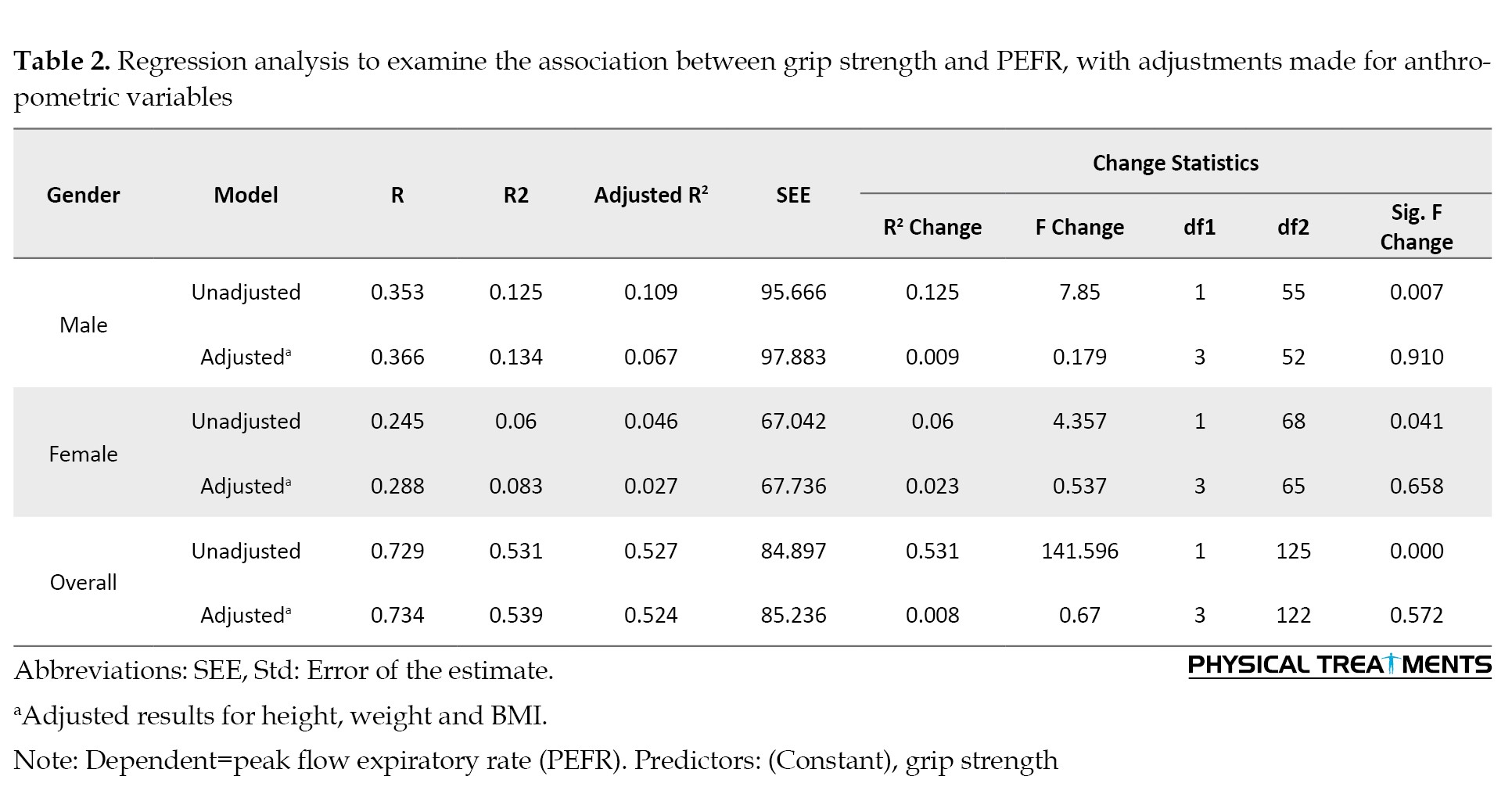
The unadjusted values of R square for male participants were 0.125(12.5%), indicating a small but significant (P<0.05) variation in PEFR. The height, weight and BMI have a negligible impact on R square changes of 0.009(0.09%) in PEFR. In female participants, the value of R square was 0.060(6%) explaining a very small but significant variation in PEFR by HGS as well. The body composition indices (height, weight, and BMI) contribute 0.023(2.3%) changes to the R square value. The cumulative impact of body composition metrics was not significant at the 0.05 level. Irrespective of gender, overall results also showed similar outcomes, with body composition metrics contributing 0.008(0.08%) to R square indicating a non-significant (P>0.05) impact.
Tables 3 and 4 present the regression analysis results for male and female participants, respectively, highlighting the association between HGS and PEFR while considering anthropometric variables.
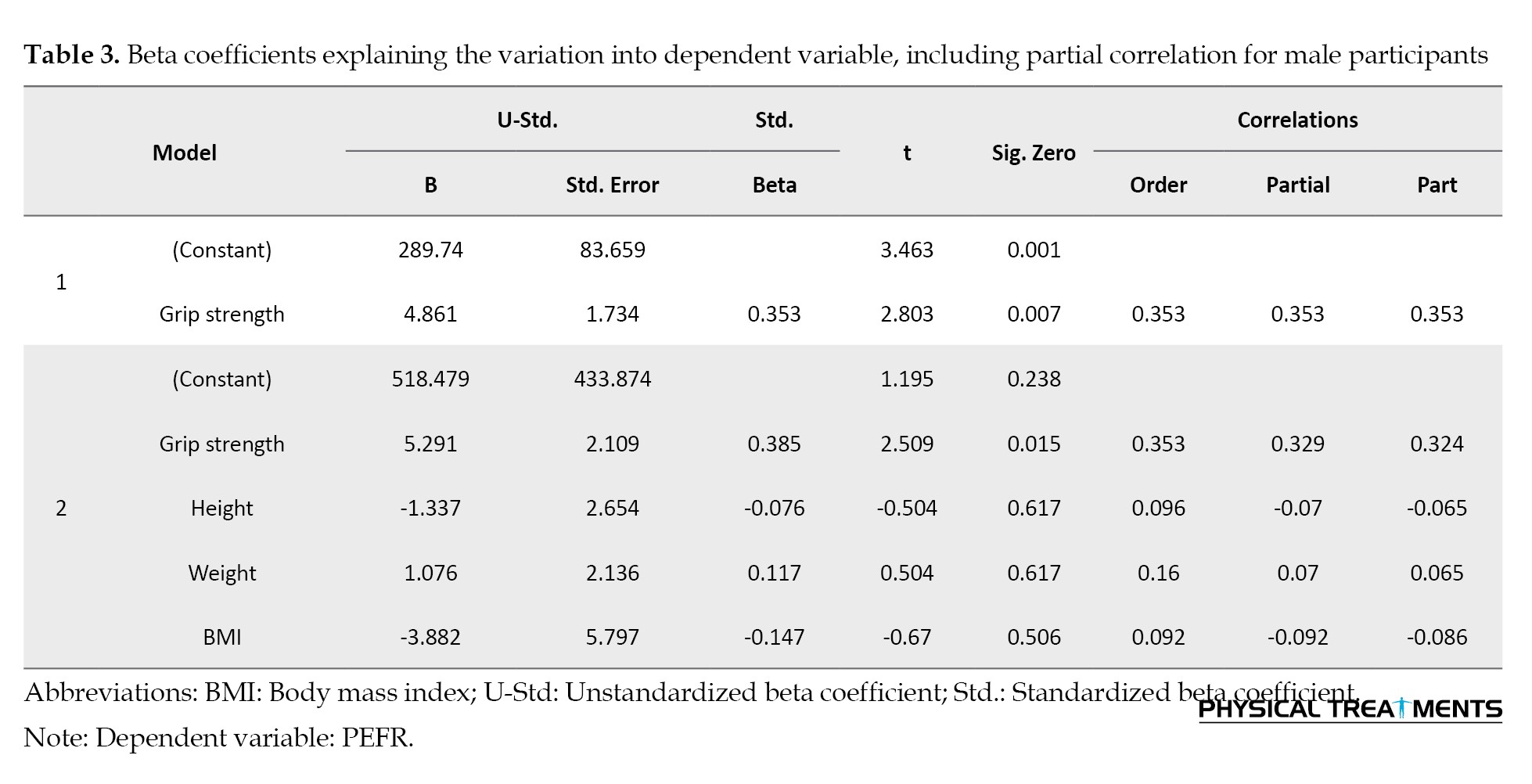
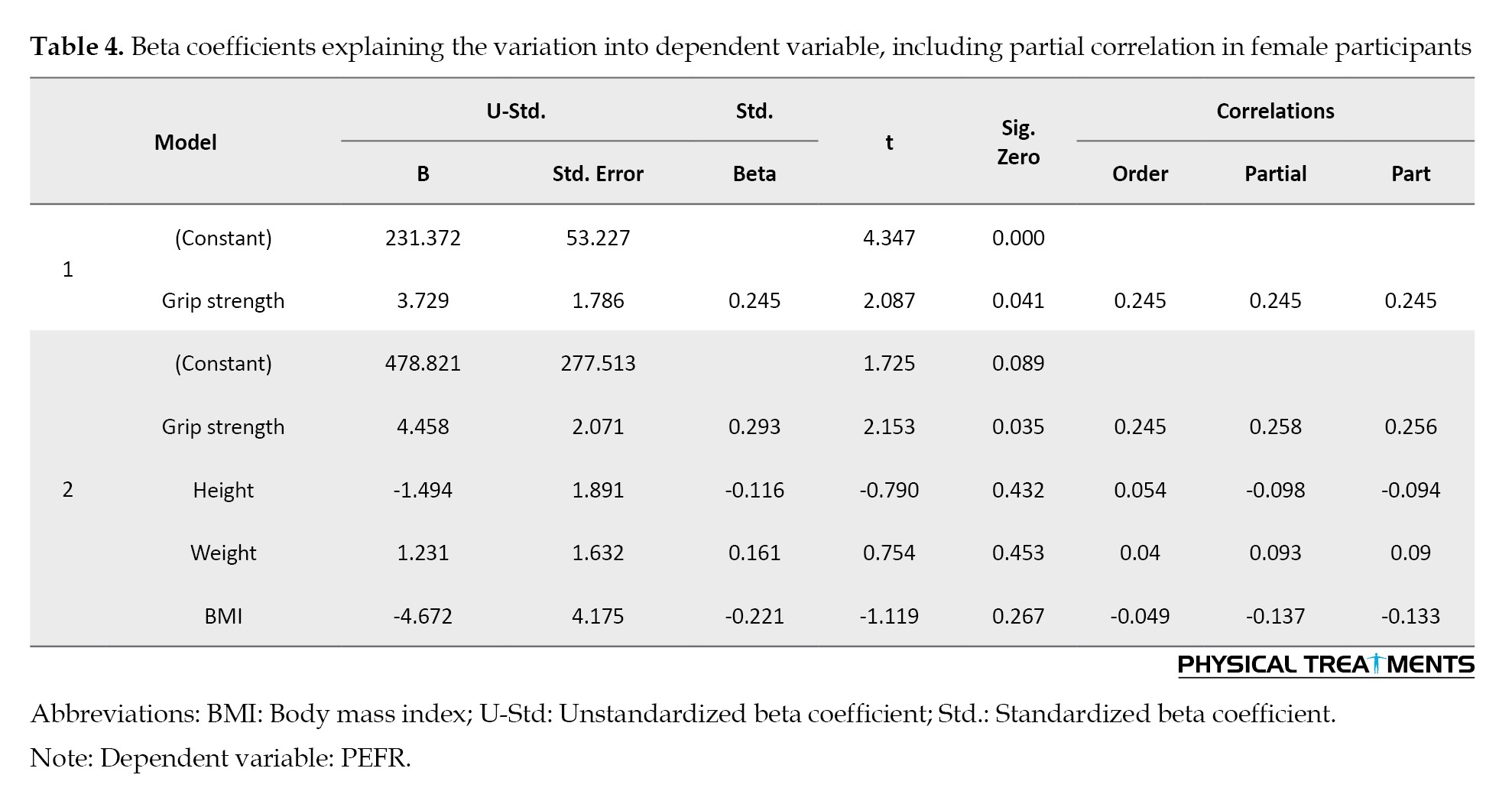
In both men and women, grip strength showed a moderate positive zero-order correlation with PEFR (r=0.353 in men, r=0.245 in women), indicating that stronger grip strength is generally associated with higher lung function. When controlling for height, weight, and BMI, the partial correlation of grip strength with PEFR remained significant in both men (r=0.329) and women (r=0.258), suggesting that grip strength contributes independently to lung function beyond the effects of body composition. The partial correlation values (r=0.324 in men, r=0.256 in women) indicate that grip strength uniquely explains a notable proportion of the variance in PEFR.
Conversely, height, weight, and BMI exhibited weak or negligible correlations with PEFR in both sexes. In men, height and BMI had near-zero or negative partial correlations, with BMI showing the strongest negative partial correlation (r=-0.092), though it was not statistically significant (P=0.506). In women, height and weight had small, and non-significant partial correlations (r=-0.098 and r=0.093, respectively), while BMI showed a slightly stronger negative partial correlation (r=-0.137) but remained non-significant (P=0.267). These findings indicate that grip strength is a more meaningful predictor of PEFR than traditional body composition variables, reinforcing its potential as a surrogate marker of respiratory function in both men and women.
Discussion
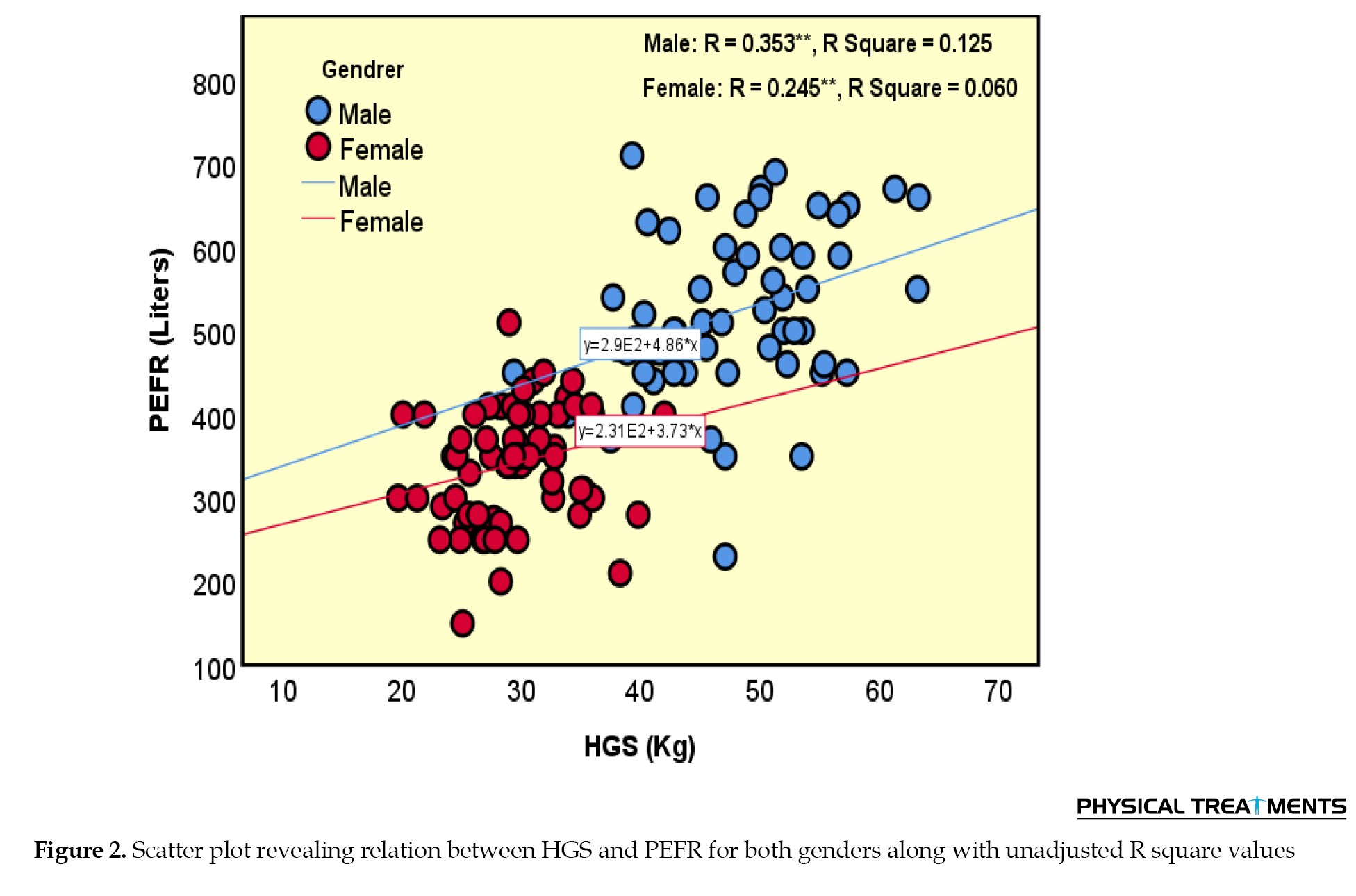
This study aimed to examine the relationship between HGS and PEFR, while adjusting for height, weight, and BMI. Additionally, an attempt was made to predict PEFR using the participants’ HGS. Figure 2 shows the prediction equations for both sexes.
Full-Text: (167 Views)
Introduction
Hand grip strength (HGS) is a crucial measure of the force exerted by the muscles of the hand and forearm, commonly considered a reflection of overall muscle strength and physical health [1]. It reflects the strength of the fingers, hand, wrist, and forearm. HGS is also recommended as a simple, noninvasive, and standardized clinical measure that can be used to diagnose muscle-related diseases, such as sarcopenia, which is age-related loss of muscle mass, strength, and function. Apart from the muscular strength, HGS is often used as an indicator of physical performance and functional mobility. The literature also shows a significant association between HGS and cardiovascular and metabolic health. Research indicates that HGS is a powerful predictor of all-cause mortality. A study in The Lancet found that lower grip strength was associated with an increased risk of early death, independent of other factors, such as blood pressure and body mass index (BMI) [2, 3]. In some recent studies, HGS is used as a predictor of post-exercise recovery and a biomarker of muscle damage [4, 5].
The peak expiratory flow rate (PEFR) is a measure of how quickly a person can forcefully exhale air from the lungs after maximal inhalation, serving as a crucial indicator of airway function and respiratory health [6]. It is an important indicator of lung function and is frequently used to identify and track conditions, such as asthma and chronic obstructive pulmonary disease (COPD) [7]. PEFR is measured using a peak flow meter, a small handheld device into which patients blow forcefully. The reading is typically expressed in liters per minute (L/min).
Various studies have reported a significant association between respiratory volumes and HGS across different ages and health statuses. Most studies focus on patients with COPD [8–11] and older adults [8, 12–15]. A study conducted on 1427 adolescents of both sexes between the ages of 11-18.9 years revealed a significant association between HGS and PEFR and body mass density was predicted with HGS [16]. Another study conducted on healthy volunteers, aged 18-21 years, showed a moderate but significant correlation between PEFR and HGS [17].
Extensive literature supports the association between HGS and respiratory indices. However, several confounding factors influence this relationship. A study by Nara et al. reported a significant relationship between HGS and body composition parameters [18, 19]. Similarly, Sartorio et al. found that gender, body dimensions, and body composition significantly impact HGS [20]. Respiratory indices are also influenced by body structure, with anthropometric and body composition parameters showing strong associations with spirometry variables such as forced expiratory volume in one second and forced vital capacity [21]. Without accounting for these confounding factors, the results may be misleading. Therefore, the present study aimed to examine the true relationship between HGS and PEFR while considering height, weight, and BMI as potential confounders. Moreover, the study analyzed the extent to which HGS contributes to variation in PEFR, providing a clearer understanding of its predictive value for respiratory function. Since spirometry is complex and expensive to conduct, this study utilized HGS as a predictor of respiratory health, particularly in schools, colleges, and low-income countries where access to advanced diagnostic facilities is limited.
Materials and Methods
The participants in the present study were university students from diverse academic backgrounds, aged between 21 and 27 years. Participants were selected using simple random sampling from their respective classes. A random sequence was generated using the RAND function in Microsoft Excel, and the list was sorted to ensure unbiased selection. The inclusion criteria required that participants be apparently healthy and engage in moderate physical activity. Health status and levels of physical activity were self-reported by participants using a structured questionnaire. No clinical examinations were conducted to verify health status. Table 1 presents the demographic and physiological traits of the sample, including 57 men and 70 women.
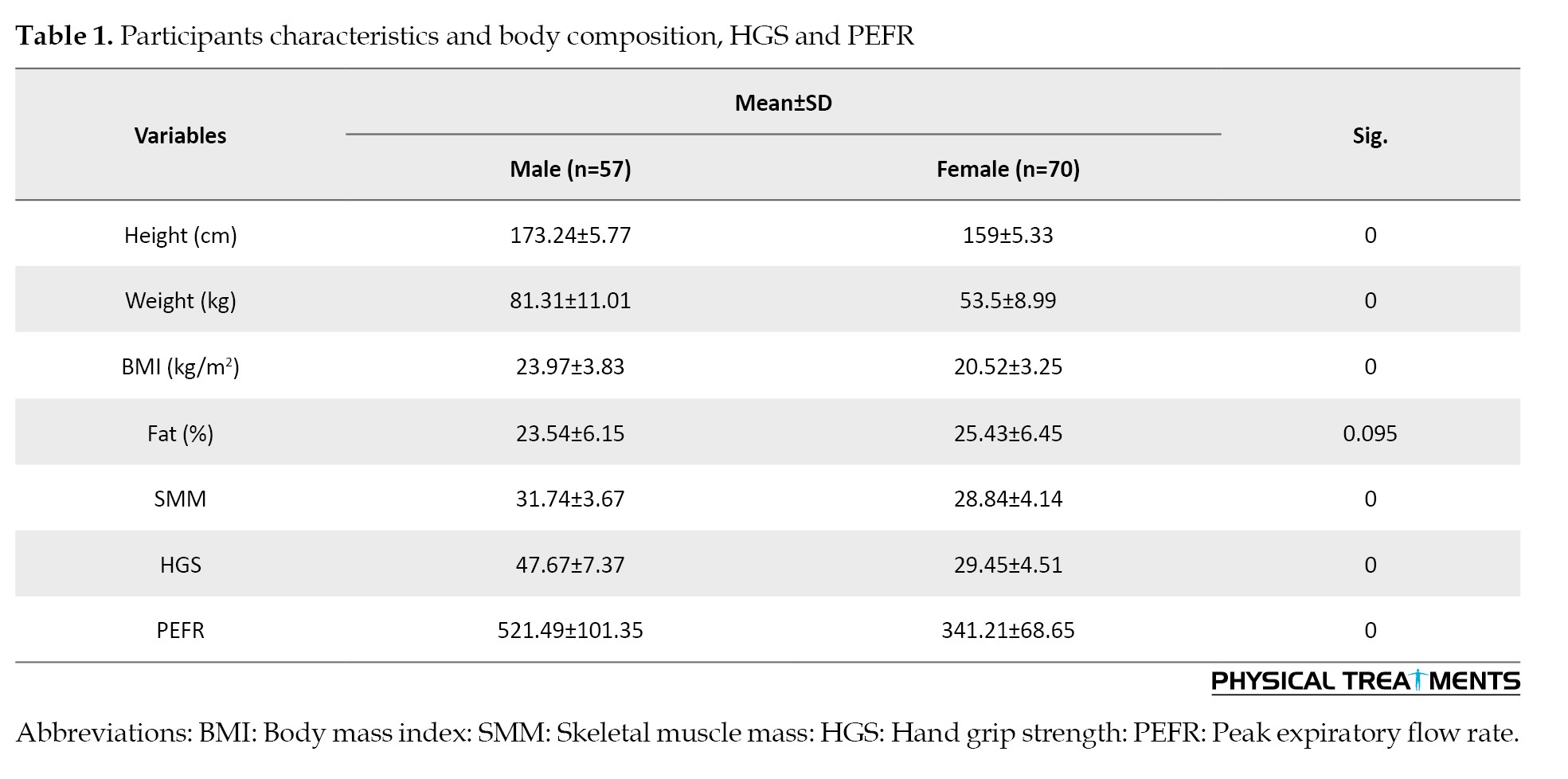
Significant differences were observed between men and women in height, weight, BMI, skeletal muscle mass (SMM), HGS, and PEFR (P<0.05). Men exhibited higher values in these parameters, with a mean height of 173.24 cm compared to 159 cm in women, and a significantly greater mean PEFR (521.49±101.35 L/min vs 341.21±68.65 L/min). However, body fat percentage did not differ significantly between the sexes (P=0.095). These characteristics provide a comprehensive overview of the sample population, highlighting key physiological differences between male and female participants. Informed consent was obtained from all participants prior to data collection, and the study was approved by the Institutional Review Board of Chaudhary Ranbir Singh University, Jind. The research adhered to the ethical guidelines outlined in the Declaration of Helsinki [22].
Measurement of body composition indices
The participants’ height was recorded using a standard stadiometer. They stood erect, barefoot, on the stadiometer platform, ensuring proper posture for accurate measurement. Height was recorded to the nearest 0.01 centimeter. Body composition was assessed using an Omron HBF-702T Body Composition Monitor [23]. This device employs bioelectrical impedance analysis (BIA) to evaluate parameters, such as body mass (kg), BMI, body fat percentage, and SMM. The HBF-702T features eight electrodes positioned on the foot and palm areas. Prior to BIA, participants were instructed to fast for at least 4–6 hours, avoid alcohol for 24 hours, and refrain from vigorous physical activity for 12 hours to minimize variations in body water content. They were also asked to empty their bladder within 30 minutes before the test and to remove any metal objects or electronic devices. Female participants were advised to avoid testing during menstruation, if possible. These precautions were taken to ensure the accuracy and reliability of BIA measurements. During measurement, participants stood barefoot on the device’s foot electrodes and held the handgrips at a 90-degree angle, ensuring proper electrode contact for accurate impedance measurement. The device is also used in various research works, including clinical and general research settings [24–26].
Measurement of PEFR
PEFR was measured using the Medicare Surgical® Peak Flow Meter, a reliable device for assessing lung function [27, 28]. To minimize the risk of communicable diseases, a clean disposable mouthpiece was used for each participant. Measurements were conducted with participants standing to facilitate optimal lung expansion and airflow. Each participant was instructed to take a deep breath followed by a strong exhalation into the peak flow meter as rapidly and completely as possible. PEFR values were recorded in liters per minute (L/min). To ensure accuracy and consistency, each participant performed three trials, and the highest value was used for analysis.
Measurement of grip strength
The HGS was assessed using a properly calibrated Camry baseline digital hand dynamometer (200 lb/90 kg capacity). Participants performed the test in a standing position, using their dominant hand to ensure consistency. Hand dominance was determined by self-report, with participants identifying the hand they predominantly used for writing and other daily activities. Before each measurement, the dynamometer handle was adjusted according to the participant’s hand span, ensuring an optimal grip for both men and women. Each participant was instructed to squeeze the device with maximum effort for a few seconds without any additional body movement or support. Three trials were conducted, with 3 minutes’ rest between each attempt to prevent fatigue. The highest recorded value (in kilograms) from the three attempts was used for analysis.
Statistical analysis
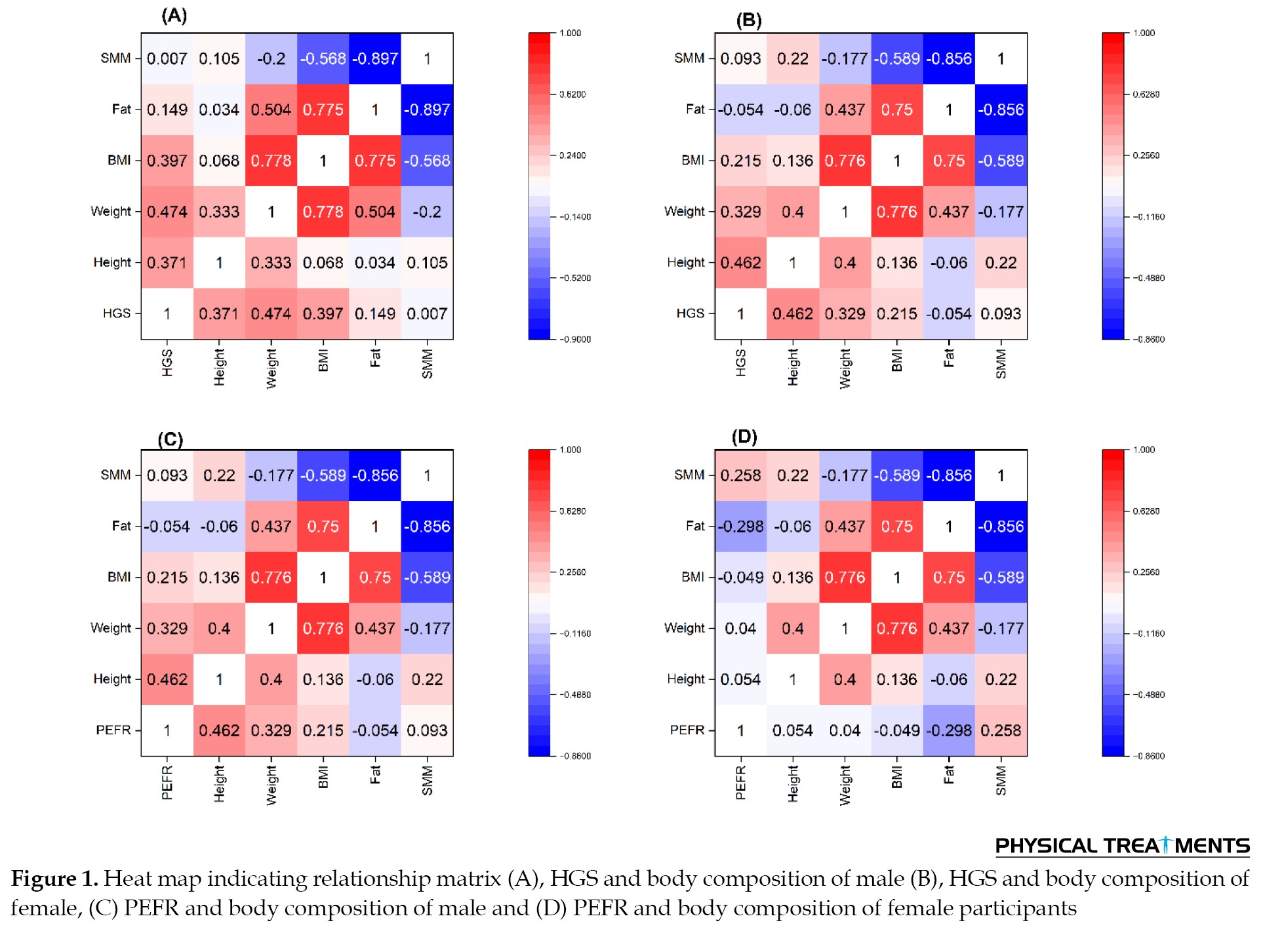
The arithmetic Mean±SD were applied as measures of central tendency and variability to summarize participants’ demographic and clinical characteristics, body composition, HGS, and peak expiratory flow results. To assess whether the data followed a normal distribution, the Kolmogorov-Smirnov and Shapiro–Wilk tests were applied. Multicollinearity among predictor variables was evaluated using tolerance and variance inflation factor values, with tolerable thresholds indicating no significant multicollinearity. An independent-samples t-test was conducted to compare selected variables between male and female participants. The association between PEFR and grip strength was examined separately for men and women using linear regression analysis, both unadjusted and adjusted for age, height, and weight. Zero-order, part, and partial correlations were calculated to evaluate the contribution of body composition variables to both the dependent and independent variables. A standard (enter method) multiple linear regression method was used, in which all independent variables were included in the model at once to evaluate both their combined and separate effects on predicting the dependent variable. All statistical analyses were conducted using SPSS software, version 26.0. Correlations between the variables of interest were illustrated using a heat plot (Figure 1), in which the degree of correlation was mapped from blue (negative correlation) to red (positive correlation).
Hand grip strength (HGS) is a crucial measure of the force exerted by the muscles of the hand and forearm, commonly considered a reflection of overall muscle strength and physical health [1]. It reflects the strength of the fingers, hand, wrist, and forearm. HGS is also recommended as a simple, noninvasive, and standardized clinical measure that can be used to diagnose muscle-related diseases, such as sarcopenia, which is age-related loss of muscle mass, strength, and function. Apart from the muscular strength, HGS is often used as an indicator of physical performance and functional mobility. The literature also shows a significant association between HGS and cardiovascular and metabolic health. Research indicates that HGS is a powerful predictor of all-cause mortality. A study in The Lancet found that lower grip strength was associated with an increased risk of early death, independent of other factors, such as blood pressure and body mass index (BMI) [2, 3]. In some recent studies, HGS is used as a predictor of post-exercise recovery and a biomarker of muscle damage [4, 5].
The peak expiratory flow rate (PEFR) is a measure of how quickly a person can forcefully exhale air from the lungs after maximal inhalation, serving as a crucial indicator of airway function and respiratory health [6]. It is an important indicator of lung function and is frequently used to identify and track conditions, such as asthma and chronic obstructive pulmonary disease (COPD) [7]. PEFR is measured using a peak flow meter, a small handheld device into which patients blow forcefully. The reading is typically expressed in liters per minute (L/min).
Various studies have reported a significant association between respiratory volumes and HGS across different ages and health statuses. Most studies focus on patients with COPD [8–11] and older adults [8, 12–15]. A study conducted on 1427 adolescents of both sexes between the ages of 11-18.9 years revealed a significant association between HGS and PEFR and body mass density was predicted with HGS [16]. Another study conducted on healthy volunteers, aged 18-21 years, showed a moderate but significant correlation between PEFR and HGS [17].
Extensive literature supports the association between HGS and respiratory indices. However, several confounding factors influence this relationship. A study by Nara et al. reported a significant relationship between HGS and body composition parameters [18, 19]. Similarly, Sartorio et al. found that gender, body dimensions, and body composition significantly impact HGS [20]. Respiratory indices are also influenced by body structure, with anthropometric and body composition parameters showing strong associations with spirometry variables such as forced expiratory volume in one second and forced vital capacity [21]. Without accounting for these confounding factors, the results may be misleading. Therefore, the present study aimed to examine the true relationship between HGS and PEFR while considering height, weight, and BMI as potential confounders. Moreover, the study analyzed the extent to which HGS contributes to variation in PEFR, providing a clearer understanding of its predictive value for respiratory function. Since spirometry is complex and expensive to conduct, this study utilized HGS as a predictor of respiratory health, particularly in schools, colleges, and low-income countries where access to advanced diagnostic facilities is limited.
Materials and Methods
The participants in the present study were university students from diverse academic backgrounds, aged between 21 and 27 years. Participants were selected using simple random sampling from their respective classes. A random sequence was generated using the RAND function in Microsoft Excel, and the list was sorted to ensure unbiased selection. The inclusion criteria required that participants be apparently healthy and engage in moderate physical activity. Health status and levels of physical activity were self-reported by participants using a structured questionnaire. No clinical examinations were conducted to verify health status. Table 1 presents the demographic and physiological traits of the sample, including 57 men and 70 women.
Significant differences were observed between men and women in height, weight, BMI, skeletal muscle mass (SMM), HGS, and PEFR (P<0.05). Men exhibited higher values in these parameters, with a mean height of 173.24 cm compared to 159 cm in women, and a significantly greater mean PEFR (521.49±101.35 L/min vs 341.21±68.65 L/min). However, body fat percentage did not differ significantly between the sexes (P=0.095). These characteristics provide a comprehensive overview of the sample population, highlighting key physiological differences between male and female participants. Informed consent was obtained from all participants prior to data collection, and the study was approved by the Institutional Review Board of Chaudhary Ranbir Singh University, Jind. The research adhered to the ethical guidelines outlined in the Declaration of Helsinki [22].
Measurement of body composition indices
The participants’ height was recorded using a standard stadiometer. They stood erect, barefoot, on the stadiometer platform, ensuring proper posture for accurate measurement. Height was recorded to the nearest 0.01 centimeter. Body composition was assessed using an Omron HBF-702T Body Composition Monitor [23]. This device employs bioelectrical impedance analysis (BIA) to evaluate parameters, such as body mass (kg), BMI, body fat percentage, and SMM. The HBF-702T features eight electrodes positioned on the foot and palm areas. Prior to BIA, participants were instructed to fast for at least 4–6 hours, avoid alcohol for 24 hours, and refrain from vigorous physical activity for 12 hours to minimize variations in body water content. They were also asked to empty their bladder within 30 minutes before the test and to remove any metal objects or electronic devices. Female participants were advised to avoid testing during menstruation, if possible. These precautions were taken to ensure the accuracy and reliability of BIA measurements. During measurement, participants stood barefoot on the device’s foot electrodes and held the handgrips at a 90-degree angle, ensuring proper electrode contact for accurate impedance measurement. The device is also used in various research works, including clinical and general research settings [24–26].
Measurement of PEFR
PEFR was measured using the Medicare Surgical® Peak Flow Meter, a reliable device for assessing lung function [27, 28]. To minimize the risk of communicable diseases, a clean disposable mouthpiece was used for each participant. Measurements were conducted with participants standing to facilitate optimal lung expansion and airflow. Each participant was instructed to take a deep breath followed by a strong exhalation into the peak flow meter as rapidly and completely as possible. PEFR values were recorded in liters per minute (L/min). To ensure accuracy and consistency, each participant performed three trials, and the highest value was used for analysis.
Measurement of grip strength
The HGS was assessed using a properly calibrated Camry baseline digital hand dynamometer (200 lb/90 kg capacity). Participants performed the test in a standing position, using their dominant hand to ensure consistency. Hand dominance was determined by self-report, with participants identifying the hand they predominantly used for writing and other daily activities. Before each measurement, the dynamometer handle was adjusted according to the participant’s hand span, ensuring an optimal grip for both men and women. Each participant was instructed to squeeze the device with maximum effort for a few seconds without any additional body movement or support. Three trials were conducted, with 3 minutes’ rest between each attempt to prevent fatigue. The highest recorded value (in kilograms) from the three attempts was used for analysis.
Statistical analysis
The arithmetic Mean±SD were applied as measures of central tendency and variability to summarize participants’ demographic and clinical characteristics, body composition, HGS, and peak expiratory flow results. To assess whether the data followed a normal distribution, the Kolmogorov-Smirnov and Shapiro–Wilk tests were applied. Multicollinearity among predictor variables was evaluated using tolerance and variance inflation factor values, with tolerable thresholds indicating no significant multicollinearity. An independent-samples t-test was conducted to compare selected variables between male and female participants. The association between PEFR and grip strength was examined separately for men and women using linear regression analysis, both unadjusted and adjusted for age, height, and weight. Zero-order, part, and partial correlations were calculated to evaluate the contribution of body composition variables to both the dependent and independent variables. A standard (enter method) multiple linear regression method was used, in which all independent variables were included in the model at once to evaluate both their combined and separate effects on predicting the dependent variable. All statistical analyses were conducted using SPSS software, version 26.0. Correlations between the variables of interest were illustrated using a heat plot (Figure 1), in which the degree of correlation was mapped from blue (negative correlation) to red (positive correlation).
Results
Table 1 presents the characteristics of the participants, showing significant differences between men and women across most variables. Males had significantly greater height, weight, and BMI (P<0.001) than women. SMM was also higher in men (P<0.001), while body fat percentage (Fat%) was slightly higher in women, though not statistically significant (P=0.095). HGS was notably greater in men (P<0.001), reflecting differences in muscle mass. Similarly, PEFR was significantly higher in men (P<0.001), likely due to differences in lung capacity and respiratory muscle strength. These findings highlight sex-based variations in body composition, strength, and lung function.
Table 2 presents the changes in PEFR through HGS before and after adjusting the contribution of body composition variables, i.e. height, weight and BMI for both sexes.
The unadjusted values of R square for male participants were 0.125(12.5%), indicating a small but significant (P<0.05) variation in PEFR. The height, weight and BMI have a negligible impact on R square changes of 0.009(0.09%) in PEFR. In female participants, the value of R square was 0.060(6%) explaining a very small but significant variation in PEFR by HGS as well. The body composition indices (height, weight, and BMI) contribute 0.023(2.3%) changes to the R square value. The cumulative impact of body composition metrics was not significant at the 0.05 level. Irrespective of gender, overall results also showed similar outcomes, with body composition metrics contributing 0.008(0.08%) to R square indicating a non-significant (P>0.05) impact.
Tables 3 and 4 present the regression analysis results for male and female participants, respectively, highlighting the association between HGS and PEFR while considering anthropometric variables.
In both men and women, grip strength showed a moderate positive zero-order correlation with PEFR (r=0.353 in men, r=0.245 in women), indicating that stronger grip strength is generally associated with higher lung function. When controlling for height, weight, and BMI, the partial correlation of grip strength with PEFR remained significant in both men (r=0.329) and women (r=0.258), suggesting that grip strength contributes independently to lung function beyond the effects of body composition. The partial correlation values (r=0.324 in men, r=0.256 in women) indicate that grip strength uniquely explains a notable proportion of the variance in PEFR.
Conversely, height, weight, and BMI exhibited weak or negligible correlations with PEFR in both sexes. In men, height and BMI had near-zero or negative partial correlations, with BMI showing the strongest negative partial correlation (r=-0.092), though it was not statistically significant (P=0.506). In women, height and weight had small, and non-significant partial correlations (r=-0.098 and r=0.093, respectively), while BMI showed a slightly stronger negative partial correlation (r=-0.137) but remained non-significant (P=0.267). These findings indicate that grip strength is a more meaningful predictor of PEFR than traditional body composition variables, reinforcing its potential as a surrogate marker of respiratory function in both men and women.
Discussion
This study aimed to examine the relationship between HGS and PEFR, while adjusting for height, weight, and BMI. Additionally, an attempt was made to predict PEFR using the participants’ HGS. Figure 2 shows the prediction equations for both sexes.
Several key findings have been observed in the present study that warrant discussion.
First, a significant positive correlation (R=0.729) was observed between HGS and PEFR when analyzing all participants collectively (Table 2). However, when examined separately by gender, the correlation coefficients decreased to R=0.353 for males and R=0.245 for females, indicating a moderate correlation in both groups. These findings suggest that while a notable relationship exists between HGS and PEFR, gender differences may influence the strength of this association. The observed significant correlation between HGS and PEFR corroborates previous studies conducted in a similar population [29]. Another study conducted on the Chinese population reported similar outcomes [30]. A significant association between HGS and PEFR was reported by the study, including German adolescents aged 15.3 years (average) [31]. A study conducted in Denmark reported a significant association between HGS and spirometry indices among healthy adolescents [32], adjusted for age, height, and weight. Lower HGS has been shown to be related to airflow limitation [33]. A significant association was also found between respiratory muscle strength and hand HGS among 61 national-level elite Turkish athletes [34]. The present insights from the literature aligned with the current findings of this research in the context of the general relationship between HGS and PEFR. No cultural and geographical variations have been identified in the literature.
The colour scale ranged from blue (negative) to red (positive), indicating the degree of relationship.
The second crucial point of discussion is the factors affecting or mediating the relationship between HGS and PEFR. As previously reported, sufficient literature confirms the strong relationship between HGS and PEFR. Simultaneously, several normative studies of HGS report a significant relationship between HGS and body composition metrics (i.e. age, height, weight, and BMI). A normative study conducted on Indian adolescents reported a high degree of correlation between HGS and height and body mass (weight) [18, 19]. Significant associations between HGS and anthropometric measures were reported in the literature [35–40]. There is a lack of normative studies of HGS that create HGS standards in accordance with confounding factors of HGS. Specifically, body stature (standing height) is a crucial factor that is frequently reported as a confounder of HGS in the literature. In another study, weight was identified as a significant factor that influences the individual differences in HGS [41]. Similarly, a report on HGS based on the participants from six countries also emphasizes adjusting HGS according to body size [42]. Therefore, the present study decided to use height, weight, and BMI as the factors whose effects were controlled during analysis.
Third, the mediating effects of anthropometric metrics between the relationship of PEFR and HGS were unclear in the literature. Therefore, the contributions of height, weight, and BMI were computed using linear regression, along with partial and partial correlations, for male and female participants. Whether the general relationship between height, weight, and BMI is significant with both HGS and PEFR, as provided in Table 2, shows that changes in R2 were not statistically significant. The height, weight, and BMI contributed 0.9% (less than 1%) in males and 2.3% in females in the prediction of PEFR through HGS. In summary, HGS predicts PEFR even after controlling for the effects of height weight and BMI. The findings of the present study are consistent with research conducted on a Korean population over the age of 40, where various confounding factors such as age, height, weight, family income, education level, employment status, physical activity, tobacco and alcohol use, co-morbidities (including self-reported diabetes mellitus, angina or myocardial infarction, and stroke), as well as nutritional factors were considered. The following study reported a significant association between HGS and spirometry indices after adjusting for the above-cited factors [43]. Another study involving COPD patients with an average age of 64.7 years reported that smokers with COPD often exhibit low HGS, independent of their BMI [44].
While the present study identified a statistically significant association between HGS and PEFR, HGS’s actual predictive capacity was modest. The change in explained variance (R²) after adjusting for height, weight, and BMI ranged from 0.9% in males to 2.3% in females, indicating that although HGS contributes to the model, it explains only a small portion of the variability in PEFR. These findings are consistent with earlier studies that reported modest but significant associations between muscle strength and pulmonary function [43, 45]. Therefore, the results should be interpreted with caution. HGS may serve as a supplementary functional marker of respiratory performance rather than a standalone predictor [29].
This study was limited by its cross-sectional design, which prevented causal inference. The sample included only healthy young adults, so results may not apply to older or clinical populations. Additionally, factors, such as physical activity, nutrition, and smoking were not assessed. PEFR was the only lung function measure used; including other spirometry parameters in future studies could provide more depth. Future research should explore these findings in diverse groups, use longitudinal designs, and examine the effects of muscle-strengthening interventions on respiratory health.
Conclusion
The present study identifies HGS as a significant and independent predictor of PEFR among healthy adults. While sex differences influenced the strength of this association, the relationship remained statistically significant in both men and women. The findings from regression analysis and partial correlation indicate that grip strength contributes uniquely to PEFR, even after adjusting for height, weight, and BMI. Traditional anthropometric measures, such as height, weight, and BMI, demonstrated weak or non-significant correlations with PEFR, emphasizing the potential of grip strength as a more functional indicator of respiratory performance. These findings underscore the role of muscle strength in pulmonary health and suggest that HGS could serve as a practical, non-invasive method for assessing respiratory function in clinical practice.
Ethical Considerations
Compliance with ethical guidelines
The study was conducted in accordance with institutional ethical standards and the principles of the Declaration of Helsinki. Informed consent was obtained from all participants prior to data collection, and participant confidentiality was maintained throughout the study.
Funding
This research did not receive any grant from funding agencies in the public, commercial, or non-profit sectors.
Authors' contributions
Conceptualization, study design, supervision, and manuscript preparation: Parveen Kumar; Data collection and manuscript drafting: Rohit Rathee and Naveen Sangwan; Data management:Rohit Rathee; Literature review: Naveen Sangwan; Statistical analysis, data interpretation, and manuscript review: Kuldeep Nara; Statistical consultation, methodology and critical manuscript review: Ari Tri Fitrianto; Critical revision of the manuscript and intellectual contribution: Md. Hamidur Rahman.
Conflict of interest
The authors declared no conflict of interest.
Acknowledgments
The authors gratefully acknowledge Awadhesh Kumar Shirotriya, Assistant Professor, Department of Sports Education, Fiji National University, Fiji, for his valuable academic support and insightful suggestions during the course of this study. The authors also express their sincere gratitude to Professor Lalit Sharma, University of Delhi, for his encouragement, scholarly guidance, and constructive inputs that contributed to the successful completion of this research.
First, a significant positive correlation (R=0.729) was observed between HGS and PEFR when analyzing all participants collectively (Table 2). However, when examined separately by gender, the correlation coefficients decreased to R=0.353 for males and R=0.245 for females, indicating a moderate correlation in both groups. These findings suggest that while a notable relationship exists between HGS and PEFR, gender differences may influence the strength of this association. The observed significant correlation between HGS and PEFR corroborates previous studies conducted in a similar population [29]. Another study conducted on the Chinese population reported similar outcomes [30]. A significant association between HGS and PEFR was reported by the study, including German adolescents aged 15.3 years (average) [31]. A study conducted in Denmark reported a significant association between HGS and spirometry indices among healthy adolescents [32], adjusted for age, height, and weight. Lower HGS has been shown to be related to airflow limitation [33]. A significant association was also found between respiratory muscle strength and hand HGS among 61 national-level elite Turkish athletes [34]. The present insights from the literature aligned with the current findings of this research in the context of the general relationship between HGS and PEFR. No cultural and geographical variations have been identified in the literature.
The colour scale ranged from blue (negative) to red (positive), indicating the degree of relationship.
The second crucial point of discussion is the factors affecting or mediating the relationship between HGS and PEFR. As previously reported, sufficient literature confirms the strong relationship between HGS and PEFR. Simultaneously, several normative studies of HGS report a significant relationship between HGS and body composition metrics (i.e. age, height, weight, and BMI). A normative study conducted on Indian adolescents reported a high degree of correlation between HGS and height and body mass (weight) [18, 19]. Significant associations between HGS and anthropometric measures were reported in the literature [35–40]. There is a lack of normative studies of HGS that create HGS standards in accordance with confounding factors of HGS. Specifically, body stature (standing height) is a crucial factor that is frequently reported as a confounder of HGS in the literature. In another study, weight was identified as a significant factor that influences the individual differences in HGS [41]. Similarly, a report on HGS based on the participants from six countries also emphasizes adjusting HGS according to body size [42]. Therefore, the present study decided to use height, weight, and BMI as the factors whose effects were controlled during analysis.
Third, the mediating effects of anthropometric metrics between the relationship of PEFR and HGS were unclear in the literature. Therefore, the contributions of height, weight, and BMI were computed using linear regression, along with partial and partial correlations, for male and female participants. Whether the general relationship between height, weight, and BMI is significant with both HGS and PEFR, as provided in Table 2, shows that changes in R2 were not statistically significant. The height, weight, and BMI contributed 0.9% (less than 1%) in males and 2.3% in females in the prediction of PEFR through HGS. In summary, HGS predicts PEFR even after controlling for the effects of height weight and BMI. The findings of the present study are consistent with research conducted on a Korean population over the age of 40, where various confounding factors such as age, height, weight, family income, education level, employment status, physical activity, tobacco and alcohol use, co-morbidities (including self-reported diabetes mellitus, angina or myocardial infarction, and stroke), as well as nutritional factors were considered. The following study reported a significant association between HGS and spirometry indices after adjusting for the above-cited factors [43]. Another study involving COPD patients with an average age of 64.7 years reported that smokers with COPD often exhibit low HGS, independent of their BMI [44].
While the present study identified a statistically significant association between HGS and PEFR, HGS’s actual predictive capacity was modest. The change in explained variance (R²) after adjusting for height, weight, and BMI ranged from 0.9% in males to 2.3% in females, indicating that although HGS contributes to the model, it explains only a small portion of the variability in PEFR. These findings are consistent with earlier studies that reported modest but significant associations between muscle strength and pulmonary function [43, 45]. Therefore, the results should be interpreted with caution. HGS may serve as a supplementary functional marker of respiratory performance rather than a standalone predictor [29].
This study was limited by its cross-sectional design, which prevented causal inference. The sample included only healthy young adults, so results may not apply to older or clinical populations. Additionally, factors, such as physical activity, nutrition, and smoking were not assessed. PEFR was the only lung function measure used; including other spirometry parameters in future studies could provide more depth. Future research should explore these findings in diverse groups, use longitudinal designs, and examine the effects of muscle-strengthening interventions on respiratory health.
Conclusion
The present study identifies HGS as a significant and independent predictor of PEFR among healthy adults. While sex differences influenced the strength of this association, the relationship remained statistically significant in both men and women. The findings from regression analysis and partial correlation indicate that grip strength contributes uniquely to PEFR, even after adjusting for height, weight, and BMI. Traditional anthropometric measures, such as height, weight, and BMI, demonstrated weak or non-significant correlations with PEFR, emphasizing the potential of grip strength as a more functional indicator of respiratory performance. These findings underscore the role of muscle strength in pulmonary health and suggest that HGS could serve as a practical, non-invasive method for assessing respiratory function in clinical practice.
Ethical Considerations
Compliance with ethical guidelines
The study was conducted in accordance with institutional ethical standards and the principles of the Declaration of Helsinki. Informed consent was obtained from all participants prior to data collection, and participant confidentiality was maintained throughout the study.
Funding
This research did not receive any grant from funding agencies in the public, commercial, or non-profit sectors.
Authors' contributions
Conceptualization, study design, supervision, and manuscript preparation: Parveen Kumar; Data collection and manuscript drafting: Rohit Rathee and Naveen Sangwan; Data management:Rohit Rathee; Literature review: Naveen Sangwan; Statistical analysis, data interpretation, and manuscript review: Kuldeep Nara; Statistical consultation, methodology and critical manuscript review: Ari Tri Fitrianto; Critical revision of the manuscript and intellectual contribution: Md. Hamidur Rahman.
Conflict of interest
The authors declared no conflict of interest.
Acknowledgments
The authors gratefully acknowledge Awadhesh Kumar Shirotriya, Assistant Professor, Department of Sports Education, Fiji National University, Fiji, for his valuable academic support and insightful suggestions during the course of this study. The authors also express their sincere gratitude to Professor Lalit Sharma, University of Delhi, for his encouragement, scholarly guidance, and constructive inputs that contributed to the successful completion of this research.
References
- Bobos P, Nazari G, Lu Z, MacDermid JC. Measurement Properties of the Hand Grip Strength Assessment: A Systematic Review With Meta-analysis. Archives of Physical Medicine and Rehabilitation 2020; 101(3):553-65. [DOI:10.1016/J.APMR.2019.10.183] [PMID]
- Ortega FB, Silventoinen K, Tynelius P, Rasmussen F. Muscular strength in male adolescents and premature death: Cohort study of one million participants. BMJ (Online). 2012; 345:e7279. [DOI:10.1136/BMJ.E7279] [PMID]
- Leong DP, Teo KK, Rangarajan S, Lopez-Jaramillo P, Avezum A, Orlandini A, et al. Prognostic value of grip strength: Findings from the Prospective Urban Rural Epidemiology (PURE) study. The Lancet. 2015; 386(9990):266-73. [DOI:10.1016/S0140-6736(14)62000-6] [PMID]
- Wilhelm EG. Grip strength as an indicator of neuromuscular recovery (senior honors project) [Bachelor thesis]. Harrisonburg: James Madison University; 2024. [Link]
- Magni NE, McNair PJ, Rice DA. The effects of resistance training on muscle strength, joint pain, and hand function in individuals with hand osteoarthritis: A systematic review and meta-analysis. Arthritis Research & Therapy. 2017; 19(1):131. [DOI:10.1186/s13075-017-1348-3] [PMID]
- Dobra R, Equi A. How to use peak expiratory flow rate. Archives of Disease in Childhood. Education and Practice Edition. 2018; 103(3):158-62. [DOI:10.1136/archdischild-2017-313178] [PMID]
- Kera T, Kawai H, Hirano H, Kojima M, Watanabe Y, Motokawa K, et al. Definition of Respiratory Sarcopenia With Peak Expiratory Flow Rate. Journal of the American Medical Directors Association. 2019; 20(8):1021-5. [DOI:10.1016/j.jamda.2018.12.013] [PMID]
- Felipe C, Bartolome C, Miguel D, Victor PP. Longitudinal changes in handgrip strength, hyperinflation, and 6-minute walk distance in patients with COPD and a control group. Chest. 2015; 148(4):986-94. [DOI:10.1378/CHEST.14-2878] [PMID]
- Puhan MA, Siebeling L, Zoller M, Muggensturm P, Riet G Ter. Simple functional performance tests and mortality in COPD. European Respiratory Journal. 2013; 42(4):956-63. [DOI:10.1183/09031936.00131612] [PMID]
- Gosselink R, Troosters T, Decramer M. Distribution of muscle weakness in patients with stable chronic obstructive pulmonary disease. Journal of Cardiopulmonary Rehabilitation. 2000; 20(6):353-60. [DOI:10.1097/00008483-200011000-00004] [PMID]
- Jeong M, Kang HK, Song P, Park HK, Jung H, Lee SS, et al. Hand grip strength in patients with chronic obstructive pulmonary disease. International Journal of Chronic Obstructive Pulmonary Disease. 2017; 12:2385-90. [DOI:10.2147/COPD.S140915] [PMID]
- Rosenberg IH. Summary comments: epidemiologic and methodologic problems in determining nutritional status of older persons. The American Journal of Clinical Nutrition. 1989; 50(5):1231-3. [DOI:10.1093/ajcn/50.5.1231]
- Kera T, Kawai H, Hirano H, Kojima M, Fujiwara Y, Ihara K, et al. Relationships among peak expiratory flow rate, body composition, physical function, and sarcopenia in community-dwelling older adults. Aging Clinical and Experimental Research. 2018; 30(4):331-40. [DOI:10.1007/s40520-017-0777-9] [PMID]
- Delmonico MJ, Harris TB, Lee JS, Visser M, Nevitt M, Kritchevsky SB, et al. Alternative definitions of sarcopenia, lower extremity performance, and functional impairment with aging in older men and women. Journal of The American Geriatrics Society. 2007; 55(5):769-74. [DOI:10.1111/j.1532-5415.2007.01140.x] [PMID]
- Goodpaster BH, Park SW, Harris TB, Kritchevsky SB, Nevitt M, Schwartz AV, et al. The loss of skeletal muscle strength, mass, and quality in older adults: The health, aging and body composition study. The Journals of Gerontology. Series A, Biological Sciences and Medical Sciences. 2006; 61(10):1059-64. [DOI:10.1093/gerona/61.10.1059] [PMID]
- Cossio-Bolaños M, Lee-Andruske C, de Arruda M, Luarte-Rocha C, Almonacid-Fierro A, Gómez-Campos R. Hand grip strength and maximum peak expiratory flow: Determinants of bone mineral density of adolescent students. BMC Pediatrics. 2018; 18(1):96. [PMID]
- Bhattacharjya J. Association of hand grip muscle strength and endurance with pulmonary function tests in healthy young adults. CHRISMED Journal of Health and Research. 2022; 9():41-4. [DOI:10.4103/CJHR.CJHR_85_20]
- Nara K, Kumar P, Rathee R, Kumar S, Ahlawat RP, Sharma J, et al. Grip strength performance as a determinant of body composition, muscular strength and cardiovascular endurance. Journal of Physical Education and Sport. 2022; 22:1618-25. [Link]
- Nara K, Kumar P, Kumar R, Singh S. Normative reference values of grip strength, the prevalence of low grip strength, and factors affecting grip strength values in Indian adolescents. Journal of Physical Education and Sport. 2023; 23:1367-75. [Link]
- Sartorio A, Lafortuna CL, Pogliaghi S, Trecate L. The impact of gender, body dimension and body composition on hand-grip strength in healthy children. Journal of Endocrinological Investigation. 2002; 25(5):431-5. [DOI:10.1007/BF03344033] [PMID]
- Ishikawa C, Barbieri MA, Bettiol H, Bazo G, Ferraro AA, Vianna EO. Comparison of body composition parameters in the study of the association between body composition and pulmonary function. BMC Pulmonary Medicine. 2021; 21(1):178. [DOI:10.1186/s12890-021-01543-1] [PMID]
- World Medical Association. World medical association Declaration of Helsinki: Ethical principles for medical research involving human subjects. JAMA. 2013; 310(20):2191-4. [DOI:10.1001/JAMA.2013.281053] [PMID]
- Omron Healthcare. Body composition analyzer (HBF-702T) [Internet]. 2025 [Updated 2026 July 29]. Available from: [Link]
- Chandru S, Bhupal DP, Veluswamy SK. Ab. No. 118 Test-Retest Reliability of Commercially Available Bio-Electrical Impedance-Based Body Composition Analyzer in India. Journal of Society of Indian Physiotherapists. 2024; 8(1):76-7. [Link]
- Subramanian SK, Kuldeep GB, Rajendran R, Varsha Y. The role of neck circumference in predicting body fat distribution: A cross-sectional study among healthy female medical students. Indian Journal of Public Health Research & Development. 2025; 16(2):304-9. [DOI:10.37506/XXGMA973]
- Yogesh M, Mody M, Makwana N, Shah S, Patel J, Rabadiya S. Unravelling the obesity maze in diabetic patients: A comparative analysis of classification methods. Journal of Family Medicine and Primary Care. 2024; 13(6):2283-8. [DOI:10.4103/JFMPC.JFMPC_1255_23] [PMID]
- Vanzeller C, Williams A, Pollock I. Comparison of bench test results measuring the accuracy of peak flow meters. BMC Pulmonary Medicine. 2019; 19(1):74. [DOI:10.1186/s12890-019-0837-3] [PMID]
- Nazir Z, Razaq S, Mir S, Anwar M, Al Mawlawi G, Sajad M, et al. Revisiting the accuracy of peak flow meters: A double-blind study using formal methods of agreement. Respiratory Medicine. 2005; 99(5):592-5. [DOI:10.1016/j.rmed.2004.10.015] [PMID]
- Mgbemena NC, Aweto HA, Tella BA, Emeto TI, Malau-Aduli BS. Prediction of lung function using handgrip strength in healthy young adults. Physiological Reports. 2019; 7(1):e13960. [DOI:10.14814/PHY2.13960] [PMID]
- Chen L, Liu X, Wang Q, Jia L, Song K, Nie S, et al. Better pulmonary function is associated with greater handgrip strength in a healthy Chinese Han population. BMC Pulmonary Medicine. 2020; 20(1):114. [DOI:10.1186/s12890-020-1155-5] [PMID]
- Smith MP, Standl M, Berdel D, Von Berg A, Bauer CP, Schikowski T, et al. Handgrip strength is associated with improved spirometry in adolescents. PLoS One. 2018; 13(4):e0194560. [DOI:10.1371/JOURNAL.PONE.0194560] [PMID]
- Hesselberg LM, Kyvsgaard JN, Stokholm J, Bisgaard H, Bønnelykke K, Chawes B. Handgrip strength associates with effort-dependent lung function measures among adolescents with and without asthma. Scientific Reports. 2023 13(1):13044. [DOI:10.1038/s41598-023-40320-4] [PMID]
- Kim S, Yoon HK, Rhee CK, Jung HW, Lee H, Jo YS. Hand grip strength and likelihood of moderate-to-severe airflow limitation in the general population. International Journal of Chronic Obstructive Pulmonary Disease. 2022; 17:1237-45. [DOI:10.2147/COPD.S364351] [PMID]
- Kocahan T, Akınoğlu B, Mete O, Hasanoğlu A. Determination of the relationship between respiratory function and respiratory muscle strength and grip strength of elite athletes. Medical Journal of Islamic World Academy of Sciences. 2017; 25(4):118-24. [DOI:10.5505/IAS.2017.37167]
- Dağ F, Erdoğan AT. Gender and age differences in absolute and relative handgrip strength of the Turkish population aged 8-27 years. Hand surgery & Rehabilitation. 2020; 39(6):556-63. [DOI:10.1016/j.hansur.2020.06.005] [PMID]
- Shurrab M, Mohanna R, Shurrab S, Mandahawi N. Experimental design to evaluate the influence of anthropometric factors on the grip force and hand force exertion. International Journal of Industrial Ergonomics. 2015; 50:9-16. [DOI:10.1016/j.ergon.2015.09.005]
- Alrashdan A, Ghaleb AM, Almobarek M. Normative static grip strength of saudi arabia’s population and influences of numerous factors on grip strength. Healthcare (Switzerland) 2021; 9(12):1647. [DOI:10.3390/HEALTHCARE9121647] [PMID]
- Khader A, Almashaqbeh S. Handgrip Strength and its Association with Anthropometric Measurements at Different Anatomical Positions of Arm among Young Individuals. Journal of Biomimetics, Biomaterials and Biomedical Engineering. 2023; 60:97-107. [DOI:10.4028/P-L0F4K2]
- Roman-Liu D, Kamińska J, Tokarski TM. Population-specific equations of age-related maximum handgrip force: A comprehensive review. PeerJ. 2024; 12:e17703. [DOI:10.7717/PEERJ.17703] [PMID]
- Abaraogu UO, Ezema CI, Ofodile UN, Igwe SE. Association of grip strength with anthropometric measures: Height, forearm diameter, and middle finger length in young adults. Polish Annals of Medicine. 2017; 24(2):153-7. [DOI:10.1016/j.poamed.2016.11.008]
- Xu T, Li X, Wang D, Zhang Y, Zhang Q, Yan J, et al. Hand grip strength should be normalized by weight not height for eliminating the influence of individual differences: Findings from a cross-sectional study of 1,511 healthy undergraduates. Frontiers in Nutrition. 2023; 9:1063939. [DOI:10.3389/fnut.2022.1063939] [PMID]
- Abdalla PP, Bohn L, dos Santos AP, Tasinafo Junior MF, da Silva LSL, Marini JAG, et al. Adjusting grip strength to body size: analyses from 6 countries. Journal of The American Medical Directors Association. 2022; 23(5):903.e13-903.e21. [DOI:10.1016/J.JAMDA.2022.01.079] [PMID]
- Han CH, Chung JH. Association between hand grip strength and spirometric parameters: Korean National health and Nutrition Examination Survey (KNHANES). Journal of Thoracic Disease. 2018; 10(11):6002-9. [DOI:10.21037/JTD.2018.10.09] [PMID]
- Martinez CH, Diaz AA, Meldrum CA, McDonald MN, Murray S, Kinney GL, et al. Handgrip strength in chronic obstructive pulmonary disease. Associations with acute exacerbations and body composition. Annals of The American Thoracic Society. 2017; 14(11):1638-45. [PMID]
- Demircioğlu H, Cihan FG, Kutlu R, Yosunkaya Ş, Zamani A. Frequency of sarcopenia and associated outcomes in patients with chronic obstructive pulmonary disease. Turkish Journal of Medical Sciences 2020; 50(5):1270-9. [DOI:10.3906/sag-1909-36] [PMID]
Type of Study: Research |
Subject:
General
Received: 2025/04/3 | Accepted: 2025/07/13 | Published: 2026/07/1
Received: 2025/04/3 | Accepted: 2025/07/13 | Published: 2026/07/1
Send email to the article author
| Rights and permissions | |
 |
This work is licensed under a Creative Commons Attribution-NonCommercial 4.0 International License. |

This is an open access article distributed under the terms of the Creative Commons Attribution-NonCommercial 4.0 (CC-By-NC 4.0), which permits use, distribution, and reproduction in any medium, provided the original work is properly cited and is not used for commercial purposes.
Contact Information