Fri, Oct 2, 2026
Volume 16 - Special Issue(Exercise Therapy in Action)
PTJ 2026, 16 - Special Issue(Exercise Therapy in Action): 391-400 |
Back to browse issues page



Download citation:
BibTeX | RIS | EndNote | Medlars | ProCite | Reference Manager | RefWorks
Send citation to:


BibTeX | RIS | EndNote | Medlars | ProCite | Reference Manager | RefWorks
Send citation to:
Saadatian A, Siavashi E, Hashemi A, Alhamodi R A. Training Enhances Return-to-sport Criteria in Female Athletes With ACL Injuries: A Quasi-experimental Study. PTJ 2026; 16 (S1) :391-400
URL: http://ptj.uswr.ac.ir/article-1-747-en.html
URL: http://ptj.uswr.ac.ir/article-1-747-en.html

1- Department of Physical Education, Faculty of Literature and Humanities, Yasouj University, Yasouj, Iran
2- Department of Physical Education, Khor.C., Islamic Azad University, Isfahan, Iran.
2- Department of Physical Education, Khor.C., Islamic Azad University, Isfahan, Iran.
Keywords: Perturbation exercises, Neuromuscular control, Functional test, Anterior cruciate ligament (ACL), Return to sport
Full-Text [PDF 659 kb]
(1130 Downloads)
| Abstract (HTML) (1871 Views)
Full-Text: (35 Views)
Introduction
The lower body is the most affected across all age groups and exercise functional levels, with the knee and ankle joints being the most affected [1]. Approximately 200,000 to 250,000 anterior cruciate ligament (ACL) injuries occur annually in the United States [2]. Approximately half of the people who suffer from ACL rupture develop osteoarthritis after 5-12 years, regardless of the type of treatment (surgical or non-surgical). In ACL injury, the maximum isokinetic strength of the quadriceps and hamstring muscles changes relative to the normal position [3], as well as muscle activity patterns (timing and activity rate) during functional activities such as walking and jumping [4, 5]. Knees with ACL defects are prone to recurrent semi-dislocations, which can be a factor in secondary joint injury [6]. These findings imply that ACL injury affects neuromuscular function. Functional tests include the jump test and measurement of isokinetic strength of knee flexors and extensors, and are among the methods used to evaluate the effects of ACL injury and determine the effectiveness of treatment programs on the neuromuscular function of the knee [7, 8]. The changes observed in muscle activity patterns in people with ACL injury are strategies that occur to compensate for decreased knee stability. Some people with ACL injury of the knee successfully compensate for the defect, which is called the Coper group, while others are unable to compensate, which is called the non-Coper group [9]. The Coper group has a physiological response and motor strategy that are closer to and similar to those of healthy people and can return to high-level physical activity. However, the non-Coper group may have difficulty even performing low-level activities such as walking [10]. This is especially important for female Copers, who may return to high-level activity without surgery, but face significant physical and mental barriers. According to previous research, one type of exercise that helps modulate neuromuscular risk factors is Perturbation training, which is designed according to specific training programs to enhance neuromuscular control, thereby helping to reduce the risk of ACL injury by improving the dynamic stability of the knee [11]. Perturbation training is a type of neuromuscular intervention that involves applying controlled, unpredictable disturbances to the body’s balance and joint stability using tools such as rockerboards or rollerboards. In some studies, following the use of perturbation exercises, an increase in the co-contraction rate of the vastus lateralis muscle and the medial part of the gastrocnemius muscle, as well as no change in the co-contraction rate of the vastus lateralis muscle and the external part of the hamstring, has been reported [12]. While ACL injury prevention programs have made progress, ACL ruptures are still common in sports. In populations with ACL injuries, perturbation-based neuromuscular training has been demonstrated to enhance knee mechanics and functional performance [13]. Although fear, confidence, and other psychosocial factors are known to have a significant impact on returning to sport, most current research focuses on physical outcomes and rarely examines psychological factors. Although no psychological measures were included in the analysis, a recent perturbation-training trial in adolescent females reported that participants felt more confident after training [14]. Therefore, this study aimed to evaluate the effectiveness of an 8-week perturbation training protocol on neuromuscular performance and psychological readiness to return to sport (RTS) in female ACL Copers.
Materials and Methods
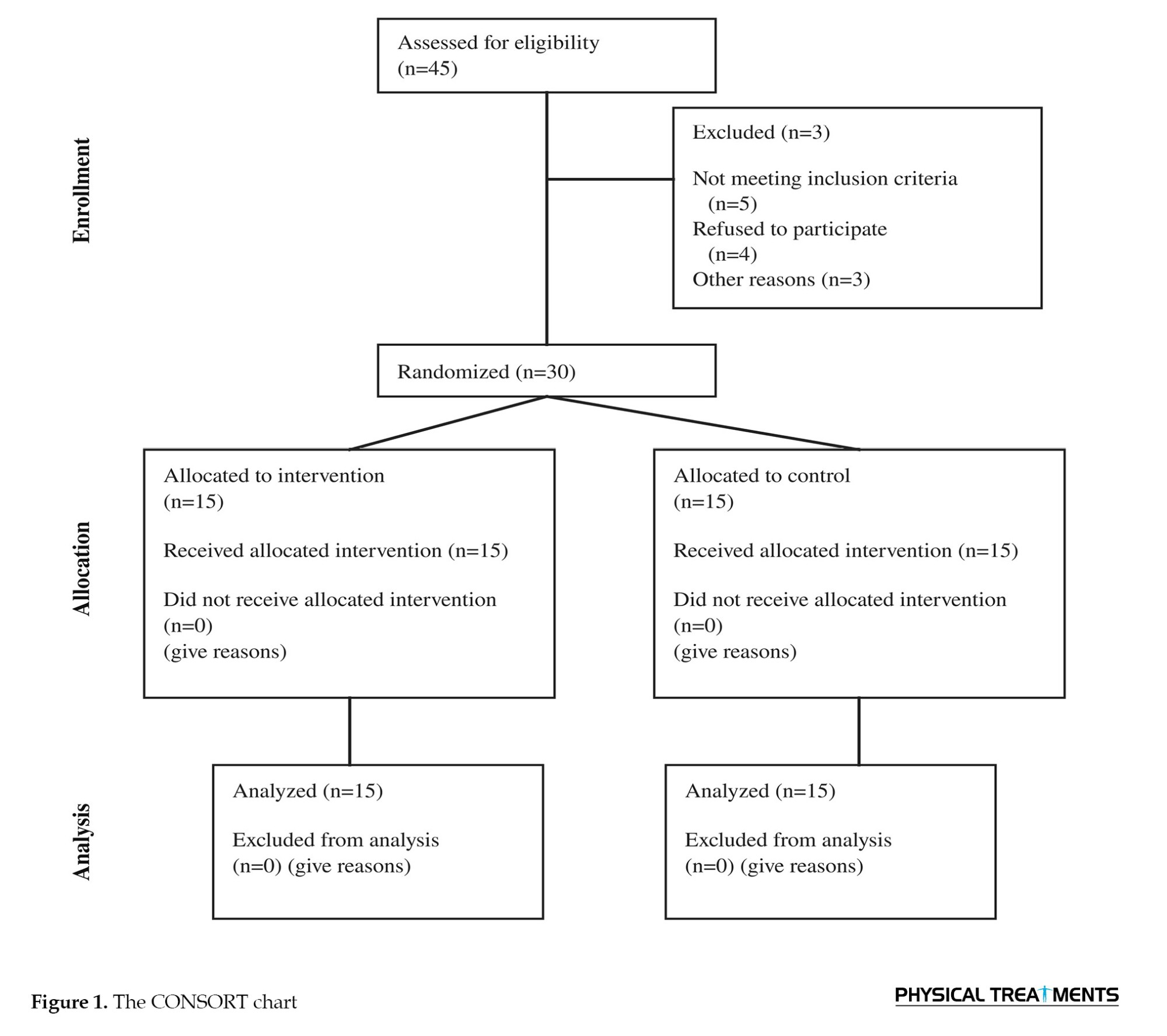
This was a quasi-experimental study using a pre-test-post-test design. This study aimed to assess the effects of an experimental perturbation-type training intervention. This study was approved by the Ethics Committee of Isfahan (Khorasgan) Branch, Islamic Azad University. The sample size was calculated using G*Power 3.1 with alpha=0.05, power=0.8, and effect size=0.8 (using quadriceps strength as a measure). Therefore, a total of 30 participants were needed. No blinding was used for the assessors or the participants. A total of 30 athletes with mild to moderate unilateral ACL injuries were included in the study. All patients were diagnosed and referred by an orthopedic surgeon based on clinical examination and MRI findings. Individuals were excluded if the injury had occurred more than six months prior, if they had concurrent injuries to other ligaments, significant meniscal or articular cartilage damage, a history of knee surgery, or presented with acute pain, swelling, or joint locking.
After familiarizing the participants with the study protocol, the Fitzgerald protocol was used to classify the patients as “Copers.” Initial assessments included a rapid successive hop test over a 6-meter distance (timed 6-meter hop test), the score on the activities of daily living scale, the overall knee function score using a visual analog scale for pain, and the number of knee giving-way episodes since the injury [15].
Participants were classified as “Copers” if they met the following criteria: a 6-meter hop test score greater than 80%, a daily living activity scale score of at least 80%, an overall knee function score of at least 60%, and no more than one episode of knee giving way since the injury [12].
A group of participants underwent perturbation training (experimental) (Appendix 1), while the control group did not receive any intervention (control).
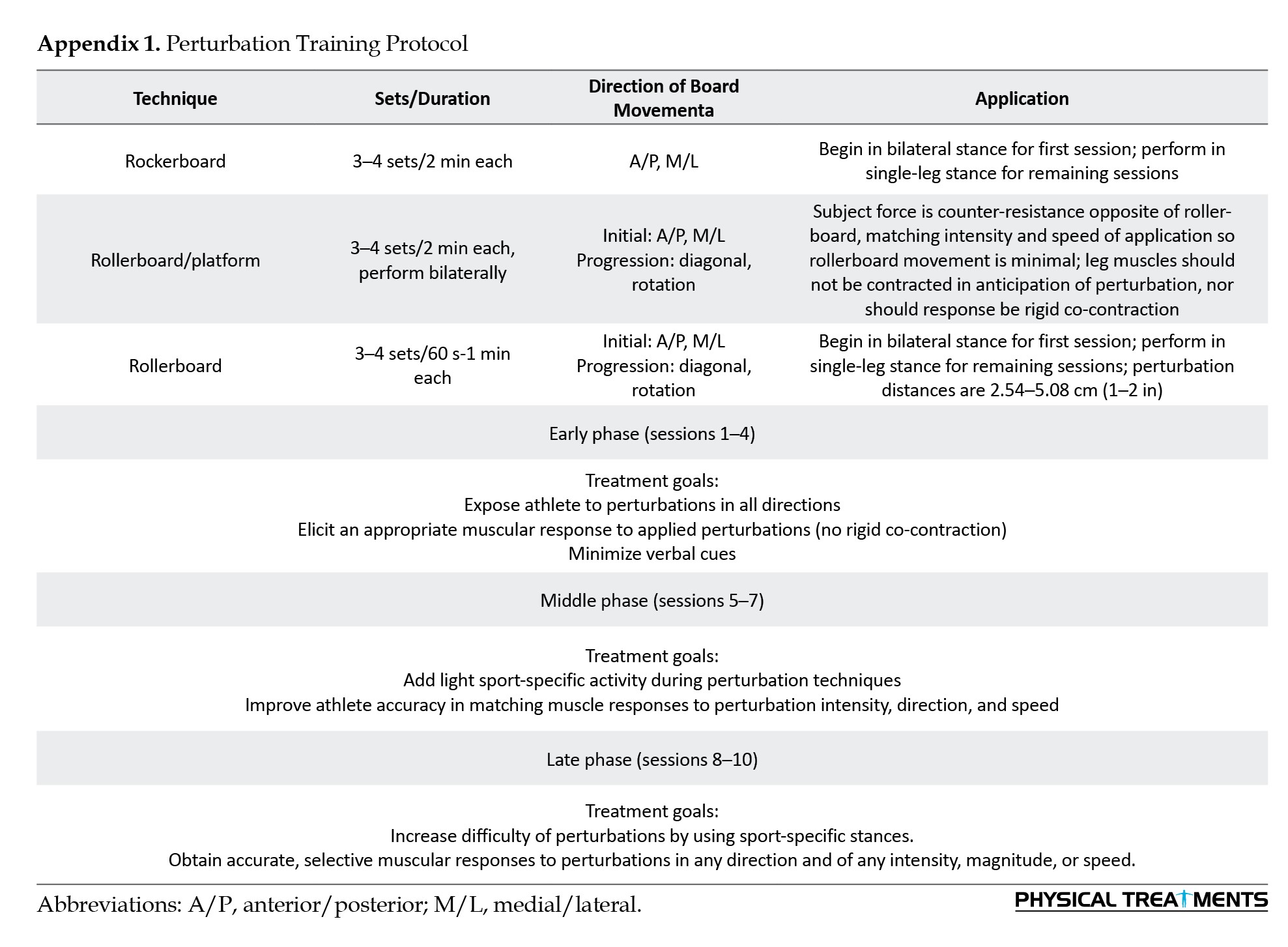
Following pre-test assessments, the experimental group took part in an 8-week program, with three one-hour sessions per week focused on training with non-linear periodization, specific exercises, and adherence monitoring. Both groups completed a post-test after the training. Psychological factors and fear of reinjury were evaluated using the ACL-return to sport after injury (RSI) questionnaire. The ACL-RSI was administered as a self-report measure in Persian, with an intraclass correlation coefficient (ICC) of 0.9 [14]. These findings suggested that the Persian version of the ACL-RSI was a suitable scale for use in Iran. This 12-item tool includes five items assessing motivation, five items related to perceived self-confidence in performance, and two items concerning perceived risk.
The isometric strength of the quadriceps and hamstrings was measured using a MMT handheld dynamometer (HHD, USA; 90-99% confidence interval). Participants sat without back support, with hips and knees flexed at 90 degrees and feet dangling. They were instructed to actively extend their knees against resistance. A band was secured around the anterior lower leg and attached to a movable base under the chair. Participants were asked to push against the dynamometer pad as hard as possible and attempt full knee extension. Rest periods of 30 seconds were provided between efforts to prevent muscle fatigue. Isometric strength was recorded as the highest force generated during three maximum efforts, and the average of these was used for analysis. The dynamometer was placed 2 cm proximal to the ankle during measurements. Hamstring strength was assessed with participants in a supine position on an examination table, asked to perform knee flexion as quickly and forcefully as possible.
Three-hop tests, previously shown to be reliable predictors of functional performance and readiness to RTS, were conducted. Each test was performed twice, with the best result recorded.
Side hop test: Participants performed a single-leg side hop, timed while completing ten hops on the lower-performing limb, crossing two lines on the floor that indicated hop distance. Any contact with arms or traps for balance resulted in disqualification [15].
Figure-eight hop test: Participants completed a figure-eight hop as fast as possible on one leg, completing two laps around two cones spaced 5 meters apart in a figure-eight pattern.
Triple hop test: This test measured the maximum distance of three consecutive hops in a straight line on one leg. A standard cloth tape was placed on the ground opposite a starting line. Participants stood with toes on the starting line and performed three maximal forward hops, arm swing allowed. The distance from the starting line to the heel after the third hop was measured. Participants had two practice trials per leg, followed by three test trials. Practice was limited to prevent fatigue. If a participant could not complete three consecutive hops without losing balance or touching the ground with the opposite leg, the trial was repeated. The longest distance across these trials was recorded in centimeters. Participants wore their own athletic footwear during testing [16].
Statistics analyses
To analyze the functional performance, psychological factors, and muscle strength data, paired t-tests and one-way analysis of variance were employed. Shapiro-Wilk and Levene’s tests were used to assess normality and homogeneity of variance, respectively. Effect sizes (Cohen’s d) were calculated to assess clinical significance. All statistical analyses were performed using SPSS software, version 26.
Results
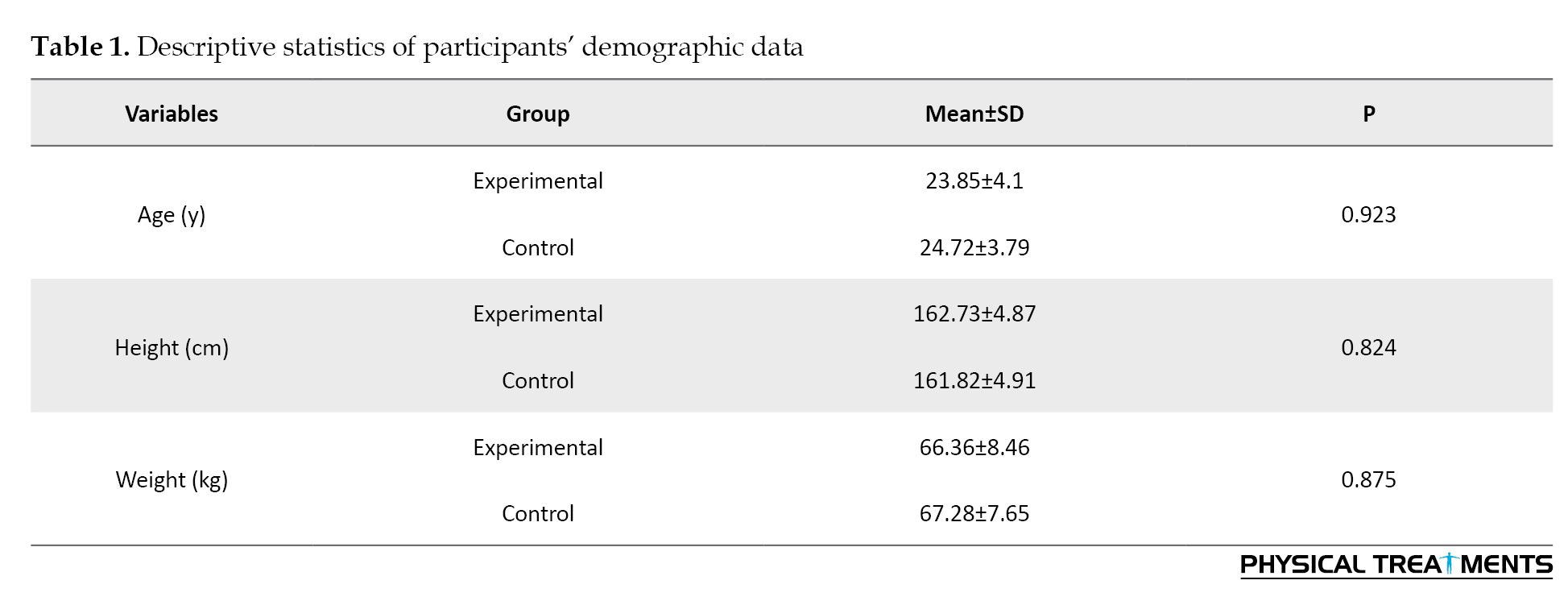
Table 1 presents the Mean±SD of the athletes’ demographic data, including height, weight, and age.
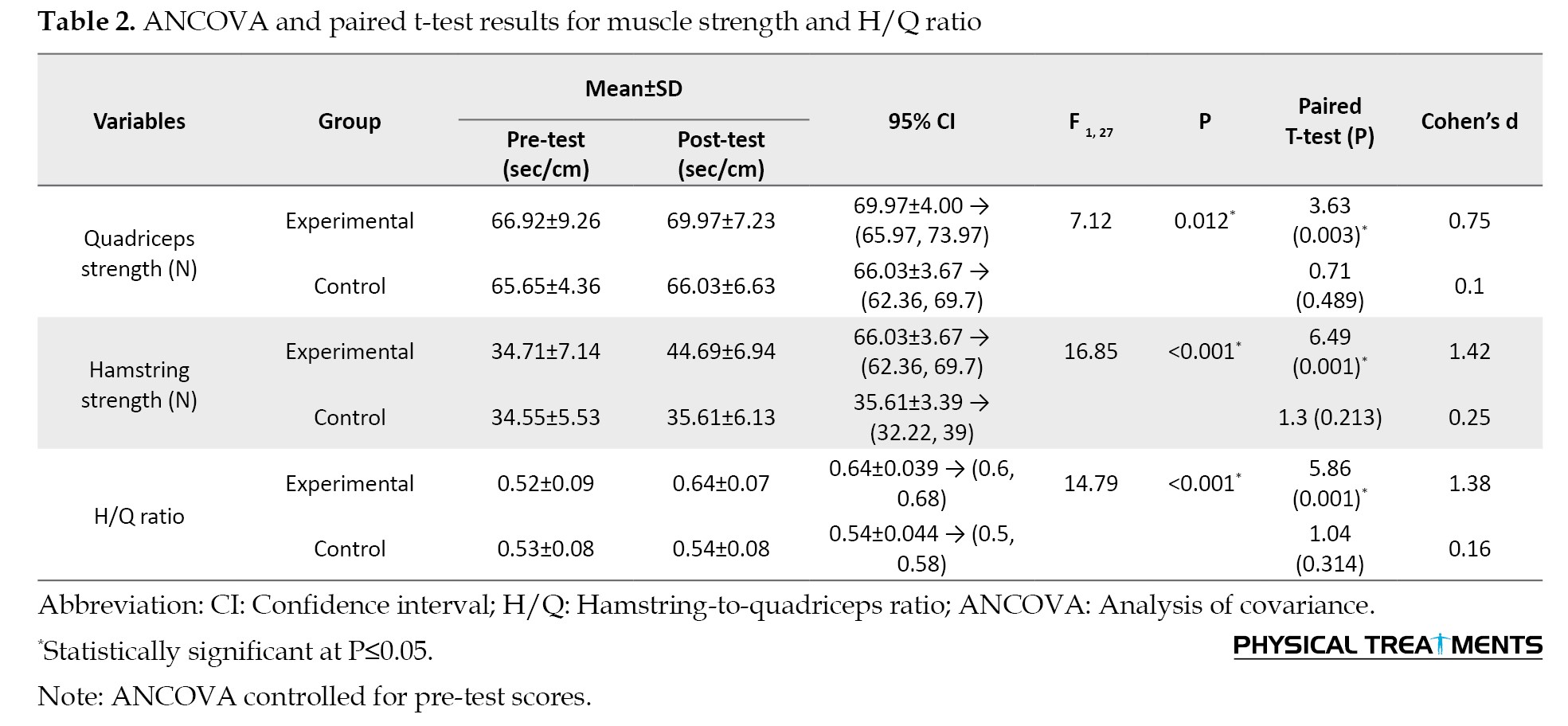
To assess normality, the Shapiro-Wilk test was employed, and Levene’s test was used to evaluate the homogeneity of variances. Given that the significance values were greater than 0.05, the null hypothesis for both normality and homogeneity of variances was not rejected. Therefore, the assumptions of analysis of covariance were met.
After 8 weeks of perturbation training, the experimental group showed statistically significant improvements in quadriceps strength, hamstring strength, and the hamstring-to-quadriceps (H/Q) ratio compared to the control group. Quadriceps strength increased by an average of approximately 3 Newton-meter (Nm) (P=0.012, d=0.75). Hamstring strength experienced a more substantial improvement of approximately 10 Nm (P<0.001, d=1.42). The H/Q ratio increased from 0.52 to 0.64 (P<0.001, d=1.38), indicating improved muscular balance, which is essential for knee stability and injury prevention. No significant changes were observed in the control group.
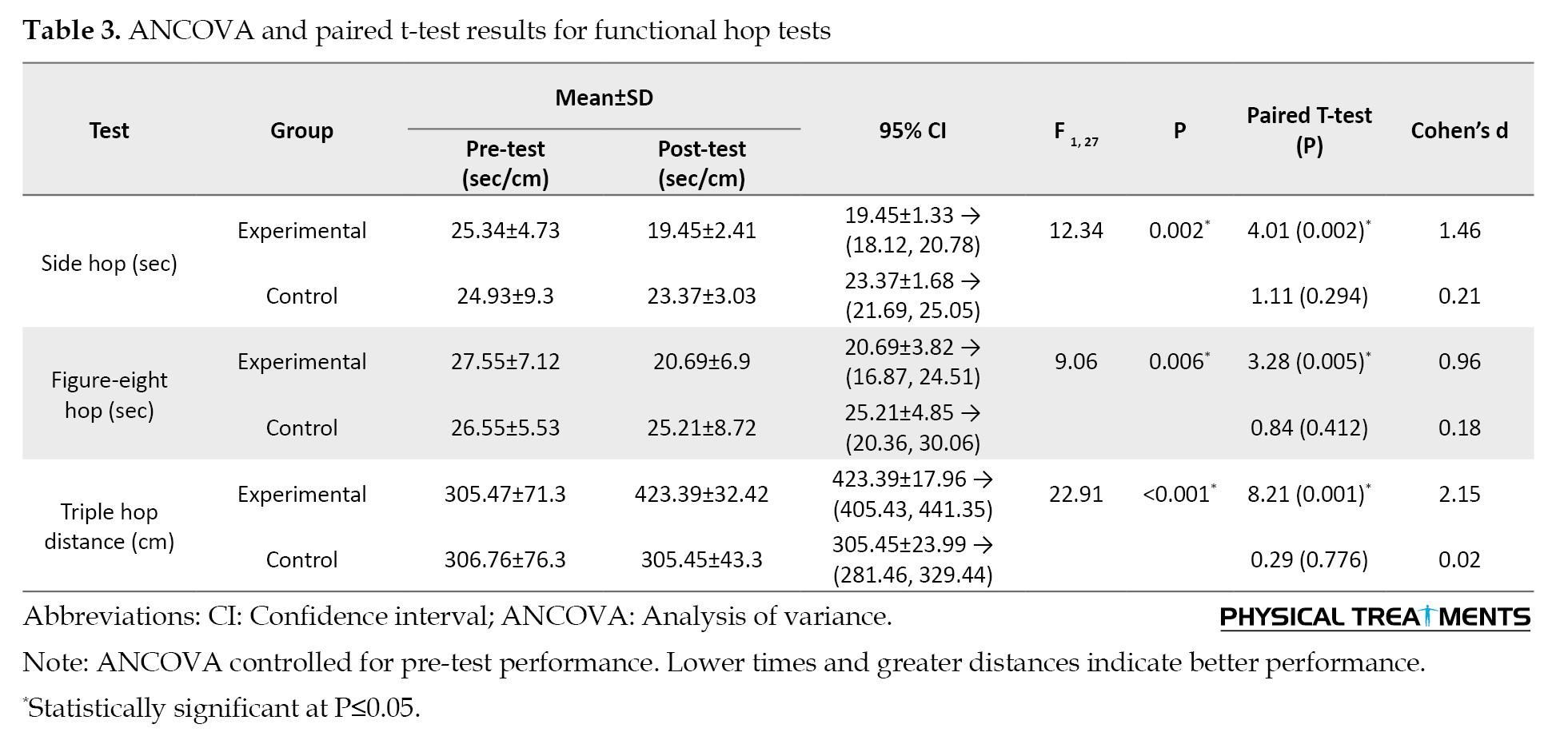
The perturbation training group showed significant improvements in all three functional hop tests: Side Hop Test: Completion time decreased notably (−5.89 s, P=0.002, d=1.46), indicating better agility and lateral control. Figure hop test: Time improved by approximately 6.86 seconds (P=0.006, d=0.96), reflecting improved coordination and neuromuscular response. Triple hop distance: Participants in the experimental group jumped about 118 cm farther after training (P<0.001, d=2.15), demonstrating increased power and lower limb control. Meanwhile, the control group showed no significant improvements.
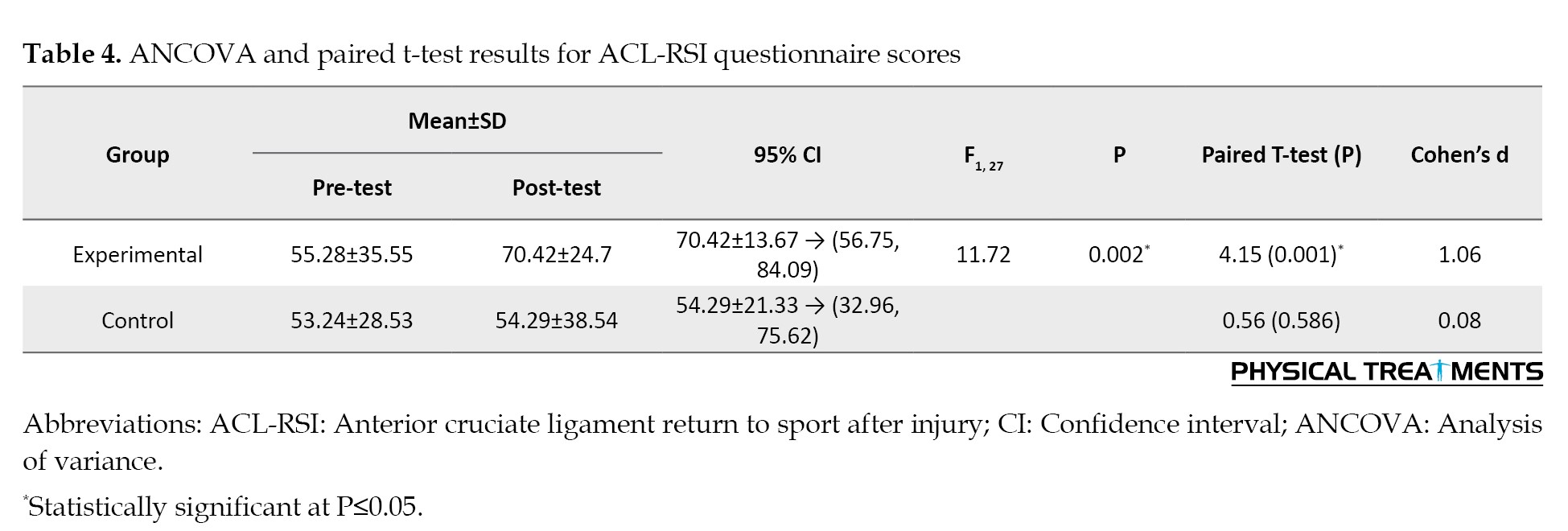
Psychological readiness, measured by the ACL-RSI questionnaire, significantly improved in the perturbation group (from 55.28 to 70.42; P=0.002, d=1.06), indicating that perturbation training helped reduce fear of reinjury and increased self-confidence. No significant changes were observed in the control group.
Discussion
The results indicated a significant difference in quadriceps and hamstring muscle strength between the perturbation training and control groups. Following eight weeks of perturbation training, the experimental group showed higher average strength than the control group for both muscles, as well as an increase in the hamstring-to-quadriceps ratio (P<0.05).
The findings of this study are consistent with those of previous research conducted by Van Dyk et al. (2014) [17] and Ramírez-delaCruz et al. (2022) [18]. Our results showed a statistically and clinically significant improvement in H/Q ratio following perturbation training. This is consistent with Letafatkar et al (2015) [16], who observed improved knee flexion angle and co-contraction in female athletes.
A balanced hamstring-to-quadriceps ratio strength is essential for reducing lower extremity injuries, particularly those involving the knee. For instance, Kanoos Vargas et al. reported a hamstring-to-quadriceps strength ratio of 0.5-0.8 in female athletes [19]. Similarly, Van Dyk et al. suggested a minimum hamstring-to-quadriceps ratio of 0.6 to prevent hamstring strains and tears [17]. The low pre-test hamstring-to-quadriceps strength ratio in participants may be attributed to the nature of the three sports involved: volleyball, handball, and basketball. It might also be that the repeated jumping and landing characteristic of these sports results in disproportionately stronger quadriceps muscles.
Similarly, many researchers have suggested that neuromuscular training is important for enhancing joint stability, determining optimal muscle activation patterns, and correcting muscular imbalances. Perturbation training, as a subcategory of neuromuscular training, especially induces these physiological adaptations [6, 20-22]. An increased hamstring-to-quadriceps strength ratio increases knee flexion angle and reduces the risk of ACL injuries among athletes. Generally, excessive force exertion on the ACL is due to improper quadriceps activation. Hamstring muscle contraction can counteract this effect [22]. Additionally, appropriate co-contraction of the hamstrings can help balance quadriceps activation and thus contribute to controlling excessive valgus moments at the knee [23].
The results of this study indicated a significant difference in return-to-sport (RTS) performance test scores between the perturbation training and control groups. Specifically, the experimental group demonstrated significantly better performance in the side-to-side hop, 8-figure one-leg hop, and single-leg triple hop tests than the control group. After six weeks of perturbation training, athletes in the experimental group completed the side-to-side hop and 8-figure one-leg hop tests in less time and covered a greater distance in the single-leg triple hop test than the control group (P<0.05).
The findings of this study are consistent with previous research conducted by Abbaszadeh et al. [24], Takazouno et al. [25], and Lagersted et al. [26]. Perturbation training, a subset of neuromuscular exercises, can enhance an athlete’s biomechanics. These exercises introduce controlled destabilizing forces that challenge balance and stability, compelling the knee to engage compensatory mechanisms at the joints. This process reduces the co-contraction of muscles, facilitates a full range of motion, and improves proprioception, agility, and balance [15]. Chmielewski et al. reported that perturbation training enhanced the strength of non-coper athletes and improved the activity of muscles around the knee [4].
The mechanism of perturbation training enhancing performance in non-Coper athletes may relate to the critical part of the brainstem muscle reflex. Sensory input from joint mechanoreceptors and subsequent balance reflex facilitates co-contraction around the knee, minimizes excessive stress, and protects joint limiting factors against injury. Such exercises promote this kind of brainstem-mediated balance reflex in maintaining posture. Consciously, at the cortical and cerebellar levels, through the efforts of the athlete, joint position and balance are restored. Zigzag tests would, therefore, require neuromuscular coordination, joint stability, strength, and power at the knee, ankle, and hip, as all these are put together during this test- an extended form of this test is utilized after rehabilitation in ACL. Also, the Zigzag test measures sensitivity up to 88% to predict normal knee functioning. These are the progressions that could result due to removal of constraints in the sensory-motor system. The sensory-motor system involves mechanisms related to the reception of sensory stimuli, conversion of those into afferent neural signals, and generating responses to motor needs for muscular activation to accomplish functional activities and stabilize the joints [27].
Significant differences were obtained between the ACL-RSI results in the control group and those with perturbation training. In our study, the average scores of the athletes in the perturbation training group were significantly different from those of athletes in the control group. From a statistical perspective, P<0.05 provides evidence that this is true. Additionally, such findings are in agreement with the results of other studies by Zia et al. [28], Nazari et al. [29], and Karimi et al [30]. However, these findings disagree with the results proposed by Gholami et al. [31]. These differences may be explained with regard to the study’s protocol and age range- enrolled participants aged 18-45 years. No injured athlete denied having a fear related to reinjury. Fear can be excessive and irrational and prevents people in general from engaging in exercise altogether [31]. The fear of re-injury is considered one of the most significant factors in an athlete’s RTS, and it also forms part of injury prevention and rehabilitation [26]. This fear may lead to poor performance and a decline in specialized aptitudes. It could be a strong factor within the rehabilitation preparation and has a noteworthy impact on the choice of whether an athlete with an ACL tear RTS [32]. Therefore, psychological aspects need to be addressed in rehabilitation programs, and the athlete’s mental attitude is crucial. The results indicate that the perturbation training may reduce the fear of reinjury in athletes with past ACL tear experiences, because unstable conditions during exercises increase self-confidence and create greater awareness of physical capabilities. Thus, they may be ready to feel more comfortable RTS [33]. While ACL-RSI scores improved, we did not correlate these directly with physical performance. Psychological readiness may have improved due to increased confidence from unstable-task training [34].
The lower body is the most affected across all age groups and exercise functional levels, with the knee and ankle joints being the most affected [1]. Approximately 200,000 to 250,000 anterior cruciate ligament (ACL) injuries occur annually in the United States [2]. Approximately half of the people who suffer from ACL rupture develop osteoarthritis after 5-12 years, regardless of the type of treatment (surgical or non-surgical). In ACL injury, the maximum isokinetic strength of the quadriceps and hamstring muscles changes relative to the normal position [3], as well as muscle activity patterns (timing and activity rate) during functional activities such as walking and jumping [4, 5]. Knees with ACL defects are prone to recurrent semi-dislocations, which can be a factor in secondary joint injury [6]. These findings imply that ACL injury affects neuromuscular function. Functional tests include the jump test and measurement of isokinetic strength of knee flexors and extensors, and are among the methods used to evaluate the effects of ACL injury and determine the effectiveness of treatment programs on the neuromuscular function of the knee [7, 8]. The changes observed in muscle activity patterns in people with ACL injury are strategies that occur to compensate for decreased knee stability. Some people with ACL injury of the knee successfully compensate for the defect, which is called the Coper group, while others are unable to compensate, which is called the non-Coper group [9]. The Coper group has a physiological response and motor strategy that are closer to and similar to those of healthy people and can return to high-level physical activity. However, the non-Coper group may have difficulty even performing low-level activities such as walking [10]. This is especially important for female Copers, who may return to high-level activity without surgery, but face significant physical and mental barriers. According to previous research, one type of exercise that helps modulate neuromuscular risk factors is Perturbation training, which is designed according to specific training programs to enhance neuromuscular control, thereby helping to reduce the risk of ACL injury by improving the dynamic stability of the knee [11]. Perturbation training is a type of neuromuscular intervention that involves applying controlled, unpredictable disturbances to the body’s balance and joint stability using tools such as rockerboards or rollerboards. In some studies, following the use of perturbation exercises, an increase in the co-contraction rate of the vastus lateralis muscle and the medial part of the gastrocnemius muscle, as well as no change in the co-contraction rate of the vastus lateralis muscle and the external part of the hamstring, has been reported [12]. While ACL injury prevention programs have made progress, ACL ruptures are still common in sports. In populations with ACL injuries, perturbation-based neuromuscular training has been demonstrated to enhance knee mechanics and functional performance [13]. Although fear, confidence, and other psychosocial factors are known to have a significant impact on returning to sport, most current research focuses on physical outcomes and rarely examines psychological factors. Although no psychological measures were included in the analysis, a recent perturbation-training trial in adolescent females reported that participants felt more confident after training [14]. Therefore, this study aimed to evaluate the effectiveness of an 8-week perturbation training protocol on neuromuscular performance and psychological readiness to return to sport (RTS) in female ACL Copers.
Materials and Methods
This was a quasi-experimental study using a pre-test-post-test design. This study aimed to assess the effects of an experimental perturbation-type training intervention. This study was approved by the Ethics Committee of Isfahan (Khorasgan) Branch, Islamic Azad University. The sample size was calculated using G*Power 3.1 with alpha=0.05, power=0.8, and effect size=0.8 (using quadriceps strength as a measure). Therefore, a total of 30 participants were needed. No blinding was used for the assessors or the participants. A total of 30 athletes with mild to moderate unilateral ACL injuries were included in the study. All patients were diagnosed and referred by an orthopedic surgeon based on clinical examination and MRI findings. Individuals were excluded if the injury had occurred more than six months prior, if they had concurrent injuries to other ligaments, significant meniscal or articular cartilage damage, a history of knee surgery, or presented with acute pain, swelling, or joint locking.
After familiarizing the participants with the study protocol, the Fitzgerald protocol was used to classify the patients as “Copers.” Initial assessments included a rapid successive hop test over a 6-meter distance (timed 6-meter hop test), the score on the activities of daily living scale, the overall knee function score using a visual analog scale for pain, and the number of knee giving-way episodes since the injury [15].
Participants were classified as “Copers” if they met the following criteria: a 6-meter hop test score greater than 80%, a daily living activity scale score of at least 80%, an overall knee function score of at least 60%, and no more than one episode of knee giving way since the injury [12].
A group of participants underwent perturbation training (experimental) (Appendix 1), while the control group did not receive any intervention (control).
Following pre-test assessments, the experimental group took part in an 8-week program, with three one-hour sessions per week focused on training with non-linear periodization, specific exercises, and adherence monitoring. Both groups completed a post-test after the training. Psychological factors and fear of reinjury were evaluated using the ACL-return to sport after injury (RSI) questionnaire. The ACL-RSI was administered as a self-report measure in Persian, with an intraclass correlation coefficient (ICC) of 0.9 [14]. These findings suggested that the Persian version of the ACL-RSI was a suitable scale for use in Iran. This 12-item tool includes five items assessing motivation, five items related to perceived self-confidence in performance, and two items concerning perceived risk.
The isometric strength of the quadriceps and hamstrings was measured using a MMT handheld dynamometer (HHD, USA; 90-99% confidence interval). Participants sat without back support, with hips and knees flexed at 90 degrees and feet dangling. They were instructed to actively extend their knees against resistance. A band was secured around the anterior lower leg and attached to a movable base under the chair. Participants were asked to push against the dynamometer pad as hard as possible and attempt full knee extension. Rest periods of 30 seconds were provided between efforts to prevent muscle fatigue. Isometric strength was recorded as the highest force generated during three maximum efforts, and the average of these was used for analysis. The dynamometer was placed 2 cm proximal to the ankle during measurements. Hamstring strength was assessed with participants in a supine position on an examination table, asked to perform knee flexion as quickly and forcefully as possible.
Three-hop tests, previously shown to be reliable predictors of functional performance and readiness to RTS, were conducted. Each test was performed twice, with the best result recorded.
Side hop test: Participants performed a single-leg side hop, timed while completing ten hops on the lower-performing limb, crossing two lines on the floor that indicated hop distance. Any contact with arms or traps for balance resulted in disqualification [15].
Figure-eight hop test: Participants completed a figure-eight hop as fast as possible on one leg, completing two laps around two cones spaced 5 meters apart in a figure-eight pattern.
Triple hop test: This test measured the maximum distance of three consecutive hops in a straight line on one leg. A standard cloth tape was placed on the ground opposite a starting line. Participants stood with toes on the starting line and performed three maximal forward hops, arm swing allowed. The distance from the starting line to the heel after the third hop was measured. Participants had two practice trials per leg, followed by three test trials. Practice was limited to prevent fatigue. If a participant could not complete three consecutive hops without losing balance or touching the ground with the opposite leg, the trial was repeated. The longest distance across these trials was recorded in centimeters. Participants wore their own athletic footwear during testing [16].
Statistics analyses
To analyze the functional performance, psychological factors, and muscle strength data, paired t-tests and one-way analysis of variance were employed. Shapiro-Wilk and Levene’s tests were used to assess normality and homogeneity of variance, respectively. Effect sizes (Cohen’s d) were calculated to assess clinical significance. All statistical analyses were performed using SPSS software, version 26.
Results
Table 1 presents the Mean±SD of the athletes’ demographic data, including height, weight, and age.
To assess normality, the Shapiro-Wilk test was employed, and Levene’s test was used to evaluate the homogeneity of variances. Given that the significance values were greater than 0.05, the null hypothesis for both normality and homogeneity of variances was not rejected. Therefore, the assumptions of analysis of covariance were met.
After 8 weeks of perturbation training, the experimental group showed statistically significant improvements in quadriceps strength, hamstring strength, and the hamstring-to-quadriceps (H/Q) ratio compared to the control group. Quadriceps strength increased by an average of approximately 3 Newton-meter (Nm) (P=0.012, d=0.75). Hamstring strength experienced a more substantial improvement of approximately 10 Nm (P<0.001, d=1.42). The H/Q ratio increased from 0.52 to 0.64 (P<0.001, d=1.38), indicating improved muscular balance, which is essential for knee stability and injury prevention. No significant changes were observed in the control group.
The perturbation training group showed significant improvements in all three functional hop tests: Side Hop Test: Completion time decreased notably (−5.89 s, P=0.002, d=1.46), indicating better agility and lateral control. Figure hop test: Time improved by approximately 6.86 seconds (P=0.006, d=0.96), reflecting improved coordination and neuromuscular response. Triple hop distance: Participants in the experimental group jumped about 118 cm farther after training (P<0.001, d=2.15), demonstrating increased power and lower limb control. Meanwhile, the control group showed no significant improvements.
Psychological readiness, measured by the ACL-RSI questionnaire, significantly improved in the perturbation group (from 55.28 to 70.42; P=0.002, d=1.06), indicating that perturbation training helped reduce fear of reinjury and increased self-confidence. No significant changes were observed in the control group.
Discussion
The results indicated a significant difference in quadriceps and hamstring muscle strength between the perturbation training and control groups. Following eight weeks of perturbation training, the experimental group showed higher average strength than the control group for both muscles, as well as an increase in the hamstring-to-quadriceps ratio (P<0.05).
The findings of this study are consistent with those of previous research conducted by Van Dyk et al. (2014) [17] and Ramírez-delaCruz et al. (2022) [18]. Our results showed a statistically and clinically significant improvement in H/Q ratio following perturbation training. This is consistent with Letafatkar et al (2015) [16], who observed improved knee flexion angle and co-contraction in female athletes.
A balanced hamstring-to-quadriceps ratio strength is essential for reducing lower extremity injuries, particularly those involving the knee. For instance, Kanoos Vargas et al. reported a hamstring-to-quadriceps strength ratio of 0.5-0.8 in female athletes [19]. Similarly, Van Dyk et al. suggested a minimum hamstring-to-quadriceps ratio of 0.6 to prevent hamstring strains and tears [17]. The low pre-test hamstring-to-quadriceps strength ratio in participants may be attributed to the nature of the three sports involved: volleyball, handball, and basketball. It might also be that the repeated jumping and landing characteristic of these sports results in disproportionately stronger quadriceps muscles.
Similarly, many researchers have suggested that neuromuscular training is important for enhancing joint stability, determining optimal muscle activation patterns, and correcting muscular imbalances. Perturbation training, as a subcategory of neuromuscular training, especially induces these physiological adaptations [6, 20-22]. An increased hamstring-to-quadriceps strength ratio increases knee flexion angle and reduces the risk of ACL injuries among athletes. Generally, excessive force exertion on the ACL is due to improper quadriceps activation. Hamstring muscle contraction can counteract this effect [22]. Additionally, appropriate co-contraction of the hamstrings can help balance quadriceps activation and thus contribute to controlling excessive valgus moments at the knee [23].
The results of this study indicated a significant difference in return-to-sport (RTS) performance test scores between the perturbation training and control groups. Specifically, the experimental group demonstrated significantly better performance in the side-to-side hop, 8-figure one-leg hop, and single-leg triple hop tests than the control group. After six weeks of perturbation training, athletes in the experimental group completed the side-to-side hop and 8-figure one-leg hop tests in less time and covered a greater distance in the single-leg triple hop test than the control group (P<0.05).
The findings of this study are consistent with previous research conducted by Abbaszadeh et al. [24], Takazouno et al. [25], and Lagersted et al. [26]. Perturbation training, a subset of neuromuscular exercises, can enhance an athlete’s biomechanics. These exercises introduce controlled destabilizing forces that challenge balance and stability, compelling the knee to engage compensatory mechanisms at the joints. This process reduces the co-contraction of muscles, facilitates a full range of motion, and improves proprioception, agility, and balance [15]. Chmielewski et al. reported that perturbation training enhanced the strength of non-coper athletes and improved the activity of muscles around the knee [4].
The mechanism of perturbation training enhancing performance in non-Coper athletes may relate to the critical part of the brainstem muscle reflex. Sensory input from joint mechanoreceptors and subsequent balance reflex facilitates co-contraction around the knee, minimizes excessive stress, and protects joint limiting factors against injury. Such exercises promote this kind of brainstem-mediated balance reflex in maintaining posture. Consciously, at the cortical and cerebellar levels, through the efforts of the athlete, joint position and balance are restored. Zigzag tests would, therefore, require neuromuscular coordination, joint stability, strength, and power at the knee, ankle, and hip, as all these are put together during this test- an extended form of this test is utilized after rehabilitation in ACL. Also, the Zigzag test measures sensitivity up to 88% to predict normal knee functioning. These are the progressions that could result due to removal of constraints in the sensory-motor system. The sensory-motor system involves mechanisms related to the reception of sensory stimuli, conversion of those into afferent neural signals, and generating responses to motor needs for muscular activation to accomplish functional activities and stabilize the joints [27].
Significant differences were obtained between the ACL-RSI results in the control group and those with perturbation training. In our study, the average scores of the athletes in the perturbation training group were significantly different from those of athletes in the control group. From a statistical perspective, P<0.05 provides evidence that this is true. Additionally, such findings are in agreement with the results of other studies by Zia et al. [28], Nazari et al. [29], and Karimi et al [30]. However, these findings disagree with the results proposed by Gholami et al. [31]. These differences may be explained with regard to the study’s protocol and age range- enrolled participants aged 18-45 years. No injured athlete denied having a fear related to reinjury. Fear can be excessive and irrational and prevents people in general from engaging in exercise altogether [31]. The fear of re-injury is considered one of the most significant factors in an athlete’s RTS, and it also forms part of injury prevention and rehabilitation [26]. This fear may lead to poor performance and a decline in specialized aptitudes. It could be a strong factor within the rehabilitation preparation and has a noteworthy impact on the choice of whether an athlete with an ACL tear RTS [32]. Therefore, psychological aspects need to be addressed in rehabilitation programs, and the athlete’s mental attitude is crucial. The results indicate that the perturbation training may reduce the fear of reinjury in athletes with past ACL tear experiences, because unstable conditions during exercises increase self-confidence and create greater awareness of physical capabilities. Thus, they may be ready to feel more comfortable RTS [33]. While ACL-RSI scores improved, we did not correlate these directly with physical performance. Psychological readiness may have improved due to increased confidence from unstable-task training [34].
In light of these findings, perturbation training needs to be considered a useful supplement to ACL rehabilitation regimens, especially for athletes hoping to resume sports. Reducing the fear of reinjury is particularly important for injury prevention and psychological preparedness. Study limitations included a small sample size, lack of blinding, no long-term follow-up, and the exclusive inclusion of female athletes from three specific sports (volleyball, handball, and basketball), without considering other confounding variables such as extracurricular physical activities, nutrition, sleep patterns, and psychological states. In so doing, the generalizability of the results may be limited.
Conclusion
8 weeks of perturbation training improved RTS outcomes in female ACL Copers. Athletes showed ~30–40% better hop test performance and a 27% increase in psychological readiness. These findings suggest that incorporating perturbation exercises in rehab may accelerate safe return to sport. As a practical suggestion, rehabilitation specialists and coaches can consider including perturbation training in their treatment paradigm.
Ethical Considerations
Compliance with ethical guidelines
This study was approved by the Research Ethics Committee of Isfahan (Khorasgan) Branch, Islamic Azad University, Isfahan, Iran (Code: IR.IAU.KHUISF.REC.1402.361). The study was conducted in accordance with the relevant institutional and national ethical guidelines and the principles of the Declaration of Helsinki (2013 revision). The reporting of this study followed the CONSORT guidelines.
Funding
This research received no specific grants from any funding agency in the public, commercial, or not-for-profit sectors.
Authors' contributions
Conceptualization, methodology, data analysis, and writing the original draft: Abouzar Saadatian; Participant recruitment, data collection, and data interpretation: Elahe Siavashi; Supervision, investigation, and statistical support: Ayoub Hashemi; Review and editing: Ayoub Hashemi and Rosul Abdolghader Alhamodi; Data collection, training protocol development, and final approval: Rosul Abdolghader Alhamodi.
Conflict of interest
The authors declared no conflict of interest.
Acknowledgments
We earnestly thank all the members who devoted their time and effort to contribute to this endeavor. Your inclusion has been priceless in progressing our understanding of front cruciate tendon wounds and restoration procedures.
Conclusion
8 weeks of perturbation training improved RTS outcomes in female ACL Copers. Athletes showed ~30–40% better hop test performance and a 27% increase in psychological readiness. These findings suggest that incorporating perturbation exercises in rehab may accelerate safe return to sport. As a practical suggestion, rehabilitation specialists and coaches can consider including perturbation training in their treatment paradigm.
Ethical Considerations
Compliance with ethical guidelines
This study was approved by the Research Ethics Committee of Isfahan (Khorasgan) Branch, Islamic Azad University, Isfahan, Iran (Code: IR.IAU.KHUISF.REC.1402.361). The study was conducted in accordance with the relevant institutional and national ethical guidelines and the principles of the Declaration of Helsinki (2013 revision). The reporting of this study followed the CONSORT guidelines.
Funding
This research received no specific grants from any funding agency in the public, commercial, or not-for-profit sectors.
Authors' contributions
Conceptualization, methodology, data analysis, and writing the original draft: Abouzar Saadatian; Participant recruitment, data collection, and data interpretation: Elahe Siavashi; Supervision, investigation, and statistical support: Ayoub Hashemi; Review and editing: Ayoub Hashemi and Rosul Abdolghader Alhamodi; Data collection, training protocol development, and final approval: Rosul Abdolghader Alhamodi.
Conflict of interest
The authors declared no conflict of interest.
Acknowledgments
We earnestly thank all the members who devoted their time and effort to contribute to this endeavor. Your inclusion has been priceless in progressing our understanding of front cruciate tendon wounds and restoration procedures.
References
- García-Luna MA, Cortell-Tormo JM, García-Jaén M, Ortega-Navarro M, Tortosa-Martínez J. Acute effects of ACL injury-prevention warm-up and soccer-specific fatigue protocol on dynamic knee valgus in youth male soccer players. International Journal of Environmental Research and Public Health. 2020; 17(15):5608. [DOI:10.3390/ijerph17155608] [PMID]
- Arundale AJH, Silvers-Granelli HJ, Myklebust G. ACL injury prevention: Where have we come from and where are we going? Journal of Orthopaedic Research®. 2022; 40(1):43-54. [DOI:10.1002/jor.25058] [PMID]
- Genc AS, Guzel N. The relationship between thigh and leg circumferences and proprioceptive sense: Results of postoperative anterior cruciate ligament reconstruction. Medicine Science. 2023; 12(2). [DOI:10.5455/medscience.2023.01.015]
- Chmielewski TL, Myer GD, Kauffman D, Tillman SM. Plyometric exercise in the rehabilitation of athletes: Physiological responses and clinical application. Journal of Orthopaedic & Sports Physical Therapy. 2006; 36(5):308-19. [DOI:10.2519/jospt.2006.2013] [PMID]
- Kasmi S, Zouhal H, Hammami R, Clark CC, Hackney AC, Hammami A, et al. The effects of eccentric and plyometric training programs and their combination on stability and the functional performance in the post-ACL-surgical rehabilitation period of elite female athletes. Frontiers in Physiology. 2021; 12:688385. [DOI:10.3389/fphys.2021.688385] [PMID]
- Hägglund M, Atroshi I, Wagner P, Waldén M. Superior compliance with a neuromuscular training programme is associated with fewer ACL injuries and fewer acute knee injuries in female adolescent football players: Secondary analysis of an RCT. British Journal of Sports Medicine. 2013; 47(15):974-9. [DOI:10.1136/bjsports-2013-092644] [PMID]
- Reid A, Birmingham TB, Stratford PW, Alcock GK, Giffin JR. Hop testing provides a reliable and valid outcome measure during rehabilitation after anterior cruciate ligament reconstruction. Physical Therapy. 2007; 87(3):337-49. [DOI:10.2522/ptj.20060143] [PMID]
- Ebert JR, Edwards P, Du Preez L, Furzer B, Joss B. Knee extensor strength, hop performance, patient-reported outcome and inter-test correlation in patients 9-12 months after anterior cruciate ligament reconstruction. The Knee. 2021; 30:176-84. [DOI:10.1016/j.knee.2021.04.012] [PMID]
- Naghizad J, Meibodi MKE, Dalvand H, Shamsoddini A. Comparison of Knee Proprioception between Athletes with Anterior Cruciate Ligament Injury and Healthy Athletes. Journal of Modern Rehabilitation. 2023; 17(2):142-8. [DOI:10.18502/jmr.v17i2.12412]
- Wellsandt E, Khandha A, Manal K, Axe MJ, Buchanan TS, Snyder‐Mackler L. Predictors of knee joint loading after anterior cruciate ligament reconstruction. Journal of Orthopaedic Research. 2017; 35(3):651-6. [DOI:10.1002/jor.23408] [PMID]
- Hurd WJ, Chmielewski TL, Snyder-Mackler L. Perturbation-enhanced neuromuscular training alters muscle activity in female athletes. Knee Surgery, Sports Traumatology, Arthroscopy. 2006; 14(1):60-9. [DOI:10.1007/s00167-005-0624-y] [PMID]
- Arumugam A, Häger CK. Thigh muscle co-contraction patterns in individuals with anterior cruciate ligament reconstruction, athletes and controls during a novel double-hop test. Scientific Reports. 2022; 12(1):8431. [DOI:10.1038/s41598-022-12436-6] [PMID]
- Bulow A, Anderson JE, Leiter JR, MacDonald PB, Peeler JD. Safety and effectiveness of a perturbation-based neuromuscular training program on dynamic balance in adolescent females: A randomized controlled trial. International Journal of Sports Physical Therapy. 2021; 16(4):1001-15. [DOI:10.26603/001c.25685] [PMID]
- Ptasinski AM, Dunleavy M, Adebayo T, Gallo RA. Returning athletes to sports following anterior cruciate ligament tears. Current Reviews in Musculoskeletal Medicine. 2022; 15(6):616-28. [DOI:10.1007/s12178-022-09782-3] [PMID]
- Fitzgerald GK, Childs JD, Ridge TM, Irrgang JJ. Agility and perturbation training for a physically active individual with knee osteoarthritis. Physical Therapy. 2002; 82(4):372-82. [DOI:10.1093/ptj/82.4.372] [PMID]
- Letafatkar A, Rajabi R, Tekamejani EE, Minoonejad H. Effects of perturbation training on knee flexion angle and quadriceps to hamstring cocontraction of female athletes with quadriceps dominance deficit: Pre-post intervention study. The Knee. 2015; 22(3):230-6. [DOI:10.1016/j.knee.2015.02.001] [PMID]
- Van Dyk N, Bahr R, Whiteley R, Tol JL, Kumar BD, Hamilton B, et al. Hamstring and quadriceps isokinetic strength deficits are weak risk factors for hamstring strain injuries: A 4-year cohort study. The American Journal of Sports Medicine. 2016; 44(7):1789-95. [DOI:10.1177/0363546516632526] [PMID]
- Ramírez-delaCruz M, Bravo-Sánchez A, Esteban-García P, Jiménez F, Abián-Vicén J. Effects of plyometric training on lower body muscle architecture, tendon structure, stiffness and physical performance: A systematic review and meta-analysis. Sports Medicine-Open. 2022; 8(1):40. [DOI:10.1186/s40798-022-00431-0] [PMID]
- Vargas VZ, Motta C, Peres B, Vancini RL, Andre Barbosa De Lira C, Andrade MS. Knee isokinetic muscle strength and balance ratio in female soccer players of different age groups: A cross-sectional study. The Physician and Sportsmedicine. 2020; 48(1):105-9. [DOI:10.1080/00913847.2019.1642808] [PMID]
- Myer GD, Brent JL, Ford KR, Hewett TE. Real-time assessment and neuromuscular training feedback techniques to prevent anterior cruciate ligament injury in female athletes. Strength & Conditioning Journal. 2011; 33(3):21-35. [DOI:10.1519/SSC.0b013e318213afa8] [PMID]
- Goldman EF, Jones DE. Interventions for preventing hamstring injuries: A systematic review. Physiotherapy. 2011; 97(2):91-9. [DOI:10.1016/j.physio.2010.11.011] [PMID]
- Padua DA, Carcia CR, Arnold BL, Granata KP. Gender differences in leg stiffness and stiffness recruitment strategy during two-legged hopping. Journal of Motor Behavior. 2005; 37(2):111-25. [DOI:10.3200/JMBR.37.2.111-126] [PMID]
- Seyedahmadi M, Minoonejad H, Karimizadeh Ardakani M, Heidari Z, Bayattork M, Akbari H. What are gender differences in lower limb muscle activity during jump-landing tasks? A systematic review and meta-analysis. BMC Sports Science, Medicine and Rehabilitation. 2022; 14(1):77. [DOI:10.1186/s13102-022-00469-3] [PMID]
- Abbaszadeh H, Letafatkar A, Abbasi A. [Effect of feedback training on some kinetic, kinematic, and functional factors of active men (Persian)]. Journal of Ilam University of Medical Sciences. 2018, 26(6):23-36. [DOI:10.29252/sjimu.26.6.23]
- Takazono PS, Ribeiro de Souza C, Ávila de Oliveira J, Coelho DB, Teixeira LA. High contextual interference in perturbation-based balance training leads to persistent and generalizable stability gains of compensatory limb movements. Experimental Brain Research. 2020; 238(5):1249-63. [DOI:10.1007/s00221-020-05806-x] [PMID]
- Logerstedt D, Di Stasi S, Grindem H, Lynch A, Eitzen I, Engebretsen L, et al. Self-reported knee function can identify athletes who fail return-to-activity criteria up to 1 year after anterior cruciate ligament reconstruction: A Delaware-Oslo ACL cohort study. Journal of Orthopaedic & Sports Physical Therapy. 2014; 44(12):914-23. [DOI:10.2519/jospt.2014.4852] [PMID]
- Abbasi H, Esfandiyari Ghalesorkhi Z, Sharifatpour R, Abedinzadeh S. The effects of 6 weeks of balance training on static and dynamic balance of blind students. Iranian Journal of Health Sciences. 2022; 10(4):63-72. [DOI:10.32598/ijhs.10.4.894.1]
- Zia M, Sahebalzamani M, Rouhollahi V. [Effect of progressive muscle relaxation training in fear of re-injury in professional athletes after anterior cruciate ligament reconstruction (Persian)]. Journal of Paramedical Sciences & Rehabilitation. 2021; 10(1):7-18. [DOI:10.22038/jpsr.2021.43816.2024]
- Nazari S, Kamali M, Akbari M, Jamshidi AA, Razi M, Nazari AA, et al. [Measurement of fear of movement/re-injury: before and after functional tests in anterior cruciate ligament deficient patients (Persian)]. The Scientific Journal of Rehabilitation Medicine. 2016; 5(4):47-56. [DOI:10.22037/jrm.2016.1100396]
- Karimi N, Dehkordi KJ, Rizi RM. Effects of Pilates training VS. Suspension training on quality of life in women with knee osteoarthritis: A randomized controlled trial. Journal of Bodywork and Movement Therapies. 2021; 27:737-45. [DOI:10.1016/j.jbmt.2021.04.002] [PMID]
- Gholami M, Kamali F, Mirzeai M, Motealleh A, Shamsi M. Effects of kinesio tape on kinesiophobia, balance and functional performance of athletes with post anterior cruciate ligament reconstruction: A pilot clinical trial. BMC Sports Science, Medicine and Rehabilitation. 2020; 12:57. [DOI:10.1186/s13102-020-00203-x] [PMID]
- Burland JP, Lepley AS, Cormier M, DiStefano LJ, Arciero R, Lepley LK. Learned helplessness after anterior cruciate ligament reconstruction: an altered neurocognitive state? Sports Medicine. 2019; 49(5):647-57. [DOI:10.1007/s40279-019-01054-4] [PMID]
- Kavyani M, Badie F, Khatibi A, Dehghani M. [The fear of movement and anxiety caused by pain in athletes with and without musculoskeletal injury (Persian)]. Journal of Sports and Motor Development and Learning. 2021; 13(3):313-31. [DOI:10.22059/jmlm.2021.325405.1585]
- Gerfroit A, Marty-Diloy T, Laboudie P, Graveleau N, Bouguennec N. Correlation between anterior cruciate ligament-return to sport after injury score at 6 months after anterior cruciate ligament reconstruction and mid-term functional test results: an observational study at 5-year follow-Up. Journal of Clinical Medicine. 2024; 13(15):4498. [DOI:10.3390/jcm13154498] [PMID]
Type of Study: Research |
Subject:
General
Received: 2025/03/8 | Accepted: 2025/08/19 | Published: 2026/06/23
Received: 2025/03/8 | Accepted: 2025/08/19 | Published: 2026/06/23
Send email to the article author
| Rights and permissions | |
 |
This work is licensed under a Creative Commons Attribution-NonCommercial 4.0 International License. |

This is an open access article distributed under the terms of the Creative Commons Attribution-NonCommercial 4.0 (CC-By-NC 4.0), which permits use, distribution, and reproduction in any medium, provided the original work is properly cited and is not used for commercial purposes.
Contact Information