Thu, Oct 1, 2026
Volume 16 - Special Issue(Exercise Therapy in Action)
PTJ 2026, 16 - Special Issue(Exercise Therapy in Action): 381-390 |
Back to browse issues page



Download citation:
BibTeX | RIS | EndNote | Medlars | ProCite | Reference Manager | RefWorks
Send citation to:


BibTeX | RIS | EndNote | Medlars | ProCite | Reference Manager | RefWorks
Send citation to:
Alimadadi M, Jafarnezhadgero A, Tabatabai Ghomsheh F, Daryabor A. Effect of Neuromuscular and Traditional Training on Load Rating and Free Torque of Girls With Ankle Sprain. PTJ 2026; 16 (S1) :381-390
URL: http://ptj.uswr.ac.ir/article-1-727-en.html
URL: http://ptj.uswr.ac.ir/article-1-727-en.html

1- Department of Sports Biomechanics, CT.C., Islamic Azad University, Tehran, Iran.
2- Department of Sport Biomechanics, Faculty of Educational Sciences and Psychology, University of Mohaghegh Ardabili, Ardabil, Iran.
3- Ergonomy Group, Tehran University of Medical Sciences, Tehran, Iran.
4- Department of Physiotherapy, School of Rehabilitation Sciences, Shahid Beheshti University of Medical Sciences, Tehran, Iran.
2- Department of Sport Biomechanics, Faculty of Educational Sciences and Psychology, University of Mohaghegh Ardabili, Ardabil, Iran.
3- Ergonomy Group, Tehran University of Medical Sciences, Tehran, Iran.
4- Department of Physiotherapy, School of Rehabilitation Sciences, Shahid Beheshti University of Medical Sciences, Tehran, Iran.
Full-Text [PDF 563 kb]
(529 Downloads)
| Abstract (HTML) (1691 Views)
Full-Text: (28 Views)
Introduction
Ankle sprains are among the most common musculoskeletal injuries encountered in sports [1]. Following an initial sprain, persistent symptoms are frequently reported, with joint instability and recurrent “giving-way” episodes being the two most prevalent [2]. Such issues considerably elevate the risk of reinjury within the next 12–24 months. In 20–50% of cases, this reinjury progresses to chronic pain or lasting instability, which in turn imposes high healthcare expenditures, increases work absenteeism, and diminishes participation in athletic and physical activities [3]. Consequently, effective prevention of ankle sprains is essential not only for protecting individual athletes but also for reducing the broader social and economic burdens.
A variety of preventive strategies have been introduced to either forestall initial ankle sprains (primary prevention), decrease the risk of subsequent sprains (secondary prevention), or address both simultaneously [4, 5]. Such strategies may include external supports—such as ankle braces, taping, and bandaging—along with modified footwear or orthotics, neuromuscular and other exercise-based programs, or integrated combinations of these approaches [6, 7].
Neuromuscular training—often referred to as balance or proprioceptive training—generally involves exercises performed on ankle discs, balance platforms, or wobble boards [8]. This form of training enhances mechanoreceptor responsiveness and improves neuromuscular coordination, allowing the central nervous system to activate motor neurons more precisely and in a more synchronized way, thereby heightening joint position sense [9]. During stance tasks, it also promotes more accurate transmission of sensory input from joint receptors to the central nervous system, which contributes to improved postural control and stability [10]. Evidence from review studies has consistently shown that neuromuscular training exerts beneficial effects on balance and motor performance [11, 12].
The loading rate denotes the level of mechanical stress or workload that an athlete can safely tolerate during training and competition [13]. A clear understanding of this threshold enables coaches and trainers to design programs that prevent excessive strain on muscles, joints, and tendons, thereby reducing the likelihood of injuries, such as sprains and strains [14]. When athletes train within their optimal load rating, they can improve strength, endurance, and technical skills without increasing injury risk [15].
Free torque describes the rotational force that muscles and joints can produce without jeopardizing stability or causing tissue damage. Appropriate regulation of this parameter helps preserve joint stability during dynamic activities, lowering the probability of dislocations or ligament injuries [16]. By learning to generate and control free torque effectively, athletes can maintain correct technique—a key factor in injury prevention during high-intensity movements.
Both load rating and free torque are critical in reducing injury risk while enhancing athletic performance [17]. Careful management of these variables allows athletes to fine-tune their training, expand physical capacity, and minimize injuries in competitive contexts [18].
Currently, only limited data exist on how such exercises affect load rating and free torque. Furthermore, the specific mechanisms by which neuromuscular training alters these parameters—especially in comparison with other exercise modalities—remain poorly understood. It is still unclear whether neuromuscular training confers distinct advantages over alternative methods for improving these outcomes or whether no substantive differences occur. Moreover, little research has directly examined the comparative impact of neuromuscular and conventional training on load rating and free torque in adolescent girls aged 15–18 with ankle ligament sprains. Addressing this knowledge gap forms the basis of the present investigation, which seeks to clarify these factors in the context of rehabilitation and performance enhancement for this population. By exploring these effects, the study aims to generate practical recommendations to inform training and rehabilitation programs for young athletes recovering from ankle injuries.
Materials and Methods
This quasi-experimental study employed an applied research approach, utilizing both neuromuscular and traditional exercise interventions. Participants were randomly selected from the target population to ensure unbiased representation. The study followed a pre-test-post-test design across three groups: two experimental groups—one receiving neuromuscular training and the other engaging in traditional exercises—and a control group. The study protocol was approved by the Research Ethics Committee of Islamic Azad University, Sari Branch.
All groups underwent assessments before and after the intervention period. The study population consisted of girls aged 15-18 years with a history of ankle sprains. The sample size determination relied on data from previous similar studies [19] and calculations performed using G*Power software, version 3.1. Using a 95% confidence level, 80% power, and an estimated effect size of 0.5, the required number of participants for each group was calculated. Accounting for a possible 10% dropout, the final sample included 15 participants per group, totaling 45 individuals. The effect size used in this estimation was based on balance-related measures.
Participants were assigned to groups using computer-generated block randomization, ensuring equal distribution and minimizing potential biases. The allocation process was conducted by a research team member who remained blinded to participants’ identities, preventing any influence on group assignment.
Randomization
Participants were allocated to groups using a computer-generated block randomization method designed to maintain consistent group sizes throughout the study. This procedure reduced the risk of selection bias and ensured a balanced distribution across groups. The assignment was carried out by a research team member who was blinded to participant identities and had no role in recruitment or data collection, guaranteeing an unbiased allocation process.
Inclusion criteria
Participants qualified for the study if they met all of the following criteria:
● Female
● Aged between 15 and 18 years
● No history of cardiovascular or neuromuscular disorders
● Not participating in high-intensity physical activities during the study period
● Free from postural abnormalities in the upper or lower limbs that could influence the study outcomes
Exclusion criteria
Participants were excluded from the study if they met any of the following criteria:
● Missing two consecutive or three non-consecutive training sessions
● Experiencing musculoskeletal pain caused by the exercises
● Using neurological medications that could influence function
● Having a history of upper or lower limb injuries within the past six months
● Diagnosed with muscular or neurological disorders (e.g. myopathy, myositis, peripheral neuropathy, muscular dystrophy)
● Undergoing surgery or sustaining a fracture within the year prior to the study
Procedure
Before securing consent and confirming participants’ agreement, the researcher thoroughly explained the following aspects: the purpose of the study, research methodology, and confidentiality of collected information. After selecting the participants, a consent form was provided to those willing to participate in the research. Only individuals who agreed proceeded into the study. Following the random assignment of participants to the different study groups, they were required to fill out several forms, including a personal characteristics questionnaire, a general health survey, and a health assessment questionnaire.
Participants in the experimental groups were instructed to refrain from engaging in any other exercise programs aside from their assigned regimen. They were also advised not to introduce any new medications into their daily routines. The experimental groups—one focusing on neuromuscular training and the other on traditional exercises—followed their designated exercise programs for 6 weeks. Each group participated in three sessions per week, with each session lasting between 45 and 60 minutes. Following the intervention, the same assessments conducted during the pre-test were repeated in the post-test, adhering to the same timing and sequence.
Measurement
Participants’ height was measured using a wall-mounted stadiometer (Seca 222, Terre Haute, IN) and recorded to the nearest 0.5 cm. Body mass was determined using a digital scale (Tanita, BC-418MA, Tokyo, Japan) with an accuracy of 0.1 kg [20].
Load rating and free torque were assessed using a Kistler force plate (model BA 9286, Switzerland) at a sampling rate of 1000 Hz. The device showed high intra-rater reliability, ranging from 0.93 to 0.97, and inter-rater reliability of 0.73 [21].
Data acquisition and analysis
Each participant completed three trials, and the mean values were used for subsequent analysis. Data processing and analysis were performed using MATLAB software, version 2016. The evaluation of load rating and free torque followed a systematic procedure, including setting up the force plate and torque sensor, connecting them to the data acquisition system, and methodically collecting, processing, and analyzing the signals to extract the desired parameters.
In MATLAB, a data acquisition object was configured to include the relevant channels for both the force plate and torque sensor. The sampling rate and recording duration were set, and data collection was initiated to capture voltage signals from the sensors. These raw voltage signals were then converted into meaningful units—Newtons for load rating and Newton-meters for torque—using established calibration coefficients. Peak and average values were calculated for both load rating and free torque throughout the measurement period. The results were visualized using MATLAB’s plotting functions to illustrate load and torque over time.
To minimize measurement noise, all signals were filtered using a 20th-order low-pass Butterworth filter. The force plate and torque sensor demonstrated high intra-rater reliability (0.93–0.97) and acceptable inter-rater reliability (0.73), ensuring consistent and reproducible measurements [22].
Intervention
Participants underwent a 6-week progressive dynamic neuromuscular training program that included exercises targeting postural stability, strength, plyometrics, and speed/agility (Table 1).
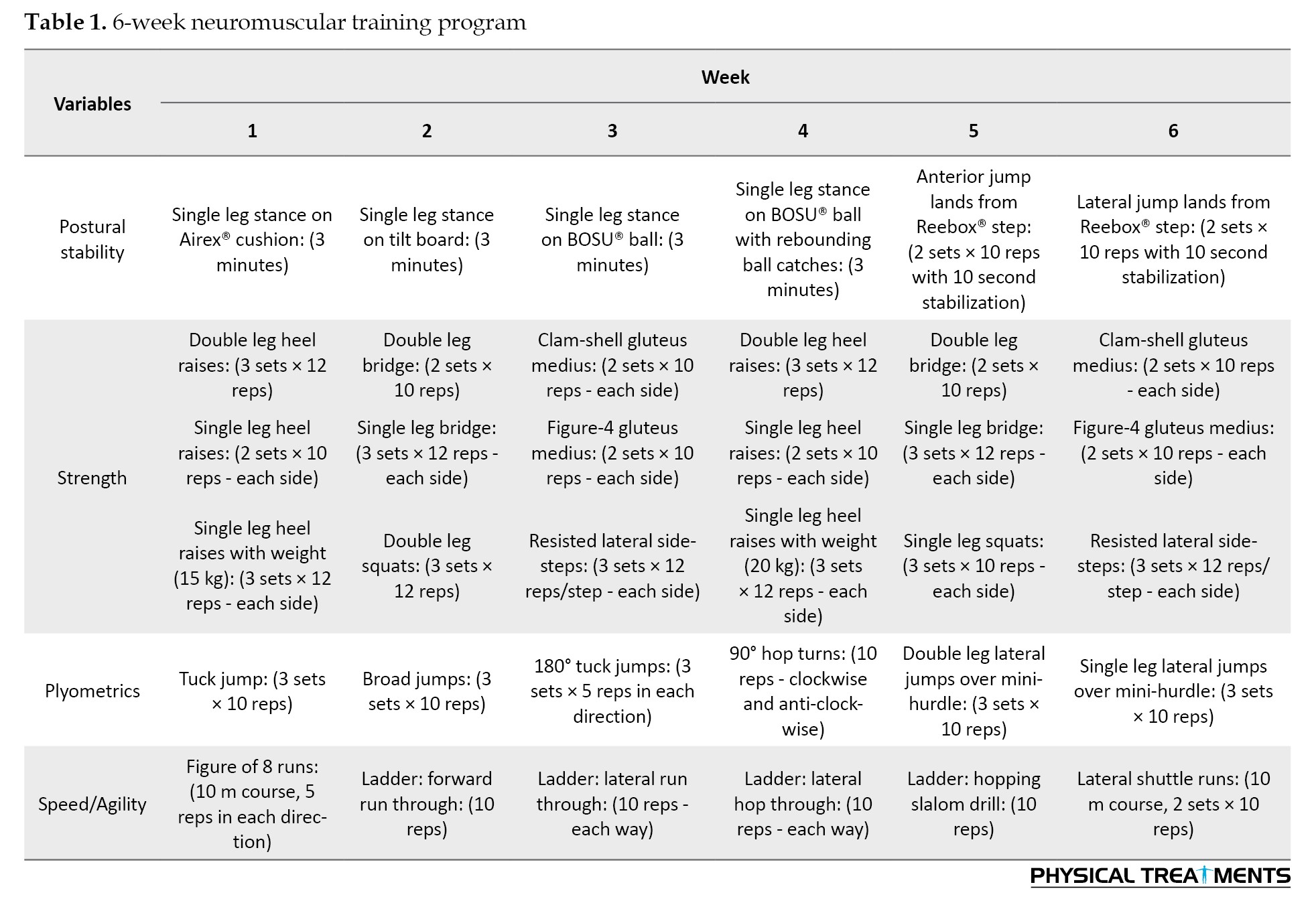
Currently, research addressing ankle sprain rehabilitation through a comprehensive, impairment-based classification system is limited. To account for the multifactorial nature of ankle sprains, a multi-component program was implemented.
The exercises were structured to progress from simple to more complex tasks, drawing from previously published rehabilitation protocols to remain consistent with contemporary best practices while addressing the specific functional needs of each participant. Given the dynamic demands of athletic activities and the common feelings of instability during high-speed movements, incorporating speed and agility training into the program was considered essential (Table 1) [23].
Traditional training program
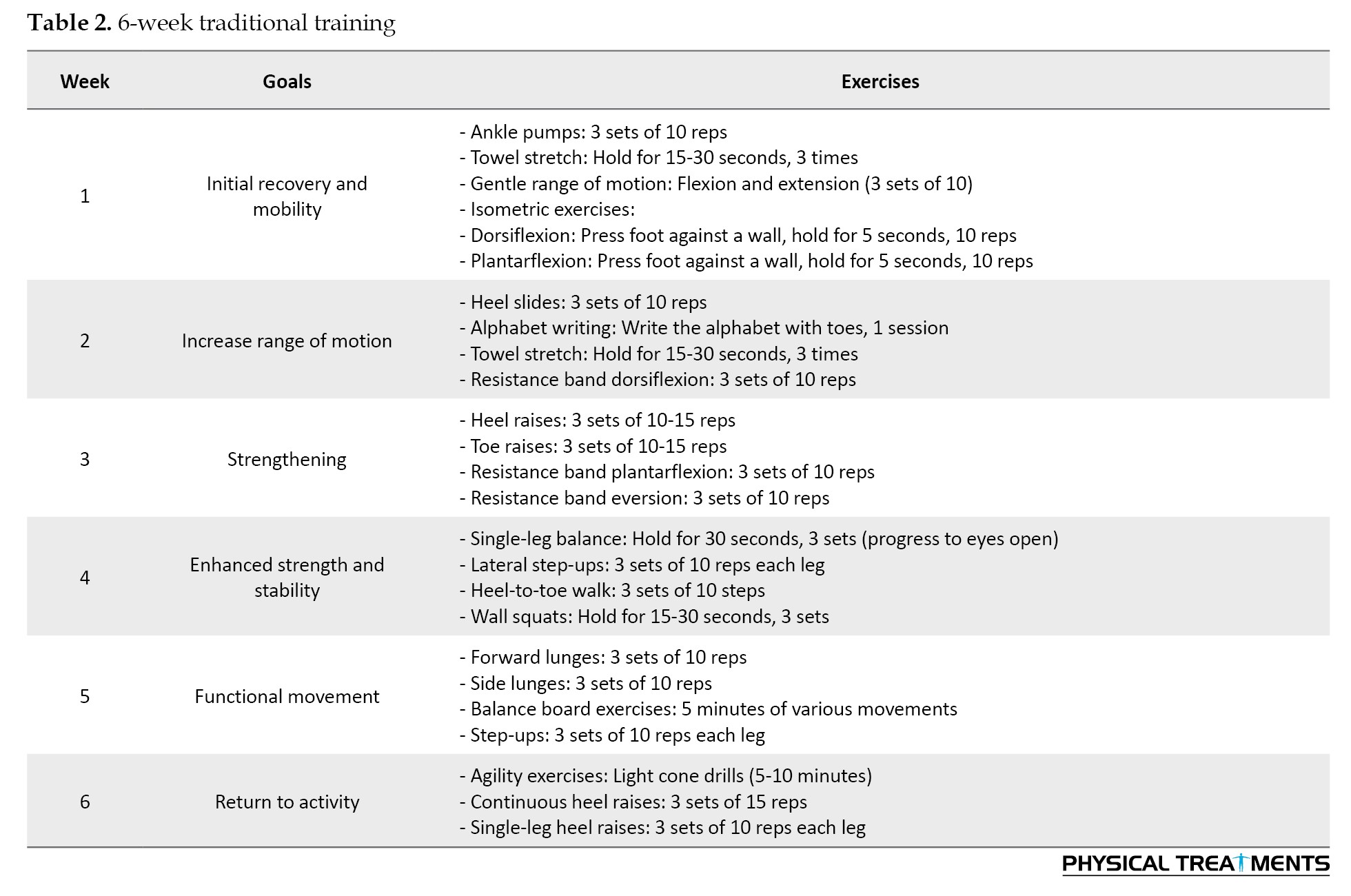
A 6-week traditional training program for ankle sprains was designed to support recovery, restore function, and strengthen the ankle joint. The program began with gentle mobility and flexibility exercises during the first week, focusing on pain-free range of motion to relieve stiffness.
As participants progressed, strengthening exercises using resistance bands and body weight were introduced to enhance muscular support around the ankle. By the fourth week, balance and stability exercises were incorporated to improve proprioception and reduce the risk of reinjury.
In the final weeks, functional movements and agility drills were emphasized, gradually preparing participants for a safe return to their usual activities or sports. This structured program provides a comprehensive approach to rehabilitation while addressing the specific needs of individuals with ankle instability (Table 2) [24].
Statistical analysis
The normality of all data, both before and after the interventions, was assessed using the Shapiro–Wilk test. Data are presented as Mean±SD. A two-way repeated-measures analysis of variance was conducted, with factors for group (2 levels) and time (pre- and post-intervention), using SPSS software (version 21.0 for Windows, SPSS Inc., Chicago, IL, USA) to evaluate changes in measured parameters.
When a significant F value was detected, Bonferroni post hoc tests were applied to determine specific differences between measures. Effect sizes were calculated using Cohen’s d to quantify the impact of the training programs. Thresholds for interpreting effect sizes were defined as follows: <0.2=trivial, 0.2–0.6=small, 0.6–1.2=moderate, 1.2–2=large, 2–4=very large, >4=perfect. All effect sizes are reported with 95% confidence intervals (CIs). Statistical significance was set at P≤0.05, and the study maintained a statistical power of 0.80 (1 – β).
Results
Table 3 presents the Mean±SD of the participants’ demographic characteristics, including age, height, and weight.
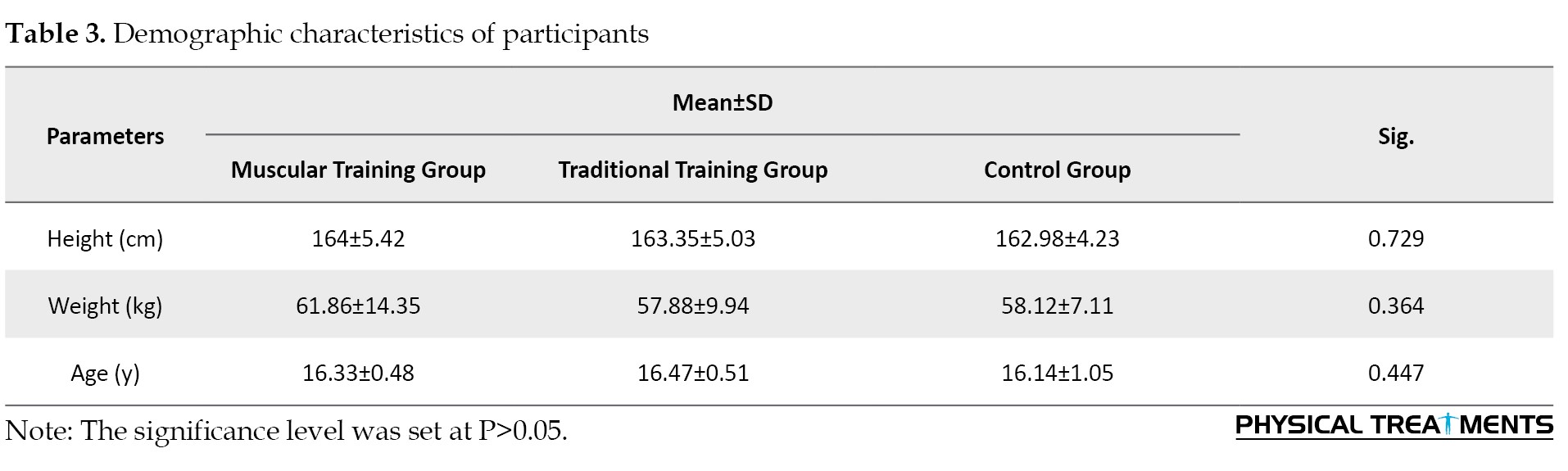
Analysis revealed no significant differences between the two groups in any of these demographic measures (P>0.05) (Table 3).
The results indicated no significant differences in any of the loading rate or free torque components during walking between the pre-test and post-test measurements for either the neuromuscular or traditional training groups among girls aged 15–18 with ankle sprains (Table 4).
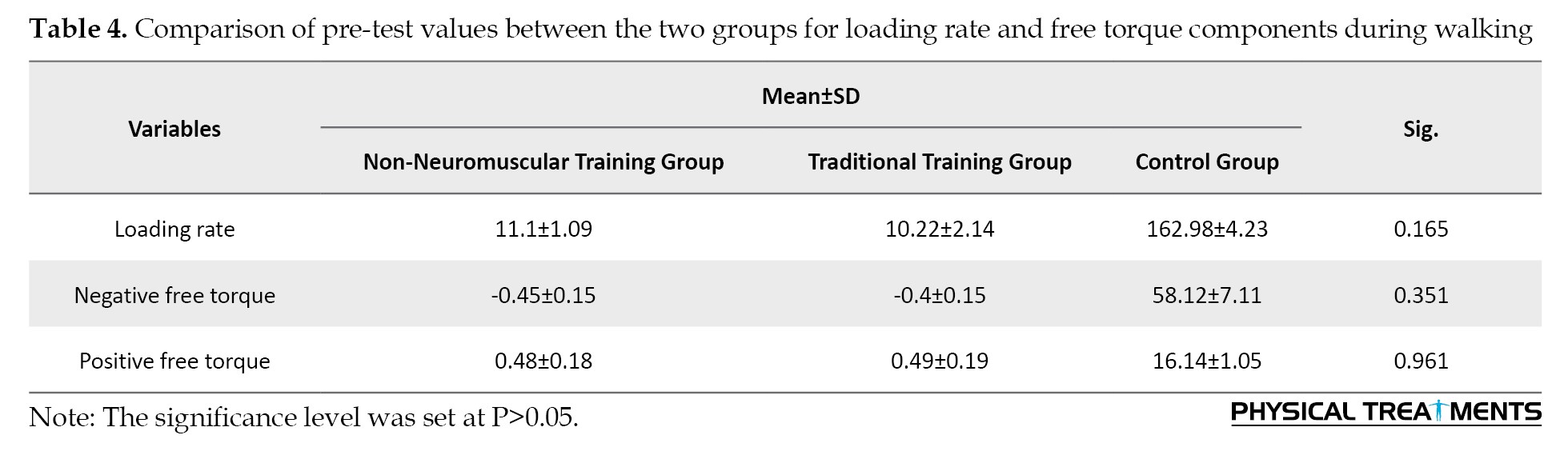
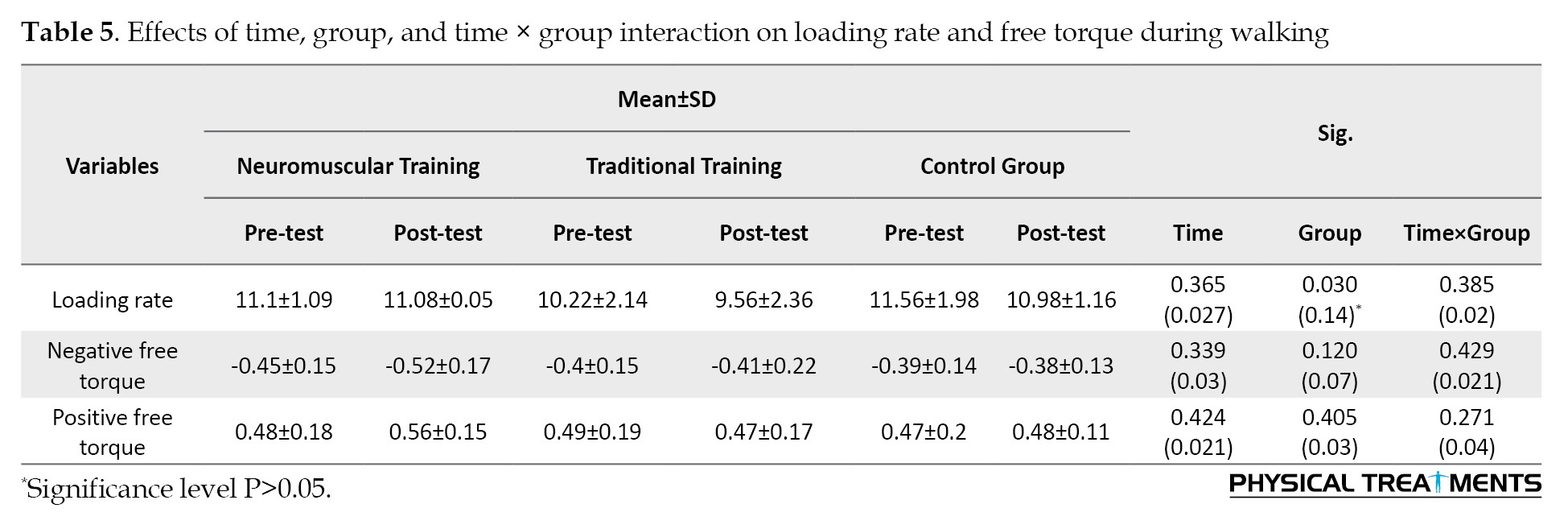
The results following the 6-week training program showed that the group effect on the loading rate was smaller in the traditional training group compared to the neuromuscular training group (P=0.30; d=0.148) (Table 4). Significant interaction effects between time and group (time×group) indicated that changes in load rating and free torque were not solely due to the passage of time but were also influenced by the specific type of training each group underwent.
This finding suggests that the pattern and magnitude of adaptation differ between neuromuscular and traditional training over the study period. In other words, the effectiveness of each exercise protocol depends on the timing of measurements, reflecting that improvements in these biomechanical variables occur at different rates across interventions. These time-dependent differences emphasize the need to consider both the training method and the temporal dynamics of adaptation when assessing rehabilitation or performance-enhancing programs.
Discussion
This study explored the effects of neuromuscular versus traditional training on load rating and free torque in girls aged 15–18 with a history of ankle ligament sprains. The results showed that neuromuscular training produced greater improvements in both loading rate and free torque compared with conventional exercise programs.
Given the critical role of muscle function in these biomechanical measures, future research should focus on how different training protocols influence muscle activation patterns. Such investigations could help clarify the mechanisms underlying the observed enhancements in load rating and free torque, providing deeper insights into effective rehabilitation strategies for ankle instability.
The findings of this study are consistent with previous research investigating the effects of neuromuscular and proprioceptive training on muscle activity and overall neuromuscular function. This alignment supports the view that these training methods effectively enhance muscle performance and neuromuscular efficiency [25–28].
For example, Fallahi Farrash et al. [29] examined functional training on soft surfaces and reported significant improvements in the responsiveness of proprioceptive receptors in the lower limbs. Similarly, Oliveira et al. [30] found that neuromuscular training increases electromyographic activity in lower-limb muscles, with greater effects observed when exercises were performed with eyes closed compared to eyes open. Additional studies by Cruz-Diaz et al. [31], Feger et al. [32], and De Ridder et al. [33] also demonstrated that neuromuscular training enhances muscle activity in individuals with a history of ankle sprains.
These findings suggest that incorporating neuromuscular training into rehabilitation programs can be particularly effective for promoting functional recovery after ankle injuries. Such training improves neuromuscular control, allowing for more efficient activation of motor units and muscle fibers during physical tasks. This improvement is associated with increased neural drive to the lower-limb muscles, combined with heightened awareness of muscle positioning, trunk stability, and pelvic alignment, all of which contribute to greater force production [34].
Evidence indicates that the rapid changes in muscle length and tension during the eccentric phase of neuromuscular exercises trigger adaptations in muscle spindles and Golgi tendon organs. This increased spindle sensitivity enhances afferent signaling to the central nervous system [35]. Additionally, the unpredictable nature of these exercises requires anticipatory muscle activation, and repeated exposure further improves the responsiveness of muscle fiber recruitment, thereby enhancing overall muscle function [36].
Neuromuscular training primarily boosts force and power output by improving the efficiency and coordination of the neuromuscular system. A key mechanism involves modulating inhibitory signals that normally limit muscle force. Specifically, such training can reduce the sensitivity of inhibitory receptors that control muscle tension, allowing the muscles to produce greater force with fewer restrictions [37].
Furthermore, neuromuscular coordination is crucial for optimizing force production by influencing the speed and effectiveness of muscle contractions. Improved coordination facilitates more efficient recruitment of motor units and muscle fibers, leading to faster and stronger contractions. Through consistent neuromuscular training, individuals enhance muscle responsiveness and efficiency, ultimately resulting in significant improvements in overall strength and power [38].
Neuromuscular training includes various techniques designed to stimulate peripheral sensory pathways, promote coordinated muscle activation, and enhance both reflexive and anticipatory motor control [39]. Exercises that challenge joint stability—particularly those performed in unbalanced positions—are especially effective for addressing multiple functional demands. With repeated practice and gradual increases in intensity, muscle activity, whether reactive or anticipatory, progressively shifts from conscious control to automatic motor responses [40].
From a motor control perspective, movements are organized around specific goals, with motor programs representing sequences of coordinated actions rather than isolated muscle contractions [41]. In practice, muscles rarely act independently; focusing on a single muscle during an activity may unintentionally draw attention to it. Muscles typically operate in coordinated groups, or synergies, adapting their roles according to the requirements of the task [42]. Therefore, training a single muscle in isolation may not fully prepare it for the diverse demands of real-world activities. This highlights the importance of a holistic training approach that considers the integrated and context-dependent nature of muscle function [43].
Limitations and future directions
This study investigated the effects of neuromuscular versus traditional training on load rating and free torque in girls aged 15–18 with a history of ankle ligament sprains. The results indicate that neuromuscular training is more effective than traditional methods in improving biomechanical variables that are closely linked to muscle function.
Future research should examine the direct relationship between different training protocols and muscle activity, given their critical role in influencing load ratings and free torque. While the findings align with previous studies on neuromuscular training and proprioceptive enhancement, several limitations should be noted. First, the relatively small sample size may limit the generalizability of the results. Second, the study focused exclusively on female participants within a narrow age range, which may not reflect how these interventions affect other populations. Future studies should include larger and more diverse samples to enhance the applicability of the findings to different demographic groups. Additionally, while this study highlights the short-term benefits of neuromuscular training, it does not provide information on its long-term effects on muscle performance or injury prevention. Investigating the sustained impact of neuromuscular training beyond the rehabilitation period could provide valuable insights into its effectiveness in reducing the risk of future ankle sprains.
Conclusion
The findings of this study indicate that neuromuscular training is more effective than traditional exercise in enhancing load rating and free torque. Based on these results, coaches and rehabilitation specialists should include neuromuscular training in recovery programs for individuals with lateral ankle ligament injuries or chronic ankle sprains. Incorporating this approach can improve both clinical outcomes and functional performance, supporting a more effective and comprehensive rehabilitation process.
Ethical Considerations
Compliance with ethical guidelines
The study protocol was approved by the Research Ethics Committee of Sari Branch, Islamic Azad University, Sari, Iran (Code: IR.IAU.SARI.REC.1404.273).
Funding
This research did not receive any financial support from public, commercial, or non-profit organizations.
Authors' contributions
All authors contributed equally to the conception, design, and preparation of this manuscript.
Conflict of interest
The authors declared no conflict of interest.
Acknowledgments
The authors sincerely thank all participants who contributed to this research and helped make it a success.
Ankle sprains are among the most common musculoskeletal injuries encountered in sports [1]. Following an initial sprain, persistent symptoms are frequently reported, with joint instability and recurrent “giving-way” episodes being the two most prevalent [2]. Such issues considerably elevate the risk of reinjury within the next 12–24 months. In 20–50% of cases, this reinjury progresses to chronic pain or lasting instability, which in turn imposes high healthcare expenditures, increases work absenteeism, and diminishes participation in athletic and physical activities [3]. Consequently, effective prevention of ankle sprains is essential not only for protecting individual athletes but also for reducing the broader social and economic burdens.
A variety of preventive strategies have been introduced to either forestall initial ankle sprains (primary prevention), decrease the risk of subsequent sprains (secondary prevention), or address both simultaneously [4, 5]. Such strategies may include external supports—such as ankle braces, taping, and bandaging—along with modified footwear or orthotics, neuromuscular and other exercise-based programs, or integrated combinations of these approaches [6, 7].
Neuromuscular training—often referred to as balance or proprioceptive training—generally involves exercises performed on ankle discs, balance platforms, or wobble boards [8]. This form of training enhances mechanoreceptor responsiveness and improves neuromuscular coordination, allowing the central nervous system to activate motor neurons more precisely and in a more synchronized way, thereby heightening joint position sense [9]. During stance tasks, it also promotes more accurate transmission of sensory input from joint receptors to the central nervous system, which contributes to improved postural control and stability [10]. Evidence from review studies has consistently shown that neuromuscular training exerts beneficial effects on balance and motor performance [11, 12].
The loading rate denotes the level of mechanical stress or workload that an athlete can safely tolerate during training and competition [13]. A clear understanding of this threshold enables coaches and trainers to design programs that prevent excessive strain on muscles, joints, and tendons, thereby reducing the likelihood of injuries, such as sprains and strains [14]. When athletes train within their optimal load rating, they can improve strength, endurance, and technical skills without increasing injury risk [15].
Free torque describes the rotational force that muscles and joints can produce without jeopardizing stability or causing tissue damage. Appropriate regulation of this parameter helps preserve joint stability during dynamic activities, lowering the probability of dislocations or ligament injuries [16]. By learning to generate and control free torque effectively, athletes can maintain correct technique—a key factor in injury prevention during high-intensity movements.
Both load rating and free torque are critical in reducing injury risk while enhancing athletic performance [17]. Careful management of these variables allows athletes to fine-tune their training, expand physical capacity, and minimize injuries in competitive contexts [18].
Currently, only limited data exist on how such exercises affect load rating and free torque. Furthermore, the specific mechanisms by which neuromuscular training alters these parameters—especially in comparison with other exercise modalities—remain poorly understood. It is still unclear whether neuromuscular training confers distinct advantages over alternative methods for improving these outcomes or whether no substantive differences occur. Moreover, little research has directly examined the comparative impact of neuromuscular and conventional training on load rating and free torque in adolescent girls aged 15–18 with ankle ligament sprains. Addressing this knowledge gap forms the basis of the present investigation, which seeks to clarify these factors in the context of rehabilitation and performance enhancement for this population. By exploring these effects, the study aims to generate practical recommendations to inform training and rehabilitation programs for young athletes recovering from ankle injuries.
Materials and Methods
This quasi-experimental study employed an applied research approach, utilizing both neuromuscular and traditional exercise interventions. Participants were randomly selected from the target population to ensure unbiased representation. The study followed a pre-test-post-test design across three groups: two experimental groups—one receiving neuromuscular training and the other engaging in traditional exercises—and a control group. The study protocol was approved by the Research Ethics Committee of Islamic Azad University, Sari Branch.
All groups underwent assessments before and after the intervention period. The study population consisted of girls aged 15-18 years with a history of ankle sprains. The sample size determination relied on data from previous similar studies [19] and calculations performed using G*Power software, version 3.1. Using a 95% confidence level, 80% power, and an estimated effect size of 0.5, the required number of participants for each group was calculated. Accounting for a possible 10% dropout, the final sample included 15 participants per group, totaling 45 individuals. The effect size used in this estimation was based on balance-related measures.
Participants were assigned to groups using computer-generated block randomization, ensuring equal distribution and minimizing potential biases. The allocation process was conducted by a research team member who remained blinded to participants’ identities, preventing any influence on group assignment.
Randomization
Participants were allocated to groups using a computer-generated block randomization method designed to maintain consistent group sizes throughout the study. This procedure reduced the risk of selection bias and ensured a balanced distribution across groups. The assignment was carried out by a research team member who was blinded to participant identities and had no role in recruitment or data collection, guaranteeing an unbiased allocation process.
Inclusion criteria
Participants qualified for the study if they met all of the following criteria:
● Female
● Aged between 15 and 18 years
● No history of cardiovascular or neuromuscular disorders
● Not participating in high-intensity physical activities during the study period
● Free from postural abnormalities in the upper or lower limbs that could influence the study outcomes
Exclusion criteria
Participants were excluded from the study if they met any of the following criteria:
● Missing two consecutive or three non-consecutive training sessions
● Experiencing musculoskeletal pain caused by the exercises
● Using neurological medications that could influence function
● Having a history of upper or lower limb injuries within the past six months
● Diagnosed with muscular or neurological disorders (e.g. myopathy, myositis, peripheral neuropathy, muscular dystrophy)
● Undergoing surgery or sustaining a fracture within the year prior to the study
Procedure
Before securing consent and confirming participants’ agreement, the researcher thoroughly explained the following aspects: the purpose of the study, research methodology, and confidentiality of collected information. After selecting the participants, a consent form was provided to those willing to participate in the research. Only individuals who agreed proceeded into the study. Following the random assignment of participants to the different study groups, they were required to fill out several forms, including a personal characteristics questionnaire, a general health survey, and a health assessment questionnaire.
Participants in the experimental groups were instructed to refrain from engaging in any other exercise programs aside from their assigned regimen. They were also advised not to introduce any new medications into their daily routines. The experimental groups—one focusing on neuromuscular training and the other on traditional exercises—followed their designated exercise programs for 6 weeks. Each group participated in three sessions per week, with each session lasting between 45 and 60 minutes. Following the intervention, the same assessments conducted during the pre-test were repeated in the post-test, adhering to the same timing and sequence.
Measurement
Participants’ height was measured using a wall-mounted stadiometer (Seca 222, Terre Haute, IN) and recorded to the nearest 0.5 cm. Body mass was determined using a digital scale (Tanita, BC-418MA, Tokyo, Japan) with an accuracy of 0.1 kg [20].
Load rating and free torque were assessed using a Kistler force plate (model BA 9286, Switzerland) at a sampling rate of 1000 Hz. The device showed high intra-rater reliability, ranging from 0.93 to 0.97, and inter-rater reliability of 0.73 [21].
Data acquisition and analysis
Each participant completed three trials, and the mean values were used for subsequent analysis. Data processing and analysis were performed using MATLAB software, version 2016. The evaluation of load rating and free torque followed a systematic procedure, including setting up the force plate and torque sensor, connecting them to the data acquisition system, and methodically collecting, processing, and analyzing the signals to extract the desired parameters.
In MATLAB, a data acquisition object was configured to include the relevant channels for both the force plate and torque sensor. The sampling rate and recording duration were set, and data collection was initiated to capture voltage signals from the sensors. These raw voltage signals were then converted into meaningful units—Newtons for load rating and Newton-meters for torque—using established calibration coefficients. Peak and average values were calculated for both load rating and free torque throughout the measurement period. The results were visualized using MATLAB’s plotting functions to illustrate load and torque over time.
To minimize measurement noise, all signals were filtered using a 20th-order low-pass Butterworth filter. The force plate and torque sensor demonstrated high intra-rater reliability (0.93–0.97) and acceptable inter-rater reliability (0.73), ensuring consistent and reproducible measurements [22].
Intervention
Participants underwent a 6-week progressive dynamic neuromuscular training program that included exercises targeting postural stability, strength, plyometrics, and speed/agility (Table 1).
Currently, research addressing ankle sprain rehabilitation through a comprehensive, impairment-based classification system is limited. To account for the multifactorial nature of ankle sprains, a multi-component program was implemented.
The exercises were structured to progress from simple to more complex tasks, drawing from previously published rehabilitation protocols to remain consistent with contemporary best practices while addressing the specific functional needs of each participant. Given the dynamic demands of athletic activities and the common feelings of instability during high-speed movements, incorporating speed and agility training into the program was considered essential (Table 1) [23].
Traditional training program
A 6-week traditional training program for ankle sprains was designed to support recovery, restore function, and strengthen the ankle joint. The program began with gentle mobility and flexibility exercises during the first week, focusing on pain-free range of motion to relieve stiffness.
As participants progressed, strengthening exercises using resistance bands and body weight were introduced to enhance muscular support around the ankle. By the fourth week, balance and stability exercises were incorporated to improve proprioception and reduce the risk of reinjury.
In the final weeks, functional movements and agility drills were emphasized, gradually preparing participants for a safe return to their usual activities or sports. This structured program provides a comprehensive approach to rehabilitation while addressing the specific needs of individuals with ankle instability (Table 2) [24].
Statistical analysis
The normality of all data, both before and after the interventions, was assessed using the Shapiro–Wilk test. Data are presented as Mean±SD. A two-way repeated-measures analysis of variance was conducted, with factors for group (2 levels) and time (pre- and post-intervention), using SPSS software (version 21.0 for Windows, SPSS Inc., Chicago, IL, USA) to evaluate changes in measured parameters.
When a significant F value was detected, Bonferroni post hoc tests were applied to determine specific differences between measures. Effect sizes were calculated using Cohen’s d to quantify the impact of the training programs. Thresholds for interpreting effect sizes were defined as follows: <0.2=trivial, 0.2–0.6=small, 0.6–1.2=moderate, 1.2–2=large, 2–4=very large, >4=perfect. All effect sizes are reported with 95% confidence intervals (CIs). Statistical significance was set at P≤0.05, and the study maintained a statistical power of 0.80 (1 – β).
Results
Table 3 presents the Mean±SD of the participants’ demographic characteristics, including age, height, and weight.
Analysis revealed no significant differences between the two groups in any of these demographic measures (P>0.05) (Table 3).
The results indicated no significant differences in any of the loading rate or free torque components during walking between the pre-test and post-test measurements for either the neuromuscular or traditional training groups among girls aged 15–18 with ankle sprains (Table 4).
The results following the 6-week training program showed that the group effect on the loading rate was smaller in the traditional training group compared to the neuromuscular training group (P=0.30; d=0.148) (Table 4). Significant interaction effects between time and group (time×group) indicated that changes in load rating and free torque were not solely due to the passage of time but were also influenced by the specific type of training each group underwent.
This finding suggests that the pattern and magnitude of adaptation differ between neuromuscular and traditional training over the study period. In other words, the effectiveness of each exercise protocol depends on the timing of measurements, reflecting that improvements in these biomechanical variables occur at different rates across interventions. These time-dependent differences emphasize the need to consider both the training method and the temporal dynamics of adaptation when assessing rehabilitation or performance-enhancing programs.
Discussion
This study explored the effects of neuromuscular versus traditional training on load rating and free torque in girls aged 15–18 with a history of ankle ligament sprains. The results showed that neuromuscular training produced greater improvements in both loading rate and free torque compared with conventional exercise programs.
Given the critical role of muscle function in these biomechanical measures, future research should focus on how different training protocols influence muscle activation patterns. Such investigations could help clarify the mechanisms underlying the observed enhancements in load rating and free torque, providing deeper insights into effective rehabilitation strategies for ankle instability.
The findings of this study are consistent with previous research investigating the effects of neuromuscular and proprioceptive training on muscle activity and overall neuromuscular function. This alignment supports the view that these training methods effectively enhance muscle performance and neuromuscular efficiency [25–28].
For example, Fallahi Farrash et al. [29] examined functional training on soft surfaces and reported significant improvements in the responsiveness of proprioceptive receptors in the lower limbs. Similarly, Oliveira et al. [30] found that neuromuscular training increases electromyographic activity in lower-limb muscles, with greater effects observed when exercises were performed with eyes closed compared to eyes open. Additional studies by Cruz-Diaz et al. [31], Feger et al. [32], and De Ridder et al. [33] also demonstrated that neuromuscular training enhances muscle activity in individuals with a history of ankle sprains.
These findings suggest that incorporating neuromuscular training into rehabilitation programs can be particularly effective for promoting functional recovery after ankle injuries. Such training improves neuromuscular control, allowing for more efficient activation of motor units and muscle fibers during physical tasks. This improvement is associated with increased neural drive to the lower-limb muscles, combined with heightened awareness of muscle positioning, trunk stability, and pelvic alignment, all of which contribute to greater force production [34].
Evidence indicates that the rapid changes in muscle length and tension during the eccentric phase of neuromuscular exercises trigger adaptations in muscle spindles and Golgi tendon organs. This increased spindle sensitivity enhances afferent signaling to the central nervous system [35]. Additionally, the unpredictable nature of these exercises requires anticipatory muscle activation, and repeated exposure further improves the responsiveness of muscle fiber recruitment, thereby enhancing overall muscle function [36].
Neuromuscular training primarily boosts force and power output by improving the efficiency and coordination of the neuromuscular system. A key mechanism involves modulating inhibitory signals that normally limit muscle force. Specifically, such training can reduce the sensitivity of inhibitory receptors that control muscle tension, allowing the muscles to produce greater force with fewer restrictions [37].
Furthermore, neuromuscular coordination is crucial for optimizing force production by influencing the speed and effectiveness of muscle contractions. Improved coordination facilitates more efficient recruitment of motor units and muscle fibers, leading to faster and stronger contractions. Through consistent neuromuscular training, individuals enhance muscle responsiveness and efficiency, ultimately resulting in significant improvements in overall strength and power [38].
Neuromuscular training includes various techniques designed to stimulate peripheral sensory pathways, promote coordinated muscle activation, and enhance both reflexive and anticipatory motor control [39]. Exercises that challenge joint stability—particularly those performed in unbalanced positions—are especially effective for addressing multiple functional demands. With repeated practice and gradual increases in intensity, muscle activity, whether reactive or anticipatory, progressively shifts from conscious control to automatic motor responses [40].
From a motor control perspective, movements are organized around specific goals, with motor programs representing sequences of coordinated actions rather than isolated muscle contractions [41]. In practice, muscles rarely act independently; focusing on a single muscle during an activity may unintentionally draw attention to it. Muscles typically operate in coordinated groups, or synergies, adapting their roles according to the requirements of the task [42]. Therefore, training a single muscle in isolation may not fully prepare it for the diverse demands of real-world activities. This highlights the importance of a holistic training approach that considers the integrated and context-dependent nature of muscle function [43].
Limitations and future directions
This study investigated the effects of neuromuscular versus traditional training on load rating and free torque in girls aged 15–18 with a history of ankle ligament sprains. The results indicate that neuromuscular training is more effective than traditional methods in improving biomechanical variables that are closely linked to muscle function.
Future research should examine the direct relationship between different training protocols and muscle activity, given their critical role in influencing load ratings and free torque. While the findings align with previous studies on neuromuscular training and proprioceptive enhancement, several limitations should be noted. First, the relatively small sample size may limit the generalizability of the results. Second, the study focused exclusively on female participants within a narrow age range, which may not reflect how these interventions affect other populations. Future studies should include larger and more diverse samples to enhance the applicability of the findings to different demographic groups. Additionally, while this study highlights the short-term benefits of neuromuscular training, it does not provide information on its long-term effects on muscle performance or injury prevention. Investigating the sustained impact of neuromuscular training beyond the rehabilitation period could provide valuable insights into its effectiveness in reducing the risk of future ankle sprains.
Conclusion
The findings of this study indicate that neuromuscular training is more effective than traditional exercise in enhancing load rating and free torque. Based on these results, coaches and rehabilitation specialists should include neuromuscular training in recovery programs for individuals with lateral ankle ligament injuries or chronic ankle sprains. Incorporating this approach can improve both clinical outcomes and functional performance, supporting a more effective and comprehensive rehabilitation process.
Ethical Considerations
Compliance with ethical guidelines
The study protocol was approved by the Research Ethics Committee of Sari Branch, Islamic Azad University, Sari, Iran (Code: IR.IAU.SARI.REC.1404.273).
Funding
This research did not receive any financial support from public, commercial, or non-profit organizations.
Authors' contributions
All authors contributed equally to the conception, design, and preparation of this manuscript.
Conflict of interest
The authors declared no conflict of interest.
Acknowledgments
The authors sincerely thank all participants who contributed to this research and helped make it a success.
References
- Halabchi F, Hassabi M. Acute ankle sprain in athletes: Clinical aspects and algorithmic approach. World Journal of Orthopedics. 2020; 11(12):534. [DOI:10.5312/wjo.v11.i12.534] [PMID] [PMCID]
- Wikstrom EA, Cain MS, Chandran A, Song K, Regan T, Migel K, et al. Lateral ankle sprain and subsequent ankle sprain risk: A systematic review. Journal of Athletic Training. 2021;56(6):578-85. [DOI:10.4085/1062-6050-168-20] [PMID] [PMCID]
- Alghadir AH, Iqbal ZA, Iqbal A, Ahmed H, Ramteke SU. Effect of chronic ankle sprain on pain, range of motion, proprioception, and balance among athletes. International Journal of Environmental Research and Public Health. 2020; 17(15):5318. [DOI:10.3390/ijerph17155318] [PMID] [PMCID]
- Wagemans J, Bleakley C, Taeymans J, Schurz AP, Kuppens K, Baur H, Vissers D. Exercise-based rehabilitation reduces reinjury following acute lateral ankle sprain: A systematic review update with meta-analysis. Plos One. 2022; 17(2):e0262023. [DOI:10.1371/journal.pone.0262023] [PMID] [PMCID]
- Tee E, Melbourne J, Sattler L, Hing W. Evidence for rehabilitation interventions after acute lateral ankle sprains in athletes: A scoping review. Journal of Sport Rehabilitation. 2021; 31(4):457-64. [DOI:10.1123/jsr.2021-0244] [PMID]
- Tedeschi R, Ricci V, Tarantino D, Tarallo L, Catani F, Donati D. Rebuilding stability: Exploring the best rehabilitation methods for chronic ankle instability. Sports. 2024; 12(10):282. [DOI:10.3390/sports12100282] [PMID] [PMCID]
- Wagemans J, Bleakley C, Taeymans J, Kuppens K, Schurz AP, Baur H, et al. Rehabilitation strategies for lateral ankle sprain do not reflect established mechanisms of re-injury: A systematic review. Physical Therapy in Sport. 2023; 60:75-83. [DOI:10.1016/j.ptsp.2023.01.008] [PMID]
- Caldemeyer LE, Brown SM, Mulcahey MK. Neuromuscular training for the prevention of ankle sprains in female athletes: a systematic review. The Physician and sportsmedicine. 2020; 48(4):363-9. [DOI:10.1080/00913847.2020.1732246] [PMID]
- Rommers N, Rössler R, Tassignon B, Verschueren J, De Ridder R, van Melick N, et al. Most amateur football teams do not implement essential components of neuromuscular training to prevent anterior cruciate ligament injuries and lateral ankle sprains. Knee Surgery, Sports Traumatology, Arthroscopy. 2022; 30(4):1169-79. [DOI:10.1007/s00167-022-06878-8] [PMID] [PMCID]
- Mansouri M, Saki F. The effectiveness of neuromuscular training with and without cognitive intervention on dynamic balance and proprioception of female athletes prone to ankle sprain injury: a randomized control trial. Journal for Research in Sport Rehabilitation. 2024; 12(23):31-44. [Link]
- Memon AG, Chandran SP, Zakir T, Sulaman M. Effects of neuromuscular training with and without kinesio-tape on pain, range of motion, balance and function in footballer with ankle sprain. Journal of Liaquat University of Medical & Health Sciences. 2025; 24(01):38-44. [Link]
- Kazemi K, Javanshir K, Saadi F, Goharpey S, Shaterzadeh Yazdi MJ, Calvo-Lobo C, et al. The effect of additional neuromuscular training on peri-ankle muscle morphology and function in chronic ankle instability subjects: A randomized controlled trial. Sports Health. 2024:19417381241258467. [DOI:10.1177/19417381241258467] [PMID] [PMCID]
- Kahere M, Matkovich G, Korporaal C. Functional and kinetic treatment with rehabilitation combined with cryotherapy compared to cryotherapy alone in the treatment of acute Grade I or II inversion Ankle Sprains: a randomized clinical trial. Journal of Chiropractic Medicine. 2022; 21(4):305-15. [DOI:10.1016/j.jcm.2022.03.002] [PMID] [PMCID]
- Teoh YX, Alwan JK, Shah DS, Teh YW, Goh SL. A scoping review of applications of artificial intelligence in kinematics and kinetics of ankle sprains-Current state-of-the-art and future prospects. Clinical Biomechanics. 2024; 113:106188.[DOI:10.1016/j.clinbiomech.2024.106188] [PMID]
- Mortezanejad M, Daryabor A, Ebrahimabadi Z, Rahimi A, Yousefi M, Ehsani F, Maleki A. Kinetic changes of gait initiation in individuals with chronic ankle instability: A systematic review. Health Science Reports. 2024; 7(11):e70143. [DOI:10.1002/hsr2.70143] [PMID] [PMCID]
- Tajdini H, Mantashloo Z, Thomas AC, Letafatkar A, Rossettini G. Inter-limb asymmetry of kinetic and electromyographic during walking in patients with chronic ankle instability. Scientific Reports. 2022; 12(1):3928. [DOI:10.1038/s41598-022-07975-x] [PMID] [PMCID]
- Taghavi Asl A, Shojaedin SS, Hadadnezhad M. Comparison of effect of wobble board training with and without cognitive intervention on balance, ankle proprioception and jump landing kinetic parameters of men with chronic ankle instability: A randomized control trial. BMC Musculoskeletal Disorders. 2022; 23(1):888. [DOI:10.1186/s12891-022-05706-x] [PMID] [PMCID]
- Hewett TE, Ford KR, Hoogenboom BJ, Myer GD. Understanding and preventing acl injuries: Current biomechanical and epidemiologic considerations - update 2010. N Am J Sports Phys Ther. 2010; 5(4):234-51. [PMID]
- Koldenhoven RM, Hart J, Abel MF, Saliba S, Hertel J. Running gait biomechanics in females with chronic ankle instability and ankle sprain copers. Sports Biomechanics. 2022; 21(4):447-59. [DOI:10.1080/14763141.2021.1977378] [PMID]
- Tipton PH, Aigner MJ, Finto D, Haislet JA, Pehl L, Sanford P, Williams M. Consider the accuracy of height and weight measurements. Nursing. 2012; 42(5):50-2. [DOI:10.1097/01.NURSE.0000413627.20475.a0] [PMID]
- Hébert-Losier K, Murray L. Reliability of centre of pressure, plantar pressure, and plantar-flexion isometric strength measures: A systematic review. Gait Posture. 2020; 75:46-62. [DOI:10.1016/j.gaitpost.2019.09.027] [PMID]
- Zhang Z, Zhang M. Effect of different ankle braces on lower extremity kinematics and kinetics following special-induced fatigue for volleyball players with functional ankle instability. Heliyon. 2023; 9(6):e16380. [DOI:10.1016/j.heliyon.2023.e16380] [PMID] [PMCID]
- O'Driscoll J, Kerin F, Delahunt E. Effect of a 6-week dynamic neuromuscular training programme on ankle joint function: A case report. Sports Med Arthrosc Rehabil Ther Technol. 2011; 3:13. [DOI:10.1186/1758-2555-3-13] [PMID] [PMCID]
- Vuurberg G, Hoorntje A, Wink LM, van der Doelen BFW, van den Bekerom MP, Dekker R, et al. Diagnosis, treatment and prevention of ankle sprains: Update of an evidence-based clinical guideline. Br J Sports Med. 2018; 52(15):956. [DOI:10.1136/bjsports-2017-098106] [PMID]
- Huang PY, Jankaew A, Lin CF. Effects of plyometric and balance training on neuromuscular control of recreational athletes with functional ankle instability: A randomized controlled laboratory study. International Journal of Environmental Research and Public Health. 2021; 18(10):5269. [DOI:10.3390/ijerph18105269] [PMID] [PMCID]
- Vuurberg S. EMG as a support tool for physiotherapy Investigating the role of EMG in determining Return-To-Sports in patients with lateral ankle sprain by physiotherapists. Enschede: University of Twente; 2024.
- Lee J, Park C, Cha Y, You JH. Comparative effects of different manual techniques on electromyography activity, kinematics, and muscle force in limited ankle dorsiflexion syndrome. Journal of Back and Musculoskeletal Rehabilitation. 2021; 34(6):1105-12. [DOI:10.3233/BMR-200257] [PMID]
- Lin CI, Khajooei M, Engel T, Nair A, Heikkila M, Kaplick H, Mayer F. The effect of chronic ankle instability on muscle activations in lower extremities. Plos One. 2021; 16(2):e0247581. [DOI:10.1371/journal.pone.0247581] [PMID] [PMCID]
- Fallahi Farrash F, Sheikhhoseini R, Babakhani F. Effect of 8 weeks of functional exercise on soft surfaces on balance and electromyographic activity of selected muscles in female taekwondo athletes. Women’s Health Bulletin. 2020; 7(2):19-25. [Link]
- Oliveira DC, Rezende PA, Silva MR, Lizardo FB, Sousa GD, Santos LA, Guimarães ÉA, Chacur EP. Electromyographic analysis of lower limb muscles in proprioceptive exercises performed with eyes open and closed. Revista Brasileira de Medicina do Esporte. 2012; 18(4):261-6. [DOI:10.1590/S1517-86922012000400009]
- Cruz-Diaz D, Lomas-Vega R, Osuna-Pérez M, Contreras F, Martínez-Amat A. Effects of 6 weeks of balance training on chronic ankle instability in athletes: A randomized controlled trial. International Journal of Sports Medicine. 2015; 36(09):754-60. [DOI:10.1055/s-0034-1398645] [PMID]
- Feger MA, Donovan L, Hart JM, Hertel J. Lower extremity muscle activation during functional exercises in patients with and without chronic ankle instability. PM&R. 2014; 6(7):602-11. [DOI:10.1016/j.pmrj.2013.12.013] [PMID]
- De Ridder R, Willems T, Vanrenterghem J, Roosen P. Influence of balance surface on ankle stabilizing muscle activity in subjects with chronic ankle instability. Journal of Rehabilitation Medicine. 2015; 47(7):632-8. [DOI:10.2340/16501977-1970] [PMID]
- Anbarian M, Ghiamirad A, Shahbazi B. Evaluating the variability of plantar pressure distribution in active young men with chronic ankle joint pain after a course of depth-sensing exercises with ultra sound waves (with a rehabilitation approach). Studies in Medical Sciences. 2023; 33(10):728-36. [DOI:10.52547/umj.33.10.728]
- Lazarou L, Kofotolis N, Malliou P, Kellis E. Effects of two proprioceptive training programs on joint position sense, strength, activation and recurrent injuries after ankle sprains. Isokinetics and Exercise Science. 2017; 25(4):289-300. [DOI:10.3233/IES-171146]
- Mohamed RAS, Kuppusamy G, Mani P, Chinnusamy S. Effectives of ultrasound and plyometric training on pain range of motion and functional ability among football players with lateral ankle sprain: A simple experimental study. International Journal of Childhood and Development Disorders. 2024; 5(1):43-7. [Link]
- Kachouri H, Borji R, Baccouch R, Laatar R, Rebai H, Sahli S. The effect of a combined strength and proprioceptive training on muscle strength and postural balance in boys with intellectual disability: An exploratory study. Research in Developmental Disabilities. 2016; 53:367-76. [DOI:10.1016/j.ridd.2016.03.003] [PMID]
- Gidu DV, Badau D, Stoica M, Aron A, Focan G, Monea D, et al. The effects of proprioceptive training on balance, strength, agility and dribbling in adolescent male soccer players. International Journal of Environmental Research and Public Health. 2022; 19(4):2028. [DOI:10.3390/ijerph19042028] [PMID] [PMCID]
- Mainer-Pardos E, Villavicencio Álvarez VE, Moreno-Apellaniz N, Gutiérrez-Logroño A, Calero-Morales S. Effects of a neuromuscular training program on the performance and inter-limb asymmetries in highly trained junior male tennis players. Heliyon. 2024; 10(5):e27081. [DOI:10.1016/j.heliyon.2024.e27081] [PMID] [PMCID]
- Winter L, Huang Q, Sertic JVL, Konczak J. The effectiveness of proprioceptive training for improving motor performance and motor dysfunction: A systematic review. Frontiers in Rehabilitation Sciences. 2022; 3:830166. [DOI:10.3389/fresc.2022.830166] [PMID] [PMCID]
- Stergiou M, Calvo AL, Forelli F. Effectiveness of neuromuscular training in preventing lower limb soccer injuries: A systematic review and meta-analysis. Journal of Clinical Medicine. 2025; 14(5):1714. [DOI:10.3390/jcm14051714] [PMID] [PMCID]
- Williams MD, Ramirez-Campillo R, Chaabene H, Moran J. Neuromuscular training and motor control in youth athletes: A meta-analysis. Perceptual and Motor Skills. 2021; 128(5):1975-97. [DOI:10.1177/00315125211029006] [PMID] [PMCID]
- Aman JE, Elangovan N, Yeh I-L, Konczak J. The effectiveness of proprioceptive training for improving motor function: A systematic review. Frontiers in Human Neuroscience. 2015;8:1075. [DOI:10.3389/fnhum.2014.01075] [PMID] [PMCID]
Type of Study: Research |
Subject:
General
Received: 2025/01/12 | Accepted: 2025/09/28 | Published: 2026/06/23
Received: 2025/01/12 | Accepted: 2025/09/28 | Published: 2026/06/23
Send email to the article author
| Rights and permissions | |
 |
This work is licensed under a Creative Commons Attribution-NonCommercial 4.0 International License. |

This is an open access article distributed under the terms of the Creative Commons Attribution-NonCommercial 4.0 (CC-By-NC 4.0), which permits use, distribution, and reproduction in any medium, provided the original work is properly cited and is not used for commercial purposes.
Contact Information