Sun, Oct 4, 2026
Volume 16, Issue 3 (Summer 2026)
PTJ 2026, 16(3): 273-282 |
Back to browse issues page



Download citation:
BibTeX | RIS | EndNote | Medlars | ProCite | Reference Manager | RefWorks
Send citation to:


BibTeX | RIS | EndNote | Medlars | ProCite | Reference Manager | RefWorks
Send citation to:
Darvish B, Piri H, Rahimi M, Shadi E. Acute Effect of Massage, Static Stretching, and Foam Rolling on Hamstring Muscle Flexibility. PTJ 2026; 16 (3) :273-282
URL: http://ptj.uswr.ac.ir/article-1-645-en.html
URL: http://ptj.uswr.ac.ir/article-1-645-en.html
1- Department of Sports Injuries and Corrective Exercises, SR.C., Islamic Azad University, Tehran, Iran.
2- Department of Corrective Exercise and Sport Injury, Faculty of Physical Education and Sport Sciences, Allameh Tabataba’i University, Tehran, Iran.
3- Department of Corrective Exercises and Sport Injuries, Faculty of Sport Sciences, Shahid Rajaee Teacher Training University, Tehran, Iran.
4- Department of Corrective Exercise and Sport Injuries, Faculty of Sport Sciences, University of Isfahan, Isfahan, Iran
2- Department of Corrective Exercise and Sport Injury, Faculty of Physical Education and Sport Sciences, Allameh Tabataba’i University, Tehran, Iran.
3- Department of Corrective Exercises and Sport Injuries, Faculty of Sport Sciences, Shahid Rajaee Teacher Training University, Tehran, Iran.
4- Department of Corrective Exercise and Sport Injuries, Faculty of Sport Sciences, University of Isfahan, Isfahan, Iran
Full-Text [PDF 3266 kb]
(1262 Downloads)
| Abstract (HTML) (2219 Views)
Full-Text: (140 Views)
Introduction
Flexibility refers to the capacity to move a specific joint through its full range of motion (ROM), which is influenced by the joint’s structure, the condition of the ligaments and fascia, and the elasticity of the surrounding muscles [1]. It is a key factor that significantly affects physical fitness and sports performance [2, 3]. The type of joint, periarticular tissues, gender, and age all influence flexibility [2, 4]. Abnormal muscle stiffness, which impairs the elastic properties of these tissues, makes it difficult to lengthen the muscles during physical activities when internal and external forces are applied. This restriction ultimately reduces the ROM [5]. Adequate flexibility and muscle stiffness can improve performance, reduce muscular pain, and lower the risk of sports injuries. In contrast, a lack of optimal flexibility results in restricted ROM and muscle imbalances, which not only negatively affect athletic performance but also increase the likelihood of injury [6, 7]. Hamstring strains are among the most common sports injuries in football players, and due to the high risk of recurrence in affected individuals, scientific research into these injuries is essential [8]. Studies have shown that insufficient strength or poor flexibility is usually the cause of most hamstring injuries [8, 9].
Stretching exercises can lead to long-term increases in joint ROM [10]. Various stretching exercises exist; however, static stretching (SS) and proprioceptive neuromuscular facilitation (PNF) are the most common strategies. Muscles and surrounding connective tissues are stretched to mild discomfort or stretch perception during SS [11]. SS can be used to enhance flexibility and reduce the risk of injury when incorporated into warm-up routines [12]. In this context, previous studies have affirmed the effectiveness of these exercises in enhancing ROM [11, 13]. Changes in flexibility after SS interventions are attributed to alterations in stiffness of the tendon-muscle unit [14, 15] and stretch tolerance [16]. The impact of SS on the two factors mentioned is influenced by the duration of stretching [17, 18]. It has been reported that ROM increases immediately following SS [17, 18]. However, some studies have shown that, for instance, the myotendinous unit of the hamstring muscles is significantly affected after 180 seconds of SS [19, 20].
Self-myofascial release (SMR) has recently become a common technique in both sports and clinical environments. This self-administered approach involves applying compressive forces to soft tissues. It simulates the impacts of manual techniques and is intended to address soft-tissue dysfunctions [21, 22]. A foam roller is a widely utilized SMR tool in sports and physiotherapy practices [23]. Two benefits of SMR with a foam roller are that it does not negatively affect muscle strength [24] or vertical jump performance [25]. Additionally, foam rolling (FR) can improve maximal running speed [26], reduce muscle soreness [27], and enhance neuromuscular efficiency [28]. Several studies have primarily investigated the effects of FR on ROM, pain, and the mechanical characteristics of the lower limbs [29]. While some investigations have demonstrated that FR can enhance ROM, the underlying mechanisms of this enhancement remain insufficiently understood [25]. The effectiveness of SMR is attributed to the direct application of pressure to soft tissues, which may result in fascia warming, the breakdown of fibrous adhesions, and the restoration of soft-tissues’ elastic properties [30].
Massage is the purposeful manipulation of soft tissues using fingers, hands, forearms, elbows, knees, or feet, with or without the application of lubricants, coverings, heat, cold, handheld tools, or other external devices, for therapeutic or enhancement purposes [31]. Swedish massage applied to the hamstrings appears to enhance hamstring flexibility in female athletes, with the effect remaining even after a 5-day cessation of the massage [32]. In a previous study, Crossman et al. (1984) investigated the impact of massage on hamstring flexibility in women, and their results showed that this intervention significantly enhanced hamstring excursion [33]. Since then, several studies have investigated the effect of massage on flexibility; however, the results remain inconclusive. Some studies have reported that massage enhances hamstring flexibility and range of motion [34–37], whereas others have found no significant improvements [38, 39]. Some studies have indicated that massage can enhance flexibility [34-36], while others have reported contradictory findings [38, 39]. In this regard, Hopper et al. (2005) found that soft tissue mobilization can increase hamstring flexibility [37].
There is limited experimental evidence supporting SMR, with the existing literature primarily reporting chronic rather than acute effects of myofascial release on muscle function. Several methods are employed to enhance muscle flexibility, and numerous studies have been conducted in this area. This research compares the effects of SS, massage, and FR on hamstring flexibility in football players with hamstring tightness.
Materials and Methods
This study employed a quasi-experimental, pre-test-post-test design. The study’s statistical population included male football players aged 17-25 with hamstring tightness. The sample consisted of 30 individuals from the population who were purposefully selected and randomly allocated to three research groups. The inclusion criteria for the current research were being a football player, being male aged 17-25 years, and having hamstring tightness. Participants with a history of hamstring muscle injury, lower limb injury in the past year, or back pain [38]. Participation in exercise programs and corrective exercises affecting the test result was excluded.
Before starting the test process, all stages were fully explained to the participants; they were instructed to complete and sign the consent form and the personal information questionnaire if they agreed to participate in the study. The researcher used the massage technique and flexibility measurement, but SS and FR were used independently after teaching the subjects these techniques. The test was conducted in three separate sessions (day 1: massage; day 2: SS; day 3: FR). In the test session, the participant’s height, weight, and hamstring muscle flexibility were initially measured and recorded. After the interventions, hamstring muscle flexibility was measured again and recorded on a specific form. The classic massage technique, which includes stroking and circular movements with the palm (effleurage) from the distal to the proximal part, similar to kneading dough towards the front, applying pressure with the hand, lifting and shaking from the proximal to the distal, was applied to the back of the thigh. These steps were repeated five times in order. The entire massage process lasted for 8 minutes (Figure 1, part B).
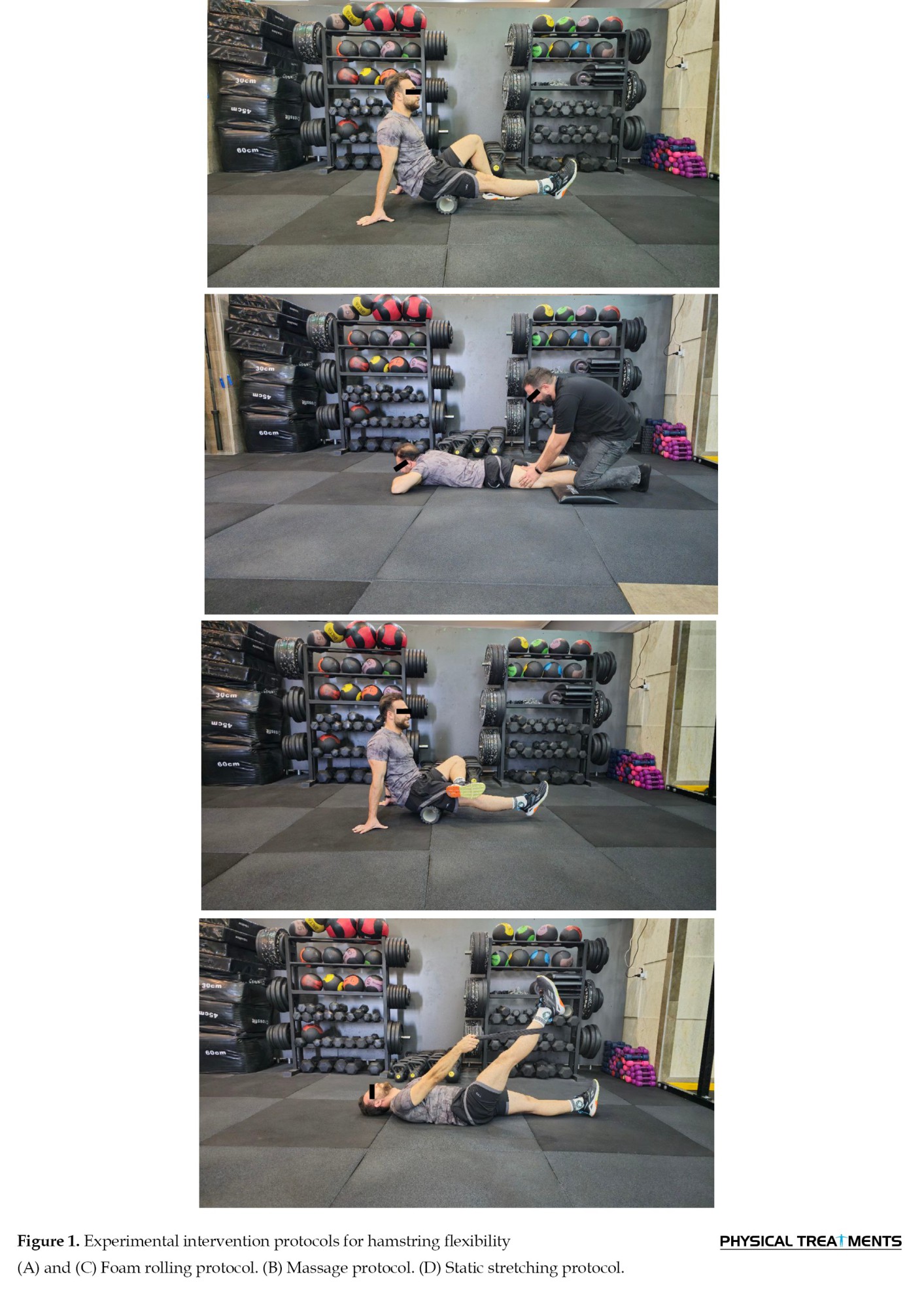 For the SS, the participant was supine with their trunk upright and the non-tested leg resting flat on the ground. The tested leg was gradually lifted off the ground while maintaining a straight knee. The participant maintained this position for 30 seconds, completing four repetitions of 30 seconds each [39] (Figure 1, part D).
To perform FR, the participant was instructed to position the foam roller near the hamstring origin and sit on it. Then, they moved it towards the knee, with the knees straight and the ankle relaxed. Next, the participant was instructed to bear their weight with extended arms, with the palms on the floor, and lift the torso upward to increase pressure between the foam roller and the hamstring muscles (three 1-minute repetitions with a 30-second rest interval) [38]. In this study, dynamic thermoplastic rubber (DTR) foam rollers with a circumference of 10 centimeters and a thickness of 3 centimeters were used [39]. DTR foam rollers have semi-flexible, asymmetrical nodes on their surface, which increase pressure on the tissues (Figure A1 and 1C).
The passive straight-leg raise (PSLR) and the sit-and-reach tests are commonly employed in clinical and research settings to assess hamstring flexibility [40]. In this study, the PSLR test was utilized. The Shapiro-Wilk test was conducted to evaluate the normality of the data distribution, and one-way ANCOVA was used to compare the immediate effects of the interventions. The Bonferroni post hoc test was conducted for pairwise comparisons. A significance level of 95% and an alpha level of 0.05 or lower were considered in the analysis.
Results
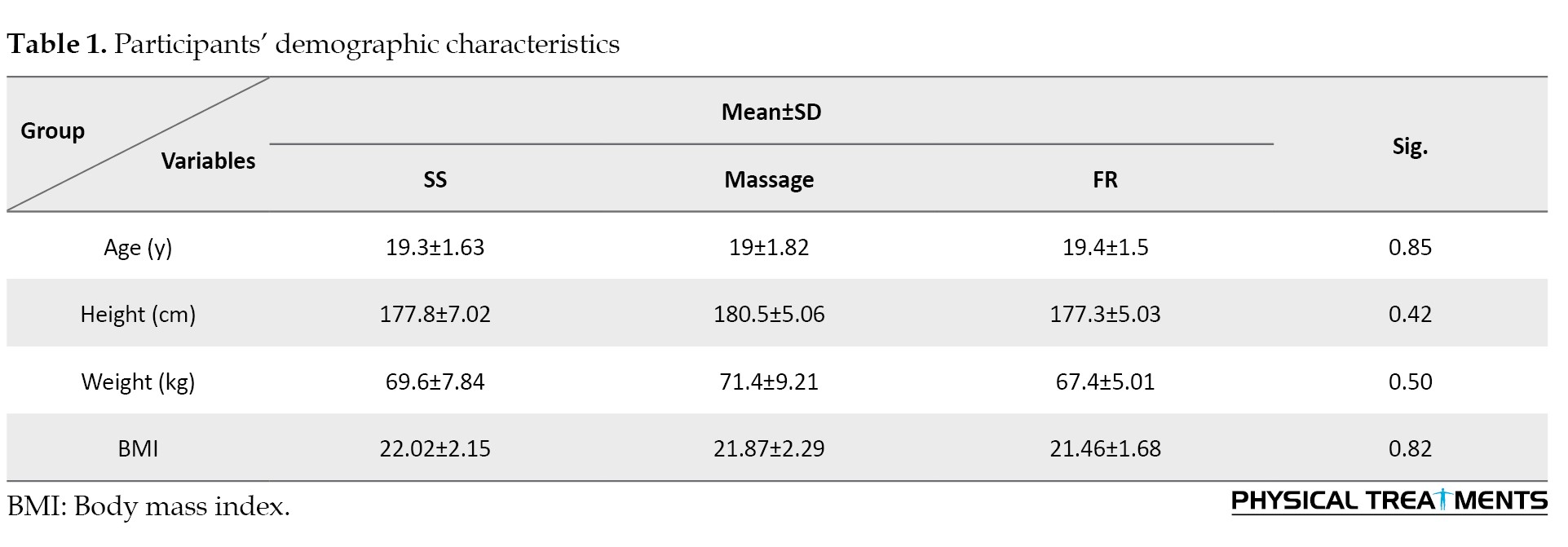
In this study, 30 participants completed each research stage. The participants were homogeneous regarding demographic factors, such as body mass index (BMI), weight, height, and age, with no significant differences noted. The normality of the data distribution was assessed using the Shapiro-Wilk test. A significance level greater than 0.05 indicated a normal distribution of the data (Table 1).
Another assumption of a one-way analysis of covariance (ANCOVA) test is the homogeneity of variances. Levene’s test was conducted to assess the homogeneity of variances.
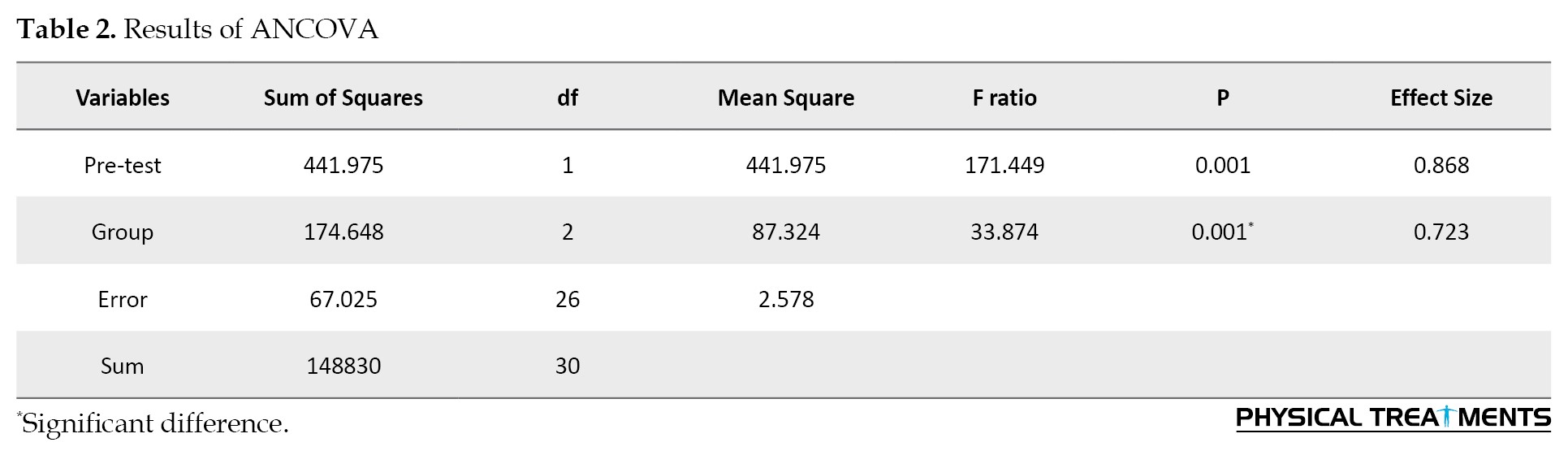
Considering the results of Shapiro-Wilk and Levene’s tests, we used ANCOVA to compare flexibility among the three groups (SS, massage, FR). The output of the ANCOVA analysis (Table 2) showed that, after controlling for pre-test effects (covariate), there is a significant difference in hamstring muscle flexibility among the three groups.
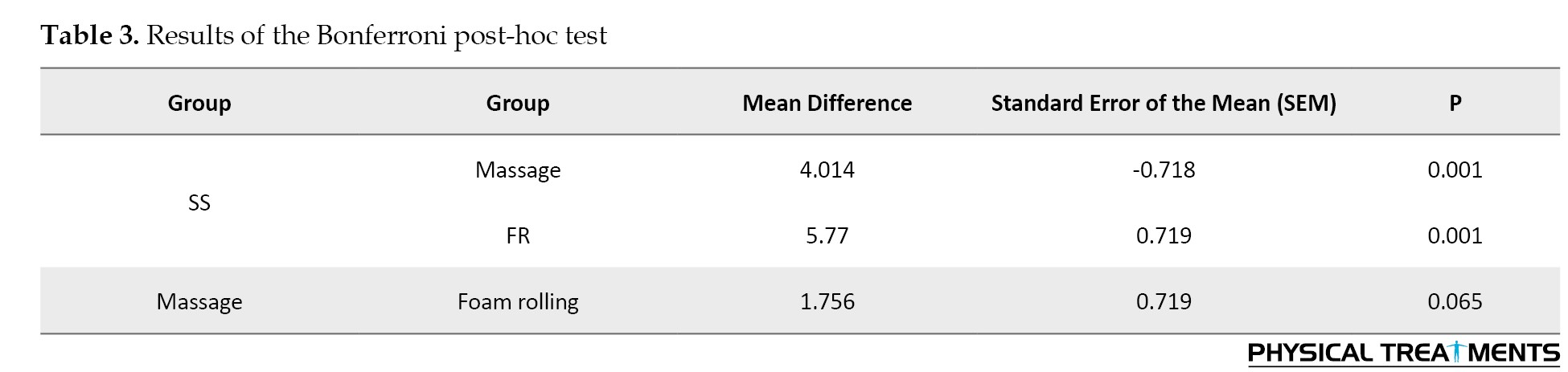
The results of the ANCOVA indicated significant differences among the groups. Therefore, we employed the Bonferroni post hoc to detect which specific pairs of groups showed significant differences. Since we had three groups, the significance level, set at 0.05, was divided by the number of groups, resulting in a significance level of 0.017 for each comparison. The results revealed significant differences between the SS and massage groups and between the SS and FR groups. However, no significant difference was found between the massage and FR groups (Table 3).
Discussion
This study aimed to compare the effectiveness of three stretching interventions—SS, FR, and massage—on hamstring flexibility in football players with hamstring tightness. The results showed that all three interventions positively impacted hamstring flexibility, as measured by the PSLR test. However, SS led to a significant improvement in hip ROM in football players with hamstring tightness. These findings align with the studies conducted by Siebert et al. (2022), Škarabot et al. (2015), Couture et al. (2015), and Evans (2014) [41-44]. Siebert et al. (2022) compared the effects of dynamic stretching (DS), FR, and SS on hip joint ROM. Their study suggested that SS and DS are effective methods for increasing actual ROM, whereas the benefits of FR seem more related to pain threshold adjustments rather than a direct improvement in ROM [43]. Škarabot et al. (2015) investigated the effects of FR and SS on ankle ROM in adolescent athletes. Participants in the mentioned study were randomly assigned to three groups: FR, SS, and a combination of both. The results revealed that SS increased ROM by 6.2%, while the combination of FR and SS increased ROM by 9.1%. However, FR alone had no significant effect on ROM, which aligns with the current study’s findings [44]. Couture et al. (2015) compared the impacts of long-term (4×30-second) and short-term (2×10-second) myofascial release interventions on knee ROM in healthy individuals. The findings of that study indicated that neither myofascial release protocol led to a significant improvement in knee ROM [41]. Evans (2014) also demonstrated that SMR does not affect flexibility or hamstring strength during movements. This researcher recommended avoiding reliance on SMR to increase flexibility during warm-up, as its effectiveness is inconsistent with previous findings, suggesting the need for further research in this area [42].
The SS technique is recognized as an efficient approach for increasing muscle flexibility and ROM in the sports world. This method improves the extensibility of muscles and connective tissue by inducing neural and muscular adaptations that can enhance ROM. From a neurocognitive perspective, this method can also help increase an individual’s tolerance to stretching by reducing the excitability of motor neurons and stretch reflex sensitivity, thereby increasing ROM [45]. Additionally, SS reduces the sensitivity of muscle spindles and increases their adaptation to stretching. This method can minimize the signals of primary and secondary afferent receptors embedded in muscle spindles. Also, by exerting forces on tendons, autogenic inhibition reflexes and muscle relaxation are mediated by Ib nerve fibers. This combination of neurophysiological effects can enable muscles to elongate further and increase their flexibility [46].
Another reason for the superior effect of SS on hip flexion ROM compared to FR may be the nature of the applied forces. SS primarily applies longitudinal forces to tendon and muscle tissue, substantially increasing the ROM. However, FR primarily induces transverse forces on muscle tissue, indicating that the reported improvements in ROM in previous studies may be due to a change in pain threshold rather than actual tissue adaptation [47].
The results of the current study do not align with the results of Reiner et al. (2022), Killen et al. (2019), and Su et al. (2016) [39, 48, 49]. Reiner et al. (2022) conducted a study comparing the effects of SS and vibration FR on hip ROM. The results indicated that vibration FR led to a larger improvement in hip flexion ROM than SS exercises [49]. Killen et al. (2019) also demonstrated that all interventions (FR, SS, and DS) were effective in improving hamstring and quadriceps muscle flexibility, with FR significantly more efficient at enhancing flexibility than SS and DS [48]. Su et al. (2016) also found similar results [39]. Another potential reason for the lack of change in the hip ROM with SMR in the current study may be inadequate pressure applied to the tissue of interest. Several participants in Evans et al.’s (2014) study reported feeling minimal or no pressure during the SMR protocol. Suboptimal positioning during rolling causes more body weight to be applied to the hands rather than to the roller and the tissue of interest. Subsequent studies could improve the effectiveness of SMR by using yoga blocks under the hands and applying more pressure on the thighs. Notably, unlike participants in previous studies with normal hip joint ROM, the samples in the current study exhibited hamstring tightness.
The current study’s findings indicated that 8 minutes of massage had no significant effect on hip ROM. Similarly, Barlow et al. (2004) found that one massage on the posterior thigh muscles had a significant effect on SLR performance [50]. Wiktorsson-Moeller et al. found that [51] massage, whether performed alone or with a warm-up, did not significantly increase hip ROM. It has been stated that massage does not alter the mechanical characteristics of myotendinous units or increase ankle ROM [52].
The limitations of the current study include a small sample size and limited familiarity with the participants’ SMR. This study investigated the immediate effects of SS, massage, and FR on hip flexion ROM in football players with hamstring tightness. Future research should explore the long-term impact and sustainability of these methods in athletes with hamstring tightness.
Conclusion
This study compared hamstring muscle flexibility among SS, massage, and FR groups. The results of the ANCOVA revealed that, after adjusting for pre-test effects as a covariate, hamstring flexibility was substantially different among the three groups. Overall, the findings suggest that SS is a more effective option to increase flexibility immediately in football players with short hamstrings than massage and FR. These findings can be beneficial for athletes and coaches in selecting the optimal method to enhance flexibility and prevent physical injuries.
Ethical Considerations
Compliance with ethical guidelines
This study was approved by the Research Ethics Committee of Sciences and Research Branch, Islamic Azad University, Tehran, Iran (Code: IR.IAU.SRB.REC.1400.005).
Funding
The article was extracted from the master’s thesis of Bahar Darvish, approved by the Sciences and Research Branch, Islamic Azad University, Tehran, Iran.
Authors' contributions
Study design and data collection: Hashem Piri and Bahar Darvish; Writing: Elahe Shadi and Mohammad Rahimi; Final approval: All authors.
Conflict of interest
The authors declared no conflicts of interest.
Acknowledgments
The authors are grateful to all those who helped them in conducting this research.
References
Flexibility refers to the capacity to move a specific joint through its full range of motion (ROM), which is influenced by the joint’s structure, the condition of the ligaments and fascia, and the elasticity of the surrounding muscles [1]. It is a key factor that significantly affects physical fitness and sports performance [2, 3]. The type of joint, periarticular tissues, gender, and age all influence flexibility [2, 4]. Abnormal muscle stiffness, which impairs the elastic properties of these tissues, makes it difficult to lengthen the muscles during physical activities when internal and external forces are applied. This restriction ultimately reduces the ROM [5]. Adequate flexibility and muscle stiffness can improve performance, reduce muscular pain, and lower the risk of sports injuries. In contrast, a lack of optimal flexibility results in restricted ROM and muscle imbalances, which not only negatively affect athletic performance but also increase the likelihood of injury [6, 7]. Hamstring strains are among the most common sports injuries in football players, and due to the high risk of recurrence in affected individuals, scientific research into these injuries is essential [8]. Studies have shown that insufficient strength or poor flexibility is usually the cause of most hamstring injuries [8, 9].
Stretching exercises can lead to long-term increases in joint ROM [10]. Various stretching exercises exist; however, static stretching (SS) and proprioceptive neuromuscular facilitation (PNF) are the most common strategies. Muscles and surrounding connective tissues are stretched to mild discomfort or stretch perception during SS [11]. SS can be used to enhance flexibility and reduce the risk of injury when incorporated into warm-up routines [12]. In this context, previous studies have affirmed the effectiveness of these exercises in enhancing ROM [11, 13]. Changes in flexibility after SS interventions are attributed to alterations in stiffness of the tendon-muscle unit [14, 15] and stretch tolerance [16]. The impact of SS on the two factors mentioned is influenced by the duration of stretching [17, 18]. It has been reported that ROM increases immediately following SS [17, 18]. However, some studies have shown that, for instance, the myotendinous unit of the hamstring muscles is significantly affected after 180 seconds of SS [19, 20].
Self-myofascial release (SMR) has recently become a common technique in both sports and clinical environments. This self-administered approach involves applying compressive forces to soft tissues. It simulates the impacts of manual techniques and is intended to address soft-tissue dysfunctions [21, 22]. A foam roller is a widely utilized SMR tool in sports and physiotherapy practices [23]. Two benefits of SMR with a foam roller are that it does not negatively affect muscle strength [24] or vertical jump performance [25]. Additionally, foam rolling (FR) can improve maximal running speed [26], reduce muscle soreness [27], and enhance neuromuscular efficiency [28]. Several studies have primarily investigated the effects of FR on ROM, pain, and the mechanical characteristics of the lower limbs [29]. While some investigations have demonstrated that FR can enhance ROM, the underlying mechanisms of this enhancement remain insufficiently understood [25]. The effectiveness of SMR is attributed to the direct application of pressure to soft tissues, which may result in fascia warming, the breakdown of fibrous adhesions, and the restoration of soft-tissues’ elastic properties [30].
Massage is the purposeful manipulation of soft tissues using fingers, hands, forearms, elbows, knees, or feet, with or without the application of lubricants, coverings, heat, cold, handheld tools, or other external devices, for therapeutic or enhancement purposes [31]. Swedish massage applied to the hamstrings appears to enhance hamstring flexibility in female athletes, with the effect remaining even after a 5-day cessation of the massage [32]. In a previous study, Crossman et al. (1984) investigated the impact of massage on hamstring flexibility in women, and their results showed that this intervention significantly enhanced hamstring excursion [33]. Since then, several studies have investigated the effect of massage on flexibility; however, the results remain inconclusive. Some studies have reported that massage enhances hamstring flexibility and range of motion [34–37], whereas others have found no significant improvements [38, 39]. Some studies have indicated that massage can enhance flexibility [34-36], while others have reported contradictory findings [38, 39]. In this regard, Hopper et al. (2005) found that soft tissue mobilization can increase hamstring flexibility [37].
There is limited experimental evidence supporting SMR, with the existing literature primarily reporting chronic rather than acute effects of myofascial release on muscle function. Several methods are employed to enhance muscle flexibility, and numerous studies have been conducted in this area. This research compares the effects of SS, massage, and FR on hamstring flexibility in football players with hamstring tightness.
Materials and Methods
This study employed a quasi-experimental, pre-test-post-test design. The study’s statistical population included male football players aged 17-25 with hamstring tightness. The sample consisted of 30 individuals from the population who were purposefully selected and randomly allocated to three research groups. The inclusion criteria for the current research were being a football player, being male aged 17-25 years, and having hamstring tightness. Participants with a history of hamstring muscle injury, lower limb injury in the past year, or back pain [38]. Participation in exercise programs and corrective exercises affecting the test result was excluded.
Before starting the test process, all stages were fully explained to the participants; they were instructed to complete and sign the consent form and the personal information questionnaire if they agreed to participate in the study. The researcher used the massage technique and flexibility measurement, but SS and FR were used independently after teaching the subjects these techniques. The test was conducted in three separate sessions (day 1: massage; day 2: SS; day 3: FR). In the test session, the participant’s height, weight, and hamstring muscle flexibility were initially measured and recorded. After the interventions, hamstring muscle flexibility was measured again and recorded on a specific form. The classic massage technique, which includes stroking and circular movements with the palm (effleurage) from the distal to the proximal part, similar to kneading dough towards the front, applying pressure with the hand, lifting and shaking from the proximal to the distal, was applied to the back of the thigh. These steps were repeated five times in order. The entire massage process lasted for 8 minutes (Figure 1, part B).
To perform FR, the participant was instructed to position the foam roller near the hamstring origin and sit on it. Then, they moved it towards the knee, with the knees straight and the ankle relaxed. Next, the participant was instructed to bear their weight with extended arms, with the palms on the floor, and lift the torso upward to increase pressure between the foam roller and the hamstring muscles (three 1-minute repetitions with a 30-second rest interval) [38]. In this study, dynamic thermoplastic rubber (DTR) foam rollers with a circumference of 10 centimeters and a thickness of 3 centimeters were used [39]. DTR foam rollers have semi-flexible, asymmetrical nodes on their surface, which increase pressure on the tissues (Figure A1 and 1C).
The passive straight-leg raise (PSLR) and the sit-and-reach tests are commonly employed in clinical and research settings to assess hamstring flexibility [40]. In this study, the PSLR test was utilized. The Shapiro-Wilk test was conducted to evaluate the normality of the data distribution, and one-way ANCOVA was used to compare the immediate effects of the interventions. The Bonferroni post hoc test was conducted for pairwise comparisons. A significance level of 95% and an alpha level of 0.05 or lower were considered in the analysis.
Results
In this study, 30 participants completed each research stage. The participants were homogeneous regarding demographic factors, such as body mass index (BMI), weight, height, and age, with no significant differences noted. The normality of the data distribution was assessed using the Shapiro-Wilk test. A significance level greater than 0.05 indicated a normal distribution of the data (Table 1).
Another assumption of a one-way analysis of covariance (ANCOVA) test is the homogeneity of variances. Levene’s test was conducted to assess the homogeneity of variances.
Considering the results of Shapiro-Wilk and Levene’s tests, we used ANCOVA to compare flexibility among the three groups (SS, massage, FR). The output of the ANCOVA analysis (Table 2) showed that, after controlling for pre-test effects (covariate), there is a significant difference in hamstring muscle flexibility among the three groups.
The results of the ANCOVA indicated significant differences among the groups. Therefore, we employed the Bonferroni post hoc to detect which specific pairs of groups showed significant differences. Since we had three groups, the significance level, set at 0.05, was divided by the number of groups, resulting in a significance level of 0.017 for each comparison. The results revealed significant differences between the SS and massage groups and between the SS and FR groups. However, no significant difference was found between the massage and FR groups (Table 3).
Discussion
This study aimed to compare the effectiveness of three stretching interventions—SS, FR, and massage—on hamstring flexibility in football players with hamstring tightness. The results showed that all three interventions positively impacted hamstring flexibility, as measured by the PSLR test. However, SS led to a significant improvement in hip ROM in football players with hamstring tightness. These findings align with the studies conducted by Siebert et al. (2022), Škarabot et al. (2015), Couture et al. (2015), and Evans (2014) [41-44]. Siebert et al. (2022) compared the effects of dynamic stretching (DS), FR, and SS on hip joint ROM. Their study suggested that SS and DS are effective methods for increasing actual ROM, whereas the benefits of FR seem more related to pain threshold adjustments rather than a direct improvement in ROM [43]. Škarabot et al. (2015) investigated the effects of FR and SS on ankle ROM in adolescent athletes. Participants in the mentioned study were randomly assigned to three groups: FR, SS, and a combination of both. The results revealed that SS increased ROM by 6.2%, while the combination of FR and SS increased ROM by 9.1%. However, FR alone had no significant effect on ROM, which aligns with the current study’s findings [44]. Couture et al. (2015) compared the impacts of long-term (4×30-second) and short-term (2×10-second) myofascial release interventions on knee ROM in healthy individuals. The findings of that study indicated that neither myofascial release protocol led to a significant improvement in knee ROM [41]. Evans (2014) also demonstrated that SMR does not affect flexibility or hamstring strength during movements. This researcher recommended avoiding reliance on SMR to increase flexibility during warm-up, as its effectiveness is inconsistent with previous findings, suggesting the need for further research in this area [42].
The SS technique is recognized as an efficient approach for increasing muscle flexibility and ROM in the sports world. This method improves the extensibility of muscles and connective tissue by inducing neural and muscular adaptations that can enhance ROM. From a neurocognitive perspective, this method can also help increase an individual’s tolerance to stretching by reducing the excitability of motor neurons and stretch reflex sensitivity, thereby increasing ROM [45]. Additionally, SS reduces the sensitivity of muscle spindles and increases their adaptation to stretching. This method can minimize the signals of primary and secondary afferent receptors embedded in muscle spindles. Also, by exerting forces on tendons, autogenic inhibition reflexes and muscle relaxation are mediated by Ib nerve fibers. This combination of neurophysiological effects can enable muscles to elongate further and increase their flexibility [46].
Another reason for the superior effect of SS on hip flexion ROM compared to FR may be the nature of the applied forces. SS primarily applies longitudinal forces to tendon and muscle tissue, substantially increasing the ROM. However, FR primarily induces transverse forces on muscle tissue, indicating that the reported improvements in ROM in previous studies may be due to a change in pain threshold rather than actual tissue adaptation [47].
The results of the current study do not align with the results of Reiner et al. (2022), Killen et al. (2019), and Su et al. (2016) [39, 48, 49]. Reiner et al. (2022) conducted a study comparing the effects of SS and vibration FR on hip ROM. The results indicated that vibration FR led to a larger improvement in hip flexion ROM than SS exercises [49]. Killen et al. (2019) also demonstrated that all interventions (FR, SS, and DS) were effective in improving hamstring and quadriceps muscle flexibility, with FR significantly more efficient at enhancing flexibility than SS and DS [48]. Su et al. (2016) also found similar results [39]. Another potential reason for the lack of change in the hip ROM with SMR in the current study may be inadequate pressure applied to the tissue of interest. Several participants in Evans et al.’s (2014) study reported feeling minimal or no pressure during the SMR protocol. Suboptimal positioning during rolling causes more body weight to be applied to the hands rather than to the roller and the tissue of interest. Subsequent studies could improve the effectiveness of SMR by using yoga blocks under the hands and applying more pressure on the thighs. Notably, unlike participants in previous studies with normal hip joint ROM, the samples in the current study exhibited hamstring tightness.
The current study’s findings indicated that 8 minutes of massage had no significant effect on hip ROM. Similarly, Barlow et al. (2004) found that one massage on the posterior thigh muscles had a significant effect on SLR performance [50]. Wiktorsson-Moeller et al. found that [51] massage, whether performed alone or with a warm-up, did not significantly increase hip ROM. It has been stated that massage does not alter the mechanical characteristics of myotendinous units or increase ankle ROM [52].
The limitations of the current study include a small sample size and limited familiarity with the participants’ SMR. This study investigated the immediate effects of SS, massage, and FR on hip flexion ROM in football players with hamstring tightness. Future research should explore the long-term impact and sustainability of these methods in athletes with hamstring tightness.
Conclusion
This study compared hamstring muscle flexibility among SS, massage, and FR groups. The results of the ANCOVA revealed that, after adjusting for pre-test effects as a covariate, hamstring flexibility was substantially different among the three groups. Overall, the findings suggest that SS is a more effective option to increase flexibility immediately in football players with short hamstrings than massage and FR. These findings can be beneficial for athletes and coaches in selecting the optimal method to enhance flexibility and prevent physical injuries.
Ethical Considerations
Compliance with ethical guidelines
This study was approved by the Research Ethics Committee of Sciences and Research Branch, Islamic Azad University, Tehran, Iran (Code: IR.IAU.SRB.REC.1400.005).
Funding
The article was extracted from the master’s thesis of Bahar Darvish, approved by the Sciences and Research Branch, Islamic Azad University, Tehran, Iran.
Authors' contributions
Study design and data collection: Hashem Piri and Bahar Darvish; Writing: Elahe Shadi and Mohammad Rahimi; Final approval: All authors.
Conflict of interest
The authors declared no conflicts of interest.
Acknowledgments
The authors are grateful to all those who helped them in conducting this research.
References
- Hoelbling D, Grafinger M, Smiech MM, Cizmic D, Dabnichki P, Baca A. Acute response on general and sport specific hip joint flexibility to training with novel sport device. Sports Biomechanics. 2024; 23(9):1107-22. [DOI:10.1080/14763141.2021.1922742] [PMID]
- Gunaydin G, Citaker S, Cobanoglu G. Effects of different stretching exercises on hamstring flexibility and performance in long term. Science & Sports. 2020; 35(6):386-92. [DOI:10.1016/j.scispo.2020.04.009]
- Kurt C, Fırtın İ. Comparison of the acute effects of static and dynamic stretching exercises on flexibility, agility and anaerobic performance in professional football players. Turkish Journal of Physical Medicine & Rehabilitation/Turkiye Fiziksel Tip Ve Rehabilitasyon Dergisi. 2016; 62(3):206-13.[Link]
- Leite TB, Costa PB, Leite RD, Novaes JS, Fleck SJ, Simão R. Effects of different number of sets of resistance training on flexibility. International Journal of Exercise Science. 2017; 10(3):354. [DOI:10.70252/YASG4874] [PMID]
- Zhang X, Liu CL, Zhang Z, Fu SN. The effects of static and dynamic stretching exercises on individuals of quadriceps components in healthy male individuals. Biomedical Journal of Scientific & Technical Research. 2018; 6(4):5467-73. [DOI:10.26717/BJSTR.2018.06.001399]
- Page P. Current concepts in muscle stretching for exercise and rehabilitation. International Journal of Sports Physical Therapy. 2012; 7(1):109-19. [PMID]
- Iwata M, Yamamoto A, Matsuo S, Hatano G, Miyazaki M, Fukaya T, et al. Dynamic stretching has sustained effects on range of motion and passive stiffness of the hamstring muscles. Journal of Sports Science & Medicine. 2019; 18(1):13-20. [PMID]
- Rudisill SS, Kucharik MP, Varady NH, Martin SD. Evidence-based management and factors associated with return to play after acute hamstring injury in athletes: A systematic review. Orthopaedic Journal of Sports Medicine. 2021; 9(11):23259671211053833. [DOI:10.1177/23259671211053833] [PMID]
- Fakhro MA, Chahine H, Srour H, Hijazi K. Effect of deep transverse friction massage vs stretching on football players’ performance. World Journal of Orthopedics. 2020; 11(1):47. [DOI:10.5312/wjo.v11.i1.47] [PMID]
- Konrad A, Alizadeh S, Daneshjoo A, Anvar SH, Graham A, Zahiri A, et al. Chronic effects of stretching on range of motion with consideration of potential moderating variables: A systematic review with meta-analysis. Journal of Sport and Health Science. 2024; 13(2):186-94. [DOI:10.1016/j.jshs.2023.06.002] [PMID]
- Behm DG, Blazevich AJ, Kay AD, McHugh M. Acute effects of muscle stretching on physical performance, range of motion, and injury incidence in healthy active individuals: A systematic review. Applied Physiology, Nutrition, and Metabolism. 2016; 41(1):1-11. [DOI:10.1139/apnm-2015-0235] [PMID]
- Takeuchi K, Nakamura M, Kakihana H, Tsukuda F. A survey of static and dynamic stretching protocol. International Journal of Sport and Health Science. 2019; 17:72-9. [DOI:10.5432/ijshs.201829]
- Radford JA, Burns J, Buchbinder R, Landorf KB, Cook C. Does stretching increase ankle dorsiflexion range of motion? A systematic review. British Journal of Sports Medicine. 2006; 40(10):870-5. [DOI:10.1136/bjsm.2006.029348] [PMID]
- Konrad A, Stafilidis S, Tilp M. Effects of acute static, ballistic, and PNF stretching exercise on the muscle and tendon tissue properties. Scandinavian Journal of Medicine & Science in Sports. 2017; 27(10):1070-80. [DOI:10.1111/sms.12725] [PMID]
- Mizuno T. Changes in joint range of motion and muscle-tendon unit stiffness after varying amounts of dynamic stretching. Journal of Sports Sciences. 2017; 35(21):2157-63. [DOI:10.1080/02640414.2016.1260149] [PMID]
- Brusco CM, Blazevich AJ, Pinto RS. The effects of 6 weeks of constant-angle muscle stretching training on flexibility and muscle function in men with limited hamstrings’ flexibility. European Journal of Applied Physiology. 2019; 119(8):1691-700. [DOI:10.1007/s00421-019-04159-w] [PMID]
- Butler RJ, Bullock G, Arnold T, Plisky P, Queen R. Competition-level differences on the lower quarter Y-balance test in baseball players. Journal of Athletic Training. 2016; 51(12):997-1002. [DOI:10.4085/1062-6050-51.12.09] [PMID]
- Sato S, Kiyono R, Takahashi N, Yoshida T, Takeuchi K, Nakamura M. The acute and prolonged effects of 20-s static stretching on muscle strength and shear elastic modulus. PLoS One. 2020; 15(2):e0228583. [DOI:10.1371/journal.pone.0228583] [PMID]
- Matsuo S, Suzuki S, Iwata M, Banno Y, Asai Y, Tsuchida W, et al. Acute effects of different stretching durations on passive torque, mobility, and isometric muscle force. The Journal of Strength & Conditioning Research. 2013; 27(12):3367-76. [DOI:10.1519/JSC.0b013e318290c26f] [PMID]
- Nakamura M, Ikezoe T, Nishishita S, Tanaka H, Umehara J, Ichihashi N. Static stretching duration needed to decrease passive stiffness of hamstring muscle-tendon unit. The Journal of Physical Fitness and Sports Medicine. 2019; 8(3):113-6. [DOI:10.7600/jpfsm.8.113]
- Krause F, Wilke J, Niederer D, Vogt L, Banzer W. Acute effects of foam rolling on passive tissue stiffness and fascial sliding: study protocol for a randomized controlled trial. Trials. 2017; 18(1):114. [DOI:10.1186/s13063-017-1866-y] [PMID]
- Wilke J, Müller AL, Giesche F, Power G, Ahmedi H, Behm DG. Acute effects of foam rolling on range of motion in healthy adults: A systematic review with multilevel meta-analysis. Sports Medicine. 2020; 50(2):387-402. [DOI:10.1007/s40279-019-01205-7] [PMID]
- De Benito AM, Valldecabres R, Ceca D, Richards J, Igual JB, Pablos A. Effect of vibration vs non-vibration foam rolling techniques on flexibility, dynamic balance and perceived joint stability after fatigue. PeerJ. 2019; 7:e8000. [DOI:10.7717/peerj.8000] [PMID]
- Madoni SN, Costa PB, Coburn JW, Galpin AJ. Effects of foam rolling on range of motion, peak torque, muscle activation, and the hamstrings-to-quadriceps strength ratios. The Journal of Strength & Conditioning Research. 2018; 32(7):1821-30. [DOI:10.1519/JSC.0000000000002468] [PMID]
- Wiewelhove T, Döweling A, Schneider C, Hottenrott L, Meyer T, Kellmann M, et al. A meta-analysis of the effects of foam rolling on performance and recovery. Frontiers in Physiology. 2019; 10:449926. [DOI:10.3389/fphys.2019.00376] [PMID]
- D’Amico AP, Gillis J. Influence of foam rolling on recovery from exercise-induced muscle damage. The Journal of Strength & Conditioning Research. 2019; 33(9):2443-52. [DOI:10.1519/JSC.0000000000002240] [PMID]
- Macdonald GZ, Button DC, Drinkwater EJ, Behm DG. Foam rolling as a recovery tool after an intense bout of physical activity. Medicine and Science in Sports and Exercise. 2014; 46(1):131-42. [DOI:10.1249/MSS.0b013e3182a123db] [PMID]
- Bradbury-Squires DJ, Noftall JC, Sullivan KM, Behm DG, Power KE, Button DC. Roller-massager application to the quadriceps and knee-joint range of motion and neuromuscular efficiency during a lunge. Journal of Athletic Training. 2015; 50(2):133-40. [DOI:10.4085/1062-6050-49.5.03] [PMID]
- Laffaye G, Da Silva DT, Delafontaine A. Self-myofascial release effect with foam rolling on recovery after high-intensity interval training. Frontiers in Physiology. 2019; 10:1287. [DOI:10.3389/fphys.2019.01287] [PMID]
- MacDonald GZ, Penney MD, Mullaley ME, Cuconato AL, Drake CD, Behm DG, et al. An acute bout of self-myofascial release increases range of motion without a subsequent decrease in muscle activation or force. The Journal of Strength & Conditioning Research. 2013; 27(3):812-21. [DOI:10.1519/JSC.0b013e31825c2bc1] [PMID]
- Kennedy AB, Cambron JA, Sharpe PA, Travillian RS, Saunders RP. Clarifying definitions for the massage therapy profession: the results of the Best Practices Symposium. International Journal of Therapeutic Massage & Bodywork. 2016; 9(3):15-26. [DOI:10.3822/ijtmb.v9i3.312] [PMID]
- Kaur K, Sinha AGK. Effectiveness of massage on flexibility of hamstring muscle and agility of female players: An experimental randomized controlled trial. Journal of Bodywork and Movement Therapies. 2020; 24(4):519-26. [DOI:10.1016/j.jbmt.2020.06.029] [PMID]
- Crosman LJ, Chateauvert SR, Weisberg J. The effects of massage to the hamstring muscle group on range of motion. Journal of Orthopaedic & Sports Physical Therapy. 1984; 6(3):168-72. [DOI:10.2519/jospt.1984.6.3.168] [PMID]
- Forman J, Geertsen L, Rogers ME. Effect of deep stripping massage alone or with eccentric resistance on hamstring length and strength. Journal of Bodywork and Movement Therapies. 2014; 18(1):139-44. [DOI:10.1016/j.jbmt.2013.04.005] [PMID]
- Iwamoto K, Mizukami M, Asakawa Y, Yoshio M, Ogaki R, Takemura M. Effects of friction massage of the popliteal fossa on dynamic changes in muscle oxygenation and ankle flexibility. Journal of Physical Therapy Science. 2016; 28(10):2713-6. [DOI:10.1589/jpts.28.2713] [PMID]
- Park J, Shim J, Kim S, Namgung S, Ku I, Cho M, et al. Application of massage for ankle joint flexibility and balance. Journal of Physical Therapy Science. 2017; 29(5):789-92. [DOI:10.1589/jpts.29.789] [PMID]
- Hopper D, Deacon S, Das S, Jain A, Riddell D, Hall T, et al. Dynamic soft tissue mobilisation increases hamstring flexibility in healthy male subjects. British Journal of Sports Medicine. 2005; 39(9):594-8. [DOI:10.1136/bjsm.2004.011981] [PMID]
- Agre S, Agrawal R. To compare the effect of foam roller with static stretching and static stretching only on hamstring muscle length in football players. International Journal of Yoga, Physiotherapy and Physical Education. 2019; 4(5):11-5. [Link]
- Su H, Chang NJ, Wu WL, Guo LY, Chu IH. Acute effects of foam rolling, static stretching, and dynamic stretching during warm-ups on muscular flexibility and strength in young adults. Journal of Sport Rehabilitation. 2017; 26(6):469-77. [DOI:10.1123/jsr.2016-0102] [PMID]
- Ayala F, de Baranda PS, Croix MDS, Santonja F. Absolute reliability of five clinical tests for assessing hamstring flexibility in professional futsal players. Journal of Science and Medicine in Sport. 2012; 15(2):142-7. [DOI:10.1016/j.jsams.2011.10.002] [PMID]
- Couture G, Karlik D, Glass SC, Hatzel BM. The effect of foam rolling duration on hamstring range of motion. The Open Orthopaedics Journal. 2015; 9:450-5. [DOI:10.2174/1874325001509010450] [PMID]
- Evans DF. Self myofascial release: effects on hamstring range of motion and torque [Honors College Thesis]. Hattiesburg: University of Southern Mississippi; 2014. [Link]
- Siebert T, Donath L, Borsdorf M, Stutzig N. Effect of static stretching, dynamic stretching, and myofascial foam rolling on range of motion during hip flexion: A randomized crossover trial. The Journal of Strength & Conditioning Research. 2022; 36(3):680-5. [DOI:10.1519/JSC.0000000000003517] [PMID]
- Škarabot J, Beardsley C, Štirn I. Comparing the effects of self‐myofascial release with static stretching on ankle range‐of‐motion in adolescent athletes. International Journal of Sports Physical Therapy. 2015; 10(2):203-12. [PMID]
- Clark M, Lucett S. NASM essentials of corrective exercise training. Philadelphia: Lippincott Williams & Wilkins; 2010.[Link]
- Gill T, Wilkinson A, Edwards E, Grimmer K. The effect of either a pre or post exercise stretch on straight leg raise range of motion (SLR-ROM) in females. Journal of Science and Medicine in Sport. 2002; 5(4):281-90. [DOI:10.1016/S1440-2440(02)80016-0] [PMID]
- Warneke K, Plöschberger G, Lohmann LH, Lichtenstein E, Jochum D, Siegel SD, et al. Foam rolling and stretching do not provide superior acute flexibility and stiffness improvements compared to any other warm-up intervention: a systematic review with meta-analysis. Journal of Sport and Health Science. 2024; 13(4):509-20. [DOI:10.1016/j.jshs.2024.01.006]
- Killen BS, Zelizney KL, Ye X. Crossover effects of unilateral static stretching and foam rolling on contralateral hamstring flexibility and strength. Journal of Sport Rehabilitation. 2019; 28(6):533-9. [DOI:10.1123/jsr.2017-0356] [PMID]
- Reiner MM, Tilp M, Guilhem G, Morales-Artacho A, Konrad A. Comparison of a single vibration foam rolling and static stretching exercise on the muscle function and mechanical properties of the hamstring muscles. Journal of Sports Science & Medicine. 2022; 21(2):287-97. [DOI:10.52082/jssm.2022.287] [PMID]
- Barlow A, Clarke R, Johnson N, Seabourne B, Thomas D, Gal J. Effect of massage of the hamstring muscle group on performance of the sit and reach test. British Journal of Sports Medicine. 2004; 38(3):349-51. [DOI:10.1136/bjsm.2002.003673] [PMID]
- Wiktorsson-Moller M, Öberg B, Ekstrand J, Gillquist J. Effects of warming up, massage, and stretching on range of motion and muscle strength in the lower extremity. The American Journal of Sports Medicine. 1983; 11(4):249-52. [DOI:10.1177/036354658301100412] [PMID]
- Thomson D, Gupta A, Arundell J, Crosbie J. Deep soft-tissue massage applied to healthy calf muscle has no effect on passive mechanical properties: A randomized, single-blind, cross-over study. BMC Sports Science, Medicine and Rehabilitation. 2015; 7:21. [DOI:10.1186/s13102-015-0015-8] [PMID]
Type of Study: Research |
Subject:
Sport injury and corrective exercises
Received: 2024/06/11 | Accepted: 2025/05/31 | Published: 2026/07/1
Received: 2024/06/11 | Accepted: 2025/05/31 | Published: 2026/07/1
Send email to the article author
| Rights and permissions | |
 |
This work is licensed under a Creative Commons Attribution-NonCommercial 4.0 International License. |

This is an open access article distributed under the terms of the Creative Commons Attribution-NonCommercial 4.0 (CC-By-NC 4.0), which permits use, distribution, and reproduction in any medium, provided the original work is properly cited and is not used for commercial purposes.
Contact Information