Fri, Oct 2, 2026
Volume 16, Issue 2 (Spring 2026)
PTJ 2026, 16(2): 161-172 |
Back to browse issues page



Download citation:
BibTeX | RIS | EndNote | Medlars | ProCite | Reference Manager | RefWorks
Send citation to:


BibTeX | RIS | EndNote | Medlars | ProCite | Reference Manager | RefWorks
Send citation to:
Saeidizadeh A, Piri H, Rahimi M, Nourbakhsh S A, Ebrahimi E, Zare A et al . Core Stability Training Improves Movement Quality, Balance, and Performance in Basketball Players. PTJ 2026; 16 (2) :161-172
URL: http://ptj.uswr.ac.ir/article-1-767-en.html
URL: http://ptj.uswr.ac.ir/article-1-767-en.html
Amirreza Saeidizadeh1  , Hashem Piri *2 , Mohammad Rahimi3 , Seyed Alihossein Nourbakhsh2 , Ebrahim Ebrahimi2 , Alireza Zare1 , Amirreza Gharakhanloo1
, Hashem Piri *2 , Mohammad Rahimi3 , Seyed Alihossein Nourbakhsh2 , Ebrahim Ebrahimi2 , Alireza Zare1 , Amirreza Gharakhanloo1
1- Department of Physical Education and Sport Sciences, SRB, Islamic Azad University, Tehran, Iran.
2- Department of Corrective Exercise and Sport Injury, Faculty of Physical Education and Sport Sciences, Allameh Tabataba’i University, Tehran, Iran.
3- Department of Corrective Exercises and Sport Injuries, Faculty of Sport Sciences, Shahid Rajaee Teacher Training University, Tehran, Iran.
2- Department of Corrective Exercise and Sport Injury, Faculty of Physical Education and Sport Sciences, Allameh Tabataba’i University, Tehran, Iran.
3- Department of Corrective Exercises and Sport Injuries, Faculty of Sport Sciences, Shahid Rajaee Teacher Training University, Tehran, Iran.
Full-Text [PDF 519 kb]
(1786 Downloads)
| Abstract (HTML) (2695 Views)
Full-Text: (519 Views)
Introduction
Today, with the increasing importance of sports at all levels of society, attention to sports injuries has become more prominent [1]. Injury is inevitable in every sport, and each sport has specific injuries. Basketball, which was created more than a century ago by James Naismith in the United States, has become one of the most popular sports in the world [2]. Basketball is a complex, high-impact sport, with an estimated 11% of the world’s population playing basketball [3]. With the increasing number of basketball players, the rate of injury has also increased, with a significant percentage of reported injuries occurring in the lower extremities (between 13% and 44%) [3, 4]. A review study that examined 12,000 reported injuries in basketball showed that, regardless of gender, more injuries occur in the lower extremities (63.7% of injuries), and the prevalence of injuries in elite athletes was reported to be 64.7% [5]. In addition, injuries to the upper extremities and trunk may also occur in basketball, as this sport involves repeated body contact and use of the upper extremities [6]. Injury prevention and risk reduction are more crucial than treatment, and screening before participation in an activity can address an important part of this issue [7]. Researchers have developed methods and tools to evaluate movement patterns for injury prevention, one of which is the functional movement screen (FMS), which can demonstrate the quality of functional movement patterns and identify individuals at risk [8, 9]. A study revealed that DS and HS scores may be associated with injuries in basketball players [10].
Core stability is the ability of core muscles to maintain spinal and pelvic stability during dynamic movements [11]. A strong core is a crucial prerequisite for practicing sports, such as track and field, basketball, and football [12]. During basketball activities, such as dribbling, boxing out, and rebounding, which involve sudden and specific movements, the core is responsible for maintaining stability and the biomechanical linkage between the upper and lower limbs [13]. The power generated in basketball-specific movements, such as shooting and layups, passes through the core of the body [14]. Core muscles minimize disturbances created during upper limb movements, enabling better balance during dynamic activities and thereby enhancing shooting performance without adding extra burden to the upper limbs [15]. Weakness or lack of sufficient coordination in the core stability muscles can lead to disruption of movement patterns, compensatory movement patterns, overuse, and ultimately injury [16]. Therefore, it can be concluded that weakness in stabilizing core muscles can have a negative effect on movement patterns [17]. In addition to having a strong core, improving balance control is an important goal in sports and exercise, as good balance strongly correlated with improving athletes’ performance and a negative correlation with upper and lower limb injuries [18]. A review by Luo et al. (2022) showed that core training can potentially improve performance in athletes across various sports, including football, handball, basketball, and golf [19].
Several studies have separately investigated the effect of core stability exercises on FMS scores, balance, and upper and lower limb performance in basketball players [20-26]. Also, most existing literature has either focused on recreational or relied on adolescent athletes or employed generalized fitness protocols that may not capture the unique physical demands of high-level basketball, such as rapid changes of direction, explosive jumping, and sustained isometric control during competitions. Given the growing emphasis on evidence-based training approaches in elite sports, there is a pressing need to investigate how core stability training protocols influence FMS scores, balance, and performance in elite athletes. Addressing this gap enhances training and rehabilitation strategies, improving injury reduction and performance optimization in competitive basketball players.
Materials and Methods
This study included 34 elite basketball players who were selected using convenience sampling and divided into core exercises (n=17) and control groups (n=17). Using G*Power software, version 3.1, considering an effect size of 0.50, a significance level of 0.05, and a statistical power of 0.80, the sample size was calculated to be 17 in each group. The inclusion criteria included an age range of 18-30, a minimum of three years of professional basketball, an absence of musculoskeletal injuries in the upper and lower limbs within the past six months [27], no history of surgery in the upper and lower limbs in the past six months, absence of significant musculoskeletal abnormalities, no simultaneous participation in other research or exercise programs, and no history of neuropathy or use of medication affecting the body’s nervous and motor systems. The exclusion criteria included injury during the research, non-compliance with the training protocol, withdrawal from the study, failure to complete the research process, and absence from two consecutive and three intermittent training sessions. Initially, in accordance with the Declaration of Helsinki, participants were fully informed about all aspects of the study, and written consent was obtained. They were also assured that the examiner would take appropriate measures in case any issues arose during the testing process. All assessments were conducted by certified corrective exercise specialists with extensive experience in evaluating functional movement and athletic performance. Each test was clearly explained to the participants beforehand. A comprehensive overview of the procedures was presented before the tests. All measurements were conducted three times, and the average of these measurements was utilized as the final data for analysis.
FMS test
The FMS kit was utilized to assess FMS scores. The FMS consists of seven movement tests: Deep squat (DS), hurdle step (HS), in-line lunge (ILL), shoulder mobility (SM), active straight leg raise (ASLR), trunk stability push-up (TSPU), and rotary stability (RS) [28, 29]. Each movement test is scored on a scale of zero to three, with higher scores indicating better performance. The scoring criteria are as follows: A score of three is awarded for a complete and correct movement; a score of two indicates compensation during the movement; a score of one is given when the movement cannot be completed; and a score of zero is assigned if pain is experienced during the test [30, 31]. To calculate the total FMS score, the individual scores of all tests were summed. The total score can range from zero, indicating pain in all movement tests, to 21, representing perfect performance across all tests. Studies have reported moderate intra-rater and inter-rater reliability for FMS tests [32, 33]. Additionally, Chorba et al. (2010) demonstrated sufficient capability of the FMS to predict injury [34]. To ensure accurate scoring, the examiner must observe and evaluate the participant from all anterior, posterior, and lateral views during the tests.
Single-leg hop test
This assessment uses a 3-meter-long narrow measuring tape placed on the floor. The participant stands on their dominant leg with the toes aligned just behind the starting line. The procedure involves executing a maximal forward hop on one leg, landing on the same foot, and maintaining balance for a minimum of two seconds. Arm movements are permitted to help balance if needed. After 2–3 practice trials, the participant performs a full single-leg hop using the dominant leg, and the distance jumped is measured. Previous studies have reported high reliability for this test, with intraclass correlation coefficients exceeding 0.85 [35].
Davies closed kinetic chain (CKC) test
In the Davies CKC upper extremity stability test, two parallel tape lines were positioned on the floor, separated by a distance of three feet. Participants assumed a push-up position and were directed to rapidly alternate their hand movements between the lines, making contact with each line in succession. They were advised to maintain a straight trunk and minimize movement of the head and torso. After a warm-up trial, three 15-second maximum-effort trials were performed, each separated by a 45-second rest period. The average number of touches across the three trials was calculated for analysis [36]. The test has demonstrated high test-re-test reliability, reported at 0.92 [37].
Y-balance test (YBT)
The YBT is a standardized method for objectively evaluating dynamic balance during functional movement. Participants placed themselves at the center of the YBT kit and are instructed to reach as far as possible in three directions—anterior, posterolateral, and posteromedial—while keeping the stance foot aligned with the designated markers. After each reach, they return to the starting position. The test is performed on both legs. The furthest point of contact, typically the toe, on the measuring stick indicates the maximum reach. Trials in which balance is lost, the stance foot shifts, or the reach indicator is struck are considered invalid. A composite score is calculated by summing the reach distances in all three directions, dividing by three times the leg length, and multiplying by 100 to obtain a percentage. Leg length is assessed with the participant in a supine position, measuring from the anterior superior iliac spine to the most distal point of the medial malleolus, utilizing a measuring tape [38]. The evaluation of a person’s preferred leg for kicking a ball serves to identify the dominant lower limb. YBT demonstrates strong inter-rater and test-re-test reliability [39].
Zigzag triple hop test
In this test, the participant stood on the testing leg and performed three consecutive zigzag hops over a line with a width of 15 cm. The movement was executed in a zigzag pattern, and the maximum total distance covered across the three hops was recorded as the performance score. The trial was considered invalid and repeated if the participant touched the ground with the non-testing leg or failed to completely clear the width of the tape line during any of the hops [40]. The test has demonstrated high intra-rater reliability, reported at 0.97 [41].
Square hop test
In this test, the participant performed clockwise hops on a single leg outside the perimeter of a 40×40 cm square for 30 seconds. The participant moved continuously clockwise, hopping over each side of the square. Each time a full revolution was completed, the participant announced it aloud while the examiner discreetly noted any instances where the leg landed on the line during the test. At the end of 30 seconds, the participant stopped, and the final score was calculated by subtracting the number of incorrect hops (incomplete clearance of the line) from the total number of correct hops (complete clearance over the line) [42].
Intervention
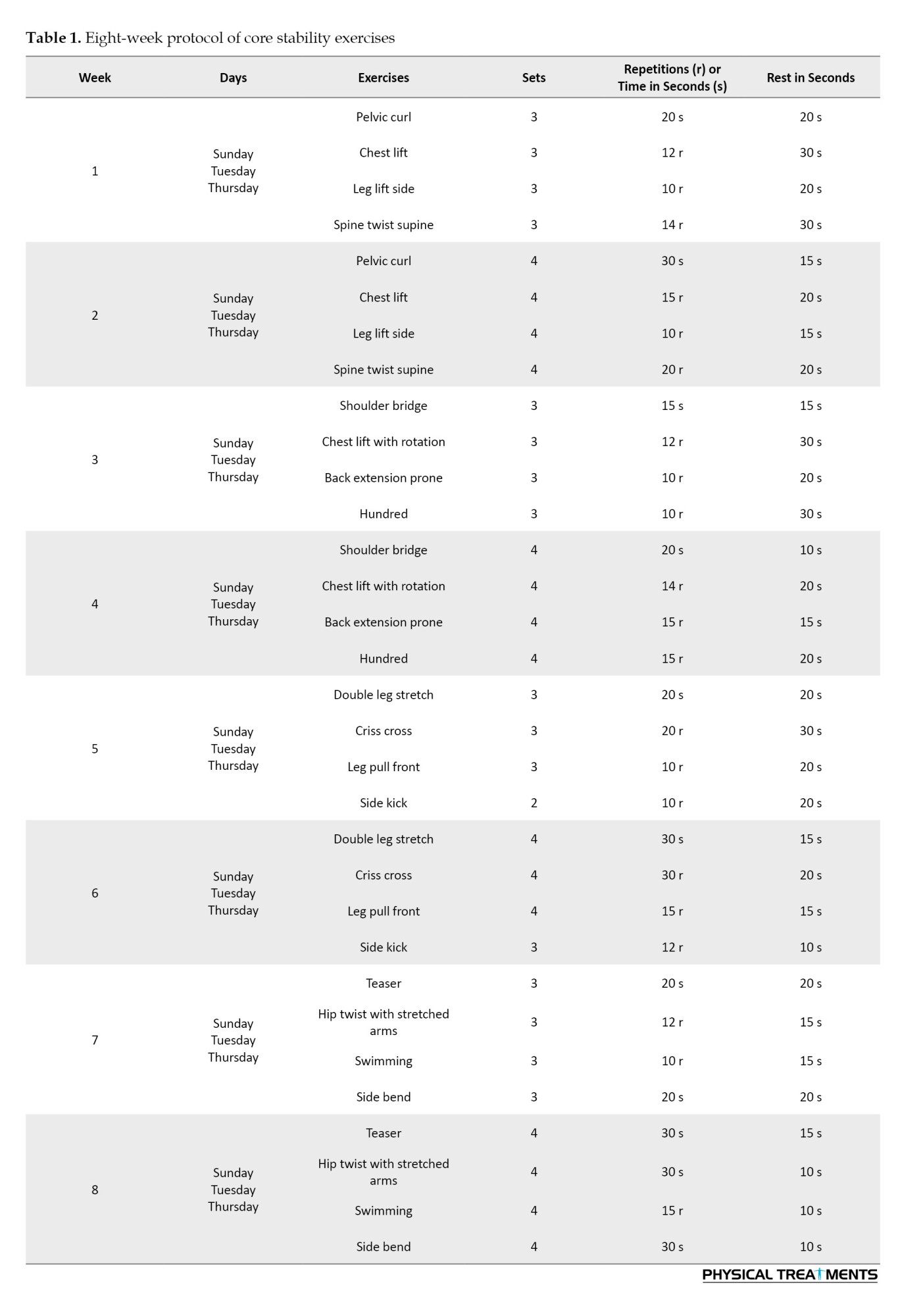
The experimental group performed an eight-week core stability exercise program based on the frequency, intensity, time, and type (FITT) principle, three days a week (each session lasting 45 minutes), alongside regular basketball training. The training focused on the abdominal, back, and hip muscles (Table 1), whereas the control group engaged in regular basketball training, emphasizing basketball-specific skills, such as shooting, passing, dribbling, defensive and offensive drills, and agility.
Finally, the post-test phase was conducted after completing the core stability exercise protocol.
Data analysis
This study employed descriptive statistics to characterize the variables and utilized inferential statistics for data analysis. The normality of the data distribution was assessed using the Shapiro-Wilk test. If normally distributed, analysis of covariance (ANCOVA) was used; otherwise, Quade’s test was utilized for non-parametric data. Statistical analysis was performed using SPSS software, version 27, with significance determined at the 95% confidence level and an alpha ≤0.05.
Results
Table 2 presents the demographic characteristics of participants across both groups. No significant differences were observed in the demographic data across the study groups.
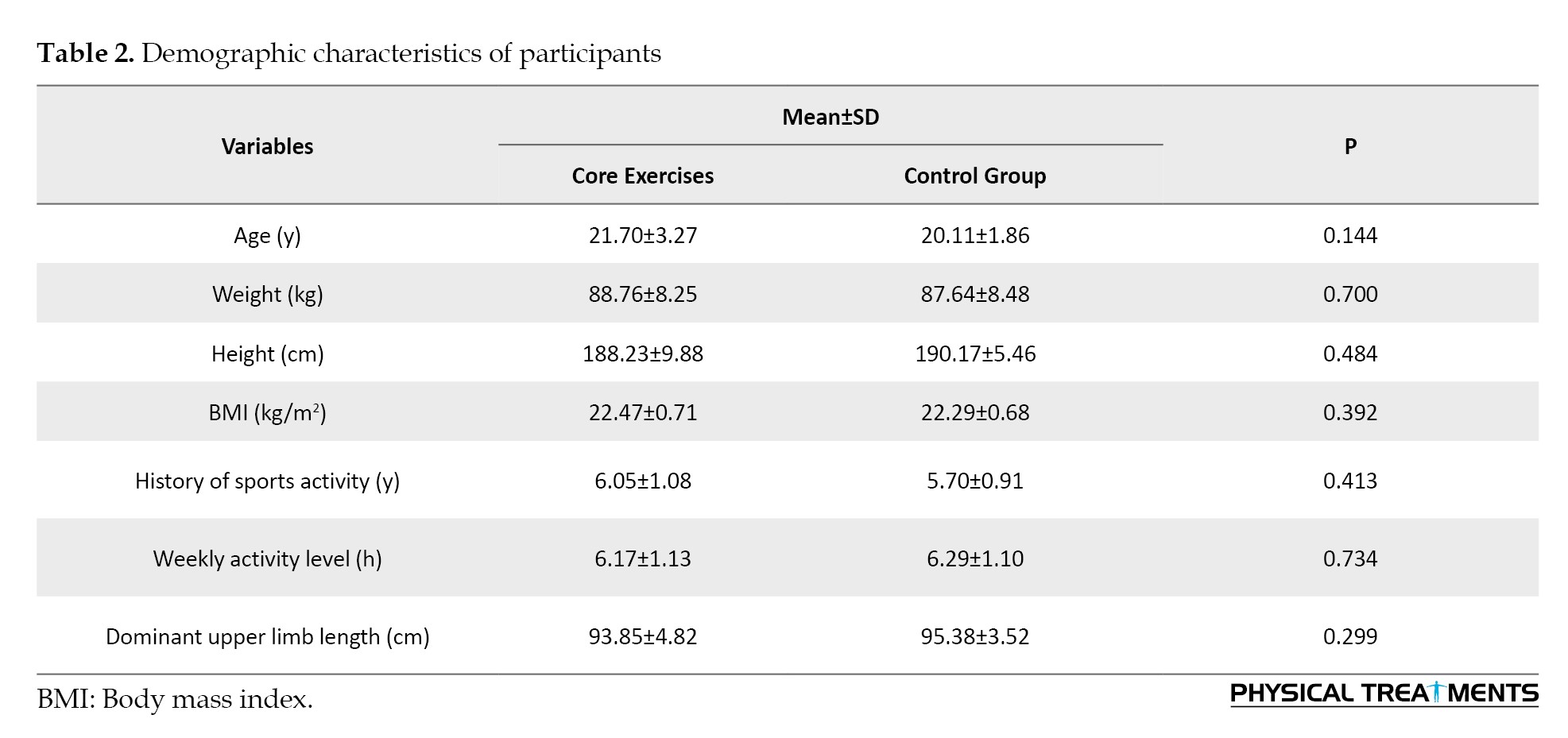
Table 3 presents a difference between the core exercise and control groups in the DS (P=0.021), HS (P=0.006), ILL (P=0.001), SM (P=0.001), ASLR (P=0.001), TSPU (P=0.001), RS (P=0.001), total FMS score (P=0.001), single-leg hop test (P=0.001), and zigzag triple hop test (P=0.001).
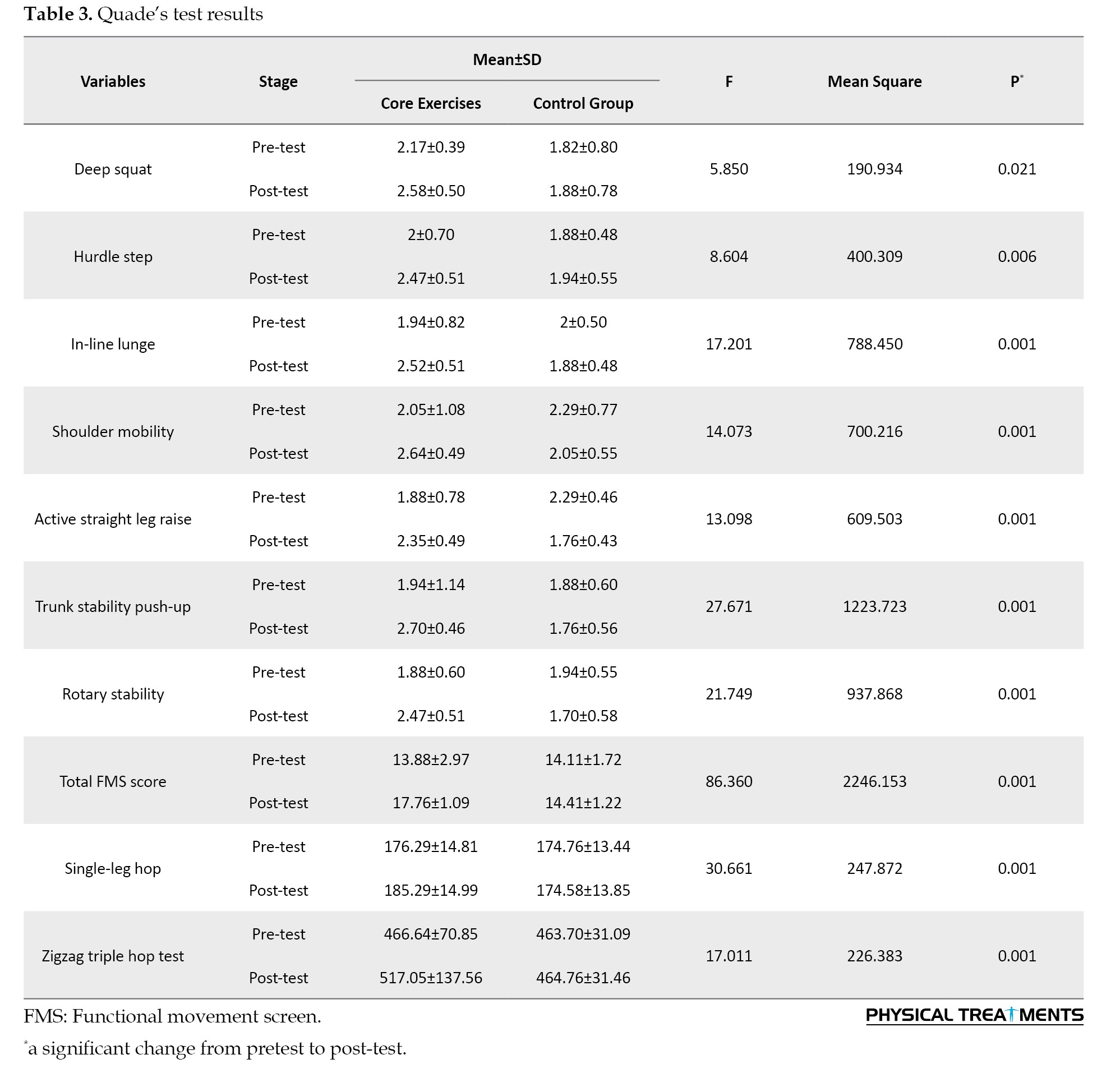
These results show that the core stability exercises significantly affected FMS.
Table 4 presents a significant difference between the core exercise and control groups in the dominant upper limb balance scores (P=0.001), non-dominant upper limb balance scores (P=0.001), the square hop test (P=0.001), and the Davies CKC test (P=0.001).
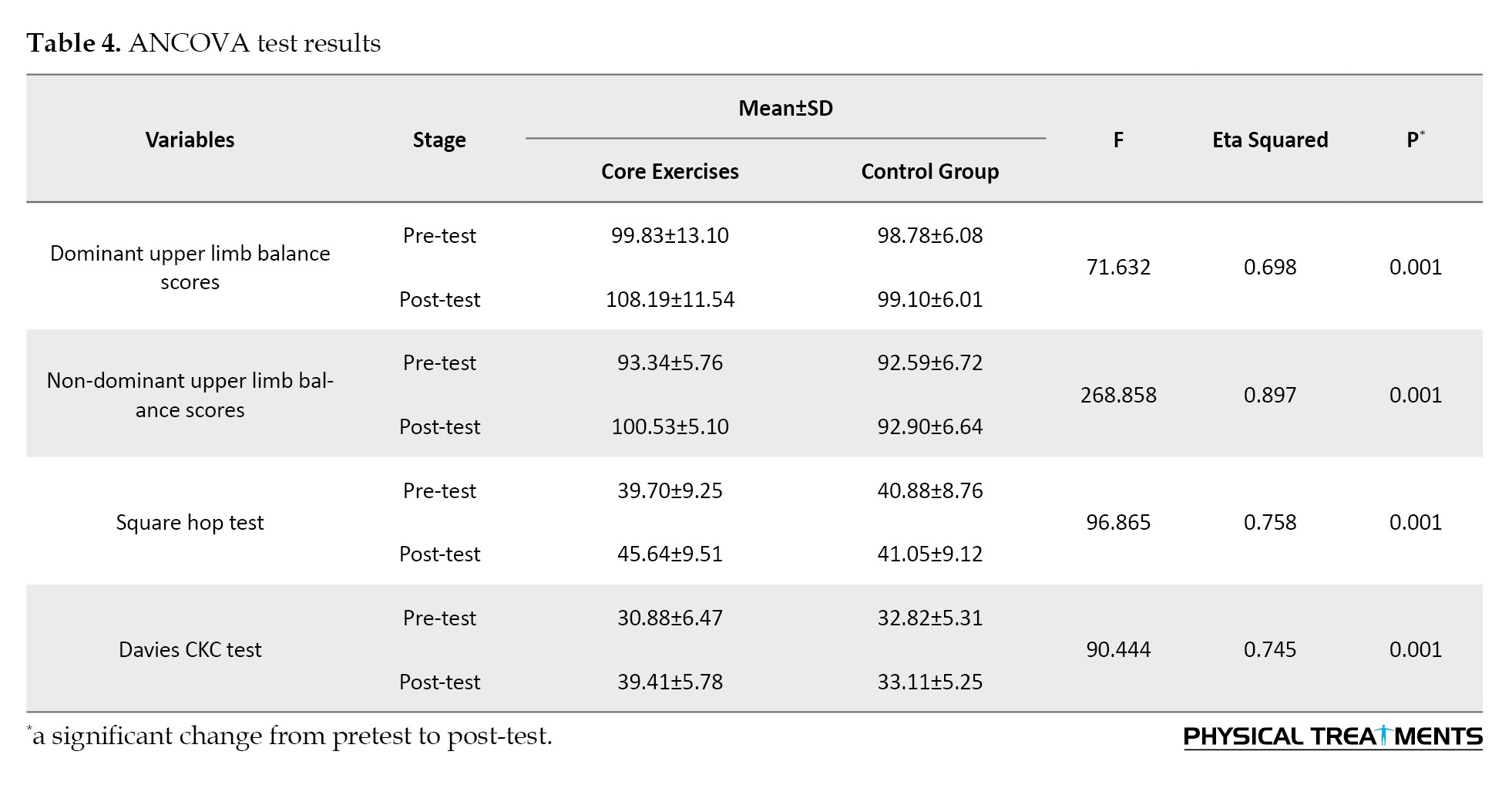
These results show that the core stability exercises significantly affected balance and performance.
Discussion
Although core stability exercises are commonly used in rehabilitation and sports, there is limited research on their effects on FMS scores, balance, and performance in elite athletes. To our knowledge, this is the first study to investigate the effects of core stability exercises on these variables in elite basketball players. The core plays a crucial role in stabilizing the torso, which is essential for effectively generating, controlling, and transferring forces to both the upper- and lower-limb during functional movements [43]. It is believed that optimal core stability enhances movement efficiency and contributes to improved athletic performance [17].
The results of this study regarding the effect of core stability exercises on the FMS test are consistent with previous research. Hessam et al. (2023) examined the effect of McGill’s core stability exercises on movement patterns, shooting accuracy, and performance in 40 male basketball players, finding them in improving FMS scores [23]. Kurt et al. (2023) reported that swimmers engaging in core stability exercises demonstrated improved performance and higher FMS test scores [44]. Furthermore, Majewska et al. (2022) showed that core stability exercises could increase the overall FMS score in tennis players from 14.44 to 16.91 [45]. Additionally, Rahimi et al. (2023, 2021) support the positive effect of core stability exercises on FMS scores of elite karate and wrestling athletes aged 9-12 years [46, 47]. Daneshjoo et al. (2020) found that core stability exercises significantly improve static and dynamic balance and increase adolescent football players’ FMS scores [48]. Lago-Fuentes et al. (2018) similarly reported significant improvements in FMS and agility in futsal players after core stability interventions [24]. These findings collectively indicate that core stability exercises positively impact athletes’ movement patterns across various sports disciplines. Specifically, core region instability has been linked to poor running technique and ineffective force application [49]. In various studies, the correlation between weak core muscles and an increased occurrence of upper and lower limb injuries in athletes has been reported. In this regard, Šiupšinskas et al. (2019) found that dysfunctional movement patterns and weak biomechanics during landing in pre-season screening tests correlate with an increased risk of lower limb injuries in female basketball players during the season [50]. Core stability exercises are widely used in rehabilitation programs and are essential for optimal performance in most activities [15]. Exercises that improve both strength and coordination of the core muscles may affect participants’ ability to activate muscles in a coordinated manner and lead to increased force production [51]. Changes in coordination, increased force production, or both, may improve movement control in sports. Sedaghati et al. (2018) reported a positive correlation between trunk flexor endurance, balance, and FMS scores in basketball players, indicating that greater muscular endurance is associated with better FMS performance and higher balance scores [52]. These exercises indirectly improved kinetic chain alignment, acceleration, and balance, ultimately contributing to enhanced athletic performance. Through co-contraction of abdominal muscles and lumbar stabilizers, core stability exercises help prevent lateral torso displacement during the FMS test. This provides the necessary stability for lower limb movement across three planes of motion, thereby enhancing performance [53].
Regarding upper and lower limb performance, our findings align with previous research. Luo et al. (2023) reported that incorporating core training, especially on unstable surfaces, and integrating static and dynamic core exercises enhanced athletic performance and skill execution in basketball players [54]. Li (2022) found improvements in fast dribbling and shooting accuracy among basketball players following a six-week core stability exercise program [55]. Furthermore, a study on collegiate athletes demonstrated that core stability training enhanced the functional throwing performance index [56]. In overhead and throwing sports, the force and energy generated by the body are ultimately transferred to the ball. The execution of such skills involves a coordinated sequence of movements, where each component has the potential to influence the entire kinetic chain. For effective execution of throwing skills and efficient energy transfer along the kinetic chain, all body segments and joints must possess adequate stability, strength, endurance, mobility, and neuromuscular control [57]. The core region is particularly critical, acting as a biomechanical bridge between the upper and lower limbs. Disruptions in force generation within one segment can increase mechanical load on adjacent segments, potentially leading to injury in structurally weaker distal joints and segments [57]. Concerning the performance of the lower limb, Saki et al. (2021) reported that after an eight-week core program, single-leg hop and triple hop were improved [58]. Ebrahimi et al. (2024) indicated that the performance of taekwondo practitioners increased after six weeks of core stability training [59]. Furthermore, an eight-week core training program for 16-18-year-old basketball players demonstrated positive effects on vertical jump performance [60]. Enhancing core strength improves the stability of the pelvic girdle, spine, and hip joints, providing a stable base of support for lower limb movements. This, in turn, facilitates more coordinated motion and better postural control during rapid directional changes [61]. Jumping performance is influenced by trunk and pelvic control, as these regions contribute significantly to the stability and force generation required by the lower limb and hip extensor muscles during jumping tasks [24].
Regarding balance, our findings are consistent with previous studies. Javdaneh et al. (2020) demonstrated that core exercises affect dynamic balance and postural sway in basketball athletes [62]. Gong et al. (2024) conducted a study comparing the effects of a ten-week core stability program with traditional strength training on balance performance in adolescent male basketball players. Their findings indicated that core stability exercises led to notable enhancements in dynamic balance and agility across various movement planes [63]. In addition, Liu (2022) found that basketball players showed better coordination and balance after completing a core training program [64]. Dogan et al. (2021) also reported that after eight weeks of a core strength training program, basketball players had better balance and general strength [22]. Core stability enhances the body’s ability to maintain balance during dynamic movements and contributes to appropriate force production, thereby aiding in injury prevention [65]. The primary goal of core training is to develop the physical capacity to retain a neutral spinal alignment during daily functional activities. This is achieved by improving the endurance and coordination of spinal stabilizer muscles, including the obliques, transversus abdominis, multifidus, and erector spinae [66].
Furthermore, the core region serves as the location of the body’s center of gravity and the origin point of all bodily movements. Thus, strengthening the musculature of this area through core stability training enhances neuromuscular efficiency and promotes optimal joint motion of the lumbar spine, pelvis, and hips throughout the functional kinetic chain. It also supports appropriate acceleration and deceleration, muscular balance, proximal stability, and functional strength [67]. High-intensity, multidirectional motions are common among elite basketball players, necessitating fine neuromuscular control, dynamic balance, and ideal force transfer along the kinetic chain. Therefore, incorporating core stability exercises into training regimens can enhance the balance, FMS scores, and overall athletic performance of elite basketball players. Specifically, we emphasize that incorporating structured core stability training into regular practice routines is a time-efficient and targeted strategy to improve key performance-related outcomes, such as movement quality, dynamic balance, and functional power. These improvements are particularly relevant for enhancing on-court performance and may support injury prevention strategies in elite basketball athletes. This study has several limitations: the absence of follow-up to assess the durability of exercise effects on the measured variables; a small sample size; and the lack of muscle length evaluation, which may influence performance outcomes in certain tests. Future research is recommended to include female, amateur, and semi-professional basketball players, and to quantify changes in core muscle activation patterns during basketball-specific skills before and after exercise interventions.
Conclusion
The current study’s results showed that after eight weeks of core stability exercises, elite basketball players experienced significant improvements in FMS scores, balance, and performance. These findings highlight the positive effect of core-focused exercises on enhancing movement efficiency and athletic performance, with important implications for reducing injury risk in elite athletes.
Ethical Considerations
Compliance with ethical guidelines
All research procedures were conducted in accordance with the ethical guidelines of the Physical Education and Sports Science Research Institute (Code: SSRI.REC-2310-2462). Before the commencement of the study and measurements, participants provided informed consent by completing a consent form.
Funding
This research did not receive any grant from funding agencies in the public, commercial, or non-profit sectors.
Authors' contributions
All authors contributed equally to the conception and design of the study, data collection and analysis, interpretation of results, and drafting of the manuscript. All authors consented to the final version of the manuscript prior to submission.
Conflict of interest
The authors declared no conflicts of interest.
Acknowledgments
The authors thank all the study participants.
Today, with the increasing importance of sports at all levels of society, attention to sports injuries has become more prominent [1]. Injury is inevitable in every sport, and each sport has specific injuries. Basketball, which was created more than a century ago by James Naismith in the United States, has become one of the most popular sports in the world [2]. Basketball is a complex, high-impact sport, with an estimated 11% of the world’s population playing basketball [3]. With the increasing number of basketball players, the rate of injury has also increased, with a significant percentage of reported injuries occurring in the lower extremities (between 13% and 44%) [3, 4]. A review study that examined 12,000 reported injuries in basketball showed that, regardless of gender, more injuries occur in the lower extremities (63.7% of injuries), and the prevalence of injuries in elite athletes was reported to be 64.7% [5]. In addition, injuries to the upper extremities and trunk may also occur in basketball, as this sport involves repeated body contact and use of the upper extremities [6]. Injury prevention and risk reduction are more crucial than treatment, and screening before participation in an activity can address an important part of this issue [7]. Researchers have developed methods and tools to evaluate movement patterns for injury prevention, one of which is the functional movement screen (FMS), which can demonstrate the quality of functional movement patterns and identify individuals at risk [8, 9]. A study revealed that DS and HS scores may be associated with injuries in basketball players [10].
Core stability is the ability of core muscles to maintain spinal and pelvic stability during dynamic movements [11]. A strong core is a crucial prerequisite for practicing sports, such as track and field, basketball, and football [12]. During basketball activities, such as dribbling, boxing out, and rebounding, which involve sudden and specific movements, the core is responsible for maintaining stability and the biomechanical linkage between the upper and lower limbs [13]. The power generated in basketball-specific movements, such as shooting and layups, passes through the core of the body [14]. Core muscles minimize disturbances created during upper limb movements, enabling better balance during dynamic activities and thereby enhancing shooting performance without adding extra burden to the upper limbs [15]. Weakness or lack of sufficient coordination in the core stability muscles can lead to disruption of movement patterns, compensatory movement patterns, overuse, and ultimately injury [16]. Therefore, it can be concluded that weakness in stabilizing core muscles can have a negative effect on movement patterns [17]. In addition to having a strong core, improving balance control is an important goal in sports and exercise, as good balance strongly correlated with improving athletes’ performance and a negative correlation with upper and lower limb injuries [18]. A review by Luo et al. (2022) showed that core training can potentially improve performance in athletes across various sports, including football, handball, basketball, and golf [19].
Several studies have separately investigated the effect of core stability exercises on FMS scores, balance, and upper and lower limb performance in basketball players [20-26]. Also, most existing literature has either focused on recreational or relied on adolescent athletes or employed generalized fitness protocols that may not capture the unique physical demands of high-level basketball, such as rapid changes of direction, explosive jumping, and sustained isometric control during competitions. Given the growing emphasis on evidence-based training approaches in elite sports, there is a pressing need to investigate how core stability training protocols influence FMS scores, balance, and performance in elite athletes. Addressing this gap enhances training and rehabilitation strategies, improving injury reduction and performance optimization in competitive basketball players.
Materials and Methods
This study included 34 elite basketball players who were selected using convenience sampling and divided into core exercises (n=17) and control groups (n=17). Using G*Power software, version 3.1, considering an effect size of 0.50, a significance level of 0.05, and a statistical power of 0.80, the sample size was calculated to be 17 in each group. The inclusion criteria included an age range of 18-30, a minimum of three years of professional basketball, an absence of musculoskeletal injuries in the upper and lower limbs within the past six months [27], no history of surgery in the upper and lower limbs in the past six months, absence of significant musculoskeletal abnormalities, no simultaneous participation in other research or exercise programs, and no history of neuropathy or use of medication affecting the body’s nervous and motor systems. The exclusion criteria included injury during the research, non-compliance with the training protocol, withdrawal from the study, failure to complete the research process, and absence from two consecutive and three intermittent training sessions. Initially, in accordance with the Declaration of Helsinki, participants were fully informed about all aspects of the study, and written consent was obtained. They were also assured that the examiner would take appropriate measures in case any issues arose during the testing process. All assessments were conducted by certified corrective exercise specialists with extensive experience in evaluating functional movement and athletic performance. Each test was clearly explained to the participants beforehand. A comprehensive overview of the procedures was presented before the tests. All measurements were conducted three times, and the average of these measurements was utilized as the final data for analysis.
FMS test
The FMS kit was utilized to assess FMS scores. The FMS consists of seven movement tests: Deep squat (DS), hurdle step (HS), in-line lunge (ILL), shoulder mobility (SM), active straight leg raise (ASLR), trunk stability push-up (TSPU), and rotary stability (RS) [28, 29]. Each movement test is scored on a scale of zero to three, with higher scores indicating better performance. The scoring criteria are as follows: A score of three is awarded for a complete and correct movement; a score of two indicates compensation during the movement; a score of one is given when the movement cannot be completed; and a score of zero is assigned if pain is experienced during the test [30, 31]. To calculate the total FMS score, the individual scores of all tests were summed. The total score can range from zero, indicating pain in all movement tests, to 21, representing perfect performance across all tests. Studies have reported moderate intra-rater and inter-rater reliability for FMS tests [32, 33]. Additionally, Chorba et al. (2010) demonstrated sufficient capability of the FMS to predict injury [34]. To ensure accurate scoring, the examiner must observe and evaluate the participant from all anterior, posterior, and lateral views during the tests.
Single-leg hop test
This assessment uses a 3-meter-long narrow measuring tape placed on the floor. The participant stands on their dominant leg with the toes aligned just behind the starting line. The procedure involves executing a maximal forward hop on one leg, landing on the same foot, and maintaining balance for a minimum of two seconds. Arm movements are permitted to help balance if needed. After 2–3 practice trials, the participant performs a full single-leg hop using the dominant leg, and the distance jumped is measured. Previous studies have reported high reliability for this test, with intraclass correlation coefficients exceeding 0.85 [35].
Davies closed kinetic chain (CKC) test
In the Davies CKC upper extremity stability test, two parallel tape lines were positioned on the floor, separated by a distance of three feet. Participants assumed a push-up position and were directed to rapidly alternate their hand movements between the lines, making contact with each line in succession. They were advised to maintain a straight trunk and minimize movement of the head and torso. After a warm-up trial, three 15-second maximum-effort trials were performed, each separated by a 45-second rest period. The average number of touches across the three trials was calculated for analysis [36]. The test has demonstrated high test-re-test reliability, reported at 0.92 [37].
Y-balance test (YBT)
The YBT is a standardized method for objectively evaluating dynamic balance during functional movement. Participants placed themselves at the center of the YBT kit and are instructed to reach as far as possible in three directions—anterior, posterolateral, and posteromedial—while keeping the stance foot aligned with the designated markers. After each reach, they return to the starting position. The test is performed on both legs. The furthest point of contact, typically the toe, on the measuring stick indicates the maximum reach. Trials in which balance is lost, the stance foot shifts, or the reach indicator is struck are considered invalid. A composite score is calculated by summing the reach distances in all three directions, dividing by three times the leg length, and multiplying by 100 to obtain a percentage. Leg length is assessed with the participant in a supine position, measuring from the anterior superior iliac spine to the most distal point of the medial malleolus, utilizing a measuring tape [38]. The evaluation of a person’s preferred leg for kicking a ball serves to identify the dominant lower limb. YBT demonstrates strong inter-rater and test-re-test reliability [39].
Zigzag triple hop test
In this test, the participant stood on the testing leg and performed three consecutive zigzag hops over a line with a width of 15 cm. The movement was executed in a zigzag pattern, and the maximum total distance covered across the three hops was recorded as the performance score. The trial was considered invalid and repeated if the participant touched the ground with the non-testing leg or failed to completely clear the width of the tape line during any of the hops [40]. The test has demonstrated high intra-rater reliability, reported at 0.97 [41].
Square hop test
In this test, the participant performed clockwise hops on a single leg outside the perimeter of a 40×40 cm square for 30 seconds. The participant moved continuously clockwise, hopping over each side of the square. Each time a full revolution was completed, the participant announced it aloud while the examiner discreetly noted any instances where the leg landed on the line during the test. At the end of 30 seconds, the participant stopped, and the final score was calculated by subtracting the number of incorrect hops (incomplete clearance of the line) from the total number of correct hops (complete clearance over the line) [42].
Intervention
The experimental group performed an eight-week core stability exercise program based on the frequency, intensity, time, and type (FITT) principle, three days a week (each session lasting 45 minutes), alongside regular basketball training. The training focused on the abdominal, back, and hip muscles (Table 1), whereas the control group engaged in regular basketball training, emphasizing basketball-specific skills, such as shooting, passing, dribbling, defensive and offensive drills, and agility.
Finally, the post-test phase was conducted after completing the core stability exercise protocol.
Data analysis
This study employed descriptive statistics to characterize the variables and utilized inferential statistics for data analysis. The normality of the data distribution was assessed using the Shapiro-Wilk test. If normally distributed, analysis of covariance (ANCOVA) was used; otherwise, Quade’s test was utilized for non-parametric data. Statistical analysis was performed using SPSS software, version 27, with significance determined at the 95% confidence level and an alpha ≤0.05.
Results
Table 2 presents the demographic characteristics of participants across both groups. No significant differences were observed in the demographic data across the study groups.
Table 3 presents a difference between the core exercise and control groups in the DS (P=0.021), HS (P=0.006), ILL (P=0.001), SM (P=0.001), ASLR (P=0.001), TSPU (P=0.001), RS (P=0.001), total FMS score (P=0.001), single-leg hop test (P=0.001), and zigzag triple hop test (P=0.001).
These results show that the core stability exercises significantly affected FMS.
Table 4 presents a significant difference between the core exercise and control groups in the dominant upper limb balance scores (P=0.001), non-dominant upper limb balance scores (P=0.001), the square hop test (P=0.001), and the Davies CKC test (P=0.001).
These results show that the core stability exercises significantly affected balance and performance.
Discussion
Although core stability exercises are commonly used in rehabilitation and sports, there is limited research on their effects on FMS scores, balance, and performance in elite athletes. To our knowledge, this is the first study to investigate the effects of core stability exercises on these variables in elite basketball players. The core plays a crucial role in stabilizing the torso, which is essential for effectively generating, controlling, and transferring forces to both the upper- and lower-limb during functional movements [43]. It is believed that optimal core stability enhances movement efficiency and contributes to improved athletic performance [17].
The results of this study regarding the effect of core stability exercises on the FMS test are consistent with previous research. Hessam et al. (2023) examined the effect of McGill’s core stability exercises on movement patterns, shooting accuracy, and performance in 40 male basketball players, finding them in improving FMS scores [23]. Kurt et al. (2023) reported that swimmers engaging in core stability exercises demonstrated improved performance and higher FMS test scores [44]. Furthermore, Majewska et al. (2022) showed that core stability exercises could increase the overall FMS score in tennis players from 14.44 to 16.91 [45]. Additionally, Rahimi et al. (2023, 2021) support the positive effect of core stability exercises on FMS scores of elite karate and wrestling athletes aged 9-12 years [46, 47]. Daneshjoo et al. (2020) found that core stability exercises significantly improve static and dynamic balance and increase adolescent football players’ FMS scores [48]. Lago-Fuentes et al. (2018) similarly reported significant improvements in FMS and agility in futsal players after core stability interventions [24]. These findings collectively indicate that core stability exercises positively impact athletes’ movement patterns across various sports disciplines. Specifically, core region instability has been linked to poor running technique and ineffective force application [49]. In various studies, the correlation between weak core muscles and an increased occurrence of upper and lower limb injuries in athletes has been reported. In this regard, Šiupšinskas et al. (2019) found that dysfunctional movement patterns and weak biomechanics during landing in pre-season screening tests correlate with an increased risk of lower limb injuries in female basketball players during the season [50]. Core stability exercises are widely used in rehabilitation programs and are essential for optimal performance in most activities [15]. Exercises that improve both strength and coordination of the core muscles may affect participants’ ability to activate muscles in a coordinated manner and lead to increased force production [51]. Changes in coordination, increased force production, or both, may improve movement control in sports. Sedaghati et al. (2018) reported a positive correlation between trunk flexor endurance, balance, and FMS scores in basketball players, indicating that greater muscular endurance is associated with better FMS performance and higher balance scores [52]. These exercises indirectly improved kinetic chain alignment, acceleration, and balance, ultimately contributing to enhanced athletic performance. Through co-contraction of abdominal muscles and lumbar stabilizers, core stability exercises help prevent lateral torso displacement during the FMS test. This provides the necessary stability for lower limb movement across three planes of motion, thereby enhancing performance [53].
Regarding upper and lower limb performance, our findings align with previous research. Luo et al. (2023) reported that incorporating core training, especially on unstable surfaces, and integrating static and dynamic core exercises enhanced athletic performance and skill execution in basketball players [54]. Li (2022) found improvements in fast dribbling and shooting accuracy among basketball players following a six-week core stability exercise program [55]. Furthermore, a study on collegiate athletes demonstrated that core stability training enhanced the functional throwing performance index [56]. In overhead and throwing sports, the force and energy generated by the body are ultimately transferred to the ball. The execution of such skills involves a coordinated sequence of movements, where each component has the potential to influence the entire kinetic chain. For effective execution of throwing skills and efficient energy transfer along the kinetic chain, all body segments and joints must possess adequate stability, strength, endurance, mobility, and neuromuscular control [57]. The core region is particularly critical, acting as a biomechanical bridge between the upper and lower limbs. Disruptions in force generation within one segment can increase mechanical load on adjacent segments, potentially leading to injury in structurally weaker distal joints and segments [57]. Concerning the performance of the lower limb, Saki et al. (2021) reported that after an eight-week core program, single-leg hop and triple hop were improved [58]. Ebrahimi et al. (2024) indicated that the performance of taekwondo practitioners increased after six weeks of core stability training [59]. Furthermore, an eight-week core training program for 16-18-year-old basketball players demonstrated positive effects on vertical jump performance [60]. Enhancing core strength improves the stability of the pelvic girdle, spine, and hip joints, providing a stable base of support for lower limb movements. This, in turn, facilitates more coordinated motion and better postural control during rapid directional changes [61]. Jumping performance is influenced by trunk and pelvic control, as these regions contribute significantly to the stability and force generation required by the lower limb and hip extensor muscles during jumping tasks [24].
Regarding balance, our findings are consistent with previous studies. Javdaneh et al. (2020) demonstrated that core exercises affect dynamic balance and postural sway in basketball athletes [62]. Gong et al. (2024) conducted a study comparing the effects of a ten-week core stability program with traditional strength training on balance performance in adolescent male basketball players. Their findings indicated that core stability exercises led to notable enhancements in dynamic balance and agility across various movement planes [63]. In addition, Liu (2022) found that basketball players showed better coordination and balance after completing a core training program [64]. Dogan et al. (2021) also reported that after eight weeks of a core strength training program, basketball players had better balance and general strength [22]. Core stability enhances the body’s ability to maintain balance during dynamic movements and contributes to appropriate force production, thereby aiding in injury prevention [65]. The primary goal of core training is to develop the physical capacity to retain a neutral spinal alignment during daily functional activities. This is achieved by improving the endurance and coordination of spinal stabilizer muscles, including the obliques, transversus abdominis, multifidus, and erector spinae [66].
Furthermore, the core region serves as the location of the body’s center of gravity and the origin point of all bodily movements. Thus, strengthening the musculature of this area through core stability training enhances neuromuscular efficiency and promotes optimal joint motion of the lumbar spine, pelvis, and hips throughout the functional kinetic chain. It also supports appropriate acceleration and deceleration, muscular balance, proximal stability, and functional strength [67]. High-intensity, multidirectional motions are common among elite basketball players, necessitating fine neuromuscular control, dynamic balance, and ideal force transfer along the kinetic chain. Therefore, incorporating core stability exercises into training regimens can enhance the balance, FMS scores, and overall athletic performance of elite basketball players. Specifically, we emphasize that incorporating structured core stability training into regular practice routines is a time-efficient and targeted strategy to improve key performance-related outcomes, such as movement quality, dynamic balance, and functional power. These improvements are particularly relevant for enhancing on-court performance and may support injury prevention strategies in elite basketball athletes. This study has several limitations: the absence of follow-up to assess the durability of exercise effects on the measured variables; a small sample size; and the lack of muscle length evaluation, which may influence performance outcomes in certain tests. Future research is recommended to include female, amateur, and semi-professional basketball players, and to quantify changes in core muscle activation patterns during basketball-specific skills before and after exercise interventions.
Conclusion
The current study’s results showed that after eight weeks of core stability exercises, elite basketball players experienced significant improvements in FMS scores, balance, and performance. These findings highlight the positive effect of core-focused exercises on enhancing movement efficiency and athletic performance, with important implications for reducing injury risk in elite athletes.
Ethical Considerations
Compliance with ethical guidelines
All research procedures were conducted in accordance with the ethical guidelines of the Physical Education and Sports Science Research Institute (Code: SSRI.REC-2310-2462). Before the commencement of the study and measurements, participants provided informed consent by completing a consent form.
Funding
This research did not receive any grant from funding agencies in the public, commercial, or non-profit sectors.
Authors' contributions
All authors contributed equally to the conception and design of the study, data collection and analysis, interpretation of results, and drafting of the manuscript. All authors consented to the final version of the manuscript prior to submission.
Conflict of interest
The authors declared no conflicts of interest.
Acknowledgments
The authors thank all the study participants.
References
- Aliabadi M, Daneshmandi H, Norasteh A. [Study of upper extremity injuries in Iranian clubs handball and volleyball players and its relationship with some physical features (Persian)]. Journal of Practical Studies of Biosciences in Sport. 2017; 5(9):85–95. [DOI:10.22077/jpsbs.2017.624]
- Cantwell JD. The physician who invented basketball. The American Journal of Cardiology. 2004; 93(8):1075–7. [PMID]
- Harmer PA. Basketball injuries. Epidemiology of pediatric sports injuries: Team sports. 2005; 49:31–61. [PMID]
- Bahr R, Engebretsen L. Handbook of sports medicine and science: sports injury prevention. Hoboken: John Wiley & Sons; 2011. [Link]
- Andreoli CV, Chiaramonti BC, Biruel E, de Castro Pochini A, Ejnisman B, Cohen M. Epidemiology of sports injuries in basketball: integrative systematic review. BMJ Open Sport & Exercise Medicine. 2018; 4(1):e000468. [PMID]
- Dick R, Hertel J, Agel J, Grossman J, Marshall SW. Descriptive epidemiology of collegiate men's basketball injuries: national collegiate athletic association injury surveillance system, 1988–1989 through 2003–2004. Journal of athletic training. 2007; 42(2):194. [PMID]
- Ghasempoor K, Rahnama N, Bagherian-Dehkordi S, Dehkordi HAH. [Functional movement screening for prevention (Persian)]. Journal of Research in Rehabilitation Sciences. 2015; 11(4):263-72. [DOI:10.22122/jrrs.v11i4.2391]
- Kraus K, Schütz E, Taylor WR, Doyscher R. Efficacy of the functional movement screen: A review. The Journal of Strength & Conditioning Research. 2014; 28(12):3571–84. [PMID]
- Philp F, Blana D, Chadwick EK, Stewart C, Stapleton C, Major K, et al. Study of the measurement and predictive validity of the Functional Movement Screen. BMJ Open Sport & Exercise Medicine. 2018; 4(1):1. [PMID]
- Francavilla G, Bonavolonta V, Cataldi S, Fasano VF, Messina G, Fischetti F. Relationship between functional movement screen results and physical performance parameters in basketball players: preliminary results. Medicina Dello Sport. 2021; 74(3):559–72. [Link]
- Key J. ‘The core’: Understanding it, and retraining its dysfunction. Journal of Bodywork and Movement Therapies. 2013; 17(4):541–59. [PMID]
- Räisänen AM, Pasanen K, Krosshaug T, Vasankari T, Kannus P, Heinonen A, et al. Association between frontal plane knee control and lower extremity injuries: A prospective study on young team sport athletes. BMj Open Sport & Exercise Medicine. 2018; 4(1):e000311. [PMID]
- McGill S. Core training: Evidence translating to better performance and injury prevention. Strength & Conditioning Journal. 2010; 32(3):33–46. [DOI:10.1519/SSC.0b013e3181df4521]
- Gambetta V. Sport specific game analysis. Athletic development. Champaign: Human Kinetics. 2007. [Link]
- Kibler WB, Press J, Sciascia A. The role of core stability in athletic function. Sports Medicine. 2006; 36:189–98. [PMID]
- Fredericson M, Moore T. Muscular balance, core stability, and injury prevention for middle-and long-distance runners. Physical Medicine and Rehabilitation Clinics. 2005; 16(3):669–89. [PMID]
- Hibbs AE, Thompson KG, French D, Wrigley A, Spears I. Optimizing performance by improving core stability and core strength. Sports Medicine. 2008; 38:995–1008. [PMID]
- Gonell AC, Romero JAP, Soler LM. Relationship between the Y balance test scores and soft tissue injury incidence in a soccer team. International Journal of Sports Physical Therapy. 2015; 10(7):955. [PMID]
- Luo S, Soh KG, Soh KL, Sun H, Nasiruddin NJM, Du C, et al. Effect of core training on skill performance among athletes: A systematic review. Frontiers in Physiology. 2022; 13:915259. [PMID]
- Aksen Cengizhan P, Cobanoglu G, Gokdogan CM, Zorlular A, Akaras E, Erikoglu Orer G, et al. The relationship between postural stability, core muscle endurance and agility in professional basketball players. Annals of Medical Research. 2019; 26(10):2181-6. [Link]
- Arora C, Singh P, Varghese V. Biomechanics of core musculature on upper extremity performance in basketball players. Journal of Bodywork and Movement Therapies. 2021; 27:127–33. [Link]
- Doğan Ö, Savaş S. Effect of an 8-weeks core training program applied to 12-14 years old basketball players on strength, balance and basketball skill. Pakistan Journal of Medical & Health Sciences. 2021; 1-7. [Link]
- Hessam M, Fathalipour K, Behdarvandan A, Goharpey S. The effect of mcgill core stability training on movement patterns, shooting accuracy, and throwing performance in male basketball players: A randomized controlled trial. Journal of Sport Rehabilitation. 2023; 32(3):296–304. [PMID]
- Lago-Fuentes C, Rey E, Padrón-Cabo A, de Rellán-Guerra AS, Fragueiro-Rodríguez A, García-Núñez J. Effects of core strength training using stable and unstable surfaces on physical fitness and functional performance in professional female futsal players. Journal of Human Kinetics. 2018; 65(1):1. [PMID]
- Sannicandro I, Cofano G, Piccinno A. Can the core stability training influences sprint and jump performances in young basketball players? Advances in Physical Education. 2020; 10(03):196. [Link]
- Soslu R, Özer Ö, Güler M, Doğan AA. Is there any effect of core exercises on anaerobic capacity in female basketball players. Journal of Education and Training Studies. 2019; 7(3):99–105. [Link]
- Oosterhoff JH, Gouttebarge V, Moen M, Staal JB, Kerkhoffs GM, Tol JL, et al. Risk factors for musculoskeletal injuries in elite junior tennis players: A systematic review. Journal of sports sciences. 2019; 37(2):131–7. [PMID]
- Cook G, Burton L, Hoogenboom BJ, Voight M. Functional movement screening: The use of fundamental movements as an assessment of function-part 1. International Journal of Sports Physical Therapy. 2014; 9(3):396. [PMID]
- Moran RW, Schneiders AG, Mason J, Sullivan SJ. Do functional movement screen (FMS) composite scores predict subsequent injury? A systematic review with meta-analysis. British Journal of Sports Medicine. 2017; 51(23):1661–9. [PMID]
- Cook G, Burton L, Hoogenboom BJ, Voight M. Functional movement screening: The use of fundamental movements as an assessment of function-part 2. International Journal of Sports Physical Therapy. 2014; 9(4):549. [PMID]
- Anam K, Setiowati A, Indardi N, Irawan FA, Pavlović R, Susanto N, et al. Functional movement screen score to predict injury risk of sports students: A review of foot shape and body mass index. Pedagogy of Physical Culture and Sports. 2024; 28(2):124–31. [PMID]
- Teyhen DS, Shaffer SW, Lorenson CL, Halfpap JP, Donofry DF, Walker MJ, et al. The functional movement screen: A reliability study. Journal of Orthopaedic & Sports Physical Therapy. 2012; 42(6):530–40. [PMID]
- Bonazza NA, Smuin D, Onks CA, Silvis ML, Dhawan A. Reliability, validity, and injury predictive value of the functional movement screen: A systematic review and meta-analysis. The American Journal of Sports Medicine. 2017; 45(3):725–32. [PMID]
- Chorba RS, Chorba DJ, Bouillon LE, Overmyer CA, Landis JA. Use of a functional movement screening tool to determine injury risk in female collegiate athletes. North American Journal of Sports Physical Therapy. 2010; 5(2):47. [PMID]
- Reid A, Birmingham TB, Stratford PW, Alcock GK, Giffin JR. Hop testing provides a reliable and valid outcome measure during rehabilitation after anterior cruciate ligament reconstruction. Physical Therapy. 2007; 87(3):337–49. [PMID]
- Negrete RJ, Hanney WJ, Kolber MJ, Davies GJ, Riemann B. Can upper extremity functional tests predict the softball throw for distance: A predictive validity investigation. International Journal of Sports Physical Therapy. 2011; 6(2):104–11. [PMID]
- Gorman PP, Butler RJ, Plisky PJ, Kiesel KB. Upper quarter y balance test: Reliability and performance comparison between genders in active adults. The Journal of Strength & Conditioning Research. 2012; 26(11):3043–8. [PMID]
- Latifi S, Kafshgar Z, Yousefi A. Evaluation of hop tests based on Y-Balance test and FMS test outcomes in volleyball and basketball players to identify those prone to injury: A potential predictor of injury. BMC Sports Science, Medicine and Rehabilitation. 2024; 16(1):187. [DOI:10.1186/s13102-024-00976-5]
- Zheng Y, Feng R, Hu W, Huang P. Investigation of inter-rater and test-retest reliability of Y balance test in college students with flexible flatfoot. BMC Sports Science, Medicine and Rehabilitation. 2024;16(1):40. [PMID]
- Ross MD, Langford B, Whelan PJ. Test-retest reliability of 4 single-leg horizontal hop tests. The Journal of Strength & Conditioning Research. 2002; 16(4):617–22. [PMID]
- Davey K, Read P, Coyne J, Jarvis P, Turner A, Brazier J, et al. An assessment of the hopping strategy and inter-limb asymmetry during the triple hop test: A test–retest pilot study. Symmetry. 2021; 13(10):1890. [Link]
- Sharma N, Sharma A, Sandhu JS. Functional performance testing in athletes with functional ankle instability. Asian Journal of Sports Medicine. 2011; 2(4):249. [PMID]
- Silfies SP, Ebaugh D, Pontillo M, Butowicz CM. Critical review of the impact of core stability on upper extremity athletic injury and performance. Brazilian Journal of Physical Therapy. 2015; 19:360–8. [PMID]
- Kurt Sl, Ibis S, Aktug ZB, Altundag E. The effect of core training on swimmers' functional movement screen scores and sport performances. JTRM in Kinesiology. 2023; 9:1–6. [Link]
- Majewska J, Kołodziej-Lackorzyńska G, Cyran-Grzebyk B, Szymczyk D, Kołodziej K, Wądołkowski P. Effects of core stability training on functional movement patterns in tennis players. International Journal of Environmental Research and Public Health. 2022; 19(23):16033. [PMID]
- Rahimi M, Elmi S, Piry H. [The comparison of the effect of core stability and neuromuscular exercises on functional movement screening of male wrestlers aged 9 to 12 years (Persian)]. Studies in Sport Medicine. 2021; 13(29):133–56. [Link]
- Rahimi M, Roshanmehr S, Piri H. [Comparison of the effect of core stability and neuromuscular exercises on lower limb alignment and functional movement screening of elite karate athletes (Persian)]. Karafan Quarterly Scientific Journal. 2023; 20(2):653–61. [Link]
- Daneshjoo A, Eslami A, Mousavi Sadati SK. [Effect of core stability training on the balance and FMS scores of adolescent soccer players (Persian)]. The Scientific Journal of Rehabilitation Medicine. 2020; 9(2):61–70. [Link]
- Chaudhari AM, Van Horn MR, Monfort SM, Pan X, Oñate JA, Best TM. Reducing core stability influences lower extremity biomechanics in novice runners. Medicine and Science in Sports and Exercise. 2020; 52(6):1347. [DOI:10.1249/MSS.0000000000002254]
- Šiupšinskas L, Garbenytė-Apolinskienė T, Salatkaitė S, Gudas R, Trumpickas V. Association of pre-season musculoskeletal screening and functional testing with sports injuries in elite female basketball players. Scientific Reports. 2019; 9(1):9286. [PMID]
- Willardson JM. Developing the core/national strength and conditioning association. Champaign: Human Kinetics; 2014. [Link]
- Sedaghati P. [Relationship the dynamic balance and core stability muscles endurance with the results of functional movement screening among the girl basketball players (Persian)]. Sport Sciences and Health Research. 2018; 9(2):169–84.[DOI:10.22059/jsmed.2018.243902.854]
- Izraelski J. Assessment and treatment of muscle imbalance: The Janda approach. The Journal of the Canadian Chiropractic Association. 2012; 56(2):158. [PMID]
- Luo S, Soh KG, Zhao Y, Soh KL, Sun H, Nasiruddin NJM, et al. Effect of core training on athletic and skill performance of basketball players: A systematic review. Plos One. 2023; 18(6):e0287379. [PMID]
- Li H. Core strength training influences basketball players’body. Revista Brasileira de Medicina do Esporte. 2022; 28(6):654–7. [Link]
- Jha P, Nuhmani S, Kapoor G, Al Muslem WH, Joseph R, Kachanathu SJ, et al. Efficacy of core stability training on upper extremity performance in collegiate athletes. Journal of Musculoskeletal & Neuronal Interactions. 2022; 22(4):498. [PMID]
- Reed J, Bowen JD. Principles of sports rehabilitation. The sports medicine resource manual 1st ed. Philadelphia: Saunders; 2008. [Link]
- Saki F, Anbariyan M, Shafiei H, Bakhtiari S. [Effect of eight weeks of core stability exercises on dynamic balance, function, and strength in athletes after anterior cruciate ligament reconstruction: Randomized clinical trial (Persian)]. Journal of Shahid Sadoughi University of Medical Sciences. 2020; 28(12):3313-25. [DOI:10.18502/ssu.v28i12.5778]
- Ebrahimi E, Mozafari S. [The effect of six weeks of core stability training on balance and performance improvement among male taekwondo athletes (Persian)]. Journal of Sport Biomechanics. 2024; 10(2):160–73. [DOI:10.61186/JSportBiomech.10.2.160]
- Şahiner V, Koca F. Investigation of the effect of 8 weeks core training program on free shooting and vertical jump performance in basketball players aged 16-18. European Journal of Physical Education and Sport Science. 2021; 7(2):1. [Link]
- Chang JT, Ganz DA. Quality indicators for falls and mobility problems in vulnerable elders. Journal of the American Geriatrics Society. 2007; 55(Suppl 2):S327-34. [PMID]
- Javdaneh N, Javdaneh N, Ghasmi B, Moradi MR. The effect of six week of core stability exercises on dynamic balance and postural sway in basketball male with functional ankle instability. Journal for Research in Sport Rehabilitation. 2020; 7(14):1–12. [DOI:10.22084/rsr.2018.17012.1395]
- Gong J, Gao H, Sui J, Qi F. The effect of core stability training on the balance ability of young male basketball players. Frontiers in Physiology. 2024; 14:1305651. [PMID]
- Liu Y. A study on the importance of core strength and coordination balance during basketball based on biomechanics. Molecular & Cellular Biomechanics. 2022; 19(3):1. [Link]
- McCaskey A. The effects of core stability training on star excursion balance test and global core muscular endurance [master thesis]. Toledo: University of Toledo; 2011. [Link]
- Reimann F, Maziarz M, Flock G, Habib A, Drucker D, Gribble F. Characterization and functional role of voltage gated cation conductances in the glucagon-like peptide-1 secreting GLUTag cell line. The Journal of physiology. 2005; 563(1):161–75. [PMID]
- Kamal O. Effects of core strength training on karate spinning wheel kick and certain physical variables for young female. Movement Health Science. 2015; 15:504–9. [Link]
Type of Study: Research |
Subject:
Sport injury and corrective exercises
Received: 2025/04/25 | Accepted: 2025/06/16 | Published: 2026/04/1
Received: 2025/04/25 | Accepted: 2025/06/16 | Published: 2026/04/1
Send email to the article author
| Rights and permissions | |
 |
This work is licensed under a Creative Commons Attribution-NonCommercial 4.0 International License. |

This is an open access article distributed under the terms of the Creative Commons Attribution-NonCommercial 4.0 (CC-By-NC 4.0), which permits use, distribution, and reproduction in any medium, provided the original work is properly cited and is not used for commercial purposes.
Contact Information