Tue, Oct 20, 2026
Volume 16, Issue 3 (Summer 2026)
PTJ 2026, 16(3): 295-306 |
Back to browse issues page



Download citation:
BibTeX | RIS | EndNote | Medlars | ProCite | Reference Manager | RefWorks
Send citation to:


BibTeX | RIS | EndNote | Medlars | ProCite | Reference Manager | RefWorks
Send citation to:
Roghangar N, Adigozali H, Salahzadeh Z, Momenzadeh A, Arab A M, Hosseinifar M. Iliopsoas Dry Needling for Non-specific Low Back Pain: Protocol for a Randomized Controlled Trial. PTJ 2026; 16 (3) :295-306
URL: http://ptj.uswr.ac.ir/article-1-699-en.html
URL: http://ptj.uswr.ac.ir/article-1-699-en.html
Niloofar Roghangar1, Hakimeh Adigozali *1, Zahra Salahzadeh1, Amin Momenzadeh1, Amir Masood Arab2, Mohammad Hosseinifar3
1- Department of Physical Therapy, Faculty of Rehabilitation Sciences, Tabriz University of Medical Sciences, Tabriz, Iran.
2- Physical Therapy Department, Faculty of Rehabilitation Sciences, University of Social Welfare and Rehabilitation Sciences. Tehran, Iran.
3- Department of Physiotherapy, Health Promotion Research Center, Faculty of Medicine, Zahedan University of Medical Sciences, Zahedan, Iran.
2- Physical Therapy Department, Faculty of Rehabilitation Sciences, University of Social Welfare and Rehabilitation Sciences. Tehran, Iran.
3- Department of Physiotherapy, Health Promotion Research Center, Faculty of Medicine, Zahedan University of Medical Sciences, Zahedan, Iran.
Keywords: Dry needling (DN), Iliopsoas muscle, Low back pain (LBP), Physical therapy modalities, Trigger points
Full-Text [PDF 754 kb]
(4845 Downloads)
| Abstract (HTML) (2914 Views)
Randomization and blinding
Patients will be randomly assigned to control (A) or intervention (B) groups using a randomizer site. Someone outside the study will do the randomization process with a 1:1 allocation. The randomization process will be conducted with three blocks of 4, two blocks of 8, and two blocks of 6 arranged in a random sequence. After allocating each participant to the study, their group names will be deleted from the block. This process results in an equal number of ‘’control groups’’ and ‘’ intervention groups.’’ After deleting all group names from a specific block, the block will be blank, and the group names will be located in the sealed envelope. A person not involved in the study was responsible for managing the envelopes for allocation concealment. After that, the next block will be opened according to its sequence. Participants are allocated to groups and their confidentiality is preserved by the secretary of the physiotherapy clinic after the initial assessment. The outcome assessor will not be informed about the number of blocks and the sequence in which they are arranged.
Sample size
Using G*Power software, version 3.1.9.2 the following parameters are determined: α error probability of 0.05, effect size of 0.5, power of 0.8, 20% dropout probability for two groups, and a sample size of 40 (20 people in each group). The effect size, Mean±SD for pain intensity will be determined according to the study by Álvarez et al. [24].
Diagnosis ofMTrP
The precise location of the active iliopsoas muscle MTrPs will be determined by a professional physical therapist considering the Travell and Simons’ criteria [12]: A hypersensitive tender spot in the taut band, presence of a taut band within the muscle, LTR on snapping palpation, spontaneous pain, and a familiar referred pain on palpation. Patients will be asked to lie supine with the slightly affected side hip in abduction. MTrPs can be identified with a cross-fiber flat palpation of the psoas musculotendinous junction and the iliacus muscle fibers against the lateral wall of the femoral triangle. If the iliacus muscle is short, it is important to semi-flex the hip by placing a foam roll under the thigh. To locate the common iliopsoas tendon, the assessor should palpate the femoral artery in the femoral triangle. Then, to reach the tendon, the palpating finger will be swept about one to two fingers palm laterally over the femoral nerve. To confirm that the clinician is palpating the iliopsoas tendon, the patient will gently contract the muscle by lifting the leg [25]. The presence of MTrPs in the iliopsoas muscle will be diagnosed in both groups.
Interventions
Control group
The participants in the control group will undergo a conventional physiotherapy program. The conventional program includes applying TENS in burst mode with a pulse width of 100 µs, a duration of 20 minutes, and a frequency of 2 Hz [20], while a hot-pack is used with TENS simultaneously. Ultrasound, continuous mode, with a frequency of 1MHz, with a duration of 6 minutes and intensity of 1.5 W/cm2 will be applied at the lateral side of the lumbar spine ipsilaterally [20]. An expert physiotherapist will perform all the therapeutic actions in the study groups. The patient will be asked to do exercises. Table 1 presents the set of recommended exercises for participants.
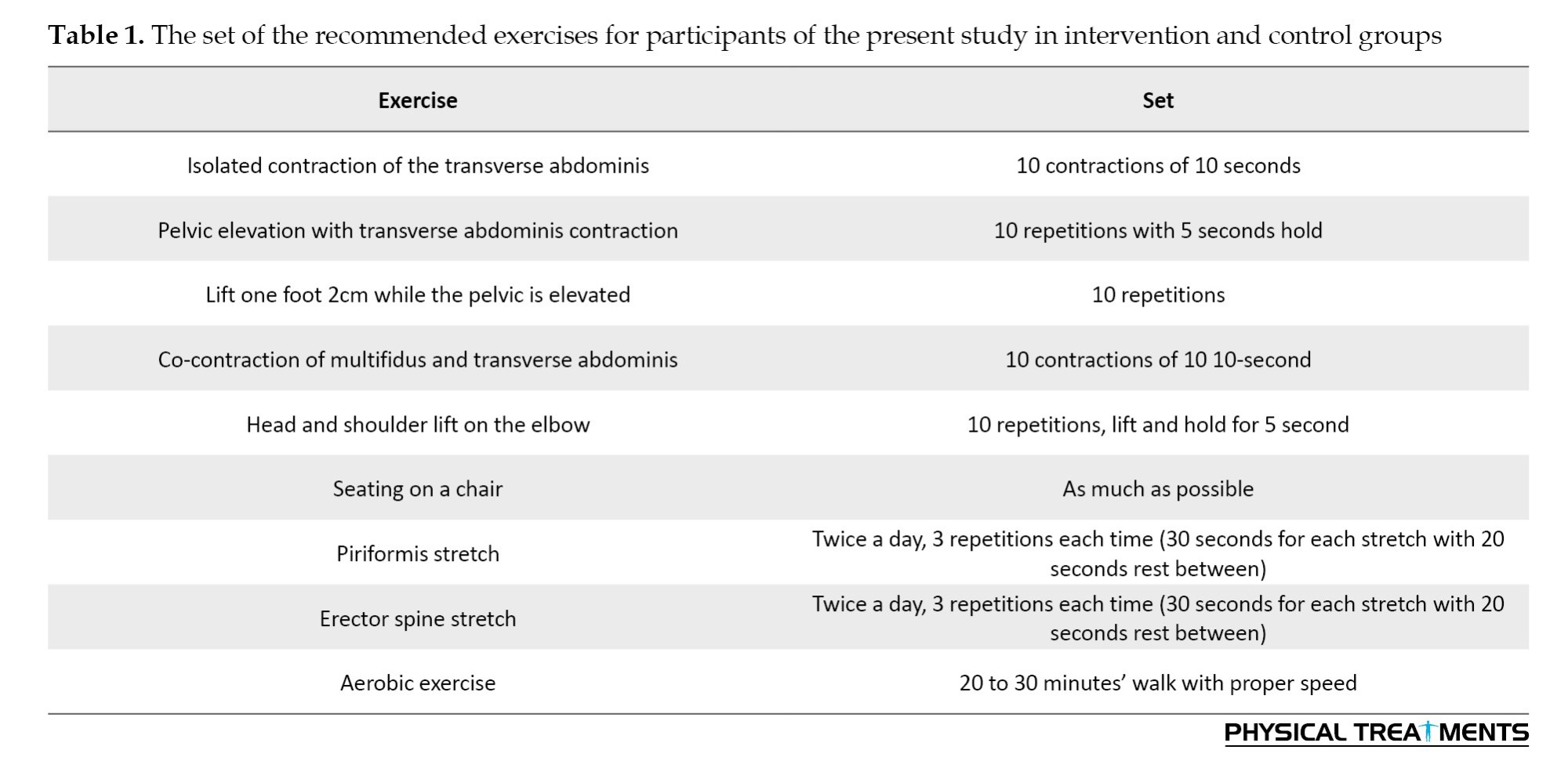
The recommended exercises for participants in the present study are as follows:
Isolated contraction of the transverse abdominis: For this exercise, patients will be asked to flex the knees with the pelvis in a neutral position and then imagine that they are trying to put on tight jeans.
Pelvic elevation with transverse abdominis contraction: This exercise is similar to the previous one, except that after completing the task, patients will be asked to raise their pelvis.
Lift one foot 2 cm while the pelvis is elevated: This exercise is more complicated than pelvic elevation with transverse abdominis contraction. Once the pelvic elevation is performed, we will ask the patients to lift one foot approximately 2 cm from the ground.
Co-contraction of multifidus and transverse abdominis: Patients will be asked to lie prone, with feet on the pillow and knees flexed. Afterward, they will be asked to contract the transverse abdominis as in the first exercise and slowly contract the multifidus.
Head and shoulder lift on the elbow: Patients will be asked to flex their knees with the pelvis in a neutral position, then lift their shoulders and head, holding that position for 5 seconds.
Seating on a chair: Keeping the feet on the floor with knees aligned with the hip. The weight will be applied to both the ischial tuberosities and the spine in a neutral position.
Piriformis stretch: Patients will be asked to place the lateral side of the foot on the contralateral knee and pull the knee toward the chest.
Erector spine stretch: Patients will be asked to sit on their knees, flex the trunk, and stretch the arms forward.
Intervention group
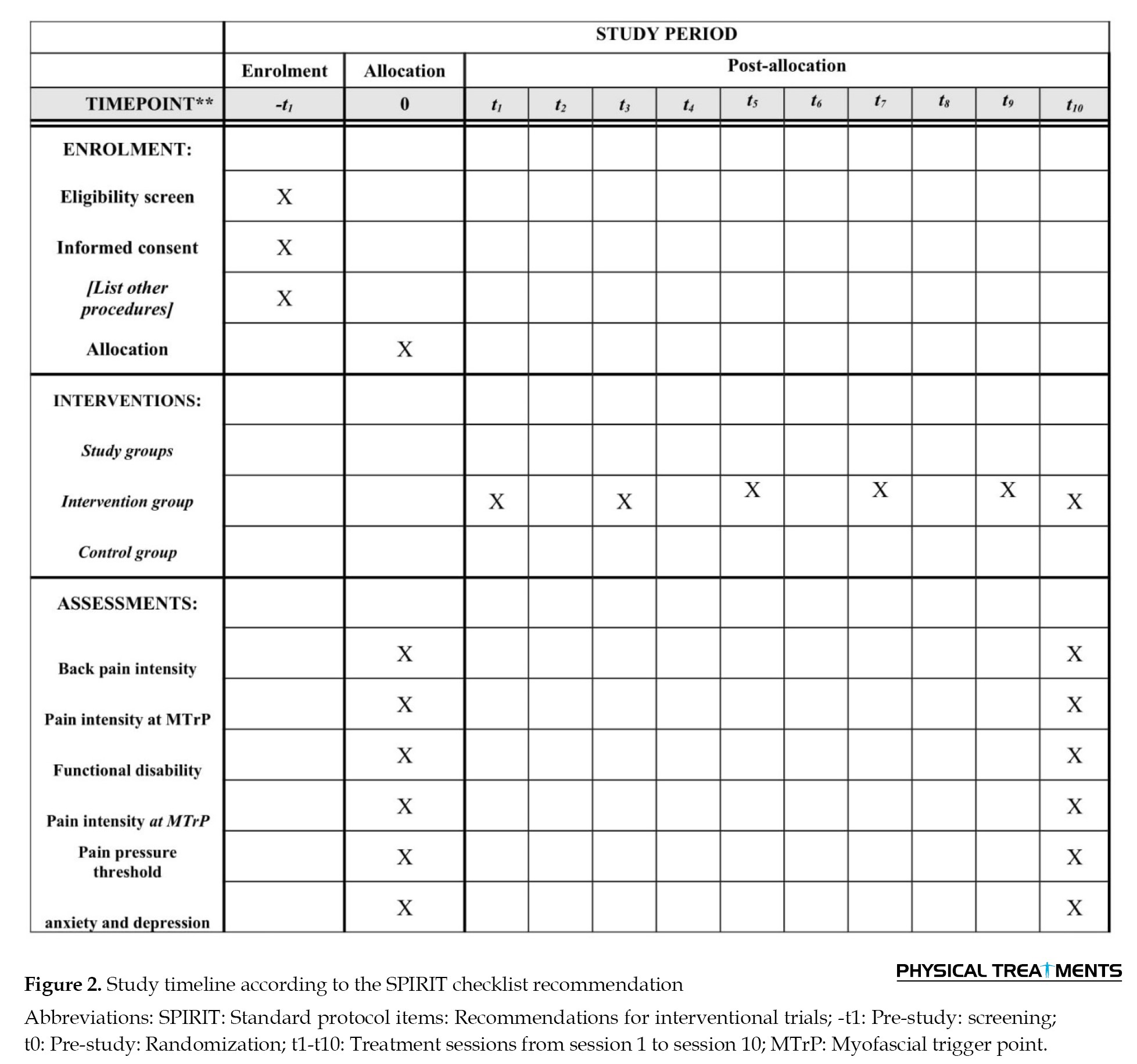
The patients in the intervention group will benefit from the conventional physiotherapy program. They also received six sessions of iliopsoas DN on the first, third, fifth, seventh, ninth, and tenth days, concurrently with their conventional physiotherapy program [20]. To perform the DN technique, patients will be asked to lie supine on a bed and slightly abduct the affected hip. The MTrPs of the iliopsoas muscle are located at the intersection of the psoas and iliacus fibers with the lateral aspect of the femoral triangle. If the iliacus muscle is short, the hip joint is placed in a semi-flexed position by placing a foam roller below it. To palpate the iliopsoas joint tendon, the femoral artery, located in the femoral triangle, is first palpated and identified. Then, by moving the palpating finger two knuckles apart and asking the patient to slightly flex the hip joint, the iliopsoas tendon is palpated [25]. Initially, the MTrP site is cleaned using alcohol and a sterile cotton pad, and then a dry needle is inserted perpendicular to the MTrP (Dong Bang Acuprime Ltd., Korea; dimensions: 60×0.25 mm). For DN, the “fast-in fast-out” technique will be used, and for this purpose, the needle will be advanced and manipulated in the target area. The precise location of MTrP is determined by palpable or visible LTR. This technique is stopped when no further LTR is elicited, and the needle will be removed from the tissue. The MTrP location will be marked using waterproof ink to remain fixed throughout the treatment process [21].
Outcome measurement
Assessments
All participant variables in the control and treatment groups will be assessed at baseline and after completing the study procedure. The MTrP diagnosis and assessments will be performed by a professional physiotherapist with 15 years of experience in diagnosing and treating MTrP and musculoskeletal dysfunctions. Figure 2 shows the SPIRIT study timeline for study’s stages.
Primary outcome measures
LBP intensity
The intensity of LBP will be assessed using the NPRS at baseline and after completing the treatment. NPRS has appeared reliable in assessing LBP severity [26]. The NPRS is an 11-point scale ranging from 0 to 10. Zero represents no pain, and 10 represents the worst pain ever experienced. The patients will be asked to report their current worst pain score during the day.
Pain intensity at MTrP of the iliopsoas muscle
Alongside back pain intensity, pain intensity at the MTrP of the iliopsoas muscle will also be measured. To measure this variable, a constant pressure of 2.5 kg/cm2 was applied to the MTrP with a digital algometer (FDX 50 force Gauge, Wagner Instruments, USA) and maintained for 3 seconds. Subsequently, the patients will be asked to report the pain intensity they experienced using the NPRS scale.
Secondary outcome measures
Functional disability
The QBPDS will be used to measure the level of functional disability among people with LBP [27]. In this study, the Persian version of the QBPDS was used. The questionnaire has shown excellent test re-test reliability (intra-class correlation coefficient (ICC): 0.86) and validity in patients with CLBP [28]. The scale has one main form for questioning: “Do you have problems with ... today?” This questionnaire has 20 questions about routine daily tasks, such as getting out of bed, and taking something out of the refrigerator. Participants rated each question on a scale from 0 (no effort) to 5 (unable to do). A higher score indicates greater disability [28, 29].
Anxiety and depression
There is a close and mutual relationship between the occurrence of CLBP and the alteration of normal psychological situations to anxiety and depression [30]. The occurrence of depression and anxiety among patients with chronic musculoskeletal pain is high, influencing the efficiency of rehabilitation programs [31]. Hospital anxiety and depression scale (HADS) is a suitable screening tool for assessing these variables in clinical practice [32]. This questionnaire has seven questions for anxiety and seven questions for depression. The answer to each question is scored from 0 to 3. A higher HADS score indicates the severity of depression and anxiety. The Persian version of HADS, a reliable and validated tool, will be used for assessing depression and anxiety in this study [33]. Anxiety and depression are measured with separate questionnaires, and each one scores 0-21.
PPT
The PPT will be evaluated using a digital algometer (FDX 50 force gauge, Wagner Instruments, USA). The algometer is placed vertically on the MTrP of the iliopsoas muscle. Then, the pressure will be increased at a constant rate, and the participant is asked to report the exact time at which the feeling of pressure changed into pain, and the amount of pressure was recorded [34]. The PPT will be measured three times, with a resting interval of ten seconds, according to the report [35].
Data monitoring and availability
An independent physical therapist will monitor the methodology to ensure adherence to the proposed methodology and accurate data collection. It is worth mentioning that after completing the recruitment procedure, the raw data will be available upon request to the corresponding author.
Data analysis
The SPSS software, version 25 (SPSS Inc., Chicago, IL, USA) will be used. Shapiro-Wilk (S-W) test will be used to detect the normal distribution of data. The independent t-test and paired t-test will be used to compare variables between the first and the tenth sessions, within the control and intervention groups, and between the two groups. Statistical significance is set at P<0.05. If any differences arise between the groups based on baseline factors, such as age and initial pain intensity, we will include subgroup analysis to improve our understanding of treatment efficacy and offer more detailed insights into our findings.
Results
This study will present the effects of iliopsoas DN and physiotherapy, compared with physiotherapy alone, on pain intensity in the lumbar region, MTrP, PPT of the iliopsoas muscle, functional disability, and anxiety and depression scores.
Discussion
CLBP is a complex issue that can have various origins, such as muscle malfunction in the lumbar region [35]. The iliopsoas muscle is a crucial muscle involved in many daily activities [9], and its normal function needs extra consideration. The development of MTrP in lumbopelvic muscles, especially the iliopsoas muscles, is prevalent in patients with CLBP, which could be a certain cause for aggravating the symptoms of the patients [9].
The inflexibility of the iliopsoas muscle due to its attachment to the lumbar vertebra leads to excessive compressive and shear forces on the spine, and restoration of its length is necessary [9]. Several studies have reported the effectiveness of iliopsoas muscle release using the muscle energy technique (MET), stretching, and proprioceptive neuromuscular facilitation in improving range of motion and other symptoms in patients with LBP [10, 11]. DN is a novel technique for the treatment of MTrP and could lead to the rapid elimination of pain, reduced muscle stiffness, and muscle elongation [18, 19]. In comparing the effectiveness of DN and MET in the release of the quadratus lumborum muscle, it has also been reported that DN is more efficient in improving the symptoms in patients with LBP compared to MET [36]. It seems that incessant input to the muscles afflicted by MTrP could lead to neuro-plastic alterations in the dorsal horn of the spinal cord, and that proper interference should have both central and peripheral effects [37, 38].
Plausible mechanisms of DN to deactivate the MTrP are grounded on mechanical, neurophysiological, and biochemical effects. For analgesic effects of DN, it is reported that when A-delta fibers are stimulated via the needle, the release of enkephalins in the posterior horn of the spinal cord is increased [38]. Also, this may induce the descending pain-inhibitory system. On the other hand, induction of the LTR in DN may have mechanical effects. Indeed, LTR leads to localized stretch to the contractured cytoskeletal structures and, as a result, causes a mechanical disruption of MTrP in the muscle [39]. Furthermore, based on previous studies, biochemical substances in active MTrPs differ from those in normal muscle sites [40]. Alterations in intramuscular blood circulation and decreased levels of chemical substances, such as substance P and calcitonin-generated peptide, in the MTrP region could be due to biochemical changes following dry needling and may explain the therapeutic effects of DN on pain alleviation in the MTrP region [41].
Although the positive effect of MTrP-DN on the different muscles of patients with LBP was asserted [19, 20, 24, 42], evidence for applying DN to the MTrP of the iliopsoas muscle is scarce [19-21]. Consequently, this study aimed to determine the impact of the MTrP-DN on the iliopsoas muscle and provide useful information to help make better decisions about managing symptoms related to CLBP. If the combination of conventional physiotherapy and DN technique produces more positive effects than physiotherapy alone, this protocol could be presented as a beneficial treatment that improves the functional ability and the quality of life of patients with CLBP.
This study has some limitations. First, although the researchers investigated the direct effect of MTrP-DN on the iliopsoas in patients with CLBP, the presence of MTrPs in other muscles, such as the multifidus, the gluteus medius, and the quadratus lumborum, may mimic the symptoms and affect the results. Designing future studies with appropriate inclusion criteria (excluding MTrPs in other lumbopelvic muscles) may be a control strategy to eliminate this limitation. Second, while the treatment program for CLBP may require attention to psychosocial or behavioral therapy, only the musculoskeletal origin is targeted. Designing a multifactorial treatment that considers these perceptions is suggested for future studies. Additionally, because of the invasive nature of the DN technique, preparing the setting for participant or DN performer building is challenging. It is assumed that including sham-DN treatment with a toothpick Steinberger needle in the control group could help assess the placebo effect of releasing the muscle with DN.
Adverse events
Although DN is considered a safe treatment, some adverse events have been reported. Table 2 presents possible adverse events.
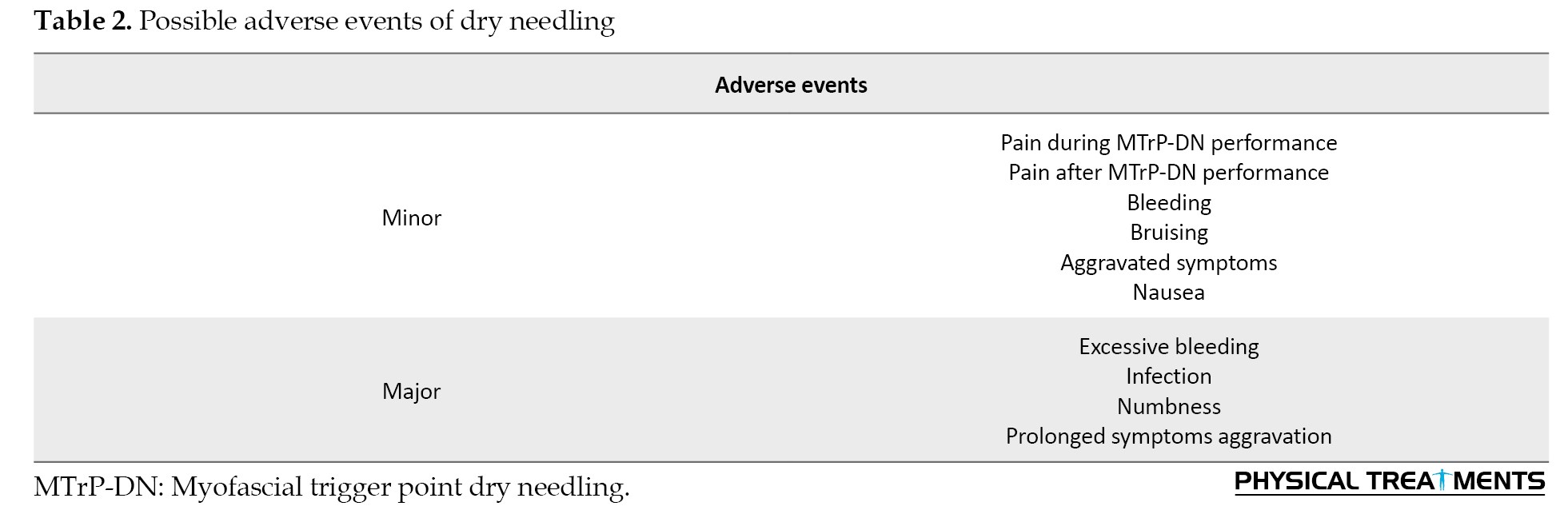
If any of these events occur, the physiotherapist in charge of the treatment is responsible for reporting them.
Ethical Considerations
Compliance with ethical guidelines
This study was approved by the Research Ethics Committee of Tabriz University of Medical Sciences, Tabriz, Iran (Code: IR.TBZMED.REC.1402.424). this study was registered by the Iranian Registry of Clinical Trials (IRCT), Tehran, Iran (Code: IRCT20200215046499N4).
Funding
Although this study was conducted under the supervision of the Rehabilitation Sciences Faculty at Tabriz University of Medical Sciences, the study team will not receive any funding from the university or any other organization for any stage of the study.
Authors' contributions
Conceptualization and Supervision: Hakimeh Adigozali, Zahra Salahzadeh; Methodology: Niloofar Roghangar, Amir Masood Arab, Amin Momenzadeh; Investigation, Writing the original draft, review & editing: All authors.
Conflict of interest
The authors declared no conflict of interest.
Acknowledgments
The authors appreciate everyone who will participate in developing this protocol at any stage.
Full-Text: (211 Views)
Introduction
Low back pain (LBP) is a disabling, common condition affecting a substantial portion of the population [1]. The prevalence of LBP is estimated to be 30-80% [2]. LBP refers to pain, stiffness, or discomfort in the lower back from the lower ribs to the top of the gluteal fold [3]. Since LBP, especially in the chronic phase referred to as chronic LBP (CLBP), is a multifactorial phenomenon, there are several approaches to its treatment.
Given the potential musculoskeletal origin, an imbalance between the trunk and hip muscles is identified as an important factor in the occurrence of CLBP [4-6]. The iliopsoas muscle is the major compressor of the lumbar spine, and its overactivity could hinder the spinal vertebra’s health [7-9]. In contrast, the iliopsoas muscle is crucial for pelvic mobility and stability. The short length of the iliopsoas could lead to spine hyper-lordosis, anterior pelvis tilt, and increased stress on the erector spinae [10, 11]. These changes may initiate or aggravate symptoms of patients with CLBP. In the event of overuse or injury, the iliopsoas muscle can develop myofascial trigger points (MTrPs). MTrPs are hyper-irritable points in the taut band of skeletal muscle or fascia causing referred pain and local sensitivity [12]. Iliopsoas MTrP referral pain usually presents as non-radicular pain that extends vertically along the lumbar spine and sacroiliac region [12].
Lack of physical activity and prolonged poor posture may be possible causes of MTrP development in the myofascial system [13-15]. Based on a study, up to 90% of patients with CLBP develop myofascial dysfunction in the lumbosacral area, and 31% of this population develop MTrP in the iliopsoas muscle [16]. Indeed, the iliopsoas muscle is one of the main lumbar muscles affected by MTrP in these patients [16]. Despite the frequent occurrence of MTrPs in the iliopsoas muscle, addressing them in this muscle is frequently neglected in the treatment of CLBP. This oversight is primarily due to challenges in palpating and visually inspecting the muscle given its deep location, as well as the nonspecific and variable symptoms of its MTrP, which often overlap with other issues. Also, functional disorders of this muscle are a neglected source of pain [17].
The conventional physiotherapy program alleviates the CLBP symptoms [16]. Dry needling (DN) is a new and effective method for myofascial problems [17, 18]. Myofascial trigger point dry needling (MTrP-DN) is defined as the insertion of a solid filament needle into the muscular MTrP to improve or restore muscle function following a local twitch response (LTR) [19].
Evidence is scarce regarding the impact of iliopsoas MTrP-DN in patients with CLBP [20, 21]. In one study, the effects of the iliopsoas MTrP-DN and therapeutic stretching were evaluated in six patients with ipsilateral foot drop and acute sciatic pain. The results revealed that iliopsoas muscle release is a reasonable therapeutic option, and DN may have greater benefits than conservative physiotherapy in these patients. However, the evidence may support the use of the iliopsoas MTrP-DN to improve LBP; however, due to the study’s small sample size and its inclusion of only patients with acute sciatica, the results cannot be generalized to other patients with LBP. Therefore, it seems necessary to design studies with larger sample sizes and different etiologies in patients with LBP [21]. Furthermore, another study suggests that DN of lumbopelvic muscles can be an efficient treatment for patients with CLBP; however, it did not consider releasing the iliopsoas muscle MTrPs [20].
Given findings from previous studies, DN is often applied to muscles in the lumbopelvic area, while the importance of releasing the iliopsoas muscle is mostly neglected or overlooked as a complement to conventional physiotherapy programs in patients with CLBP [22, 23]. Therefore, this single-blinded randomized controlled trial is designed to examine the effect of iliopsoas MTrP-DN and physiotherapy, compared to physiotherapy alone, in patients with CLBP.
The study hypothesizes that patients receiving MTrP-DN alongside a conventional physiotherapy program will show greater improvement in LBP symptoms, such as pain intensity in the lumbar and MTrP (as primary outcomes), anxiety and depression levels, pain pressure threshold (PPT) at the iliopsoas muscle MTrP, and functional disability (as secondary outcomes) compared to those receiving only conventional physiotherapy.
Materials and Methods
Study design
This study will be a monocenter, superior, randomized, single-blinded, controlled trial with parallel groups of 40 patients, with the outcome assessor blinded to the interventions. The allocation ratio will be 1:1. This study follows the standard protocol items: recommendations for interventional trials (SPIRIT) guidelines. This study has been registered at the Iranian Registry of Clinical Trials (IRCT), registered on 2023-09-24.
Informed consent
The study will be conducted in accordance with the Declaration of Helsinki. Participants will be informed in detail about the trial goal, interventions, benefits, and possible side effects. They can withdraw from the study at any stage. Before recruitment, the physiotherapist responsible for assessing the patients will collect written informed consent. This study has been approved by the Research Ethics Committee of Tabriz University of Medical Sciences on 2023-09-04.
Participants
Eligible subjects with CLBP will be recruited from the physiotherapy clinics at Tabriz University of Medical Sciences in this study. Participants will be evaluated with the inclusion and exclusion criteria before entering the trial. The inclusion criteria include age 35-60 [23], duration of CLBP of at least 3 months, disability level with Quebec back pain disability scale (QBPDS) more than 40, and presence of MTrP in the iliopsoas muscle. The exclusion criteria include the coincidence of the trial with any physiotherapy intervention, sensory or cognitive disorder, specific LBP (i.e. spinal canal stenosis, spondylolisthesis, and tumor), needle phobia, epilepsy, pregnancy, and history of spine surgery.
Procedure
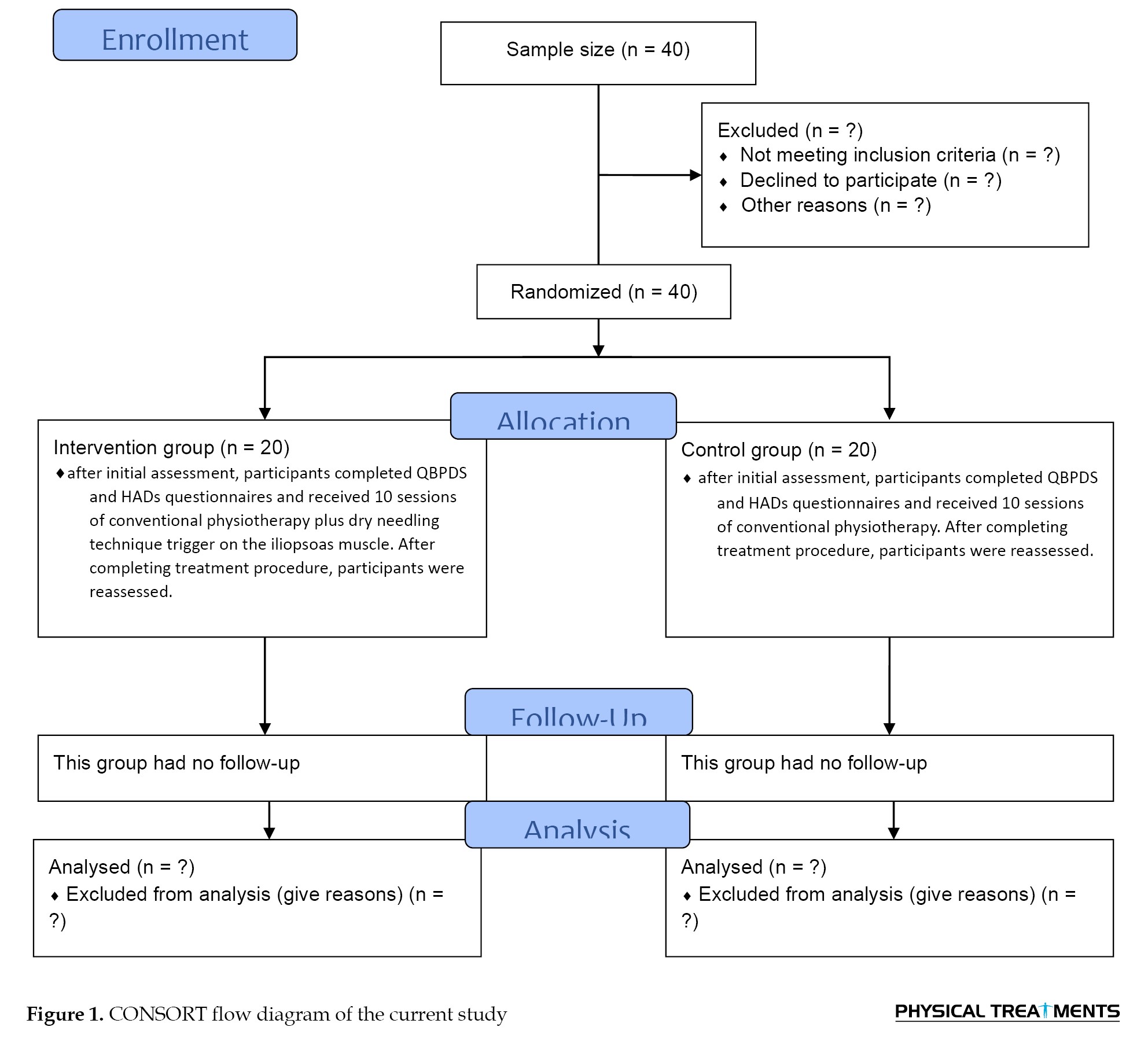
The target population of the trial will be patients with CLBP who are referred to the clinic. The trial will be performed in a physiotherapy clinic under the supervision of the Tabriz University of Medical Sciences, Rehabilitation Faculty. After completing informed consent, 40 patients will be randomly allocated into the intervention and control groups. The control group will receive 10 sessions of a conventional physiotherapy program, including ultrasound, transcutaneous electrical nerve stimulation (TENS), and exercise therapy, and the intervention group will receive a conventional physiotherapy program plus 6 sessions of the iliopsoas MTrP-DN technique. An experienced physiotherapist will assess the patients once at the baseline and once after completing the last treatment session. Demographic information and study-related data will be coded and stored confidentially in numerical order. A double-review strategy will be adopted to minimize errors, ensure accurate data entry, and identify missing items. Figure 1 shows a CONSORT flow diagram related to the stages of the protocol.
Low back pain (LBP) is a disabling, common condition affecting a substantial portion of the population [1]. The prevalence of LBP is estimated to be 30-80% [2]. LBP refers to pain, stiffness, or discomfort in the lower back from the lower ribs to the top of the gluteal fold [3]. Since LBP, especially in the chronic phase referred to as chronic LBP (CLBP), is a multifactorial phenomenon, there are several approaches to its treatment.
Given the potential musculoskeletal origin, an imbalance between the trunk and hip muscles is identified as an important factor in the occurrence of CLBP [4-6]. The iliopsoas muscle is the major compressor of the lumbar spine, and its overactivity could hinder the spinal vertebra’s health [7-9]. In contrast, the iliopsoas muscle is crucial for pelvic mobility and stability. The short length of the iliopsoas could lead to spine hyper-lordosis, anterior pelvis tilt, and increased stress on the erector spinae [10, 11]. These changes may initiate or aggravate symptoms of patients with CLBP. In the event of overuse or injury, the iliopsoas muscle can develop myofascial trigger points (MTrPs). MTrPs are hyper-irritable points in the taut band of skeletal muscle or fascia causing referred pain and local sensitivity [12]. Iliopsoas MTrP referral pain usually presents as non-radicular pain that extends vertically along the lumbar spine and sacroiliac region [12].
Lack of physical activity and prolonged poor posture may be possible causes of MTrP development in the myofascial system [13-15]. Based on a study, up to 90% of patients with CLBP develop myofascial dysfunction in the lumbosacral area, and 31% of this population develop MTrP in the iliopsoas muscle [16]. Indeed, the iliopsoas muscle is one of the main lumbar muscles affected by MTrP in these patients [16]. Despite the frequent occurrence of MTrPs in the iliopsoas muscle, addressing them in this muscle is frequently neglected in the treatment of CLBP. This oversight is primarily due to challenges in palpating and visually inspecting the muscle given its deep location, as well as the nonspecific and variable symptoms of its MTrP, which often overlap with other issues. Also, functional disorders of this muscle are a neglected source of pain [17].
The conventional physiotherapy program alleviates the CLBP symptoms [16]. Dry needling (DN) is a new and effective method for myofascial problems [17, 18]. Myofascial trigger point dry needling (MTrP-DN) is defined as the insertion of a solid filament needle into the muscular MTrP to improve or restore muscle function following a local twitch response (LTR) [19].
Evidence is scarce regarding the impact of iliopsoas MTrP-DN in patients with CLBP [20, 21]. In one study, the effects of the iliopsoas MTrP-DN and therapeutic stretching were evaluated in six patients with ipsilateral foot drop and acute sciatic pain. The results revealed that iliopsoas muscle release is a reasonable therapeutic option, and DN may have greater benefits than conservative physiotherapy in these patients. However, the evidence may support the use of the iliopsoas MTrP-DN to improve LBP; however, due to the study’s small sample size and its inclusion of only patients with acute sciatica, the results cannot be generalized to other patients with LBP. Therefore, it seems necessary to design studies with larger sample sizes and different etiologies in patients with LBP [21]. Furthermore, another study suggests that DN of lumbopelvic muscles can be an efficient treatment for patients with CLBP; however, it did not consider releasing the iliopsoas muscle MTrPs [20].
Given findings from previous studies, DN is often applied to muscles in the lumbopelvic area, while the importance of releasing the iliopsoas muscle is mostly neglected or overlooked as a complement to conventional physiotherapy programs in patients with CLBP [22, 23]. Therefore, this single-blinded randomized controlled trial is designed to examine the effect of iliopsoas MTrP-DN and physiotherapy, compared to physiotherapy alone, in patients with CLBP.
The study hypothesizes that patients receiving MTrP-DN alongside a conventional physiotherapy program will show greater improvement in LBP symptoms, such as pain intensity in the lumbar and MTrP (as primary outcomes), anxiety and depression levels, pain pressure threshold (PPT) at the iliopsoas muscle MTrP, and functional disability (as secondary outcomes) compared to those receiving only conventional physiotherapy.
Materials and Methods
Study design
This study will be a monocenter, superior, randomized, single-blinded, controlled trial with parallel groups of 40 patients, with the outcome assessor blinded to the interventions. The allocation ratio will be 1:1. This study follows the standard protocol items: recommendations for interventional trials (SPIRIT) guidelines. This study has been registered at the Iranian Registry of Clinical Trials (IRCT), registered on 2023-09-24.
Informed consent
The study will be conducted in accordance with the Declaration of Helsinki. Participants will be informed in detail about the trial goal, interventions, benefits, and possible side effects. They can withdraw from the study at any stage. Before recruitment, the physiotherapist responsible for assessing the patients will collect written informed consent. This study has been approved by the Research Ethics Committee of Tabriz University of Medical Sciences on 2023-09-04.
Participants
Eligible subjects with CLBP will be recruited from the physiotherapy clinics at Tabriz University of Medical Sciences in this study. Participants will be evaluated with the inclusion and exclusion criteria before entering the trial. The inclusion criteria include age 35-60 [23], duration of CLBP of at least 3 months, disability level with Quebec back pain disability scale (QBPDS) more than 40, and presence of MTrP in the iliopsoas muscle. The exclusion criteria include the coincidence of the trial with any physiotherapy intervention, sensory or cognitive disorder, specific LBP (i.e. spinal canal stenosis, spondylolisthesis, and tumor), needle phobia, epilepsy, pregnancy, and history of spine surgery.
Procedure
The target population of the trial will be patients with CLBP who are referred to the clinic. The trial will be performed in a physiotherapy clinic under the supervision of the Tabriz University of Medical Sciences, Rehabilitation Faculty. After completing informed consent, 40 patients will be randomly allocated into the intervention and control groups. The control group will receive 10 sessions of a conventional physiotherapy program, including ultrasound, transcutaneous electrical nerve stimulation (TENS), and exercise therapy, and the intervention group will receive a conventional physiotherapy program plus 6 sessions of the iliopsoas MTrP-DN technique. An experienced physiotherapist will assess the patients once at the baseline and once after completing the last treatment session. Demographic information and study-related data will be coded and stored confidentially in numerical order. A double-review strategy will be adopted to minimize errors, ensure accurate data entry, and identify missing items. Figure 1 shows a CONSORT flow diagram related to the stages of the protocol.
Randomization and blinding
Patients will be randomly assigned to control (A) or intervention (B) groups using a randomizer site. Someone outside the study will do the randomization process with a 1:1 allocation. The randomization process will be conducted with three blocks of 4, two blocks of 8, and two blocks of 6 arranged in a random sequence. After allocating each participant to the study, their group names will be deleted from the block. This process results in an equal number of ‘’control groups’’ and ‘’ intervention groups.’’ After deleting all group names from a specific block, the block will be blank, and the group names will be located in the sealed envelope. A person not involved in the study was responsible for managing the envelopes for allocation concealment. After that, the next block will be opened according to its sequence. Participants are allocated to groups and their confidentiality is preserved by the secretary of the physiotherapy clinic after the initial assessment. The outcome assessor will not be informed about the number of blocks and the sequence in which they are arranged.
Sample size
Using G*Power software, version 3.1.9.2 the following parameters are determined: α error probability of 0.05, effect size of 0.5, power of 0.8, 20% dropout probability for two groups, and a sample size of 40 (20 people in each group). The effect size, Mean±SD for pain intensity will be determined according to the study by Álvarez et al. [24].
Diagnosis ofMTrP
The precise location of the active iliopsoas muscle MTrPs will be determined by a professional physical therapist considering the Travell and Simons’ criteria [12]: A hypersensitive tender spot in the taut band, presence of a taut band within the muscle, LTR on snapping palpation, spontaneous pain, and a familiar referred pain on palpation. Patients will be asked to lie supine with the slightly affected side hip in abduction. MTrPs can be identified with a cross-fiber flat palpation of the psoas musculotendinous junction and the iliacus muscle fibers against the lateral wall of the femoral triangle. If the iliacus muscle is short, it is important to semi-flex the hip by placing a foam roll under the thigh. To locate the common iliopsoas tendon, the assessor should palpate the femoral artery in the femoral triangle. Then, to reach the tendon, the palpating finger will be swept about one to two fingers palm laterally over the femoral nerve. To confirm that the clinician is palpating the iliopsoas tendon, the patient will gently contract the muscle by lifting the leg [25]. The presence of MTrPs in the iliopsoas muscle will be diagnosed in both groups.
Interventions
Control group
The participants in the control group will undergo a conventional physiotherapy program. The conventional program includes applying TENS in burst mode with a pulse width of 100 µs, a duration of 20 minutes, and a frequency of 2 Hz [20], while a hot-pack is used with TENS simultaneously. Ultrasound, continuous mode, with a frequency of 1MHz, with a duration of 6 minutes and intensity of 1.5 W/cm2 will be applied at the lateral side of the lumbar spine ipsilaterally [20]. An expert physiotherapist will perform all the therapeutic actions in the study groups. The patient will be asked to do exercises. Table 1 presents the set of recommended exercises for participants.
The recommended exercises for participants in the present study are as follows:
Isolated contraction of the transverse abdominis: For this exercise, patients will be asked to flex the knees with the pelvis in a neutral position and then imagine that they are trying to put on tight jeans.
Pelvic elevation with transverse abdominis contraction: This exercise is similar to the previous one, except that after completing the task, patients will be asked to raise their pelvis.
Lift one foot 2 cm while the pelvis is elevated: This exercise is more complicated than pelvic elevation with transverse abdominis contraction. Once the pelvic elevation is performed, we will ask the patients to lift one foot approximately 2 cm from the ground.
Co-contraction of multifidus and transverse abdominis: Patients will be asked to lie prone, with feet on the pillow and knees flexed. Afterward, they will be asked to contract the transverse abdominis as in the first exercise and slowly contract the multifidus.
Head and shoulder lift on the elbow: Patients will be asked to flex their knees with the pelvis in a neutral position, then lift their shoulders and head, holding that position for 5 seconds.
Seating on a chair: Keeping the feet on the floor with knees aligned with the hip. The weight will be applied to both the ischial tuberosities and the spine in a neutral position.
Piriformis stretch: Patients will be asked to place the lateral side of the foot on the contralateral knee and pull the knee toward the chest.
Erector spine stretch: Patients will be asked to sit on their knees, flex the trunk, and stretch the arms forward.
Intervention group
The patients in the intervention group will benefit from the conventional physiotherapy program. They also received six sessions of iliopsoas DN on the first, third, fifth, seventh, ninth, and tenth days, concurrently with their conventional physiotherapy program [20]. To perform the DN technique, patients will be asked to lie supine on a bed and slightly abduct the affected hip. The MTrPs of the iliopsoas muscle are located at the intersection of the psoas and iliacus fibers with the lateral aspect of the femoral triangle. If the iliacus muscle is short, the hip joint is placed in a semi-flexed position by placing a foam roller below it. To palpate the iliopsoas joint tendon, the femoral artery, located in the femoral triangle, is first palpated and identified. Then, by moving the palpating finger two knuckles apart and asking the patient to slightly flex the hip joint, the iliopsoas tendon is palpated [25]. Initially, the MTrP site is cleaned using alcohol and a sterile cotton pad, and then a dry needle is inserted perpendicular to the MTrP (Dong Bang Acuprime Ltd., Korea; dimensions: 60×0.25 mm). For DN, the “fast-in fast-out” technique will be used, and for this purpose, the needle will be advanced and manipulated in the target area. The precise location of MTrP is determined by palpable or visible LTR. This technique is stopped when no further LTR is elicited, and the needle will be removed from the tissue. The MTrP location will be marked using waterproof ink to remain fixed throughout the treatment process [21].
Outcome measurement
Assessments
All participant variables in the control and treatment groups will be assessed at baseline and after completing the study procedure. The MTrP diagnosis and assessments will be performed by a professional physiotherapist with 15 years of experience in diagnosing and treating MTrP and musculoskeletal dysfunctions. Figure 2 shows the SPIRIT study timeline for study’s stages.
Primary outcome measures
LBP intensity
The intensity of LBP will be assessed using the NPRS at baseline and after completing the treatment. NPRS has appeared reliable in assessing LBP severity [26]. The NPRS is an 11-point scale ranging from 0 to 10. Zero represents no pain, and 10 represents the worst pain ever experienced. The patients will be asked to report their current worst pain score during the day.
Pain intensity at MTrP of the iliopsoas muscle
Alongside back pain intensity, pain intensity at the MTrP of the iliopsoas muscle will also be measured. To measure this variable, a constant pressure of 2.5 kg/cm2 was applied to the MTrP with a digital algometer (FDX 50 force Gauge, Wagner Instruments, USA) and maintained for 3 seconds. Subsequently, the patients will be asked to report the pain intensity they experienced using the NPRS scale.
Secondary outcome measures
Functional disability
The QBPDS will be used to measure the level of functional disability among people with LBP [27]. In this study, the Persian version of the QBPDS was used. The questionnaire has shown excellent test re-test reliability (intra-class correlation coefficient (ICC): 0.86) and validity in patients with CLBP [28]. The scale has one main form for questioning: “Do you have problems with ... today?” This questionnaire has 20 questions about routine daily tasks, such as getting out of bed, and taking something out of the refrigerator. Participants rated each question on a scale from 0 (no effort) to 5 (unable to do). A higher score indicates greater disability [28, 29].
Anxiety and depression
There is a close and mutual relationship between the occurrence of CLBP and the alteration of normal psychological situations to anxiety and depression [30]. The occurrence of depression and anxiety among patients with chronic musculoskeletal pain is high, influencing the efficiency of rehabilitation programs [31]. Hospital anxiety and depression scale (HADS) is a suitable screening tool for assessing these variables in clinical practice [32]. This questionnaire has seven questions for anxiety and seven questions for depression. The answer to each question is scored from 0 to 3. A higher HADS score indicates the severity of depression and anxiety. The Persian version of HADS, a reliable and validated tool, will be used for assessing depression and anxiety in this study [33]. Anxiety and depression are measured with separate questionnaires, and each one scores 0-21.
PPT
The PPT will be evaluated using a digital algometer (FDX 50 force gauge, Wagner Instruments, USA). The algometer is placed vertically on the MTrP of the iliopsoas muscle. Then, the pressure will be increased at a constant rate, and the participant is asked to report the exact time at which the feeling of pressure changed into pain, and the amount of pressure was recorded [34]. The PPT will be measured three times, with a resting interval of ten seconds, according to the report [35].
Data monitoring and availability
An independent physical therapist will monitor the methodology to ensure adherence to the proposed methodology and accurate data collection. It is worth mentioning that after completing the recruitment procedure, the raw data will be available upon request to the corresponding author.
Data analysis
The SPSS software, version 25 (SPSS Inc., Chicago, IL, USA) will be used. Shapiro-Wilk (S-W) test will be used to detect the normal distribution of data. The independent t-test and paired t-test will be used to compare variables between the first and the tenth sessions, within the control and intervention groups, and between the two groups. Statistical significance is set at P<0.05. If any differences arise between the groups based on baseline factors, such as age and initial pain intensity, we will include subgroup analysis to improve our understanding of treatment efficacy and offer more detailed insights into our findings.
Results
This study will present the effects of iliopsoas DN and physiotherapy, compared with physiotherapy alone, on pain intensity in the lumbar region, MTrP, PPT of the iliopsoas muscle, functional disability, and anxiety and depression scores.
Discussion
CLBP is a complex issue that can have various origins, such as muscle malfunction in the lumbar region [35]. The iliopsoas muscle is a crucial muscle involved in many daily activities [9], and its normal function needs extra consideration. The development of MTrP in lumbopelvic muscles, especially the iliopsoas muscles, is prevalent in patients with CLBP, which could be a certain cause for aggravating the symptoms of the patients [9].
The inflexibility of the iliopsoas muscle due to its attachment to the lumbar vertebra leads to excessive compressive and shear forces on the spine, and restoration of its length is necessary [9]. Several studies have reported the effectiveness of iliopsoas muscle release using the muscle energy technique (MET), stretching, and proprioceptive neuromuscular facilitation in improving range of motion and other symptoms in patients with LBP [10, 11]. DN is a novel technique for the treatment of MTrP and could lead to the rapid elimination of pain, reduced muscle stiffness, and muscle elongation [18, 19]. In comparing the effectiveness of DN and MET in the release of the quadratus lumborum muscle, it has also been reported that DN is more efficient in improving the symptoms in patients with LBP compared to MET [36]. It seems that incessant input to the muscles afflicted by MTrP could lead to neuro-plastic alterations in the dorsal horn of the spinal cord, and that proper interference should have both central and peripheral effects [37, 38].
Plausible mechanisms of DN to deactivate the MTrP are grounded on mechanical, neurophysiological, and biochemical effects. For analgesic effects of DN, it is reported that when A-delta fibers are stimulated via the needle, the release of enkephalins in the posterior horn of the spinal cord is increased [38]. Also, this may induce the descending pain-inhibitory system. On the other hand, induction of the LTR in DN may have mechanical effects. Indeed, LTR leads to localized stretch to the contractured cytoskeletal structures and, as a result, causes a mechanical disruption of MTrP in the muscle [39]. Furthermore, based on previous studies, biochemical substances in active MTrPs differ from those in normal muscle sites [40]. Alterations in intramuscular blood circulation and decreased levels of chemical substances, such as substance P and calcitonin-generated peptide, in the MTrP region could be due to biochemical changes following dry needling and may explain the therapeutic effects of DN on pain alleviation in the MTrP region [41].
Although the positive effect of MTrP-DN on the different muscles of patients with LBP was asserted [19, 20, 24, 42], evidence for applying DN to the MTrP of the iliopsoas muscle is scarce [19-21]. Consequently, this study aimed to determine the impact of the MTrP-DN on the iliopsoas muscle and provide useful information to help make better decisions about managing symptoms related to CLBP. If the combination of conventional physiotherapy and DN technique produces more positive effects than physiotherapy alone, this protocol could be presented as a beneficial treatment that improves the functional ability and the quality of life of patients with CLBP.
This study has some limitations. First, although the researchers investigated the direct effect of MTrP-DN on the iliopsoas in patients with CLBP, the presence of MTrPs in other muscles, such as the multifidus, the gluteus medius, and the quadratus lumborum, may mimic the symptoms and affect the results. Designing future studies with appropriate inclusion criteria (excluding MTrPs in other lumbopelvic muscles) may be a control strategy to eliminate this limitation. Second, while the treatment program for CLBP may require attention to psychosocial or behavioral therapy, only the musculoskeletal origin is targeted. Designing a multifactorial treatment that considers these perceptions is suggested for future studies. Additionally, because of the invasive nature of the DN technique, preparing the setting for participant or DN performer building is challenging. It is assumed that including sham-DN treatment with a toothpick Steinberger needle in the control group could help assess the placebo effect of releasing the muscle with DN.
Adverse events
Although DN is considered a safe treatment, some adverse events have been reported. Table 2 presents possible adverse events.
If any of these events occur, the physiotherapist in charge of the treatment is responsible for reporting them.
Ethical Considerations
Compliance with ethical guidelines
This study was approved by the Research Ethics Committee of Tabriz University of Medical Sciences, Tabriz, Iran (Code: IR.TBZMED.REC.1402.424). this study was registered by the Iranian Registry of Clinical Trials (IRCT), Tehran, Iran (Code: IRCT20200215046499N4).
Funding
Although this study was conducted under the supervision of the Rehabilitation Sciences Faculty at Tabriz University of Medical Sciences, the study team will not receive any funding from the university or any other organization for any stage of the study.
Authors' contributions
Conceptualization and Supervision: Hakimeh Adigozali, Zahra Salahzadeh; Methodology: Niloofar Roghangar, Amir Masood Arab, Amin Momenzadeh; Investigation, Writing the original draft, review & editing: All authors.
Conflict of interest
The authors declared no conflict of interest.
Acknowledgments
The authors appreciate everyone who will participate in developing this protocol at any stage.
References
- Shokri P, Zahmatyar M, Falah Tafti M, Fathy M, Rezaei Tolzali M, Ghaffari Jolfayi A, et al. Non-spinal low back pain: Global epidemiology, trends, and risk factors. Health Science Reports. 2023; 6(9):e1533. [DOI:10.1002/hsr2.1533] [PMID]
- Goel S. Non-Spinal Causes of Back Pain: An ‘undiagnosed’diagnosis. Journal of Medical Research and Innovation. 2019; 3(2):e000172-e. [DOI:10.32892/jmri.172]
- Iglesias-González JJ, Muñoz-García MT, Rodrigues-de-Souza DP, Alburquerque-Sendín F, Fernández-de-Las-Peñas C. Myofascial trigger points, pain, disability, and sleep quality in patients with chronic nonspecific low back pain. Pain Medicine. 2013; 14(12):1964-70. [DOI:10.1111/pme.12224] [PMID]
- Cho KH, Beom JW, Lee TS, Lim JH, Lee TH, Yuk JH. Trunk muscles strength as a risk factor for nonspecific low back pain: A pilot study. Annals of Rehabilitation Medicine. 2014; 38(2):234-40. [DOI:10.5535/arm.2014.38.2.234] [PMID]
- de Sousa CS, de Jesus FLA, Machado MB, Ferreira G, Ayres IGT, de Aquino LM, et al. Lower limb muscle strength in patients with low back pain: A systematic review and meta-analysis. Journal of Musculoskeletal & Neuronal Interactions. 2019; 19(1):69-78. [PMID]
- Kim B, Yim J. Core stability and hip exercises improve physical function and activity in patients with non-specific low back pain: A randomized controlled trial. The Tohoku Journal of Experimental Medicine. 2020; 251(3):193-206. [DOI:10.1620/tjem.251.193] [PMID]
- Otsudo T, Mimura K, Akasaka K. Immediate effect of application of the pressure technique to the psoas major on lumbar lordosis. Journal of Physical Therapy Science. 2018; 30(10):1323-8. [DOI:10.1589/jpts.30.1323] [PMID]
- Sheldon BL, DiMarzio M, Chung SH, Tram J, Khazen O, Staudt MD, et al. Association of outcomes of spinal cord stimulation for chronic low back pain and psoas measurements based on size of iliopsoas muscles. Neuromodulation: Journal of The International Neuromodulation Society. 2022; 25(1):121-7. [DOI:10.1111/ner.13375] [PMID]
- Lifshitz L, Bar Sela S, Gal N, Martin R, Fleitman Klar M. Iliopsoas the hidden muscle: Anatomy, diagnosis, and treatment. Current Sports Medicine Reports. 2020; 19(6):235-43. [DOI:10.1249/JSR.0000000000000723] [PMID]
- Chaudhary S, Patel T, Makwana A, Patel M. Improvement of iliopsoas flexibility: A comparative effectiveness between post isometric relaxation and static stretching. Indian Journal of Physiotherapy & Occupational Therapy. 2020; 14(3):213-8. [Link]
- Shivalkar A. Efficacy of Single Stretching Session of Iliopsoas using PNF Versus MET on Low Back Pain in Patients with Lumbar Hyper-Lordosis. Journal of Health Physiotherapy and Orthopaedics. 2024; 1(1). [DOI:10.7759/cureus.27916]
- Donnelly J. Travell, simons & simons’ myofascial pain and dysfunction: The trigger point manual. Alphen aan den Rijn: Wolters Kluwer Health; 2018. [Link]
- Quintner JL, Bove GM, Cohen ML. A critical evaluation of the trigger point phenomenon. Rheumatology. 2015; 54(3):392-9. [DOI:10.1093/rheumatology/keu471] [PMID]
- Amjad F, Mohseni-Bandpei MA, Gilani SA, Ahmad A, Hanif A. Effects of non-surgical decompression therapy in addition to routine physical therapy on pain, range of motion, endurance, functional disability and quality of life versus routine physical therapy alone in patients with lumbar radiculopathy; a randomized controlled trial. BMC Musculoskeletal Disorders. 2022; 23(1):255. [DOI:10.1186/s12891-022-05196-x] [PMID]
- Gerwin RD. A review of myofascial pain and fibromyalgia-factors that promote their persistence. Acupuncture in Medicine. 2005; 23(3):121-34. [DOI:10.1136/aim.23.3.121] [PMID]
- Coelho DM, Barbosa RI, Pavan AM, de Oliveira AS, Bevilaqua-Grossi D, Defino HLA. Prevalence of myofascial dysfunction in patients with low back pain. Acta Fisiátrica. 2014; 21(2):71-4. [DOI:10.11606/issn.2317-0190.v21i2a103835]
- Grgić V. Iliopsoas muscle syndrome. Functional disorders: Shortening, spasm and weakness of a structurally unchanged muscle. Lijecnicki Vjesnik. 2009; 131(3-4):81-6. [PMID]
- Ghanavati T, Adigozali H, Rezaei M, Gilani N, Ahadi J. Comparing the remote effects of dry needling and ischemic pressure on pain intensity and threshold of the myofascial trigger points in women: A Single Blinded Randomized Clinical Trial. International Journal of Osteopathic Medicine. 2024; 51:100701. [DOI:10.1016/j.ijosm.2023.100701]
- Liu L, Huang QM, Liu QG, Thitham N, Li LH, Ma YT, et al. Evidence for dry needling in the management of myofascial trigger points associated with low back pain: A systematic review and meta-analysis. Archives of Physical Medicine and Rehabilitation. 2018; 99(1):144-52. e2. [DOI:10.1016/j.apmr.2017.06.008] [PMID]
- Tüzün EH, Gildir S, Angın E, Tecer BH, Dana KÖ, Malkoç M. Effectiveness of dry needling versus a classical physiotherapy program in patients with chronic low-back pain: a single-blind, randomized, controlled trial. Journal of Physical Therapy Science. 2017; 29(9):1502-9. [DOI:10.1589/jpts.29.1502] [PMID]
- Ingber RS. Iliopsoas trigger point dry needling and therapeutic stretching in the treatment of a series of six consecutive patients presenting with acute lumbar radiculitis and foot drop. Journal of Bodywork and Movement Therapies. 2023; 36:1-4. [DOI:10.1016/j.jbmt.2023.04.073] [PMID]
- Funk MF, Frisina-Deyo AJ. Dry needling for spine related disorders: a scoping review. Chiropractic & Manual Therapies. 2020; 28(1):1-13. [DOI:10.1186/s12998-020-00310-z] [PMID]
- Lara-Palomo IC, Gil-Martínez E, Antequera-Soler E, Castro-Sánchez AM, Fernández-Sánchez M, García-López H. Electrical dry needling versus conventional physiotherapy in the treatment of active and latent myofascial trigger points in patients with nonspecific chronic low back pain. Trials. 2022; 23(1):238. [DOI:10.1186/s13063-022-06179-y] [PMID]
- Álvarez SD, Velázquez Saornil J, Sánchez Milá Z, Jaén Crespo G, Campón Chekroun A, Barragán Casas JM, et al. Effectiveness of Dry Needling and Ischemic Trigger Point Compression in the Gluteus Medius in Patients with Non-Specific Low Back Pain: A Randomized Short-Term Clinical Trial. International Journal of Environmental Research and Public Health. 2022; 19(19):12468. [DOI:10.3390/ijerph191912468] [PMID]
- Ball AM, Finnegan M, Koppenhaver S, Freres W, Dommerholt J, Mayoral del Moral O, et al. The relative risk to the femoral nerve as a function of patient positioning: potential implications for trigger point dry needling of the iliacus muscle. Journal of Manual & Manipulative Therapy. 2019; 27(3):162-71. [DOI:10.1080/10669817.2019.1568699] [PMID]
- Shafshak TS, Elnemr R. The visual analogue scale versus numerical rating scale in measuring pain severity and predicting disability in low back pain. JCR: Journal of Clinical Rheumatology. 2021; 27(7):282-5. [DOI:10.1097/RHU.0000000000001320] [PMID]
- Niri HG, Ghanavati T, Mostafaee N, Salahzadeh Z, Divandari A, Adigozali H, et al. Oswestry disability index, roland-morris disability questionnaire, and Quebec back pain disability scale: Responsiveness and minimal clinically important changes in Iranian people with lumbar disc herniation following physiotherapy. Archives of Bone and Joint Surgery. 2024; 12(1):58. [DOI:10.22038/ABJS.2023.72246.3366] [PMID]
- Mousavi SJ, Parnianpour M, Mehdian H, Montazeri A, Mobini B. The Oswestry disability index, the Roland-Morris disability questionnaire, and the Quebec back pain disability scale: translation and validation studies of the Iranian versions. Spine. 2006; 31(14):E454-E9. [DOI:10.1097/01.brs.0000222141.61424.f7] [PMID]
- Smeets R, Köke A, Lin CW, Ferreira M, Demoulin C. Measures of function in low back pain/disorders: low back pain rating scale (lbprs), oswestry disability index (odi), progressive isoinertial lifting evaluation (pile), quebec back pain disability scale (qbpds), and roland-morris disability questionnaire (rdq). Arthritis Care & Research. 2011; 63:S158-73. [DOI:10.1002/acr.20542] [PMID]
- Mok LC, Lee IFK. Anxiety, depression and pain intensity in patients with low back pain who are admitted to acute care hospitals. Journal of Clinical Nursing. 2008; 17(11):1471-80. [DOI:10.1111/j.1365-2702.2007.02037.x] [PMID]
- Pallant JF, Bailey CM. Assessment of the structure of the Hospital Anxiety and Depression Scale in musculoskeletal patients. Health and Quality of Life Outcomes. 2005; 3:1-9. [DOI:10.1186/1477-7525-3-82] [PMID]
- Sagheer MA, Khan MF, Sharif S. Association between chronic low back pain, anxiety and depression in patients at a tertiary care centre. Journal of The Pakistan Medical Association. 2013; 63(6):688-90. [PMID]
- Montazeri A, Vahdaninia M, Ebrahimi M, Jarvandi S. The Hospital Anxiety and Depression Scale (HADS): translation and validation study of the Iranian version. Health and Quality of Life Outcomes. 2003; 1:1-5. [DOI:10.1186/1477-7525-1-14] [PMID]
- Cagnie B, Castelein B, Pollie F, Steelant L, Verhoeyen H, Cools A. Evidence for the use of ischemic compression and dry needling in the management of trigger points of the upper trapezius in patients with neck pain: A systematic review. American Journal of Physical Medicine & Rehabilitation. 2015; 94(7):573-83. [DOI:10.1097/PHM.0000000000000266] [PMID]
- Momenzadeh A, Adigozali H, Ahadi J, Oskouei AE. Effects of Subscapularis Muscle Dry Needling on clinical symptom improvement in People with Frozen Shoulder: A Randomized Controlled Trial Protocol. Muscles, Ligaments and Tendons Journal. 2024; 14(1):145-55. [DOI:10.32098/mltj.01.2024.12]
- Ahmed K, Batool A, Zahid H, Bashir U, Ali M. Comparing the therapeutic effects of dry needling and muscle energy technique on quadratus lumborum trigger points: A study on back pain alleviation. Journal of Health and Rehabilitation Research. 2023; 3(1). [DOI:10.61919/jhrr.v3i1.76]
- Adigozali H, Shadmehr A, Ebrahimi E, Rezasoltani A, Naderi F. B mode, Doppler and ultrasound elastography imaging on active trigger point in women with myofascial pain syndrome treated by dry needling. Muscles, Ligaments & Tendons Journal. 2019; 9(3):417-24. [Link]
- Dommerholt J. Dry needling-peripheral and central considerations. Journal of Manual & Manipulative Therapy. 2011; 19(4):223-7. [DOI:10.1179/106698111X13129729552065] [PMID]
- Chou LW, Kao MJ, Lin JG. Probable mechanisms of needling therapies for myofascial pain control. Evidence-Based Complementary and Alternative Medicine. 2012; 2012:705327. [DOI:10.1155/2012/705327] [PMID]
- Shah JP, Gilliams EA. Uncovering the biochemical milieu of myofascial trigger points using in vivo microdialysis: An application of muscle pain concepts to myofascial pain syndrome. Journal of Bodywork and Movement Therapies. 2008; 12(4):371-84. [DOI:10.1016/j.jbmt.2008.06.006] [PMID]
- Hsieh YL, Yang CC, Liu SY, Chou LW, Hong CZ. Remote Dose-Dependent Effects of Dry Needling at Distant Myofascial Trigger Spots of Rabbit Skeletal Muscles on Reduction of Substance P Levels of Proximal Muscle and Spinal Cords. BioMed Research International. 2014; 2014:982121.[DOI:10.1155/2014/982121] [PMID]
- Hu HT, Gao H, Ma RJ, Zhao XF, Tian HF, Li L. Is dry needling effective for low back pain?: A systematic review and PRISMA-compliant meta-analysis. Medicine. 2018; 97(26):e11225. [DOI:10.1097/MD.0000000000011225] [PMID]
Type of Study: Research |
Subject:
General
Received: 2024/11/26 | Accepted: 2025/02/17 | Published: 2026/07/1
Received: 2024/11/26 | Accepted: 2025/02/17 | Published: 2026/07/1
Send email to the article author
| Rights and permissions | |
 |
This work is licensed under a Creative Commons Attribution-NonCommercial 4.0 International License. |

This is an open access article distributed under the terms of the Creative Commons Attribution-NonCommercial 4.0 (CC-By-NC 4.0), which permits use, distribution, and reproduction in any medium, provided the original work is properly cited and is not used for commercial purposes.
Contact Information