Wed, Jul 15, 2026
Volume 16, Issue 1 (Winter 2026)
PTJ 2026, 16(1): 15-24 |
Back to browse issues page



Download citation:
BibTeX | RIS | EndNote | Medlars | ProCite | Reference Manager | RefWorks
Send citation to:


BibTeX | RIS | EndNote | Medlars | ProCite | Reference Manager | RefWorks
Send citation to:
Mohammadi H, Omidi M R, Fakhraei Rad N. Impact of Supportive Taping on Performance in Fatigue Conditions: A Study on Professional Basketball Players With Flat Feet. PTJ 2026; 16 (1) :15-24
URL: http://ptj.uswr.ac.ir/article-1-691-en.html
URL: http://ptj.uswr.ac.ir/article-1-691-en.html


1- Department of Physical Education and Sport Sciences, Faculty of Humanity Sciences, University of Kurdistan, Sanandaj, Iran.
2- Department of Human Movement and Nutrition Sciences, School of Health and Rehabilitation Sciences, The University of Queensland, Brisbane, Australia.
2- Department of Human Movement and Nutrition Sciences, School of Health and Rehabilitation Sciences, The University of Queensland, Brisbane, Australia.
Full-Text [PDF 876 kb]
(1043 Downloads)
| Abstract (HTML) (1967 Views)
Full-Text: (440 Views)
Introduction
According to International Basketball Federation (FIBA), about 11% of the global sports community plays basketball, making it the second most popular sport worldwide [1, 2]. Success in basketball hinges on specific abilities, including strength, power, speed, and agility [3]. In this regard, some unique movements in basketball include defending against opponents’ movements and using skills, like agility, sidestepping, acceleration, blocking, and physical confrontation to maintain position, which is directly linked to the enhancement of jumping and landing, running at different speeds, and sudden changes in direction [3]. Additionally, professional basketball players are required to perform an average of 42 to 56 jumps during a game [2]. Although playing basketball increases strength, boosts the immune system, and improves body composition, the contact nature of the sport and the complexity of its demands also increase the risk of injury, which includes running, jumping, switching, and deceleration [4].
In basketball, multiple jumps and landings increase the risk of lower extremity injuries [4, 5]. More than half of all injuries to young basketball players are lower extremity injuries [6]. An analysis of 12,000 basketball injuries found that the ankle was the most common injury site, accounting for 22% (2,832 injuries), while the knee accounted for 18% (2,305 injuries) [4]. Female basketball players experience a rate of 13.8 injuries per 1000 hours of exposure, whereas male counterparts experience a rate of 14.8, with females experiencing more ankle injuries at 45% and males experiencing knee injuries at 51% [7]. The most common injury in basketball is a sprain, with the ankle being the most common site, usually occurring during contact mechanisms. In addition, athletes who practice more than four times a week have an almost twofold increased risk of injury compared to those who practice less frequently [7]. Investigating potential risks and biomechanical factors is crucial in light of these injury rates.
Since basketball is a weight-bearing sport, and the foot plays a significant role in the game, it may result in changes in foot anatomy [8]. Running and jumping, which are two crucial factors in basketball, increase the amount of bodyweight pressure in the forefoot and midfoot [8]. In this regard, one of the most common postural deficits among basketball players, accounting for around 22%, is flat foot [9, 10]. A flat foot results from a depression in the medial longitudinal arch and is a risk factor for injury in the foot [8]. The human movement chain is interconnected; thus, if one segment is weak, it can affect another segment as well [11]. For example, a study showed that National Basketball Association (NBA) players with larger legs and flat feet suffer from hallux valgus because flat foot is an important risk factor for hallux valgus [12]. It was also stated that flat foot is a risk factor for postural deficits and spinal injuries [10]. Flat foot reduces not only the vertical ground reaction force (VGRF), but also the time it takes to transfer the reaction force to the foot, which are risk factors for foot bone fractures and ankle sprains [13]. As flat feet appear to be the most common form of postural deficit in basketball players, the present study was conducted on basketball players with flat feet.
Various methods, including shoes, insoles, and taping, are used to modify flat feet in athletes [1, 14]. A study found that foot orthoses, a common treatment for flat foot, had limited effects [15]. Moreover, stretching exercises and continuous use of orthosis seem to reduce pain in people with flat feet, but they do not change the structure of a person’s foot [16]. The shape and height of the arch can be maintained by arch taping for athletes with pain or injury as a result of overpronation [17]. In this context, anti-pronation taping strengthens the transverse arch, increases static and dynamic balance, increases the internal longitudinal arch, and improves flat foot by reducing ankle pronation [18, 19]. Low-dye taping is highlighted as an effective method to increase the height of the navicular, increase explosive power, and reduce the risk of injury [5]. Navicular sling kinesiotape is also recognized as a valuable technique for lifting navicular height [20]. The low-dye tape and the navicular sling kinesiotape appear to effectively alter the foot pressure and raise the internal longitudinal foot arch [17].
While previous studies have examined the impact of these techniques only under normal and fatigue conditions, no research has investigated the impact of both low-dye taping and navicular sling kinesiotape simultaneously on performance in basketball-specific performance fatigue conditions until now. To this end, this study sought to explore how these techniques affect the most important performance factors (dynamic balance, speed, power, and agility), in basketball players with flat feet under conditions of performance fatigue. Understanding these effects is crucial for optimizing athletic performance and reducing the risk of injury, not only in basketball but also in other sports that require rapid movements and stability. We hypothesized that (1) both low-dye taping and navicular sling kinesiotape would modify flat feet and (2) improve performance in performance fatigue conditions.
Materials and Methods
Study design
This study used a randomized crossover design (repeated measure) according to the Declaration of Helsinki guidelines.
Participants
Twelve male professional basketball players (age: 22.91±2.39 years; years of experience: 6.75±1.81; weight: 93.83±18.95 kg; height: 190.83±9.35 cm, and Staheli Index: 0.94±0.03) were selected from 112 volunteered with flat foot (after screening). According to the sample size formula outlined in the study conducted by Charan and Biswas, a total of 12 participants were considered sufficient for this study [21]. The included sample was relatively homogeneous because only players from the basketball teams were recruited.
To be included, participants needed to have a score of 0.89 on their feet, no ankle problems, no lower body injuries in the past 12 months, and at least three years of basketball playing experience. The exclusion criteria included declining to participate in the fatigue protocol and experiencing acute injury during the study protocol. The participants were informed about all aspects of the study, including its procedures, benefits, goals, and potential issues. After providing personal, medical, and athletic background information, participants completed a 10-minute basketball-specific dynamic warm-up. The athletes were instructed to do the assessments (described in the assessment tests section) both before and after the performance fatigue program.
Assessment tests
Staheli index
To assess flat feet, the Staheli Index was employed, whose validity and reliability have been previously established [22]. This index is used to measure the ratio between the midfoot’s smallest length and the heel’s largest length. Normal values were considered Mean±SD, 0.89±0.44 [22]. The Staheli index could predict flatfoot with a high accuracy of 0.80 and a sensitivity of 81.8. [23].
Y balance test
Dynamic balance was evaluated using the Y balance test, which has previously been used to assess neuromuscular deficiencies, lower extremity injury risk factors, and the time it takes to return to sport, demonstrating strong reliability (ICC=0.71-0.88) [24]. The athlete’s leg length was measured to normalize the results after the test was repeated three times [24].
20-meter speed test
Speed was assessed using a 20-meter speed test, with prior research confirming the reliability of this method. The athlete was instructed to run quickly and powerfully toward the finish line while positioned behind the starting line. The duration, measured in seconds, was recorded using a chronometer, and the athlete’s score was noted as the time taken [25].
Sargent test
The Sargent test was used to assess lower extremity power, with the difference of two points recorded as the athlete’s jump score [24]. The athlete extended their arms and reached out to touch the marked wall before immediately jumping as high as possible to touch the highest point of the wall while bending their knees to a comfortable 90º angle. The test has a validity of 0.80 and a reliability of 0.93 [24].
Modified t-test
The modified t-test was employed to assess agility. This is a multifactorial analysis that considers several basketball-specific factors, including power, speed, and jumping [5] The assessment is carried out using four cons for the design and a stopwatch for recording the time. Behind the starting line, the athlete was instructed to run quickly and change directions by backpedaling, shuffling left and right, and sprinting forward [26]. The reliability of this test is >0.90 [26].
Treatments
Sling navicular kinesiotape
We used two-inch elastic tape for the navicular sling kinesiotape. Starting from the dorsal side of the foot, the tape was pushed laterally across the metatarsals and crossed over the fifth metatarsal. It continued under the foot on the plantar surface, moving toward the first metatarsal and emerging under the navicular. The tape stretched around the ankle, reaching the dorsum of the foot and crossing across the lateral malleolus. It then wrapped around the ankle and covered the medial malleolus before returning to the dorsum of the foot [17].
Low-dye taping
Low-dye taping is an effective technique for for altering pronation in flat feet and raising the height of the navicular. It is also used to enhance the explosive power of jumping activities. The jump pattern of basketball players with flat feet appears to be directly impacted by this taping technique [4]. To apply the tape, it should be placed on the skin above the side of the fifth metatarsophalangeal joint, wrapped around the heel, and finished on the side of the first metatarsophalangeal joint. The strips should initially be positioned toward the lateral anchor, then pushed medially over the arch, and finally extended to the medial dorsum. The strips should overlap by half and continue along the plantar portion of the foot, culminating at the metatarsal head near the metatarsophalangeal joints. To complete the plantar strips, another anchor strip should be placed, starting at the lateral part of the foot and applied similarly to the first anchor strip. Two additional anchor strips were then added. These strips should also overlap by half and be placed on the dorsal aspect of the foot. The strips should start on the medial dorsum and end at the anchor that covers the fifth metatarsal [17].
Basketball-specific performance fatigue protocol
Performance fatigue was induced by using a basketball-specific protocol. This protocol consists of three minutes of rest at 70% of maximum heart rate, followed by four stages of four minutes each, at 90 to 95% of maximum heart rate. This protocol is comparable to a basketball game in terms of duration, intensity, and movement patterns, and it can be used on a basketball court. Following an instruction from the examiner, the participant starts moving without the ball from cone one and runs towards cone two.
They then perform pivot movements toward cones three, four, five, and six, respectively, followed by short forward vertical jumps from cones six to seven. The participant then takes the ball from cone seven and dribbles in a zigzag pattern toward cones eight, nine, ten, eleven, and twelve before proceeding with a layup shot toward the basket. Subsequently, they release the ball, move outside the court behind cone thirteen, sprint toward cone fourteen at maximum speed, and then run backward toward cone one [1]. A Polar heart rate monitor is used to track the participants’ heart rates during the test. The level of fatigue was measured using the Borg scale, in which participants were asked to express their actual feelings about the activity they had just completed, and the results were scored using the Borg scale table [27]. If this score is less than 15, the fatigue protocol is carried out again [1].
Data analysis
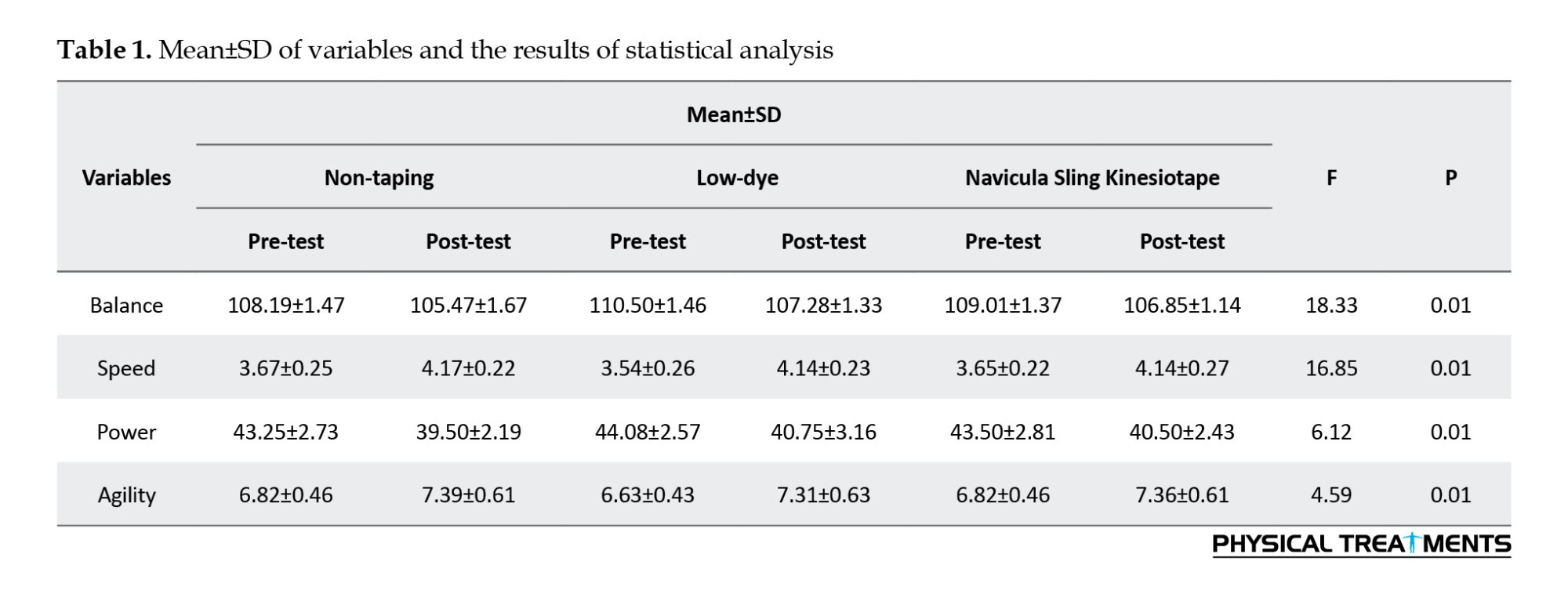
The Kolmogorov-Smirnov test was employed to verify the normal distribution of data, while the Levene’s test was employed to verify the homogeneity of variances. To examine how low-dye taping and navicular sling kinesiotape affect balance, power, speed, and agility under fatigued and non-fatigued conditions, we utilized an ANOVA (Table 1). Tukey’s test was employed to compare sports functions in different conditions and situations. The significance level was set at P<0.05, and the entire statistical analysis was done using SPSS software, version 25.
Results
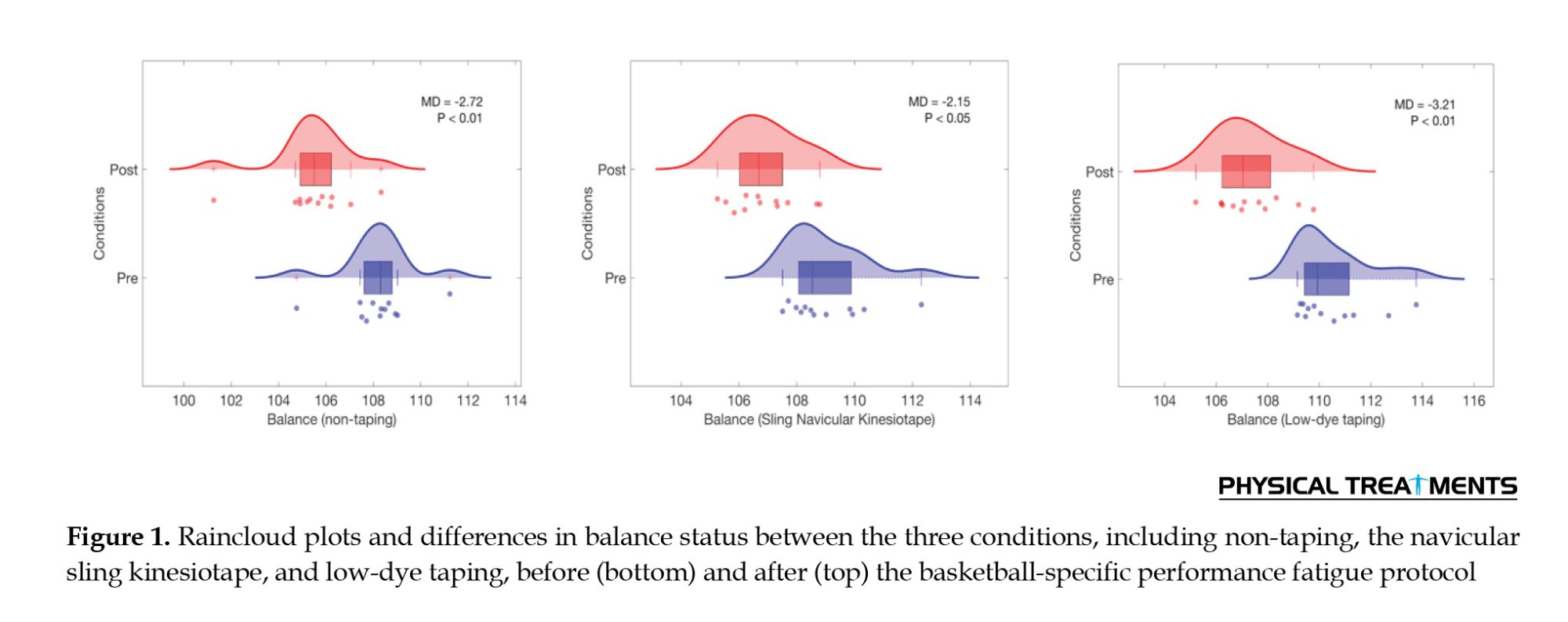
The Kolmogorov–Smirnov test (P<0.05) verified the normality of the data distribution. Although balance status decreased in fatigued condition with low-dye taping and navicular sling kinesiotape, this reduction was less than that observed in the non-taping condition. The low-dye taping led to significant improvements in balance status in non-fatigued conditions by 2.3 cm (P<0.01) and in fatigued conditions by 1.81 cm (P<0.01).In contrast, there was only a slight improvement in balance with navicular sling kinesiotape in both fatigued and non-fatigued conditions compared to the non-taping condition (Figure 1).
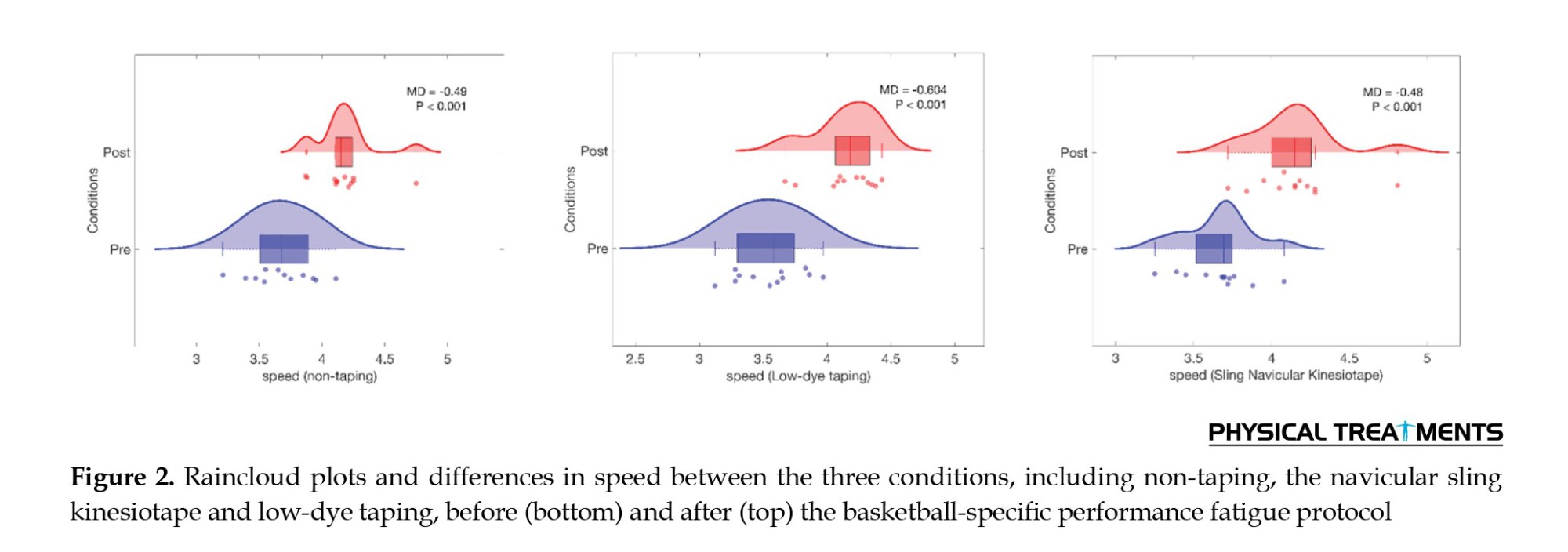
Tuky’s test showed that the basketball-specific performance fatigue protocol significantly increased the 20-meter speed record in different conditions compared to the non-fatigued condition. In other words, under fatigue conditions, there was a statistically significant increase of 0.49 seconds in speed records in the non-taping condition, 0.60 seconds in the low-dye taping condition, and 0.48 seconds in the navicular sling kinesiotape condition (P=0.01). Moreover, in the non-fatigued condition, the speed record reduced more in the low-dye taping condition by 0.13 seconds than in the navicular sling kinesiotape condition by 0.02 seconds (Figure 2).
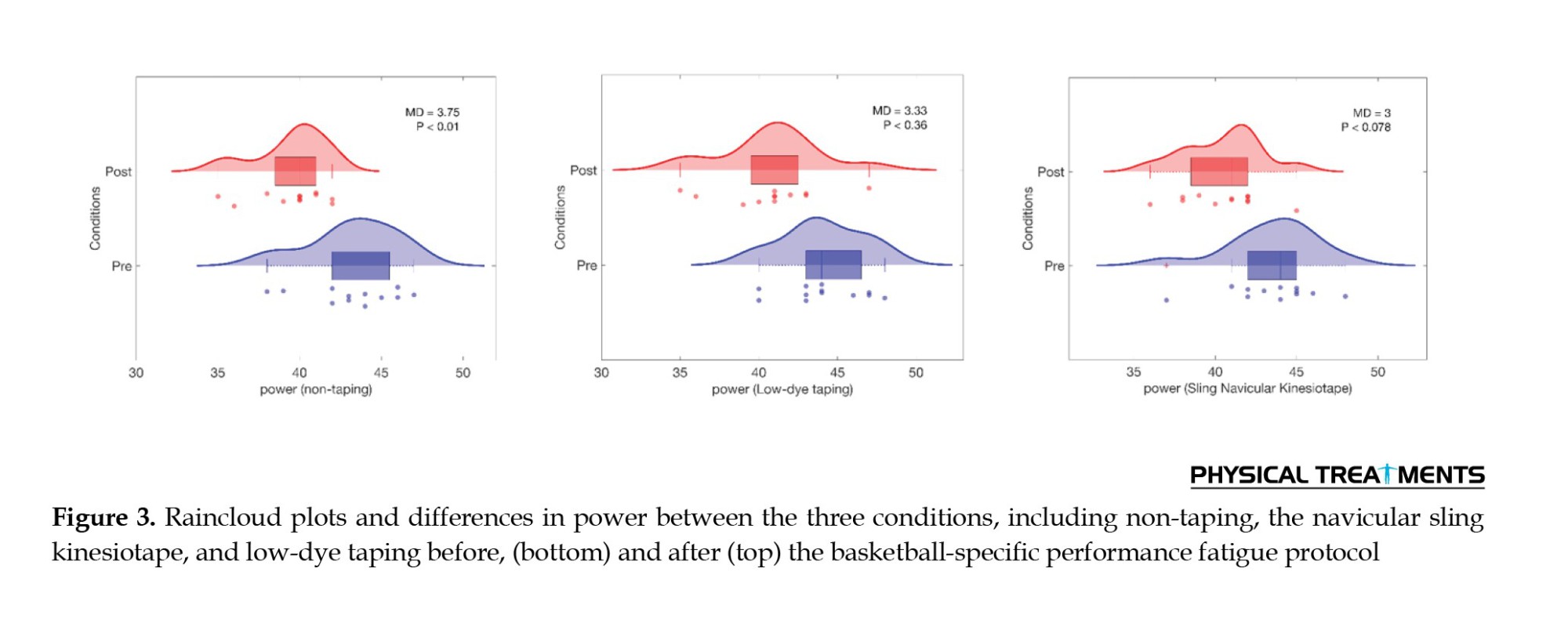
Power declined in all three categories when fatigued, but the non-taping condition showed the largest reduction of 3.75 cm (P=0.01). Furthermore, a slight improvement in power was observed with low-dye taping when compared to the navicular sling kinesiotape condition, although there was no significant improvement in power records in the non-fatigued condition (Figure 3).
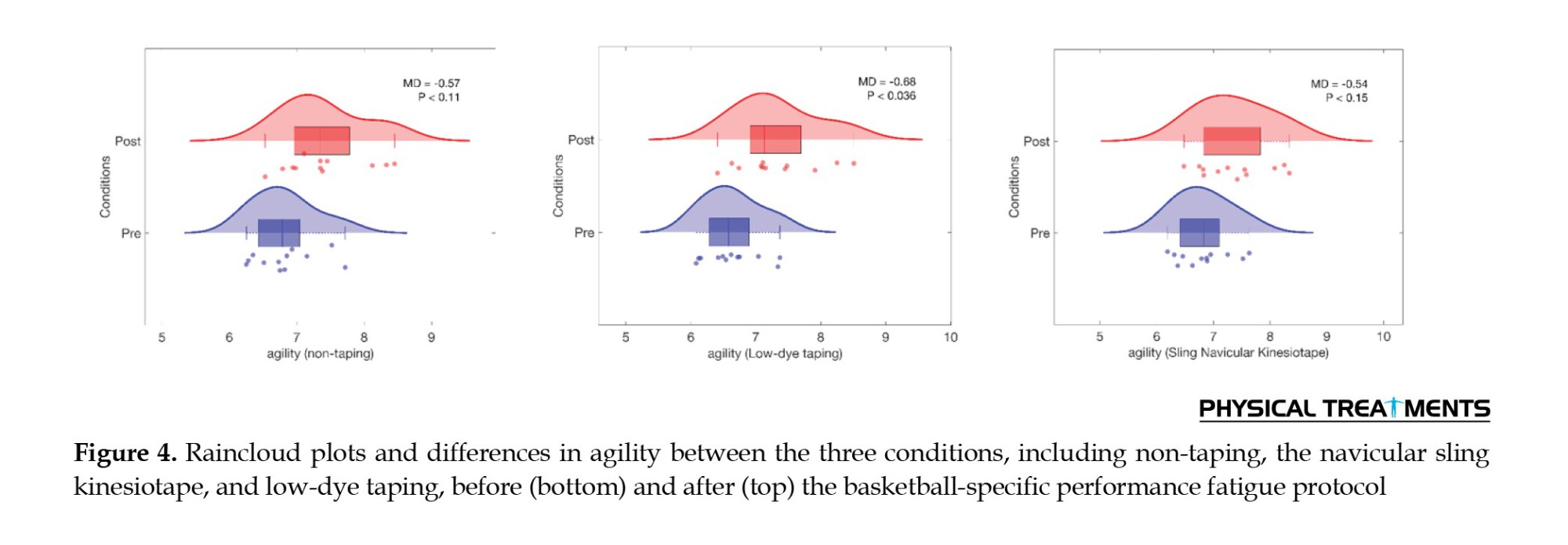
Tuky’s test conducted on agility revealed a significant increase in agility record in three types of conditions after the fatigued protocol, with a substantially greater improvement in the non-taping condition of 0.68 seconds (P=0.04) compared to the navicular sling kinesiotape and low-dye taping. In the non-fatigued condition, the agility record decreased by approximately 0.19 seconds with low-dye taping, while it did not change with the navicular sling kinesiotape (Figure 4).
Discussion
The primary objective of this study was to investigate how low-dye tape and navicular sling kinesiotape affect athletic performance in basketball players with flat feet when performing a basketball-specific fatigue protocol. The study’s findings demonstrated that, while fatigue conditions led to decreased performance, low-dye taping, and navicular sling kinesiotape resulted in less of a reduction in performance compared to non-taping conditions. Moreover, low-dye taping had a greater effect on flat feet and performance than navicular sling kinesiotape.
The foot plays a vital role in activities as one of the most significant lower extremity structures. One of its primary functions is to distribute body weight and maintain balance during activities [28]. Accordingly, any deficits in the legs, such as flat foot, can lead to imbalance and an increased risk of injuries, including plantar fasciitis, tibial stress fractures, anterior cruciate ligament rupture (ACLR), and back pain, as well as decreased performance [28]. Taping is one of the common intervention methods to reduce the impact of flat feet on performance. No study has examined whether low-dye tape and navicular sling kinesiotape affect performance and balance in basketball players with flat feet under fatigued and unfatigued conditions. Siu et al. showed that navicular sling kinesiotape improved the function of the posterior tibial muscle and modified flat feet during running [18]. The present findings align with those reported by Newell et al. indicating that low-dye taping had a greater impact on flat feet during activities. Moreover, navicular sling kinesiotape effectively raised the height of the navicular immediately after taping; however, the efficacy of this technique rapidly diminished after the initial 5 minutes of running [17].
Previous research has shown that fatigue conditions can have a negative impact balance, and there is a strong correlation between balance status and flat feet [1, 29]. Numerous disorders of the musculoskeletal and nervous systems in the lower extremities, like flat feet, can affect balance status, necessitating ongoing modifications to joint alignment and muscular activity [30]. An increase in the angle of heel valgus results from an increased rear angle, which disrupts balance. Muscle stretch angles and inactive components surrounding joints change as a result of heel misalignment. This misalignment causes erroneous signals to be sent from the foot to the central nervous system, which may impact balance [31].
In the present study, balance statues status was lower in the non-taping condition but improved with low-dye taping and then with navicular sling kinesiotape. This improvement may have been caused by changes in the structure of the foot following tape application. Dynamic tape has been shown in earlier studies to help improve the reduced dynamic balance status caused by flat feet [32]. The current study’s findings showed that, although balance status did decline under fatigued conditions, it did so to a lesser extent under low-dye taping compared to navicular sling kinesiotape when compared to non-taping conditions in basketball players with flat feet. These outcomes closely match those of earlier research [31, 32].
Having abnormalities in the legs, such as flat feet can cause a decrease in physical abilities [33]. Furthermore, fatigue can significantly impair an athlete’s performance by weakening stability and resulting in deficits in dynamic activities, like balance, speed, vertical jump, and agility [34]. One study showed that a fatigued protocol can negatively affect the kinematics and kinetics of running, leading to decreased speed performance [35]. Fatigue not only reduces power generation but also reduces acceleration and speed during functional movements, such as jumping [36]. A recent study by Ho et al. demonstrated that applying low-dye taping to basketball players with flat feet significantly enhances navicular height, gluteal activity during the eccentric phase, and explosive power, thereby reducing injury risk and improving sports performance, particularly strength and power factors [37].
Our findings suggest that athlete performance decreased following the implementation of a basketball-specific performance fatigue protocol, with further enhancements observed after the application of low-dye taping and navicular sling kinesiotape. These interventions mitigated the negative impact of flat feet on performance, aligning with previous research that indicates the positive effects of modifying flat feet with taping techniques [38]. The enhancements in performance factors, which are important components of basketball success, were anticipated with the use of low-dye taping and navicular sling kinesiotape, even after applying the basketball-specific performance fatigue protocol.
Conclusion
Among basketball players, flat feet appear to be the most prevalent type of postural deficit. These can negatively impact performance, cause imbalances, and increase the risk of injury. The findings of the study indicated that, despite the impact of fatigue on performance, low-dye taping and navicular sling kinesiotape had a less detrimental effect on performance than non-taping conditions. Additionally, low-dye taping had a stronger impact on flat feet and performance compared to navicular sling kinesiotape. These results emphasize the importance of using various strategies to modify flat feet and address the negative effects of flat feet on performance and balance.
To improve the arch of their feet, athletes are also recommended to use low-dye taping and navicular sling kinesiotape. This recommendation is based on the results of this study, which demonstrated that these tapes not only did not interfere with performance or balance but also served as helpful preventative strategies in situations where performance fatigue may occur. Future research should explore the effects of low-dye taping and Navigating Sling Kinesiotape on landing technique, as fatigue causes deficits in landing performance. Furthermore, it is recommended to use force plates to gain a deeper understanding of the forces and kinematics of landings. Additionally, future research should investigate the long-term effects of these taping techniques and include larger sample sizes for more robust findings.
Study limitations
There were certain limitations to this study. First, because force plates are more difficult for coaches and athletes to access, we assessed power using the Sargent test rather than force plates. Second, there was no comparison between the training and control groups. Finally, the sample size (12 participants) was small, making it difficult to generalize the findings to a broader population.
Ethical Considerations
Compliance with ethical guidelines
This study was approved by the Ethics Committee of University of Kurdistan, Sanandaj, Iran (Code: IR.UOK.REC.1403.012). The article adhered to ethical guidelines, such as obtaining permission to participate, maintaining the confidentiality of information, and allowing participants to withdraw at any time.
Funding
This study was exracted from master thesis of Hemn Mohammadi, approved by University of Kurdistan, Sanandaj, Iran.
Authors' contributions
All authors contributed equally to the conception and design of the study, data collection and analysis, interpretation of the results, and drafting of the manuscript. Each author approved the final version of the manuscript for submission.
Conflict of interest
The authors declared no conflict of interest.
Acknowledgments
All basketball players who participated in this research are greatly appreciated by the authors.
References
According to International Basketball Federation (FIBA), about 11% of the global sports community plays basketball, making it the second most popular sport worldwide [1, 2]. Success in basketball hinges on specific abilities, including strength, power, speed, and agility [3]. In this regard, some unique movements in basketball include defending against opponents’ movements and using skills, like agility, sidestepping, acceleration, blocking, and physical confrontation to maintain position, which is directly linked to the enhancement of jumping and landing, running at different speeds, and sudden changes in direction [3]. Additionally, professional basketball players are required to perform an average of 42 to 56 jumps during a game [2]. Although playing basketball increases strength, boosts the immune system, and improves body composition, the contact nature of the sport and the complexity of its demands also increase the risk of injury, which includes running, jumping, switching, and deceleration [4].
In basketball, multiple jumps and landings increase the risk of lower extremity injuries [4, 5]. More than half of all injuries to young basketball players are lower extremity injuries [6]. An analysis of 12,000 basketball injuries found that the ankle was the most common injury site, accounting for 22% (2,832 injuries), while the knee accounted for 18% (2,305 injuries) [4]. Female basketball players experience a rate of 13.8 injuries per 1000 hours of exposure, whereas male counterparts experience a rate of 14.8, with females experiencing more ankle injuries at 45% and males experiencing knee injuries at 51% [7]. The most common injury in basketball is a sprain, with the ankle being the most common site, usually occurring during contact mechanisms. In addition, athletes who practice more than four times a week have an almost twofold increased risk of injury compared to those who practice less frequently [7]. Investigating potential risks and biomechanical factors is crucial in light of these injury rates.
Since basketball is a weight-bearing sport, and the foot plays a significant role in the game, it may result in changes in foot anatomy [8]. Running and jumping, which are two crucial factors in basketball, increase the amount of bodyweight pressure in the forefoot and midfoot [8]. In this regard, one of the most common postural deficits among basketball players, accounting for around 22%, is flat foot [9, 10]. A flat foot results from a depression in the medial longitudinal arch and is a risk factor for injury in the foot [8]. The human movement chain is interconnected; thus, if one segment is weak, it can affect another segment as well [11]. For example, a study showed that National Basketball Association (NBA) players with larger legs and flat feet suffer from hallux valgus because flat foot is an important risk factor for hallux valgus [12]. It was also stated that flat foot is a risk factor for postural deficits and spinal injuries [10]. Flat foot reduces not only the vertical ground reaction force (VGRF), but also the time it takes to transfer the reaction force to the foot, which are risk factors for foot bone fractures and ankle sprains [13]. As flat feet appear to be the most common form of postural deficit in basketball players, the present study was conducted on basketball players with flat feet.
Various methods, including shoes, insoles, and taping, are used to modify flat feet in athletes [1, 14]. A study found that foot orthoses, a common treatment for flat foot, had limited effects [15]. Moreover, stretching exercises and continuous use of orthosis seem to reduce pain in people with flat feet, but they do not change the structure of a person’s foot [16]. The shape and height of the arch can be maintained by arch taping for athletes with pain or injury as a result of overpronation [17]. In this context, anti-pronation taping strengthens the transverse arch, increases static and dynamic balance, increases the internal longitudinal arch, and improves flat foot by reducing ankle pronation [18, 19]. Low-dye taping is highlighted as an effective method to increase the height of the navicular, increase explosive power, and reduce the risk of injury [5]. Navicular sling kinesiotape is also recognized as a valuable technique for lifting navicular height [20]. The low-dye tape and the navicular sling kinesiotape appear to effectively alter the foot pressure and raise the internal longitudinal foot arch [17].
While previous studies have examined the impact of these techniques only under normal and fatigue conditions, no research has investigated the impact of both low-dye taping and navicular sling kinesiotape simultaneously on performance in basketball-specific performance fatigue conditions until now. To this end, this study sought to explore how these techniques affect the most important performance factors (dynamic balance, speed, power, and agility), in basketball players with flat feet under conditions of performance fatigue. Understanding these effects is crucial for optimizing athletic performance and reducing the risk of injury, not only in basketball but also in other sports that require rapid movements and stability. We hypothesized that (1) both low-dye taping and navicular sling kinesiotape would modify flat feet and (2) improve performance in performance fatigue conditions.
Materials and Methods
Study design
This study used a randomized crossover design (repeated measure) according to the Declaration of Helsinki guidelines.
Participants
Twelve male professional basketball players (age: 22.91±2.39 years; years of experience: 6.75±1.81; weight: 93.83±18.95 kg; height: 190.83±9.35 cm, and Staheli Index: 0.94±0.03) were selected from 112 volunteered with flat foot (after screening). According to the sample size formula outlined in the study conducted by Charan and Biswas, a total of 12 participants were considered sufficient for this study [21]. The included sample was relatively homogeneous because only players from the basketball teams were recruited.
To be included, participants needed to have a score of 0.89 on their feet, no ankle problems, no lower body injuries in the past 12 months, and at least three years of basketball playing experience. The exclusion criteria included declining to participate in the fatigue protocol and experiencing acute injury during the study protocol. The participants were informed about all aspects of the study, including its procedures, benefits, goals, and potential issues. After providing personal, medical, and athletic background information, participants completed a 10-minute basketball-specific dynamic warm-up. The athletes were instructed to do the assessments (described in the assessment tests section) both before and after the performance fatigue program.
Assessment tests
Staheli index
To assess flat feet, the Staheli Index was employed, whose validity and reliability have been previously established [22]. This index is used to measure the ratio between the midfoot’s smallest length and the heel’s largest length. Normal values were considered Mean±SD, 0.89±0.44 [22]. The Staheli index could predict flatfoot with a high accuracy of 0.80 and a sensitivity of 81.8. [23].
Y balance test
Dynamic balance was evaluated using the Y balance test, which has previously been used to assess neuromuscular deficiencies, lower extremity injury risk factors, and the time it takes to return to sport, demonstrating strong reliability (ICC=0.71-0.88) [24]. The athlete’s leg length was measured to normalize the results after the test was repeated three times [24].
20-meter speed test
Speed was assessed using a 20-meter speed test, with prior research confirming the reliability of this method. The athlete was instructed to run quickly and powerfully toward the finish line while positioned behind the starting line. The duration, measured in seconds, was recorded using a chronometer, and the athlete’s score was noted as the time taken [25].
Sargent test
The Sargent test was used to assess lower extremity power, with the difference of two points recorded as the athlete’s jump score [24]. The athlete extended their arms and reached out to touch the marked wall before immediately jumping as high as possible to touch the highest point of the wall while bending their knees to a comfortable 90º angle. The test has a validity of 0.80 and a reliability of 0.93 [24].
Modified t-test
The modified t-test was employed to assess agility. This is a multifactorial analysis that considers several basketball-specific factors, including power, speed, and jumping [5] The assessment is carried out using four cons for the design and a stopwatch for recording the time. Behind the starting line, the athlete was instructed to run quickly and change directions by backpedaling, shuffling left and right, and sprinting forward [26]. The reliability of this test is >0.90 [26].
Treatments
Sling navicular kinesiotape
We used two-inch elastic tape for the navicular sling kinesiotape. Starting from the dorsal side of the foot, the tape was pushed laterally across the metatarsals and crossed over the fifth metatarsal. It continued under the foot on the plantar surface, moving toward the first metatarsal and emerging under the navicular. The tape stretched around the ankle, reaching the dorsum of the foot and crossing across the lateral malleolus. It then wrapped around the ankle and covered the medial malleolus before returning to the dorsum of the foot [17].
Low-dye taping
Low-dye taping is an effective technique for for altering pronation in flat feet and raising the height of the navicular. It is also used to enhance the explosive power of jumping activities. The jump pattern of basketball players with flat feet appears to be directly impacted by this taping technique [4]. To apply the tape, it should be placed on the skin above the side of the fifth metatarsophalangeal joint, wrapped around the heel, and finished on the side of the first metatarsophalangeal joint. The strips should initially be positioned toward the lateral anchor, then pushed medially over the arch, and finally extended to the medial dorsum. The strips should overlap by half and continue along the plantar portion of the foot, culminating at the metatarsal head near the metatarsophalangeal joints. To complete the plantar strips, another anchor strip should be placed, starting at the lateral part of the foot and applied similarly to the first anchor strip. Two additional anchor strips were then added. These strips should also overlap by half and be placed on the dorsal aspect of the foot. The strips should start on the medial dorsum and end at the anchor that covers the fifth metatarsal [17].
Basketball-specific performance fatigue protocol
Performance fatigue was induced by using a basketball-specific protocol. This protocol consists of three minutes of rest at 70% of maximum heart rate, followed by four stages of four minutes each, at 90 to 95% of maximum heart rate. This protocol is comparable to a basketball game in terms of duration, intensity, and movement patterns, and it can be used on a basketball court. Following an instruction from the examiner, the participant starts moving without the ball from cone one and runs towards cone two.
They then perform pivot movements toward cones three, four, five, and six, respectively, followed by short forward vertical jumps from cones six to seven. The participant then takes the ball from cone seven and dribbles in a zigzag pattern toward cones eight, nine, ten, eleven, and twelve before proceeding with a layup shot toward the basket. Subsequently, they release the ball, move outside the court behind cone thirteen, sprint toward cone fourteen at maximum speed, and then run backward toward cone one [1]. A Polar heart rate monitor is used to track the participants’ heart rates during the test. The level of fatigue was measured using the Borg scale, in which participants were asked to express their actual feelings about the activity they had just completed, and the results were scored using the Borg scale table [27]. If this score is less than 15, the fatigue protocol is carried out again [1].
Data analysis
The Kolmogorov-Smirnov test was employed to verify the normal distribution of data, while the Levene’s test was employed to verify the homogeneity of variances. To examine how low-dye taping and navicular sling kinesiotape affect balance, power, speed, and agility under fatigued and non-fatigued conditions, we utilized an ANOVA (Table 1). Tukey’s test was employed to compare sports functions in different conditions and situations. The significance level was set at P<0.05, and the entire statistical analysis was done using SPSS software, version 25.
Results
The Kolmogorov–Smirnov test (P<0.05) verified the normality of the data distribution. Although balance status decreased in fatigued condition with low-dye taping and navicular sling kinesiotape, this reduction was less than that observed in the non-taping condition. The low-dye taping led to significant improvements in balance status in non-fatigued conditions by 2.3 cm (P<0.01) and in fatigued conditions by 1.81 cm (P<0.01).In contrast, there was only a slight improvement in balance with navicular sling kinesiotape in both fatigued and non-fatigued conditions compared to the non-taping condition (Figure 1).
Tuky’s test showed that the basketball-specific performance fatigue protocol significantly increased the 20-meter speed record in different conditions compared to the non-fatigued condition. In other words, under fatigue conditions, there was a statistically significant increase of 0.49 seconds in speed records in the non-taping condition, 0.60 seconds in the low-dye taping condition, and 0.48 seconds in the navicular sling kinesiotape condition (P=0.01). Moreover, in the non-fatigued condition, the speed record reduced more in the low-dye taping condition by 0.13 seconds than in the navicular sling kinesiotape condition by 0.02 seconds (Figure 2).
Power declined in all three categories when fatigued, but the non-taping condition showed the largest reduction of 3.75 cm (P=0.01). Furthermore, a slight improvement in power was observed with low-dye taping when compared to the navicular sling kinesiotape condition, although there was no significant improvement in power records in the non-fatigued condition (Figure 3).
Tuky’s test conducted on agility revealed a significant increase in agility record in three types of conditions after the fatigued protocol, with a substantially greater improvement in the non-taping condition of 0.68 seconds (P=0.04) compared to the navicular sling kinesiotape and low-dye taping. In the non-fatigued condition, the agility record decreased by approximately 0.19 seconds with low-dye taping, while it did not change with the navicular sling kinesiotape (Figure 4).
Discussion
The primary objective of this study was to investigate how low-dye tape and navicular sling kinesiotape affect athletic performance in basketball players with flat feet when performing a basketball-specific fatigue protocol. The study’s findings demonstrated that, while fatigue conditions led to decreased performance, low-dye taping, and navicular sling kinesiotape resulted in less of a reduction in performance compared to non-taping conditions. Moreover, low-dye taping had a greater effect on flat feet and performance than navicular sling kinesiotape.
The foot plays a vital role in activities as one of the most significant lower extremity structures. One of its primary functions is to distribute body weight and maintain balance during activities [28]. Accordingly, any deficits in the legs, such as flat foot, can lead to imbalance and an increased risk of injuries, including plantar fasciitis, tibial stress fractures, anterior cruciate ligament rupture (ACLR), and back pain, as well as decreased performance [28]. Taping is one of the common intervention methods to reduce the impact of flat feet on performance. No study has examined whether low-dye tape and navicular sling kinesiotape affect performance and balance in basketball players with flat feet under fatigued and unfatigued conditions. Siu et al. showed that navicular sling kinesiotape improved the function of the posterior tibial muscle and modified flat feet during running [18]. The present findings align with those reported by Newell et al. indicating that low-dye taping had a greater impact on flat feet during activities. Moreover, navicular sling kinesiotape effectively raised the height of the navicular immediately after taping; however, the efficacy of this technique rapidly diminished after the initial 5 minutes of running [17].
Previous research has shown that fatigue conditions can have a negative impact balance, and there is a strong correlation between balance status and flat feet [1, 29]. Numerous disorders of the musculoskeletal and nervous systems in the lower extremities, like flat feet, can affect balance status, necessitating ongoing modifications to joint alignment and muscular activity [30]. An increase in the angle of heel valgus results from an increased rear angle, which disrupts balance. Muscle stretch angles and inactive components surrounding joints change as a result of heel misalignment. This misalignment causes erroneous signals to be sent from the foot to the central nervous system, which may impact balance [31].
In the present study, balance statues status was lower in the non-taping condition but improved with low-dye taping and then with navicular sling kinesiotape. This improvement may have been caused by changes in the structure of the foot following tape application. Dynamic tape has been shown in earlier studies to help improve the reduced dynamic balance status caused by flat feet [32]. The current study’s findings showed that, although balance status did decline under fatigued conditions, it did so to a lesser extent under low-dye taping compared to navicular sling kinesiotape when compared to non-taping conditions in basketball players with flat feet. These outcomes closely match those of earlier research [31, 32].
Having abnormalities in the legs, such as flat feet can cause a decrease in physical abilities [33]. Furthermore, fatigue can significantly impair an athlete’s performance by weakening stability and resulting in deficits in dynamic activities, like balance, speed, vertical jump, and agility [34]. One study showed that a fatigued protocol can negatively affect the kinematics and kinetics of running, leading to decreased speed performance [35]. Fatigue not only reduces power generation but also reduces acceleration and speed during functional movements, such as jumping [36]. A recent study by Ho et al. demonstrated that applying low-dye taping to basketball players with flat feet significantly enhances navicular height, gluteal activity during the eccentric phase, and explosive power, thereby reducing injury risk and improving sports performance, particularly strength and power factors [37].
Our findings suggest that athlete performance decreased following the implementation of a basketball-specific performance fatigue protocol, with further enhancements observed after the application of low-dye taping and navicular sling kinesiotape. These interventions mitigated the negative impact of flat feet on performance, aligning with previous research that indicates the positive effects of modifying flat feet with taping techniques [38]. The enhancements in performance factors, which are important components of basketball success, were anticipated with the use of low-dye taping and navicular sling kinesiotape, even after applying the basketball-specific performance fatigue protocol.
Conclusion
Among basketball players, flat feet appear to be the most prevalent type of postural deficit. These can negatively impact performance, cause imbalances, and increase the risk of injury. The findings of the study indicated that, despite the impact of fatigue on performance, low-dye taping and navicular sling kinesiotape had a less detrimental effect on performance than non-taping conditions. Additionally, low-dye taping had a stronger impact on flat feet and performance compared to navicular sling kinesiotape. These results emphasize the importance of using various strategies to modify flat feet and address the negative effects of flat feet on performance and balance.
To improve the arch of their feet, athletes are also recommended to use low-dye taping and navicular sling kinesiotape. This recommendation is based on the results of this study, which demonstrated that these tapes not only did not interfere with performance or balance but also served as helpful preventative strategies in situations where performance fatigue may occur. Future research should explore the effects of low-dye taping and Navigating Sling Kinesiotape on landing technique, as fatigue causes deficits in landing performance. Furthermore, it is recommended to use force plates to gain a deeper understanding of the forces and kinematics of landings. Additionally, future research should investigate the long-term effects of these taping techniques and include larger sample sizes for more robust findings.
Study limitations
There were certain limitations to this study. First, because force plates are more difficult for coaches and athletes to access, we assessed power using the Sargent test rather than force plates. Second, there was no comparison between the training and control groups. Finally, the sample size (12 participants) was small, making it difficult to generalize the findings to a broader population.
Ethical Considerations
Compliance with ethical guidelines
This study was approved by the Ethics Committee of University of Kurdistan, Sanandaj, Iran (Code: IR.UOK.REC.1403.012). The article adhered to ethical guidelines, such as obtaining permission to participate, maintaining the confidentiality of information, and allowing participants to withdraw at any time.
Funding
This study was exracted from master thesis of Hemn Mohammadi, approved by University of Kurdistan, Sanandaj, Iran.
Authors' contributions
All authors contributed equally to the conception and design of the study, data collection and analysis, interpretation of the results, and drafting of the manuscript. Each author approved the final version of the manuscript for submission.
Conflict of interest
The authors declared no conflict of interest.
Acknowledgments
All basketball players who participated in this research are greatly appreciated by the authors.
References
- Naderi S, Naserpour H, Mohammadi-Pour F, Amir-Seyfaddini M. [A comparative study on the effects of functional and non-functional fatigue protocols on dynamic balance of amateur basketball players (Persian)]. Journal of Sport Biomechanics. 2019; 5(3):168-77. [DOI:10.32598/biomechanics.5.3.4]
- Morrison M, Martin DT, Talpey S, Scanlan AT, Delaney J, Halson SL, et al. A systematic review on fitness testing in adult male basketball players: Tests adopted, characteristics reported and recommendations for practice. Sports Medicine. 2022; 52(7):1491-532. [DOI:10.1007/s40279-021-01626-3] [PMID]
- Puente C, Abián-Vicén J, Areces F, López R, Del Coso J. Physical and physiological demands of experienced male basketball players during a competitive game. Journal of Strength and Conditioning Research. 2017; 31(4):956-62. [DOI:10.1519/JSC.0000000000001577] [PMID]
- Andreoli CV, Chiaramonti BC, Buriel E, Pochini AC, Ejnisman B, Cohen M. Epidemiology of sports injuries in basketball: Integrative systematic review. BMJ Open Sport & Exercise Medicine. 2018; 4(1):e000468. [DOI:10.1136/bmjsem-2018-000468] [PMID]
- Ghobadinezhad S, Hosseini SH, Norasteh AA. The effect of progressive jump landing exercises with injury prevention approach on the performance of male basketball players with knee valgus defect. Irtiqa Imini Pishgiri Masdumiyat. 2022; 10(1):86-73. [DOI:10.22037/iipm.v10i1.36193]
- Aenumulapalli A, Kulkarni MM, Gandotra AR. Prevalence of flexible flat foot in adults: A cross-sectional study. Journal of Clinical and Diagnostic Research. 2017; 11(6):AC17-20. [DOI:10.7860/JCDR/2017/26566.10059] [PMID]
- Owoeye OBA, Ghali B, Befus K, Stilling C, Hogg A, Choi J, et al. Epidemiology of all-complaint injuries in youth basketball. Scandinavian Journal of Medicine & Science in Sports. 2020; 30(12):2466-76. [DOI:10.1111/sms.13813] [PMID]
- Primal D, Kusumaningtyas S, Ibrahim EI. Pes Planus Plantaris (Flat Foot) Decreases Postural Stability of Basketball Student-athletes through Ground Reaction Force Vector (vGRF). Proceedings of the 10th International Conference on Sport Sciences Research and Technology Support icSPORTS - Volume 1. 2022; 143-51. [DOI:10.5220/0011573500003321]
- Bhosale N, Nandala P. Prevalance of flexible flat foot in athletes. Multi-Disciplinary Journal. 2021; 1(1):1-13. [Link]
- Puzovic V, Rotim K, Jurisic V, Samardzic M, Zivkovic B, Savic A, et al. The Prevalence of Spine Deformities and Flat Feet among 10-12 Year Old Children Who Train Basketball--Cross-Sectional Study. Collegium Antropologicum. 2015; 39(3):625-9. [Link]
- Rad NF, Alimoradi M, Antohe B, Uysal HŞ, Korkmaz S, Relph N, et al. Modelling of ankle joint range of motion and landing quality scores in female soccer players with quantile regression approach. PLoS One. 2025; 20(6):e0325180. [PMID]
- Mann R. B:union: deformity in elite athletes. In: Porter DA, Schon LC, editors. Baxter’s The Foot and Ankle in Sport. St. Louis: Mosby, Inc; 2007. [DOI:10.1016/B978-032302358-0.10019-3]
- Jahani MR, Jalalvand A, Soltani N, Kaki K. [Comparison of ground reaction forces and the amount of load introduced during crossover landing in people with flat foot and healthy individuals (Persian)]. Journal of Health Promotion Management. 2020; 9(4):33-44. [Link]
- Buldt AK, Allan JJ, Landorf KB, Menz HB. The relationship between foot posture and plantar pressure during walking in adults: A systematic review. Gait & Posture. 2018; 62:56-67. [DOI:10.1016/j.gaitpost.2018.02.026] [PMID]
- Huang C, Chen LY, Liao YH, Masodsai K, Lin YY. Effects of the short-foot exercise on foot alignment and muscle hypertrophy in flatfoot individuals: A meta-analysis. International Journal of Environmental Research and Public Health. 2022; 19(19):11994. [DOI:10.3390/ijerph191911994] [PMID]
- Hoang NT, Chen S, Chou LW. The impact of foot orthoses and exercises on pain and navicular drop for adult flatfoot: A network meta-analysis. International Journal of Environmental Research and Public Health. 2021; 18(15):8063. [DOI:10.3390/ijerph18158063] [PMID]
- Newell T, Simon J, Docherty CL. Arch-taping techniques for altering navicular height and plantar pressures during activity. Journal of Athletic Training. 2015; 50(8):825-32. [DOI:10.4085/1062-6050-50.5.05] [PMID]
- Siu WS, Shih YF, Lin HC. Effects of Kinesio tape on supporting medial foot arch in runners with functional flatfoot: A preliminary study. Research in Sports Medicine. 2020; 28(2):168-80. [DOI:10.1080/15438627.2019.1638258] [PMID]
- Koh HLA, Lin WH, Kong PW. Comfort and ground reaction forces in flat-footed female runners: Comparison of Low-Dye Taping versus Sham Taping. Journal of Sports Science & Medicine. 2020; 19(3):620-6. [PMID]
- Tang M, Wang L, You Y, Li J, Hu X. Effects of taping techniques on arch deformation in adults with pes planus: A meta-analysis. Plos One. 2021; 16(7):e0253567. [DOI:10.1371/journal.pone.0253567] [PMID]
- Charan J, Biswas T. How to calculate sample size for different study designs in medical research? Indian Journal of Psychological Medicine. 2013; 35(2):121-6. [DOI:10.4103/0253-7176.116232] [PMID]
- Onodera AN, Sacco IC, Morioka EH, Souza PS, de Sá MR, Amadio AC. What is the best method for child longitudinal plantar arch assessment and when does arch maturation occur? The Foot. 2008; 18(3):142-9. [DOI:10.1016/j.foot.2008.03.003] [PMID]
- Pita-Fernández S, González-Martín C, Seoane-Pillado T, López-Calviño B, Pértega-Díaz S, Gil-Guillén V. Validity of footprint analysis to determine flatfoot using clinical diagnosis as the gold standard in a random sample aged 40 years and older. Journal of Epidemiology. 2015; 25(2):148-54. [DOI:10.2188/jea.JE20140082] [PMID]
- Mohammadi H, Rad NF, Khosravani M, Adibhesami N, Sarvestan J. Core strength, dynamic balance and performance enhancement in female athletes with ligament dominance in response to sports-specific SportsMetrics neuromuscular training programs. Sport Sciences for Health. 2023; 19(4):1381-9. [DOI:10.1007/s11332-023-01114-3]
- Eler N, Acar H. The effects of the rope jump training program in physical education lessons on strength, speed and VO 2 Max in Children. Journal of Educational Research. 2018; 6(2):340-5. [DOI:10.13189/ujer.2018.060217]
- Sassi RH, Dardouri W, Yahmed MH, Gmada N, Mahfoudhi ME, Gharbi Z. Relative and absolute reliability of a modified agility T-test and its relationship with vertical jump and straight sprint. The Journal of Strength & Conditioning Research. 2009; 23(6):1644-51. [DOI:10.1519/JSC.0b013e3181b425d2] [PMID]
- Jo D, Bilodeau M. Rating of perceived exertion (RPE) in studies of fatigue-induced postural control alterations in healthy adults: Scoping review of quantitative evidence. Gait & Posture. 2021; 90:167-78. [DOI:10.1016/j.gaitpost.2021.08.015] [PMID]
- Rauf U, Adnan M, Sadiq N. Comparison of dynamic balance between flat feet and normal athletes. International Journal of Natural Medicine and Health Sciences. 2022; 2(1):56-60. [DOI:10.52461/ijnms.v2i1.1240]
- Güler Ö, Aras D, Akça F, Bianco A, Lavanco G, Paoli A, et al. Effects of aerobic and anaerobic fatigue exercises on postural control and recovery time in female soccer players. International Journal of Environmental Research and Public Health. 2020; 17(17):6273. [DOI:10.3390/ijerph17176273] [PMID]
- Ali MM, Mohamed MS. Dynamic postural balance in subjects with and without flat foot. Bulletin of Faculty of Physical Therapy. 2011; 16(1):7-11. [Link]
- Soni M, Joshi M, Kulkarni M. Effect of flat feet on static and dynamic balance in adults. Indian Journal of Physiotherapy and Occupational Therapy - An International Journal. 2022; 16(1):76-85. [DOI:10.37506/ijpot.v16i1.17778]
- Lim OB, Park SY. Comparison of the effects of barefoot, kinesio tape, and dynamic tape on static and dynamic balance in subjects with asymptomatic flexible. Physical Therapy Korea. 2020; 27(1):78-86. [DOI:10.12674/ptk.2020.27.1.78]
- Febriyanti I, Setijono H, Wijaya FJ, Kusuma ID. Foot health and physical fitness: investigating the interplay among flat feet, body balance, and performance in junior high school students. Pedagogy of Physical Culture and Sports. 2024; 28(3):168-74. [DOI:10.15561/26649837.2024.0301]
- Bujas P, Maciejczyk M, Pałka T, Czerwińska-Ledwig O, Piotrowska A, Jaworski J, et al. Acute effects of combined hypoxia and fatigue on balance in young men. Applied Sciences. 2024; 14(2):568. [DOI:10.3390/app14020568]
- Romero V, Lahti J, Castaño Zambudio A, Mendiguchia J, Jiménez Reyes P, Morin JB. Effects of Fatigue Induced by Repeated Sprints on Sprint Biomechanics in Football Players: Should We Look at the Group or the Individual? International Journal of Environmental Research and Public Health. 2022; 19(22):14643. [DOI:10.3390/ijerph192214643] [PMID]
- Cooper CN, Dabbs NC, Davis J, Sauls NM. Effects of lower-body muscular fatigue on vertical jump and balance performance. The Journal of Strength & Conditioning Research. 2020; 34(10):2903-10. [DOI:10.1519/JSC.0000000000002882] [PMID]
- Ho IMK, Weldon A, Yeung NCY, Luk JTC. Low-dye taping may enhance physical performance and muscle activation in basketball players with overpronated feet. Plos One. 2022; 17(10):e0275178. [DOI:10.1371/journal.pone.0275178] [PMID]
- Yoo KT. Effects of modified low-dye taping and foot intrinsic muscle strengthening exercise on plantar pressure in flexible flat foot. Journal of International Academy of Physical Therapy Research (JIAPTR). 2017; 8(3):1235-41. [Link]
Type of Study: Research |
Subject:
Sport injury and corrective exercises
Received: 2025/06/12 | Accepted: 2025/10/7 | Published: 2026/01/1
Received: 2025/06/12 | Accepted: 2025/10/7 | Published: 2026/01/1
Send email to the article author
| Rights and permissions | |
 |
This work is licensed under a Creative Commons Attribution-NonCommercial 4.0 International License. |

This is an open access article distributed under the terms of the Creative Commons Attribution-NonCommercial 4.0 (CC-By-NC 4.0), which permits use, distribution, and reproduction in any medium, provided the original work is properly cited and is not used for commercial purposes.
Contact Information