Wed, Aug 19, 2026
Volume 16, Issue 3 (Summer 2026)
PTJ 2026, 16(3): 243-254 |
Back to browse issues page


Download citation:
BibTeX | RIS | EndNote | Medlars | ProCite | Reference Manager | RefWorks
Send citation to:


BibTeX | RIS | EndNote | Medlars | ProCite | Reference Manager | RefWorks
Send citation to:
Hamzeh L, Jafarnejadgero A, Piri H, Tabatabai Ghomsheh F. Impact of Fatigue on Lower-limb Biomechanics in Individuals With Dynamic Knee Valgus: A Meta-analysis. PTJ 2026; 16 (3) :243-254
URL: http://ptj.uswr.ac.ir/article-1-737-en.html
URL: http://ptj.uswr.ac.ir/article-1-737-en.html


1- Department of Sports Biomechanics, CT.C., Islamic Azad University, Tehran, Iran.
2- Department of Sport Biomechanics, Faculty of Educational Sciences and Psychology, University of Mohaghegh Ardabili, Ardabil, Iran.
3- Department of Corrective Exercise and Sport Injury, Faculty of Physical Education and Sport Sciences, Allameh Tabataba’i University, Tehran, Iran.
4- Department of Ergonomics, Neurorehabilitation Research Center, Faculty of Rehabilitation Sciences, University of Social Welfare and Rehabilitation Sciences, Tehran, Iran.
2- Department of Sport Biomechanics, Faculty of Educational Sciences and Psychology, University of Mohaghegh Ardabili, Ardabil, Iran.
3- Department of Corrective Exercise and Sport Injury, Faculty of Physical Education and Sport Sciences, Allameh Tabataba’i University, Tehran, Iran.
4- Department of Ergonomics, Neurorehabilitation Research Center, Faculty of Rehabilitation Sciences, University of Social Welfare and Rehabilitation Sciences, Tehran, Iran.
Full-Text [PDF 1256 kb]
(2505 Downloads)
| Abstract (HTML) (2198 Views)
Full-Text: (27 Views)
Introduction
Dynamic knee valgus (DKV) is a distinct lower-limb motion pattern characterized by several factors, including femoral adduction and inward rotation, knee abduction, forward movement of the tibia, outward rotation of the tibia, and ankle eversion [1]. This movement pattern is distinguished by a medial shift of the knee that extends beyond the alignment of the foot and thigh, indicating a valgus knee posture [2]. Therefore, evaluating the factors affecting DKV can increase our knowledge of preventing sports injuries.
DKV alters lower limb kinematics, leading to abnormal knee joint angles and compensatory movements at the hip and ankle, which can further disrupt normal biomechanics [3, 4]. The altered alignment associated with DKV increases ground reaction forces (GRFs) transmitted through the lower extremities, heightening stress on the knee joint and potentially contributing to overuse injuries [5, 6]. Additionally, DKV often results in reduced knee flexion during landing tasks, diminishing the knee’s natural shock-absorbing capacity and increasing the risk of injury during high-impact activities [7]. Research, including video analyses of athletes during competitive games and cadaveric studies, highlights the significance of knee valgus in the mechanism of anterior cruciate ligament (ACL) trauma [3, 8]. The condition also influences muscle activation patterns, leading to altered recruitment of stabilizing muscles, such as the quadriceps, hamstrings, and gluteal muscles, which can create imbalances and decrease knee joint stability [9]. This increased valgus moment at the knee, coupled with the biomechanical inefficiencies caused by DKV, is closely linked to a heightened risk of ACL injuries [6] and other injuries, such as meniscal tears and patellar tendinopathy, due to abnormal loading patterns.
Fatigue is a critical factor that significantly affects DKV during sports and landing tasks [10]. As fatigue accumulates, neuromuscular control and strength decline, which can exacerbate the inward collapse of the knee joint [11]. This deterioration in muscular function leads to altered lower limb kinematics, characterized by increased knee valgus angles [12]. Specifically, fatigued athletes may exhibit reduced ability to maintain proper knee alignment and stability, resulting in compensatory movements at the hip and ankle that further disrupt normal biomechanics [13].
Moreover, fatigue influences muscle activation patterns, often leading to insufficient recruitment of key stabilizing muscles, such as the gluteals and quadriceps [14]. This insufficient activation can increase the valgus moment at the knee, further amplifying the risk of injury [15]. The effects of fatigue are particularly pronounced during high-impact activities, where the ability to absorb shock and maintain optimal knee flexion is compromised [16]. Consequently, the combination of fatigue and DKV not only heightens the risk of ACL injuries but also predisposes athletes to other overuse injuries [17]. Consequently, comprehending the relationship between fatigue and DKV is crucial for developing effective training and rehabilitation strategies to improve performance and reduce the risk of injury in athletes.
Findings from review studies indicate that DKV considerably influences kinetic and kinematic parameters [3, 18]. Furthermore, the findings of these studies suggest that fatigue has a notable effect on kinematic and kinetic factors, thereby increasing injury incidence [19, 20]. However, no review has directly examined how fatigue impacts individuals with DKV. Thus, this review aimed to explore the effects of fatigue on lower-limb mechanics in individuals with DKV.
Existing research on DKV has established that it significantly influences kinetic and kinematic parameters, indicating a clear link between DKV and altered biomechanics [3, 18]. However, while findings from review studies suggest that fatigue also exerts a notable effect on these parameters, leading to an increased incidence of injuries [19, 20], a critical gap remains in the literature. Specifically, no review has directly examined the interplay between fatigue and DKV in individuals, leaving a crucial aspect of this relationship unexplored. This study is necessary to fill this gap by providing a comprehensive analysis of how fatigue impacts lower-limb mechanics in individuals with DKV. Understanding this interaction is vital for several reasons. First, it can elucidate the mechanisms by which fatigue exacerbates the risks associated with DKV, potentially leading to targeted interventions for injury prevention. Second, by focusing specifically on individuals with DKV, this review can inform clinical practices and rehabilitation strategies tailored to this population. Overall, this investigation is essential for advancing our knowledge of the biomechanical implications of fatigue in DKV, ultimately contributing to enhanced athlete safety and performance. Thus, this systematic review aims to examine how fatigue affects lower-limb mechanics in individuals with DKV.
Materials and Methods
This systematic review was conducted in accordance with the preferred reporting items for systematic reviews and meta-analyses (PRISMA) guidelines to ensure transparency and rigor in reporting [21].
Search strategy
We conducted a systematic search of Scopus, Web of Science (WoS), and PubMed from the database’s inception until January 5, 2025. Initially, keywords were extracted from Medical Subject Headings (MeSH) descriptors and subsequently refined to guarantee the inclusion of all pertinent studies. Google Scholar was utilized to broaden the search for relevant publications across multiple platforms. Following the selection process, we manually examined the references of the selected studies to identify any missed citations.
Search keywords
The digital repositories were explored using various keyword groupings, as follows: (1) “Dynamic knee valgus” OR “knee abduction” OR “knee kinetics” OR “frontal plane projection angle” OR “knee biomechanics” OR “valgus alignment” OR “valgus knee deformity”; (2) Fatigue OR “neuromuscular fatigue” OR “muscular exhaustion” OR “systemic fatigue” OR exertion, OR “physical strain” and (3) Biomechanics OR kinematics OR “counter-movement jump” OR “landing task” OR landing OR “lower extremit” OR “lower limb” OR “lower-limb” OR “lower-extremit”.
Eligibility criteria
The inclusion criteria were as follows: 1. Study population: participants with DKV (with any age range, with both genders); 2. Intervention: fatigue assessment protocol; 3. Comparison: fatigue protocol versus non-fatigue protocol; 4. Outcomes: Kinetic or kinematic assessments; 5. Study design: pre- and post-fatigue protocol investigations; 6. Language: peer-reviewed publications available in English.
Two independent reviewers, Leila Hamzeh and Amirali Jafarnejadgero, conducted the search and then individually screened the titles and abstracts against the established criteria. Any differences in opinion were addressed through discussion. Also, the supervisor author took the initiative to address these discrepancies [22].
Data extraction
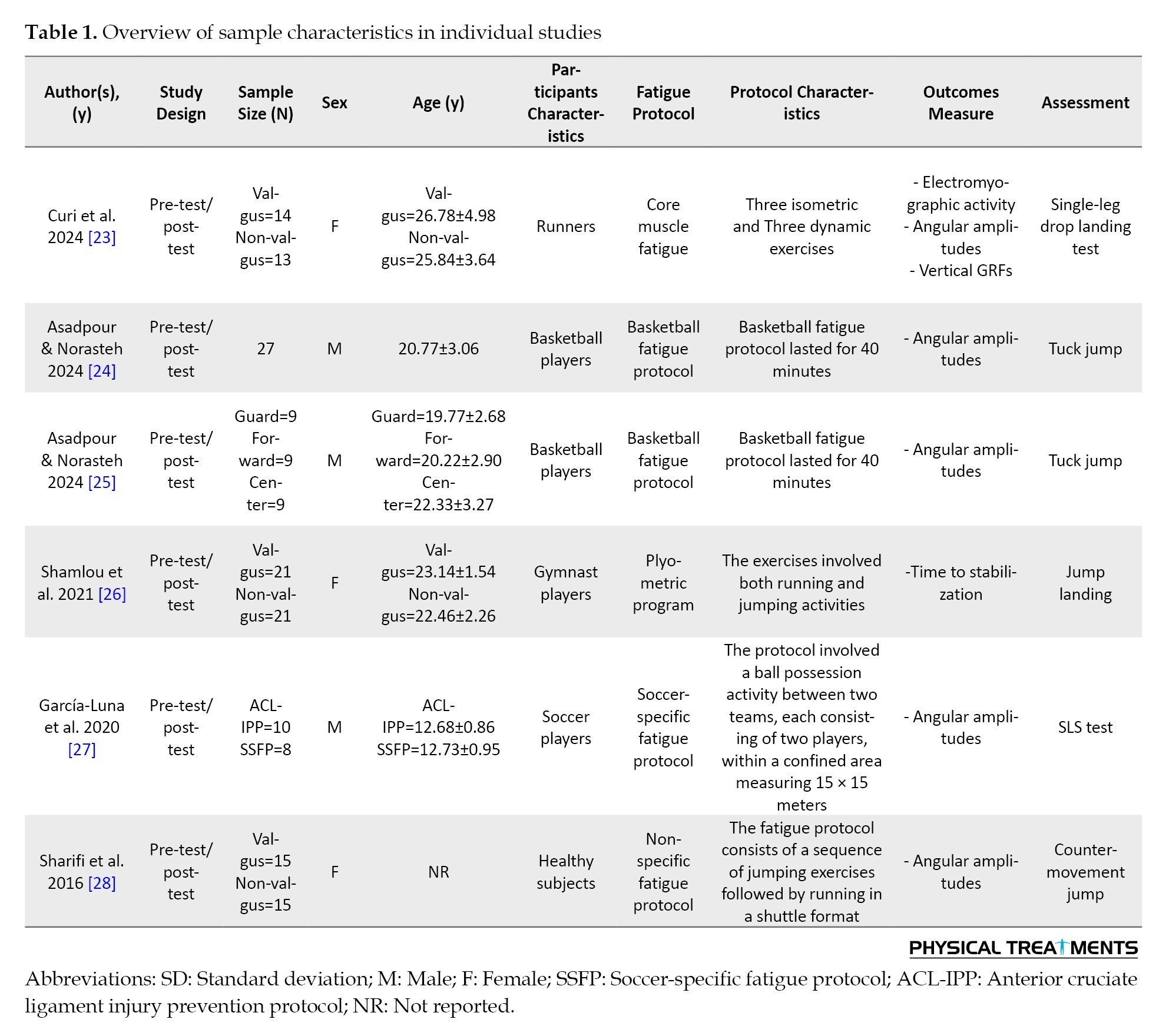
The study data were independently collected by researchers (Leila Hamzeh and Amirali Jafarnejadgero) based on several criteria, including the lead author’s name, participant information, assessment instruments, primary outcome measures, and an overall evaluation of the study’s quality (Table 1).
Quality of evidence
Both reviewers assessed the risk of bias utilizing the Newcastle-Ottawa scale (NOS). Additionally, a checklist created by Herzog and Álvarez-Pasquin [29] for cross-sectional studies was utilized. The NOS evaluates the risk of bias by awarding star ratings for each criterion fulfilled, with a total possible score of ten stars distributed as follows: five stars for selection, three stars for comparability, and two stars for outcomes [30]. Each star signifies a reduced risk of bias for that specific criterion. According to Herzog and Álvarez-Pasquin [29], studies were classified by quality as follows: unsatisfactory (0–4 stars), satisfactory (5–6 stars), good (7–8 stars), and very good (9–10 stars). Studies deemed low quality were excluded from the comprehensive analysis in accordance with the NOS checklist guidelines. The creators of the NOS confirmed its face and criterion validity, as well as its inter-rater reliability [31-33].
Statistical analyses
Heterogeneity was evaluated using the I² index, interpreted as follows: 0–30% indicating no heterogeneity; 30–50% indicating a small degree of heterogeneity; 50–75% indicating moderate heterogeneity; and 75–100% indicating substantial heterogeneity. As a result, both fixed and random-effects models were employed to analyze variation among studies in this review. A random-effects model was applied when I² values surpassed 50% [34]. Hedges’ g effect size was applied to quantify the effect of fatigue [35]. In addition, Egger’s regression analysis was performed to assess publication bias [36, 37]. Ultimately, statistical calculations were performed using Comprehensive Meta-Analysis software version 2.0 (Biostat Inc., Englewood, NJ).
Results
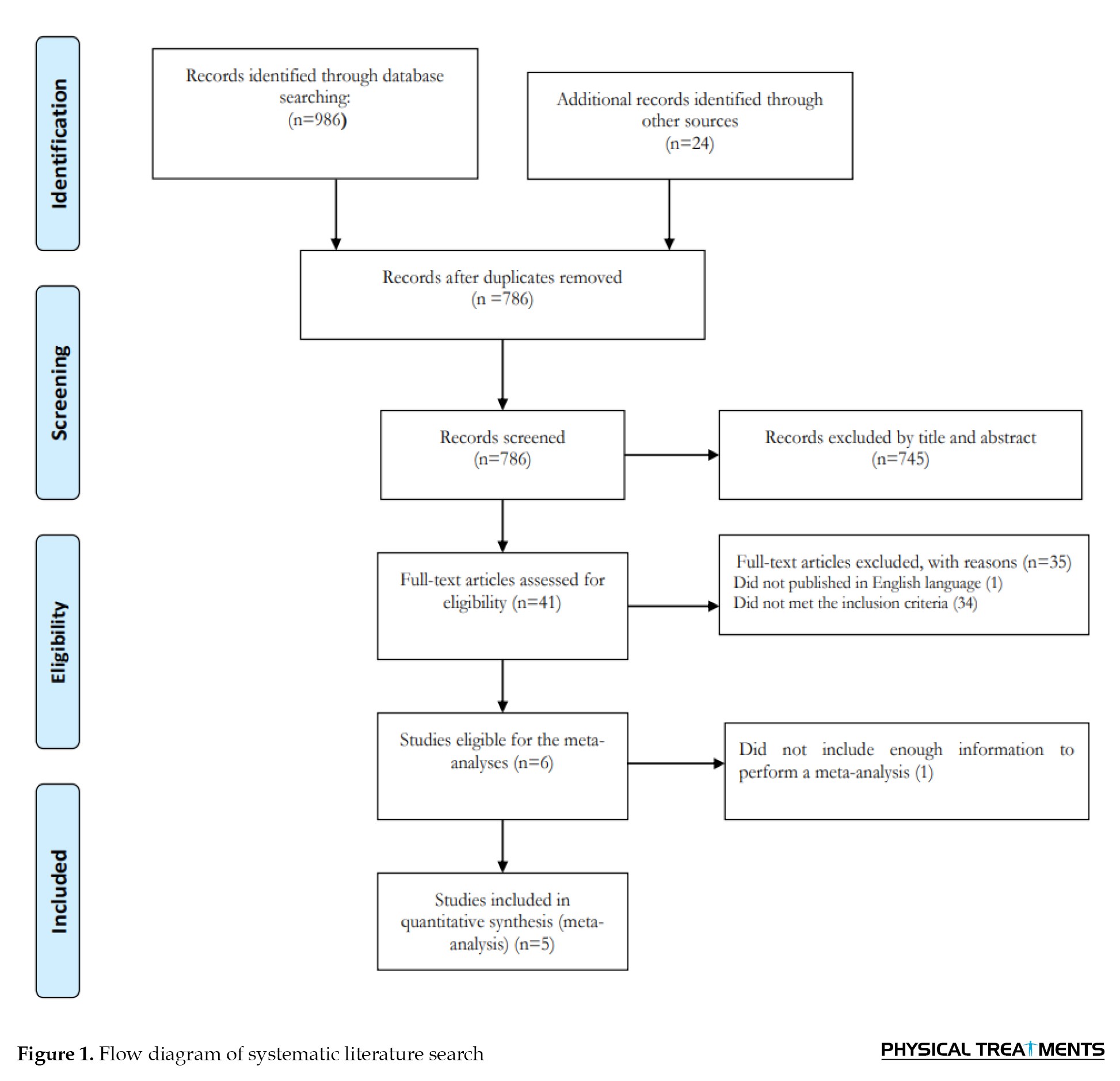
A total of 986 potentially relevant articles were retrieved from four digital repositories. Additionally, 24 records were identified through examination of the reference list. After excluding 224 duplicate studies, 786 potentially applicable summaries were screened, leading to 745 exclusions. This resulted in 41 full-text papers for comprehensive review, of which 35 were excluded for failing to meet the inclusion criteria (Figure 1).
Dynamic knee valgus (DKV) is a distinct lower-limb motion pattern characterized by several factors, including femoral adduction and inward rotation, knee abduction, forward movement of the tibia, outward rotation of the tibia, and ankle eversion [1]. This movement pattern is distinguished by a medial shift of the knee that extends beyond the alignment of the foot and thigh, indicating a valgus knee posture [2]. Therefore, evaluating the factors affecting DKV can increase our knowledge of preventing sports injuries.
DKV alters lower limb kinematics, leading to abnormal knee joint angles and compensatory movements at the hip and ankle, which can further disrupt normal biomechanics [3, 4]. The altered alignment associated with DKV increases ground reaction forces (GRFs) transmitted through the lower extremities, heightening stress on the knee joint and potentially contributing to overuse injuries [5, 6]. Additionally, DKV often results in reduced knee flexion during landing tasks, diminishing the knee’s natural shock-absorbing capacity and increasing the risk of injury during high-impact activities [7]. Research, including video analyses of athletes during competitive games and cadaveric studies, highlights the significance of knee valgus in the mechanism of anterior cruciate ligament (ACL) trauma [3, 8]. The condition also influences muscle activation patterns, leading to altered recruitment of stabilizing muscles, such as the quadriceps, hamstrings, and gluteal muscles, which can create imbalances and decrease knee joint stability [9]. This increased valgus moment at the knee, coupled with the biomechanical inefficiencies caused by DKV, is closely linked to a heightened risk of ACL injuries [6] and other injuries, such as meniscal tears and patellar tendinopathy, due to abnormal loading patterns.
Fatigue is a critical factor that significantly affects DKV during sports and landing tasks [10]. As fatigue accumulates, neuromuscular control and strength decline, which can exacerbate the inward collapse of the knee joint [11]. This deterioration in muscular function leads to altered lower limb kinematics, characterized by increased knee valgus angles [12]. Specifically, fatigued athletes may exhibit reduced ability to maintain proper knee alignment and stability, resulting in compensatory movements at the hip and ankle that further disrupt normal biomechanics [13].
Moreover, fatigue influences muscle activation patterns, often leading to insufficient recruitment of key stabilizing muscles, such as the gluteals and quadriceps [14]. This insufficient activation can increase the valgus moment at the knee, further amplifying the risk of injury [15]. The effects of fatigue are particularly pronounced during high-impact activities, where the ability to absorb shock and maintain optimal knee flexion is compromised [16]. Consequently, the combination of fatigue and DKV not only heightens the risk of ACL injuries but also predisposes athletes to other overuse injuries [17]. Consequently, comprehending the relationship between fatigue and DKV is crucial for developing effective training and rehabilitation strategies to improve performance and reduce the risk of injury in athletes.
Findings from review studies indicate that DKV considerably influences kinetic and kinematic parameters [3, 18]. Furthermore, the findings of these studies suggest that fatigue has a notable effect on kinematic and kinetic factors, thereby increasing injury incidence [19, 20]. However, no review has directly examined how fatigue impacts individuals with DKV. Thus, this review aimed to explore the effects of fatigue on lower-limb mechanics in individuals with DKV.
Existing research on DKV has established that it significantly influences kinetic and kinematic parameters, indicating a clear link between DKV and altered biomechanics [3, 18]. However, while findings from review studies suggest that fatigue also exerts a notable effect on these parameters, leading to an increased incidence of injuries [19, 20], a critical gap remains in the literature. Specifically, no review has directly examined the interplay between fatigue and DKV in individuals, leaving a crucial aspect of this relationship unexplored. This study is necessary to fill this gap by providing a comprehensive analysis of how fatigue impacts lower-limb mechanics in individuals with DKV. Understanding this interaction is vital for several reasons. First, it can elucidate the mechanisms by which fatigue exacerbates the risks associated with DKV, potentially leading to targeted interventions for injury prevention. Second, by focusing specifically on individuals with DKV, this review can inform clinical practices and rehabilitation strategies tailored to this population. Overall, this investigation is essential for advancing our knowledge of the biomechanical implications of fatigue in DKV, ultimately contributing to enhanced athlete safety and performance. Thus, this systematic review aims to examine how fatigue affects lower-limb mechanics in individuals with DKV.
Materials and Methods
This systematic review was conducted in accordance with the preferred reporting items for systematic reviews and meta-analyses (PRISMA) guidelines to ensure transparency and rigor in reporting [21].
Search strategy
We conducted a systematic search of Scopus, Web of Science (WoS), and PubMed from the database’s inception until January 5, 2025. Initially, keywords were extracted from Medical Subject Headings (MeSH) descriptors and subsequently refined to guarantee the inclusion of all pertinent studies. Google Scholar was utilized to broaden the search for relevant publications across multiple platforms. Following the selection process, we manually examined the references of the selected studies to identify any missed citations.
Search keywords
The digital repositories were explored using various keyword groupings, as follows: (1) “Dynamic knee valgus” OR “knee abduction” OR “knee kinetics” OR “frontal plane projection angle” OR “knee biomechanics” OR “valgus alignment” OR “valgus knee deformity”; (2) Fatigue OR “neuromuscular fatigue” OR “muscular exhaustion” OR “systemic fatigue” OR exertion, OR “physical strain” and (3) Biomechanics OR kinematics OR “counter-movement jump” OR “landing task” OR landing OR “lower extremit” OR “lower limb” OR “lower-limb” OR “lower-extremit”.
Eligibility criteria
The inclusion criteria were as follows: 1. Study population: participants with DKV (with any age range, with both genders); 2. Intervention: fatigue assessment protocol; 3. Comparison: fatigue protocol versus non-fatigue protocol; 4. Outcomes: Kinetic or kinematic assessments; 5. Study design: pre- and post-fatigue protocol investigations; 6. Language: peer-reviewed publications available in English.
Two independent reviewers, Leila Hamzeh and Amirali Jafarnejadgero, conducted the search and then individually screened the titles and abstracts against the established criteria. Any differences in opinion were addressed through discussion. Also, the supervisor author took the initiative to address these discrepancies [22].
Data extraction
The study data were independently collected by researchers (Leila Hamzeh and Amirali Jafarnejadgero) based on several criteria, including the lead author’s name, participant information, assessment instruments, primary outcome measures, and an overall evaluation of the study’s quality (Table 1).
Quality of evidence
Both reviewers assessed the risk of bias utilizing the Newcastle-Ottawa scale (NOS). Additionally, a checklist created by Herzog and Álvarez-Pasquin [29] for cross-sectional studies was utilized. The NOS evaluates the risk of bias by awarding star ratings for each criterion fulfilled, with a total possible score of ten stars distributed as follows: five stars for selection, three stars for comparability, and two stars for outcomes [30]. Each star signifies a reduced risk of bias for that specific criterion. According to Herzog and Álvarez-Pasquin [29], studies were classified by quality as follows: unsatisfactory (0–4 stars), satisfactory (5–6 stars), good (7–8 stars), and very good (9–10 stars). Studies deemed low quality were excluded from the comprehensive analysis in accordance with the NOS checklist guidelines. The creators of the NOS confirmed its face and criterion validity, as well as its inter-rater reliability [31-33].
Statistical analyses
Heterogeneity was evaluated using the I² index, interpreted as follows: 0–30% indicating no heterogeneity; 30–50% indicating a small degree of heterogeneity; 50–75% indicating moderate heterogeneity; and 75–100% indicating substantial heterogeneity. As a result, both fixed and random-effects models were employed to analyze variation among studies in this review. A random-effects model was applied when I² values surpassed 50% [34]. Hedges’ g effect size was applied to quantify the effect of fatigue [35]. In addition, Egger’s regression analysis was performed to assess publication bias [36, 37]. Ultimately, statistical calculations were performed using Comprehensive Meta-Analysis software version 2.0 (Biostat Inc., Englewood, NJ).
Results
A total of 986 potentially relevant articles were retrieved from four digital repositories. Additionally, 24 records were identified through examination of the reference list. After excluding 224 duplicate studies, 786 potentially applicable summaries were screened, leading to 745 exclusions. This resulted in 41 full-text papers for comprehensive review, of which 35 were excluded for failing to meet the inclusion criteria (Figure 1).
Ultimately, six studies involving 171 participants were included in this systematic review.
Publication characteristics
Among the six studies selected for the systematic review, the participant demographics were as follows: Two studies focused on basketball players, one on runners, one on gymnasts, one on soccer players, and one on non-athletes. To assess DKV, various tests were employed, including the tuck leap, unilateral drop landing, single-leg squat (SLS), and countermovement leap. The studies employed diverse fatigue protocols, ranging from fatigue-simulating games to plyometric and localized muscle fatigue protocols.
The participants’ ages ranged from 12 to 30 years. Several outcomes were utilized to assess the influence of fatigue on lower-limb biomechanics. Kinematic measurements were taken using the Motion Analyzer and Kinovea, focusing on two key phases: initial contact (IC) and maximum knee flexion. Kinetic assessments were conducted with a force plate device, which measured the time to stability (TTS). Additionally, electromyography was employed to analyze muscle electrical activity.
Quality of evidence
According to the findings derived from the NOS evaluation, six studies were subjected to systematic review and meta-analysis, exhibiting favorable qualities: four studies (67%) received a rating of highly rated (9-10 stars), while two studies (33%) were rated moderately rated (7-8 stars). Therefore, the research analyzed in the systematic review was considered to have good methodological quality (Table 2).
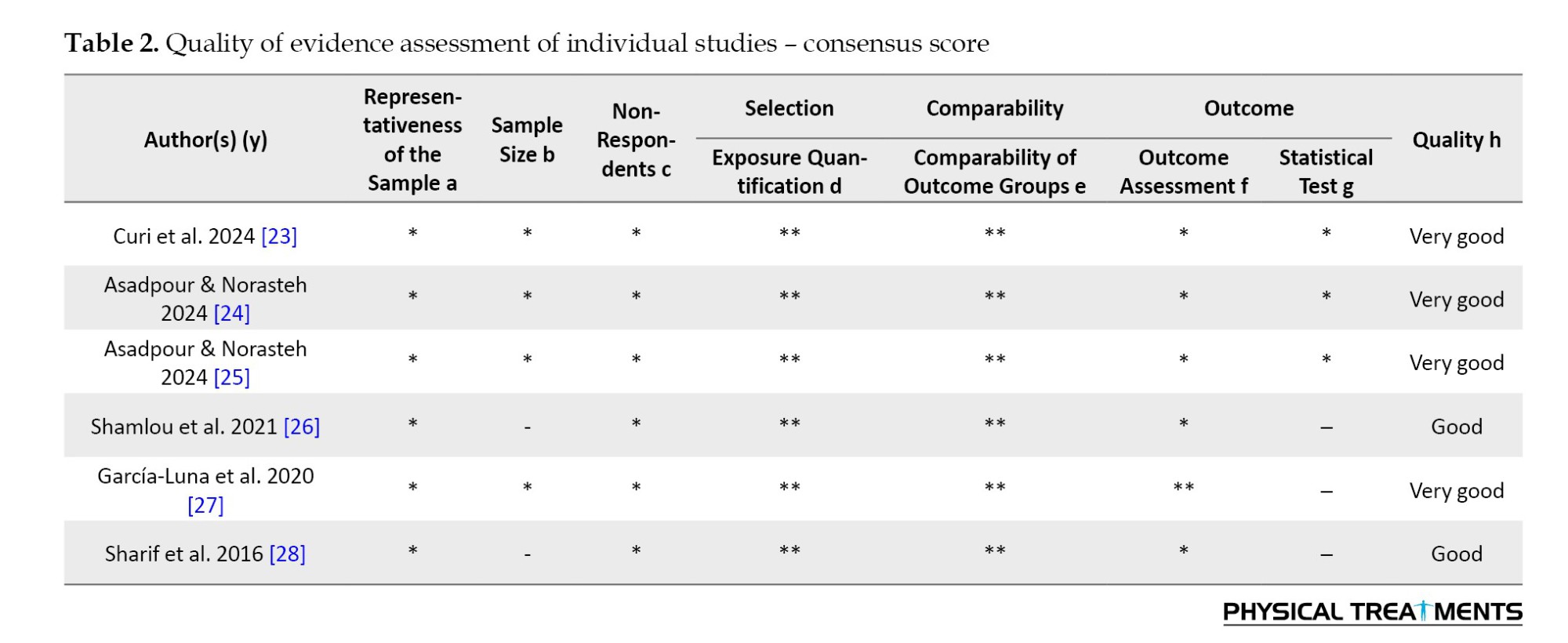
a) Representativeness of the sample: Studies should choose samples that are either fully or partially representative of the target population. b) Sample size: The appropriateness and justification of the selected sample size were examined. c) Non-responders: A star was awarded if the characteristics of respondents and non-responders were similar and the response rate was satisfactory. No stars were given if the response rate was considered unsatisfactory or if there was a lack of information regarding the response rate. d) Exposure quantification: Two stars were granted if the study utilized a valid measurement tool to evaluate risk factors. One star was awarded for using an available or described but invalid measurement tool. e) Comparability of outcome groups: This criterion evaluated whether the study accounted for confounding variables among individuals in different outcome groups. f) Outcome assessment: The method of outcome assessment was assessed based on whether it included independent blinding, record linkage, self-reporting, or lacked description. Two stars were awarded for independent blinded assessments or record linkage, while one star was given for self-reported outcomes. g) Statistical test: One star was assigned if the statistical test used for data analysis was clearly described, appropriate, and included a measure of association, such as confidence intervals and P. h) Quality: Study quality was rated using a star system: nine to ten stars indicated “very good” quality, seven to eight stars indicated “good” quality, five to six stars indicated “satisfactory” quality, and zero to four stars indicated “unsatisfactory” quality.
Data synthesis
The impact of fatigue protocol on dominant limb knee valgus angle
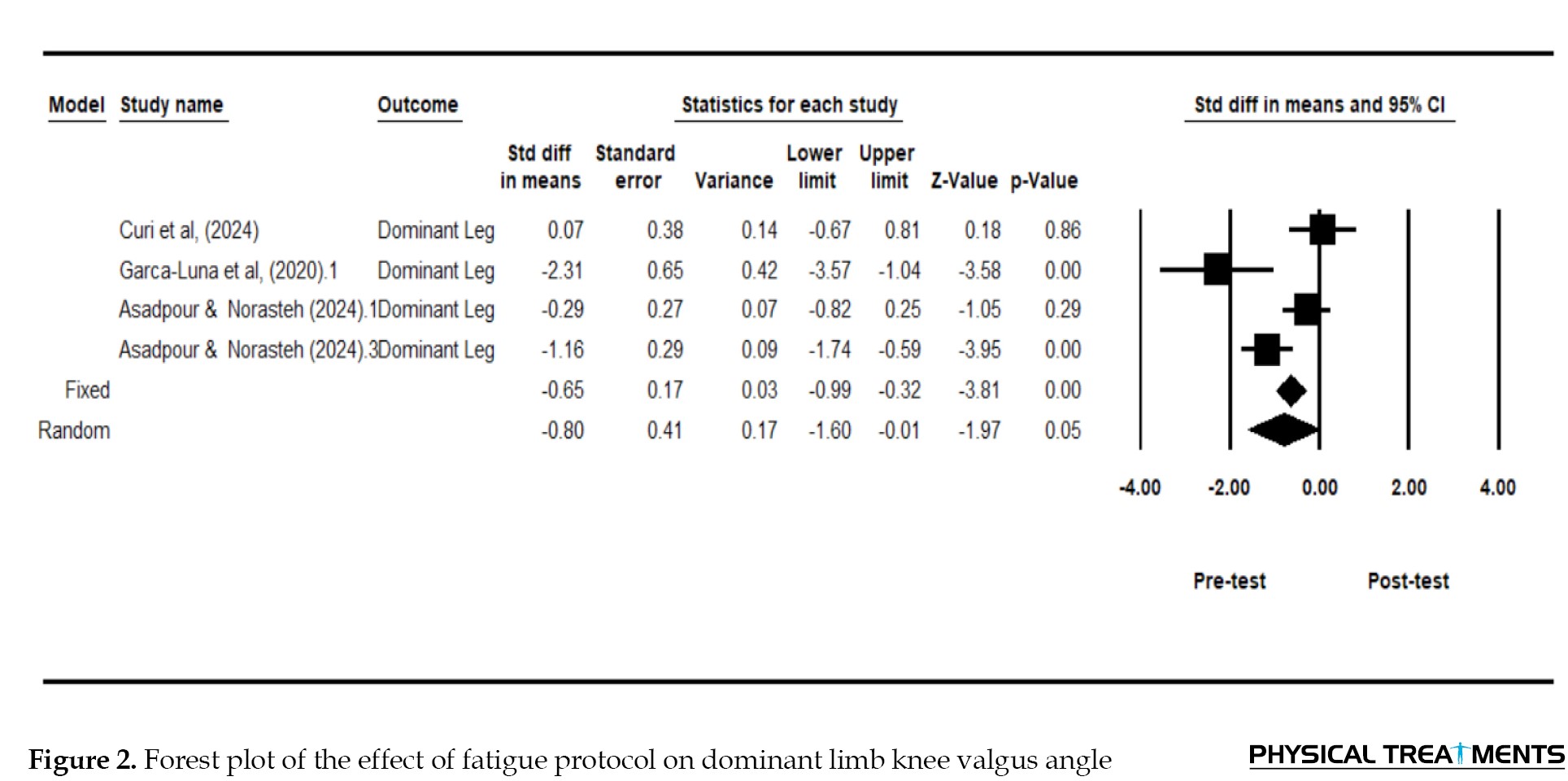
Four intervention conditions were evaluated for their influence on the dominant-limb knee valgus angle. Overall, the fatigue protocol increased in the dominant-limb knee valgus angle (effect size: -0.78, 95% confidence interval [CI]=-1.56%, -0.01%, P=0.001), demonstrating substantial variability across studies (I²=79.81%, P=0.002) (Figure 2).
Publication characteristics
Among the six studies selected for the systematic review, the participant demographics were as follows: Two studies focused on basketball players, one on runners, one on gymnasts, one on soccer players, and one on non-athletes. To assess DKV, various tests were employed, including the tuck leap, unilateral drop landing, single-leg squat (SLS), and countermovement leap. The studies employed diverse fatigue protocols, ranging from fatigue-simulating games to plyometric and localized muscle fatigue protocols.
The participants’ ages ranged from 12 to 30 years. Several outcomes were utilized to assess the influence of fatigue on lower-limb biomechanics. Kinematic measurements were taken using the Motion Analyzer and Kinovea, focusing on two key phases: initial contact (IC) and maximum knee flexion. Kinetic assessments were conducted with a force plate device, which measured the time to stability (TTS). Additionally, electromyography was employed to analyze muscle electrical activity.
Quality of evidence
According to the findings derived from the NOS evaluation, six studies were subjected to systematic review and meta-analysis, exhibiting favorable qualities: four studies (67%) received a rating of highly rated (9-10 stars), while two studies (33%) were rated moderately rated (7-8 stars). Therefore, the research analyzed in the systematic review was considered to have good methodological quality (Table 2).
a) Representativeness of the sample: Studies should choose samples that are either fully or partially representative of the target population. b) Sample size: The appropriateness and justification of the selected sample size were examined. c) Non-responders: A star was awarded if the characteristics of respondents and non-responders were similar and the response rate was satisfactory. No stars were given if the response rate was considered unsatisfactory or if there was a lack of information regarding the response rate. d) Exposure quantification: Two stars were granted if the study utilized a valid measurement tool to evaluate risk factors. One star was awarded for using an available or described but invalid measurement tool. e) Comparability of outcome groups: This criterion evaluated whether the study accounted for confounding variables among individuals in different outcome groups. f) Outcome assessment: The method of outcome assessment was assessed based on whether it included independent blinding, record linkage, self-reporting, or lacked description. Two stars were awarded for independent blinded assessments or record linkage, while one star was given for self-reported outcomes. g) Statistical test: One star was assigned if the statistical test used for data analysis was clearly described, appropriate, and included a measure of association, such as confidence intervals and P. h) Quality: Study quality was rated using a star system: nine to ten stars indicated “very good” quality, seven to eight stars indicated “good” quality, five to six stars indicated “satisfactory” quality, and zero to four stars indicated “unsatisfactory” quality.
Data synthesis
The impact of fatigue protocol on dominant limb knee valgus angle
Four intervention conditions were evaluated for their influence on the dominant-limb knee valgus angle. Overall, the fatigue protocol increased in the dominant-limb knee valgus angle (effect size: -0.78, 95% confidence interval [CI]=-1.56%, -0.01%, P=0.001), demonstrating substantial variability across studies (I²=79.81%, P=0.002) (Figure 2).
Both the graphical examination of scatter plots and the findings of Egger’s test revealed no considerable publication distortion (P=0.50).
The impact of fatigue protocol on non-dominant limb knee valgus angle
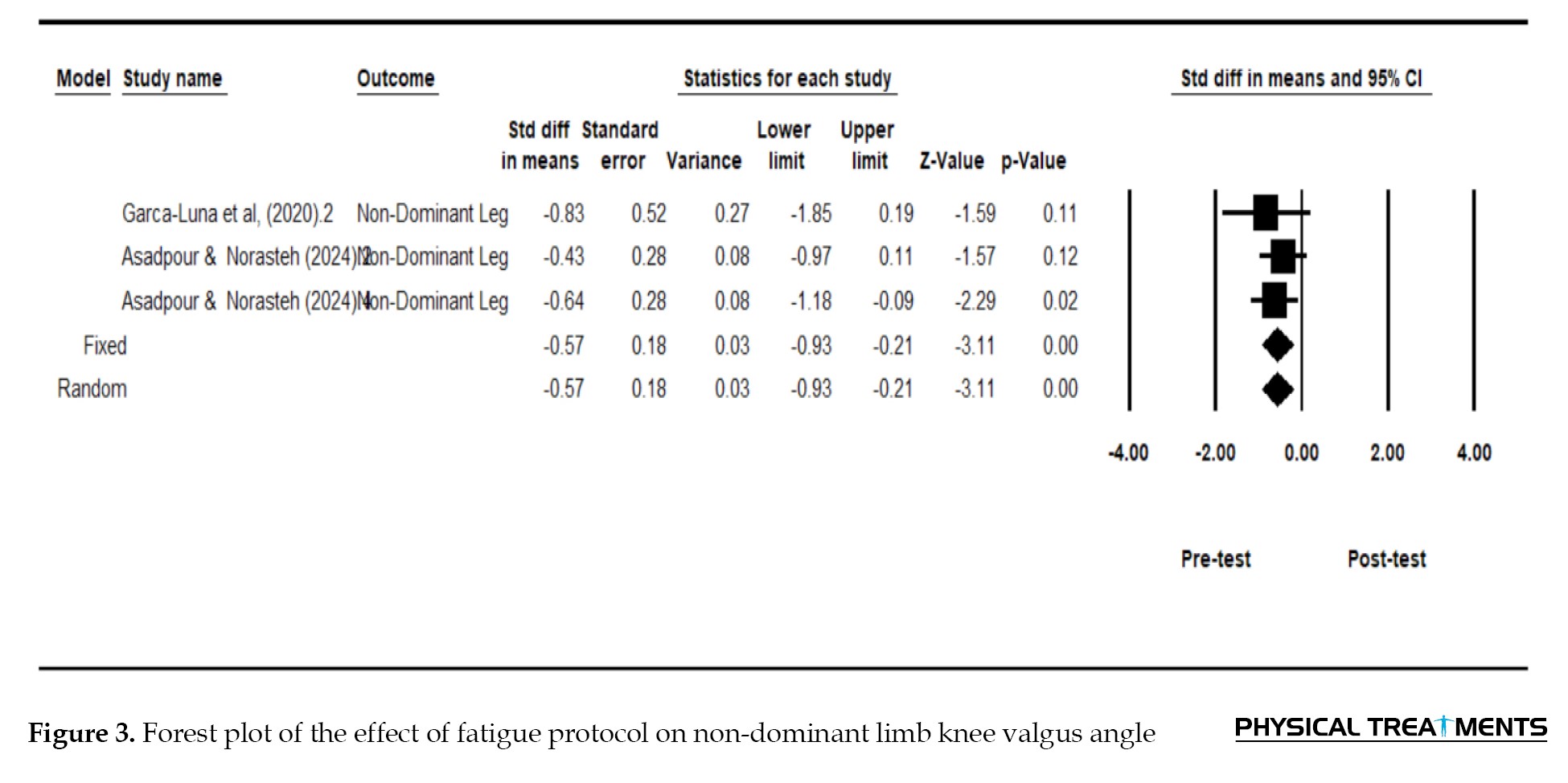
Three intervention conditions were assessed to determine the impact of the fatigue protocol on the non-dominant limb knee valgus angle. Overall, the fatigue protocol resulted in an increase in the non-dominant limb knee valgus angle (effect size: -0.56, 95% CI=-0.78%, -0.21%, P=0.001), with minimal variation between studies (I²=0.00%, P=0.773) (Figure 3).
The impact of fatigue protocol on non-dominant limb knee valgus angle
Three intervention conditions were assessed to determine the impact of the fatigue protocol on the non-dominant limb knee valgus angle. Overall, the fatigue protocol resulted in an increase in the non-dominant limb knee valgus angle (effect size: -0.56, 95% CI=-0.78%, -0.21%, P=0.001), with minimal variation between studies (I²=0.00%, P=0.773) (Figure 3).
Both the graphical assessment of scatter plots and the conclusions from Egger’s test demonstrated no meaningful publication deviation (P=0.51).
Discussion
The present comprehensive literature review and meta-analysis aimed to assess the effect of fatigue on the biomechanical function of the lower extremities in individuals with DKV. The findings indicated that fatigue protocols significantly increased the DKV angle in both the primary and secondary legs of the participants. To our knowledge, no prior investigation or extensive meta-study has examined the degree to which fatigue protocols influence lower-limb biomechanics in those with DKV. Other systematic reviews have demonstrated that fatigue significantly influences kinematic and kinetic parameters, resulting in an increased injury rate [19, 20]. Additionally, studies have utilized various biomechanical outcomes to evaluate the effect of fatigue protocols on fatigue-induced changes in lower-limb movement patterns in individuals with DKV. Consequently, this study concentrated exclusively on meta-analyzing the combined effect of fatigue protocols on DKV in the primary and secondary sides, as other outcomes were deemed unsuitable for meta-analysis. Moreover, the studies included in this review exhibited high methodological quality, suggesting that the results of this meta-analysis are both trustworthy and of superior quality.
In addition, Egger’s test was utilized to examine potential reporting bias, revealing no bias in the research findings. However, one of the two outcomes examined within this comprehensive review displayed significant research constraints and variability across several areas, including assessment tools and methods, protocol type, extent and magnitude, supervision by therapists or trainers, participant groups, timeframes, and characteristics of the induced fatigue. While variability in evaluation instruments was managed by classifying factors, additional constraints increased variability across the studies. Consequently, future research in this area should consider these variables to achieve more precise conclusions about the effects of fatigue on the biomechanical function of the lower extremities in individuals with DKV.
The findings from four intervention arms [23-25, 27] showed that the fatigue protocol increased dominant-limb valgus positioning of the knee. Also, the results of three intervention arms [24, 25, 27] showed that the fatigue protocol increased non-dominant-limb valgus positioning of the knee. Research conducted by Madigan and Pidcoe [38] regarding fatigue-related impacts during forward landing maneuvers found that fatigue led to a heightened valgus positioning, which corresponds with our present findings. Likewise, Chappell and Creighton [39] investigated the kinetic and kinematic effects of fatigue on the knees of a cohort of 20 athletes (10 males and 10 females) engaged in a stop-and-jump activity, revealing that exhaustion increased knee valgus in both groups, consistent with our findings. Additionally, Santamaria and Webster [19] evaluated how fatigue influences lower-limb movement mechanics during unilateral landings. They reported a notable decrease in peak knee valgus, angular displacement, and knee flexion across genders athlete’s post-fatigue. Notably, they found that women exhibited less inward leg rotation, joint angular deviation, and duration of knee flexion at peak displacement than males post-exertion, aligning with our study’s findings. Overall, the findings from these studies reinforce the conclusions of the present study.
One of the investigations included in this comprehensive review examined fatigue’s influence on TTS [26]. The results indicated that post-exertion TTS was markedly extended compared to pre-exhaustion levels. TTS refers to the duration required for an individual to return reaction forces from the ground in vertical, medial-lateral, and anterior-posterior planes to baseline standing values [40]. A quicker TTS is generally considered a beneficial and protective characteristic. Within this framework, fatigue is acknowledged as a contributing element to lower-limb injuries, including ACL damage. This increased risk is likely due to alterations in movement mechanics and adaptive responses [26].
Neuromuscular regulation is essential for maintaining dynamic stability in joints. This process involves activating dynamic constraints that respond to movement and joint loading, thereby ensuring effective functional stability. The TTS metric is a valuable indicator of neuromuscular control, employing force plate measurements to evaluate postural stability during activities such as jump landings [41]. Additionally, it assesses how fatigue influences proprioception and neuromuscular regulation. An extended TTS reflects a sluggish response to maintaining stability, which can hinder postural control during landings. Studies indicate that fatigued individuals tend to depend more on their ankle muscles and associated strategies rather than engaging their knee muscles. This shift may compromise knee stability and elevate the risk of ACL injuries [26].
Additionally, the results of one of the studies included in this systematic review show that fatigue significantly affects muscle electromyographic activity [23]. All voluntary movements result from a complex interaction between the brain, spinal cord, peripheral nerves, muscles, and joints. Any injury or dysfunction in these components can adversely affect performance, especially in athletic settings [42]. Neuromuscular fatigue is a significant factor affecting the regulation of lower limb joints. This form of fatigue arises from a combination of physiological mechanisms at both central and peripheral levels, disrupting neuromuscular afferent pathways and reducing proprioceptive capabilities. The resulting dysfunction in neuromuscular efferent pathways manifests as delayed muscle responses [43].
Fatigue mechanisms can significantly influence the biomechanical patterns associated with DKV, particularly through impaired gluteal function [42-44]. Research suggests that fatigue can result in decreased activation and strength of the gluteal muscles, which are essential for stabilizing the pelvis and ensuring proper alignment of the lower extremities during dynamic movements [42]. When these muscles become fatigued, their capacity to counteract valgus forces at the knee decreases, leading to greater knee collapse during activities, such as landing or cutting [10]. This compromised gluteal function can alter movement patterns, leading to greater reliance on less stable muscle groups, thereby increasing the risk of injury [45].
In response to stress, initial muscle contractions are activated to stabilize joints, serving as a protective mechanism against injury. These contractions enhance joint stability and mitigate the risk of collapse, which could result in irreversible damage [46]. In summary, this mechanism is essential for neuromuscular regulation and joint stability. Furthermore, the dynamic stability of the body, especially at critical joints, such as the knee, depends on the coordinated neuromuscular control of all body segments involved in movement. Prolonged deterioration in neural function during physical activities can jeopardize the integrity of lower limb joints, particularly the knee [47]. Research indicates that fatigue from increased anterior and lateral knee movement may play a significant role in knee injuries, particularly those involving the ACL. This fatigue leads to depletion of the body’s energy reserves, thereby increasing the risk of injury [42].
In contrast, some studies have shown that fatigue may not universally affect landing mechanics. For example, Zhang et al. (2021) found that while fatigue altered certain kinematic parameters, it did not significantly impact vertical GRFs during landing tasks in a sample of trained athletes [48]. Similarly, Johnson and Lee (2019) observed that fatigue significantly elevated the knee abduction angle at IC and the peak abduction torque at 40 milliseconds after IC in recreational female athletes. However, these changes were not observed in collegiate female athletes, indicating that individual differences and training status may influence how fatigue affects landing mechanics [49]. These conflicting results highlight the complex relationship between fatigue and biomechanics, indicating that further research is necessary to elucidate the conditions under which fatigue influences DKV patterns. The practical applications of this research are significant. By identifying the specific mechanisms through which fatigue affects lower-limb mechanics, targeted neuromuscular training programs can be developed to enhance gluteal activation and strength [50]. Such programs could include exercises focusing on hip abduction and external rotation, which are crucial for maintaining knee stability [51]. Additionally, incorporating fatigue protocols into training regimens may help athletes adapt to the demands of their sports, ultimately reducing the risk of injuries associated with DKV [52]. Furthermore, understanding the interplay between fatigue and DKV can inform rehabilitation strategies for individuals recovering from knee injuries, ensuring that interventions are tailored to address the specific biomechanical challenges posed by fatigue in this population.
Limitations and future scope
This study highlighted multiple methodological constraints requiring further exploration. Notably, none of the authors mentioned allocation concealment in their studies, implying that selection bias may not have been completely controlled. Additionally, the current study focused solely on lower-limb biomechanics, neglecting other aspects such as motor function and upper-limb movement patterns. Thus, it is recommended that future systematic reviews investigate these additional parameters.
Conclusion
The present systematic review sought to assess the effect of fatigue on the biomechanics of the lower limbs in individuals with DKV. The results indicated that fatigue protocols significantly raised the DKV angle in both the non-dominant and dominant legs of the participants studied.
Ethical Considerations
Compliance with ethical guideline.s
Given the review nature of this study, all ethical principles, including scientific integrity, transparency in reporting, and proper citation of sources, were observed throughout the research process.
Funding
This research did not receive any grant from funding agencies in the public, commercial, or non-profit sectors.
Authors' contributions
All authors contributed equally to the conception and design of the study, data collection and analysis, interpretation of the results, and drafting of the manuscript. Each author approved the final version of the manuscript for submission.
Conflict of interest
The authors declared no conflict of interest.
Discussion
The present comprehensive literature review and meta-analysis aimed to assess the effect of fatigue on the biomechanical function of the lower extremities in individuals with DKV. The findings indicated that fatigue protocols significantly increased the DKV angle in both the primary and secondary legs of the participants. To our knowledge, no prior investigation or extensive meta-study has examined the degree to which fatigue protocols influence lower-limb biomechanics in those with DKV. Other systematic reviews have demonstrated that fatigue significantly influences kinematic and kinetic parameters, resulting in an increased injury rate [19, 20]. Additionally, studies have utilized various biomechanical outcomes to evaluate the effect of fatigue protocols on fatigue-induced changes in lower-limb movement patterns in individuals with DKV. Consequently, this study concentrated exclusively on meta-analyzing the combined effect of fatigue protocols on DKV in the primary and secondary sides, as other outcomes were deemed unsuitable for meta-analysis. Moreover, the studies included in this review exhibited high methodological quality, suggesting that the results of this meta-analysis are both trustworthy and of superior quality.
In addition, Egger’s test was utilized to examine potential reporting bias, revealing no bias in the research findings. However, one of the two outcomes examined within this comprehensive review displayed significant research constraints and variability across several areas, including assessment tools and methods, protocol type, extent and magnitude, supervision by therapists or trainers, participant groups, timeframes, and characteristics of the induced fatigue. While variability in evaluation instruments was managed by classifying factors, additional constraints increased variability across the studies. Consequently, future research in this area should consider these variables to achieve more precise conclusions about the effects of fatigue on the biomechanical function of the lower extremities in individuals with DKV.
The findings from four intervention arms [23-25, 27] showed that the fatigue protocol increased dominant-limb valgus positioning of the knee. Also, the results of three intervention arms [24, 25, 27] showed that the fatigue protocol increased non-dominant-limb valgus positioning of the knee. Research conducted by Madigan and Pidcoe [38] regarding fatigue-related impacts during forward landing maneuvers found that fatigue led to a heightened valgus positioning, which corresponds with our present findings. Likewise, Chappell and Creighton [39] investigated the kinetic and kinematic effects of fatigue on the knees of a cohort of 20 athletes (10 males and 10 females) engaged in a stop-and-jump activity, revealing that exhaustion increased knee valgus in both groups, consistent with our findings. Additionally, Santamaria and Webster [19] evaluated how fatigue influences lower-limb movement mechanics during unilateral landings. They reported a notable decrease in peak knee valgus, angular displacement, and knee flexion across genders athlete’s post-fatigue. Notably, they found that women exhibited less inward leg rotation, joint angular deviation, and duration of knee flexion at peak displacement than males post-exertion, aligning with our study’s findings. Overall, the findings from these studies reinforce the conclusions of the present study.
One of the investigations included in this comprehensive review examined fatigue’s influence on TTS [26]. The results indicated that post-exertion TTS was markedly extended compared to pre-exhaustion levels. TTS refers to the duration required for an individual to return reaction forces from the ground in vertical, medial-lateral, and anterior-posterior planes to baseline standing values [40]. A quicker TTS is generally considered a beneficial and protective characteristic. Within this framework, fatigue is acknowledged as a contributing element to lower-limb injuries, including ACL damage. This increased risk is likely due to alterations in movement mechanics and adaptive responses [26].
Neuromuscular regulation is essential for maintaining dynamic stability in joints. This process involves activating dynamic constraints that respond to movement and joint loading, thereby ensuring effective functional stability. The TTS metric is a valuable indicator of neuromuscular control, employing force plate measurements to evaluate postural stability during activities such as jump landings [41]. Additionally, it assesses how fatigue influences proprioception and neuromuscular regulation. An extended TTS reflects a sluggish response to maintaining stability, which can hinder postural control during landings. Studies indicate that fatigued individuals tend to depend more on their ankle muscles and associated strategies rather than engaging their knee muscles. This shift may compromise knee stability and elevate the risk of ACL injuries [26].
Additionally, the results of one of the studies included in this systematic review show that fatigue significantly affects muscle electromyographic activity [23]. All voluntary movements result from a complex interaction between the brain, spinal cord, peripheral nerves, muscles, and joints. Any injury or dysfunction in these components can adversely affect performance, especially in athletic settings [42]. Neuromuscular fatigue is a significant factor affecting the regulation of lower limb joints. This form of fatigue arises from a combination of physiological mechanisms at both central and peripheral levels, disrupting neuromuscular afferent pathways and reducing proprioceptive capabilities. The resulting dysfunction in neuromuscular efferent pathways manifests as delayed muscle responses [43].
Fatigue mechanisms can significantly influence the biomechanical patterns associated with DKV, particularly through impaired gluteal function [42-44]. Research suggests that fatigue can result in decreased activation and strength of the gluteal muscles, which are essential for stabilizing the pelvis and ensuring proper alignment of the lower extremities during dynamic movements [42]. When these muscles become fatigued, their capacity to counteract valgus forces at the knee decreases, leading to greater knee collapse during activities, such as landing or cutting [10]. This compromised gluteal function can alter movement patterns, leading to greater reliance on less stable muscle groups, thereby increasing the risk of injury [45].
In response to stress, initial muscle contractions are activated to stabilize joints, serving as a protective mechanism against injury. These contractions enhance joint stability and mitigate the risk of collapse, which could result in irreversible damage [46]. In summary, this mechanism is essential for neuromuscular regulation and joint stability. Furthermore, the dynamic stability of the body, especially at critical joints, such as the knee, depends on the coordinated neuromuscular control of all body segments involved in movement. Prolonged deterioration in neural function during physical activities can jeopardize the integrity of lower limb joints, particularly the knee [47]. Research indicates that fatigue from increased anterior and lateral knee movement may play a significant role in knee injuries, particularly those involving the ACL. This fatigue leads to depletion of the body’s energy reserves, thereby increasing the risk of injury [42].
In contrast, some studies have shown that fatigue may not universally affect landing mechanics. For example, Zhang et al. (2021) found that while fatigue altered certain kinematic parameters, it did not significantly impact vertical GRFs during landing tasks in a sample of trained athletes [48]. Similarly, Johnson and Lee (2019) observed that fatigue significantly elevated the knee abduction angle at IC and the peak abduction torque at 40 milliseconds after IC in recreational female athletes. However, these changes were not observed in collegiate female athletes, indicating that individual differences and training status may influence how fatigue affects landing mechanics [49]. These conflicting results highlight the complex relationship between fatigue and biomechanics, indicating that further research is necessary to elucidate the conditions under which fatigue influences DKV patterns. The practical applications of this research are significant. By identifying the specific mechanisms through which fatigue affects lower-limb mechanics, targeted neuromuscular training programs can be developed to enhance gluteal activation and strength [50]. Such programs could include exercises focusing on hip abduction and external rotation, which are crucial for maintaining knee stability [51]. Additionally, incorporating fatigue protocols into training regimens may help athletes adapt to the demands of their sports, ultimately reducing the risk of injuries associated with DKV [52]. Furthermore, understanding the interplay between fatigue and DKV can inform rehabilitation strategies for individuals recovering from knee injuries, ensuring that interventions are tailored to address the specific biomechanical challenges posed by fatigue in this population.
Limitations and future scope
This study highlighted multiple methodological constraints requiring further exploration. Notably, none of the authors mentioned allocation concealment in their studies, implying that selection bias may not have been completely controlled. Additionally, the current study focused solely on lower-limb biomechanics, neglecting other aspects such as motor function and upper-limb movement patterns. Thus, it is recommended that future systematic reviews investigate these additional parameters.
Conclusion
The present systematic review sought to assess the effect of fatigue on the biomechanics of the lower limbs in individuals with DKV. The results indicated that fatigue protocols significantly raised the DKV angle in both the non-dominant and dominant legs of the participants studied.
Ethical Considerations
Compliance with ethical guideline.s
Given the review nature of this study, all ethical principles, including scientific integrity, transparency in reporting, and proper citation of sources, were observed throughout the research process.
Funding
This research did not receive any grant from funding agencies in the public, commercial, or non-profit sectors.
Authors' contributions
All authors contributed equally to the conception and design of the study, data collection and analysis, interpretation of the results, and drafting of the manuscript. Each author approved the final version of the manuscript for submission.
Conflict of interest
The authors declared no conflict of interest.
References
- Larwa J, Stoy C, Chafetz RS, Boniello M, Franklin C. Stiff Landings, Core Stability, and Dynamic Knee Valgus: A Systematic Review on Documented Anterior Cruciate Ligament Ruptures in Male and Female Athletes. International Journal of Environmental Research and Public Health. 2021; 18(7):3826. [DOI:10.3390/ijerph18073826] [PMID] [PMCID]
- Mozafaripour E, Seidi F, Minoonejad H, Mousavi SH, Bayattork M. Can lower extremity anatomical measures and core stability predict dynamic knee valgus in young men? Journal of Bodywork and Movement Therapies. 2021; 27:358-63. [DOI:10.1016/j.jbmt.2021.02.004] [PMID]
- Wilczyński B, Zorena K, Ślęzak D. Dynamic knee valgus in single-leg movement tasks. Potentially modifiable factors and exercise training options. A literature review. International Journal of Environmental Research and Public Health. 2020; 17(21):8208. [DOI:10.3390/ijerph17218208] [PMID] [PMCID]
- Dadfar M, Sheikhhoseini R, Jafarian M, Esmaeili A. Lower extremity kinematic coupling during single and double leg landing and gait in female junior athletes with dynamic knee valgus. BMC Sports Science, Medicine and Rehabilitation. 2021; 13(1):152. [DOI:10.1186/s13102-021-00385-y] [PMID] [PMCID]
- Dischiavi SL, Wright AA, Hegedus EJ, Bleakley CM. Rethinking dynamic knee valgus and its relation to knee injury: Normal movement requiring control, not avoidance. Journal of Orthopaedic & Sports Physical Therapy. 2019; 49(4):216-8. [DOI:10.2519/jospt.2019.0606] [PMID]
- Norasteh AA, Fadaei Dehcheshmeh M, Shamlou Kazemi A. [The role of dynamic knee valgus in occurrence of knee injuries: A review study (Persian)]. The Scientific Journal of Rehabilitation Medicine. 2023; 12(2):186-201. [DOI:10.32598/SJRM.12.2.10]
- Zamankhanpour M, Sheikhhoseini R, Letafatkar A, Piri H, Asadi Melerdi S, Abdollahi S. The effect of dual-task on jump landing kinematics and kinetics in female athletes with or without dynamic knee valgus. Scientific Reports. 2023; 13(1):14305. [DOI:10.1038/s41598-023-41648-7] [PMID] [PMCID]
- Boden BP, Sheehan FT. Mechanism of non‐contact ACL injury: OREF Clinical Research Award 2021. Journal of Orthopaedic Research®. 2022; 40(3):531-40. [DOI:10.1002/jor.25257] [PMID] [PMCID]
- Mansouri R, Bahrami F, Rajabi R, Minoonejad H, Kaczmarczyk K. Investigating the landing kinetics factors and preparatory knee muscle activation in female handball players with and without dynamic knee valgus while performing single leg landing. Biomedical Human Kinetics. 2021; 13(1):155-62. [DOI:10.2478/bhk-2021-0019]
- Wong TL, Huang CF, Chen PC. Effects of lower extremity muscle fatigue on knee loading during a forward drop jump to a vertical jump in female athletes. Journal of Human Kinetics. 2020; 72:5-13. [DOI:10.2478/hukin-2019-0122] [PMID] [PMCID]
- El-Ashker S, Chaabene H, Prieske O, Abdelkafy A, Ahmed MA, Muaidi QI, et al. Effects of neuromuscular fatigue on eccentric strength and electromechanical delay of the knee flexors: the role of training status. Frontiers in Physiology. 2019; 10:782. [DOI:10.3389/fphys.2019.00782] [PMID] [PMCID]
- Xia R, Zhang X, Wang X, Sun X, Fu W. Effects of two fatigue protocols on impact forces and lower extremity kinematics during drop landings: Implications for noncontact anterior cruciate ligament injury. Journal of Healthcare Engineering. 2017; 2017:5690519. [DOI:10.1155/2017/5690519] [PMID] [PMCID]
- Moon J, Lee J, Kim K, Koo D, Lee J, Pathak P, et al. Effect of muscle-specific fatigue on the risk of anterior cruciate ligament injury in females. Applied Sciences. 2021; 11(11):4969. [DOI:10.3390/app11114969]
- Pawłowski M, Furmanek MP, Juras G. Does muscle fatigue change motor synergies at different levels of neuromotor control? Frontiers in Human Neuroscience. 2025; 18:1519462. [DOI:10.3389/fnhum.2024.1519462] [PMID] [PMCID]
- Dashti Rostami K, Alizadeh MH, Minoonejad H, Yazdi H, Thomas A. Effect of fatigue on electromyographic activity patterns of the knee joint muscles in anterior cruciate ligament reconstructed and deficient patients during landing task. Journal of Functional Morphology and Kinesiology. 2018; 3(2):22. [DOI:10.3390/jfmk3020022]
- Gillot T, L’Hermette M, Garnier T, Tourny-Chollet C. Effect of fatigue on functional stability of the knee: particularities of female handball players. International Journal of Sports Medicine. 2019; 40(07):468-76. [DOI:10.1055/a-0866-9482] [PMID]
- Verschueren J, Tassignon B, De Pauw K, Proost M, Teugels A, Van Cutsem J, et al. Does acute fatigue negatively affect intrinsic risk factors of the lower extremity injury risk profile? A systematic and critical review. Sports Medicine. 2020; 50(4):767-84. [DOI:10.1007/s40279-019-01235-1] [PMID]
- Pedley JS, Lloyd RS, Read PJ, Moore IS, De Ste Croix M, Myer GD, et al. Utility of kinetic and kinematic jumping and landing variables as predictors of injury risk: A systematic review. Journal of Science in Sport and Exercise. 2020; 2:287-304. [DOI:10.1007/s42978-020-00090-1]
- Santamaria LJ, Webster KE. The effect of fatigue on lower-limb biomechanics during single-limb landings: A systematic review. Journal of Orthopaedic & Sports Physical Therapy. 2010; 40(8):464-73. [DOI:10.2519/jospt.2010.3295] [PMID]
- Vermeulen S, De Bleecker C, De Blaiser C, Kilinç ÖO, Willems T, Vanrenterghem J, et al. The effect of fatigue on trunk and pelvic jump-landing biomechanics in view of lower extremity loading: A systematic review. Journal of Human Kinetics. 2023; 86:73-95. [DOI:10.5114/jhk/159460] [PMID] [PMCID]
- Parums DV. Review articles, systematic reviews, meta-analysis, and the updated preferred reporting items for systematic reviews and meta-analyses (PRISMA) 2020 guidelines. Medical Science Monitor: International Medical Journal of Experimental and Clinical Research. 2021; 27:e934475-1. [DOI:10.12659/MSM.934475]
- Landis JR, Koch GG. The measurement of observer agreement for categorical data. Biometrics. 1977; 33(1):159-74. [DOI:10.2307/2529310] [PMID]
- Curi GOBDC, Costa FDD, Medeiros VS, Barbosa VD, Santos TRT, Dionisio VC. The effects of core muscle fatigue on lower limbs and trunk during single-leg drop landing: A comparison between recreational runners with and without dynamic knee valgus. The Knee. 2024; 50:96-106. [DOI:10.1016/j.knee.2024.07.017] [PMID]
- Asadpour R, Norasteh AA. Comparing the Knee Valgus Angle and Pattern of Dominant and Non-dominant Feet in Basketball Players With Dynamic Knee Valgus After Fatigue.Physical Treatments - Specific Physical Therapy Journal. 2024; 14(4):321-30. [DOI:10.32598/ptj.14.4.604.2]
- Asadpour R, Norasteh AA. The Effect of a Fatigue Program on the Kinematics of Lower Limb Joints in Basketball Players with Dynamic Knee Valgus Pattern in Various Positions. Journal of Advanced Sport Technology. 2024; 8(2):27-44. [DOI:10.32598/ptj.14.2.604.1]
- Shamlou A, Akbarieh Kaleybar M, Babakhani F, Balouchi R. Comparison of the effect of acute and delayed fatigue on the time to stability of female gymnasts with and without dynamic knee valgus during drop-landing task. Sport Sciences and Health Research. 2021; 14(2):265-73. [DOI:10.22059/sshr.2023.339435.1047]
- García-Luna MA, Cortell-Tormo JM, García-Jaén M, Ortega-Navarro M, Tortosa-Martínez J. Acute effects of ACL injury-prevention warm-up and soccer-specific fatigue protocol on dynamic knee valgus in youth male soccer players. International Journal of Environmental Research and Public Health. 2020; 17(15):5608. [DOI:10.3390/ijerph17155608] [PMID] [PMCID]
- Sharifi N, Amir-Seyfaddini M, Amiri-Khorasani M. Effect of fatigue on knee kinematics during countermovement jumps in female students of physical education with valgus knee deformity. Iranian Rehabilitation Journal. 2016; 14(2):107-14. [DOI:10.18869/nrip.irj.14.2.107]
- Herzog R, Álvarez-Pasquin MJ, Díaz C, Del Barrio JL, Estrada JM, Gil Á. Are healthcare workers’ intentions to vaccinate related to their knowledge, beliefs and attitudes? A systematic review. BMC Public Health. 2013; 13:154. [DOI:10.1186/1471-2458-13-154] [PMID] [PMCID]
- Newcastle O. Newcastle-Ottawa: Scale customized for cross-sectional studies. Google Scholar; 2018. [Link]
- Hartling L, Hamm M, Milne A, Vandermeer B, Santaguida PL, Ansari M, et al. Validity and Inter-Rater Reliability Testing of Quality Assessment Instruments [Internet]. Rockville (MD): Agency for Healthcare Research and Quality (US); 2012 Mar. Report No.: 12-EHC039-EF. [PMID]
- Bossley H. A primer on quality measurement development. In: Pines JM, Burstin H, Hyatt Thorpe J, editors. Quality measurement in healthcare. Hoboken: Wiley; 2025. [DOI:10.1002/9781394219421.ch4]
- Hartling L, Milne A, Hamm MP, Vandermeer B, Ansari M, Tsertsvadze A, et al. Testing the Newcastle Ottawa Scale showed low reliability between individual reviewers. Journal of Clinical Epidemiology. 2013; 66(9):982-93. [DOI:10.1016/j.jclinepi.2013.03.003] [PMID]
- Labanca L, Iovine R, Bragonzoni L, Barone G, Farella G, Benedetti MG. Instrumented platforms for balance and proprioceptive assessment in patients with total knee replacement: A systematic review and meta-analysis. Gait & Posture. 2020; 81:230-40. [DOI:10.1016/j.gaitpost.2020.07.080] [PMID]
- Becker LA. Effect size. 2000; 1-14. [Link]
- Neyeloff JL, Fuchs SC, Moreira LB. Meta-analyses and Forest plots using a microsoft excel spreadsheet: Step-by-step guide focusing on descriptive data analysis. BMC Research Notes. 2012; 5:52. [DOI:10.1186/1756-0500-5-52] [PMID] [PMCID]
- Rine RM, Braswell J, Fisher D, Joyce K, Kalar K, Shaffer M. Improvement of motor development and postural control following intervention in children with sensorineural hearing loss and vestibular impairment. International Journal of Pediatric Otorhinolaryngology. 2004; 68(9):1141-8. [DOI:10.1016/j.ijporl.2004.04.007] [PMID]
- Madigan ML, Pidcoe PE. Changes in landing biomechanics during a fatiguing landing activity. Journal of Electromyography and Kinesiology. 2003; 13(5):491-8. [DOI:10.1016/S1050-6411(03)00037-3] [PMID]
- Chappell JD, Creighton RA, Giuliani C, Yu B, Garrett WE. Kinematics and electromyography of landing preparation in vertical stop-jump: Risks for noncontact anterior cruciate ligament injury. The American Journal of Sports Medicine. 2007; 35(2):235-41. [DOI:10.1177/0363546506294077] [PMID]
- Bartlett A, Mazzone B. Assessment of Jump Type and Leg Dominance on Time to Stabilization (TTS) for Division III Collegiate Athletes: An Exploratory Study. Advances in Orthopedics and Sports Medicine. 2022; 2022(1):1-7. [Link]
- Ghorbani M, Shamloo Kazemi A, Babakhani F. The Effect of Fatigue on the Time to Stability in Jumping and Landing in Football Players Who Have Undergone Anterior Cruciate Ligament Reconstruction. Journal of Rehabilitation Sciences & Research. 2022; 9(4):167-72. [DOI:10.30476/jrsr.2022.93112.1222]
- Rinaldi VG, Prill R, Jahnke S, Zaffagnini S, Becker R. The influence of gluteal muscle strength deficits on dynamic knee valgus: A scoping review. Journal of Experimental Orthopaedics. 2022; 9(1):81. [DOI:10.1186/s40634-022-00513-8] [PMID] [PMCID]
- Liu Z, Yang C, Yu J, Zhao X, Wu J, Zhang Y, et al. The effect of muscles fatigue on the knee’s kinetics and kinematics characteristics. Sustainability. 2023; 15(4):3029. [DOI:10.3390/su15043029]
- Cooper CN, Dabbs NC, Davis J, Sauls NM. Effects of lower-body muscular fatigue on vertical jump and balance performance. The Journal of Strength & Conditioning Research. 2020; 34(10):2903-10. [DOI:10.1519/JSC.0000000000002882] [PMID]
- Rabello R, Nodari C, Scudiero F, Borges I, Fitarelli L, Bianchesse J, et al. Effects of task and hip-abductor fatigue on lower limb alignment and muscle activation. Sport Sciences for Health. 2021; 18:759–69. [DOI:10.1007/s11332-021-00854-4]
- Jafarnezhadgero A, Ghorbanloo F, Malekabadi AM, Ghasemi S. The acute effect of knee brace on the electromyography activity of lower limb muscles in individuals with genu valgus during walking. Medical Journal of Tabriz University of Medical Sciences. 2021; 43(1):116-23. [DOI:10.34172/mj.2021.036]
- Shams F, Hadadnezhad M, Letafatkar A, Hogg J. Valgus control feedback and taping improves the effects of plyometric exercises in women with dynamic knee valgus. Sports Health. 2022; 14(5):747-57. [DOI:10.1177/19417381211049805] [PMID] [PMCID]
- Zhang Q, Ruan M, Singh NB, Huang L, Zhang X, Wu X. Progression of fatigue modifies primary contributors to ground reaction forces during drop landing. Journal of Human Kinetics. 2021; 76:161-73. [DOI:10.2478/hukin-2021-0052] [PMID] [PMCID]
- Harato K, Morishige Y, Niki Y, Kobayashi S, Nagura T. Fatigue and recovery have different effects on knee biomechanics of drop vertical jump between female collegiate and recreational athletes. Journal of Orthopaedic Surgery and Research. 2021; 16(1):739. [DOI:10.1186/s13018-021-02893-6] [PMID] [PMCID]
- Ford KR, Nguyen AD, Dischiavi SL, Hegedus EJ, Zuk EF, Taylor JB. An evidence-based review of hip-focused neuromuscular exercise interventions to address dynamic lower extremity valgus. Open Access Journal of Sports Medicine. 2015; 6:291-303. [DOI:10.2147/OAJSM.S72432] [PMID] [PMCID]
- Weir G, Cantwell D, Alderson J, Elliott B, Donnelly CJ, editors. Changes in support moment and muscle activation following hip and trunk neuromuscular training: The hip and ACL injury risk. Paper presented at: ISBS-Conference Proceedings Archive. 2014 October 3; Johnson City, USA. [Link]
- Benjaminse A, Webster KE, Kimp A, Meijer M, Gokeler A. Revised approach to the role of fatigue in anterior cruciate ligament injury prevention: A systematic review with meta-analyses. Sports Medicine. 2019; 49(4):565-86. [DOI:10.1007/s40279-019-01052-6] [PMID] [PMCID]
Type of Study: Systematic Review |
Subject:
General
Received: 2025/02/18 | Accepted: 2025/05/31 | Published: 2026/07/1
Received: 2025/02/18 | Accepted: 2025/05/31 | Published: 2026/07/1
Send email to the article author
| Rights and permissions | |
 |
This work is licensed under a Creative Commons Attribution-NonCommercial 4.0 International License. |

This is an open access article distributed under the terms of the Creative Commons Attribution-NonCommercial 4.0 (CC-By-NC 4.0), which permits use, distribution, and reproduction in any medium, provided the original work is properly cited and is not used for commercial purposes.
Contact Information