Mon, Jul 27, 2026
Volume 16, Issue 1 (Winter 2026)
PTJ 2026, 16(1): 95-104 |
Back to browse issues page


Download citation:
BibTeX | RIS | EndNote | Medlars | ProCite | Reference Manager | RefWorks
Send citation to:


BibTeX | RIS | EndNote | Medlars | ProCite | Reference Manager | RefWorks
Send citation to:
Nguyen H M, Nguyen L T. Effects of Intensive Physical Exercise on the Physical Fitness Level of University Students. PTJ 2026; 16 (1) :95-104
URL: http://ptj.uswr.ac.ir/article-1-716-en.html
URL: http://ptj.uswr.ac.ir/article-1-716-en.html


1- Department of Physical Education, School of Education, Vinh University, Vinh, Vietnam.
Full-Text [PDF 726 kb]
(611 Downloads)
| Abstract (HTML) (1492 Views)
Full-Text: (356 Views)
Introduction
Physical education is a fundamental component of a comprehensive education, fostering healthy habits and attitudes through physical activity [1]. It promotes physical health, cognitive development, and social-emotional well-being [2]. Physical education also plays a crucial role in enhancing mental health [3-5] and improving body shape [6]. Regular exercise strengthens the musculoskeletal system for optimal growth and development and improves functional independence in the elderly by facilitating daily activities [7]. It also significantly reduces the risk of osteoporosis and hip fractures [8, 9]. Following physical activity guidelines is linked to lower mortality rates [10]. Notably, even limited physical activity can provide substantial health benefits, including reduced risk of death [10]. Regular physical activity fosters healthy growth and development in youth by supporting the development and maintenance of strong bones, muscles, and joints [11]. Furthermore, it may contribute to a reduced risk of cardiovascular disease by improving cardiovascular health, as evidenced by lower arterial stiffness and enhanced physical and cognitive abilities [12].
Research suggests that physical activity and exercise can mitigate aggressive behavior, alleviate psychological distress, and improve self-belief and self-regulation in university students [13]. Additionally, physical activity interventions have been shown to yield significant benefits for college students, including improvements in physical self-perception and functional movement [14, 15], enhanced mental health [16], and improved quality of public class teaching in physical education, as well as the promotion of healthy exercise habits, leading to better physical and mental health [17]. Physical activity and exercise can help alleviate certain psychotic symptoms and manage associated health conditions in individuals with mental health disorders [18]. They also play a crucial role in addressing the global obesity epidemic [19]. In addition, physical activity has been shown to positively impact body composition by reducing body fat and increasing muscle mass. Furthermore, it significantly improves overall physical fitness, enhancing various components, such as upper body strength, balance, and agility [20].
A report revealed that Vietnamese children and adolescents exhibit concerningly low levels of physical activity while demonstrating high levels of sedentary behaviors [21]. This alarming trend is further substantiated by previous research. A significant proportion of Vietnamese adolescents fall short of physical activity recommendations, with only 19.7% of 13-17-year-olds meeting the guideline of at least 60 minutes of daily physical activity on five or more days per week [22]. Furthermore, a concerning trend emerges: physical inactivity, along with poor dietary habits and excessive sedentary behavior, has been identified as the most prevalent lifestyle risk factors among Vietnamese adolescents [23].
While the broad health advantages of physical activity are widely recognized, a critical gap exists in our understanding of its specific impact on the physical fitness of Vietnamese university students. This demographic, undergoing significant lifestyle transitions and academic pressures, may experience unique barriers and facilitators to exercise adoption and adherence. Investigating this population is crucial, as their current fitness levels can significantly influence their long-term health trajectories and productivity. Therefore, this study aimed to address this notable research gap by specifically evaluating the effects of physical exercise interventions on the physical fitness profiles of Vietnamese university students, thereby providing targeted insights for promoting healthier lifestyles within this important group.
Materials and Methods
Participants
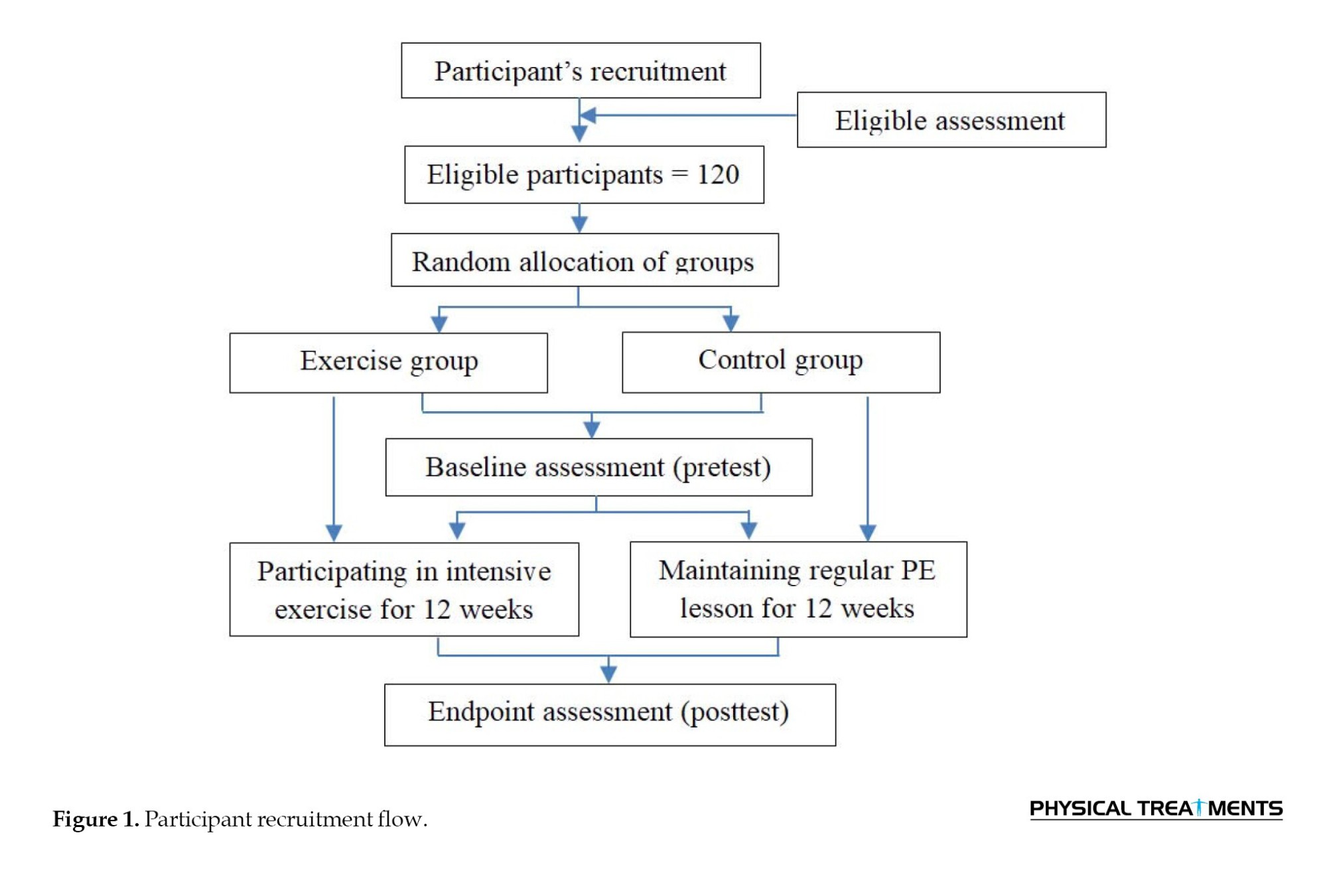
One hundred and twenty university students aged 18-19 from Vinh University were randomly assigned to two groups: An exercise group and a control group. Participants in the exercise group engaged in selected intensive physical exercises, while participants in the control group maintained their regular exercise routine as per the school’s schedule.
Individuals with serious medical conditions, such as angina, heart disease, and respiratory diseases, were excluded from the study. Data collection and exercise training were conducted on the Vinh University campus. Eligible participants were recruited by the research team (Figure 1).
Intervention
Subjects in the exercise group were instructed to engage in selected intensive physical exercises three times per week for 12 weeks, including both in-class and out-of-class sessions. Each training session incorporated warm-up and cool-down periods, with safety measures in place throughout the program. Qualified teachers and trainers provided comprehensive instruction on the proper execution of all exercises.
Outcome measurement and test protocol
To evaluate the effectiveness of selected intensive physical exercises, participants were divided into two groups and assessed at two time points: Pre-test and post-test. Physical fitness tests employed in this research were adapted from decision No.53 of the Ministry of Education and Training of Vietnam (METV) [24]:
Dominant hand grip test (kg): This test measures maximum isometric hand and forearm strength. While it is reliable when consistent technique and regular dynamometer calibration are applied, its validity as a general strength measure is limited, as forearm strength does not reflect overall muscle strength. Specific tests are recommended for assessing individual muscle groups.
30-second sit-up test (times): This test measures abdominal and hip flexor strength and endurance, which are crucial for core stability and back support. It is essential for assessing core stability and back support, allowing for monitoring of athletic training progress. Test validity indicates whether it accurately measures these qualities and whether conclusions drawn from the scores are meaningful. Test reliability reflects the consistency of the measurements, which depends on strict test administration and individual motivation.
30-meter sprint test: This test measures acceleration and speed, allowing for the monitoring of physical training progress. Validity concerns whether the test accurately measures what it intends to measure and whether interpretations are meaningful. Reliability refers to the test’s consistency, which depends on strict administration and participant motivation.
Standing long jump test (cm): This test assesses leg explosive power. Test validity indicates whether the test truly measures this quality and if conclusions drawn from the scores are meaningful. This test helps track an athlete’s physical progress. Test reliability means that the test consistently measures what it is supposed to measure, depending on strict procedures and the athlete’s effort.
4×10 m shuttle run test: This test assesses speed, agility, and body control, with good validity for measuring these abilities. It is widely used for motor fitness assessment. The test also demonstrates good to excellent test-retest reliability under consistent conditions.
Free 5-minute run test (m): This test measures endurance. It is a reliable and practical field test for estimating maximal aerobic velocity, particularly when standardized procedures are followed and participants are familiarized with the test. However, it has limitations in accurately predicting VO2max and may underestimate it compared to laboratory-based assessments. Its validity for VO2max estimation is considered fair to moderate.
Statistical analysis
One-way ANOVA was used to compare groups, and paired samples t-tests were conducted to assess within-group changes. Statistical significance was set at the 0.05 level.
Results
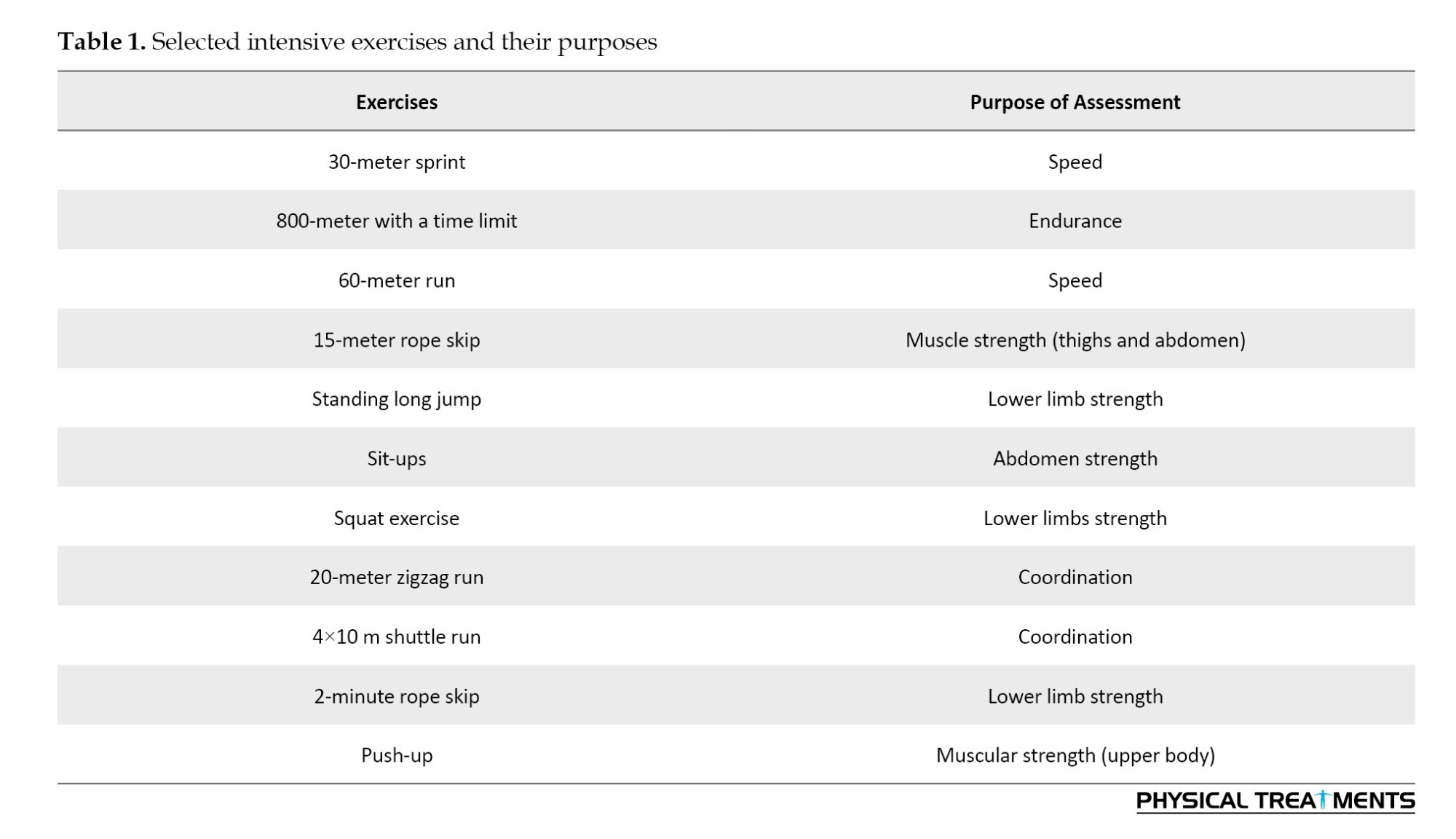
The exercises used in this study were selected through interviews with physical education instructors and experts (Table 1).
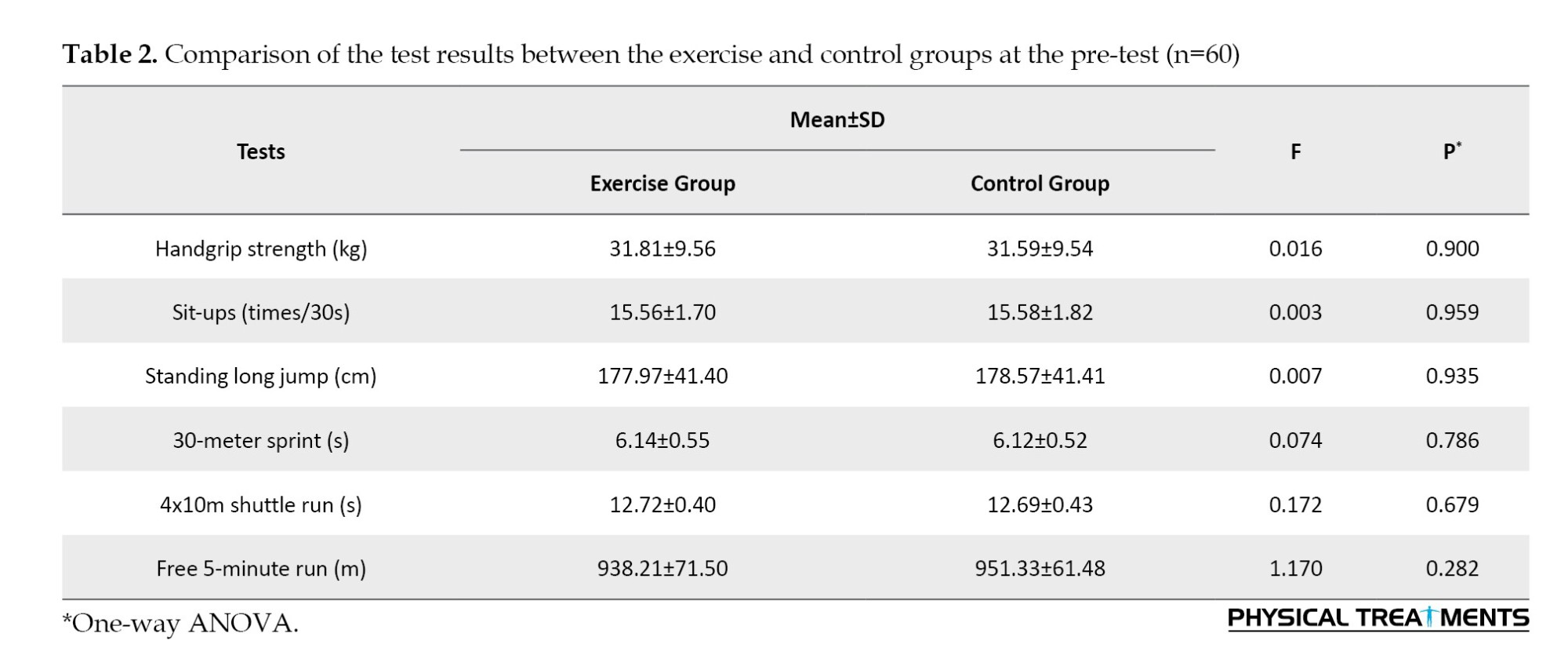
Prior to implementing the selected intensive physical exercise program, participants underwent a pre-test assessment using six physical fitness tests to determine any pre-existing differences between the groups.
Pre-test assessments revealed no significant differences between the groups in any of the six physical fitness tests (Table 2). Specifically, no significant differences were found in handgrip strength (F=0.016, P=0.900), sit-ups (F=0.003, P=0.959), standing long jump (F=0.007, P=0.935), 30-meter sprint (F=0.074, P=0.786), 4×10-meter shuttle run (F=0.172, P=0.679), or the 5-minute run test (F=1.170, P=0.282). These results indicate no significant differences between groups in terms of lower and upper extremity strength, abdominal strength, speed, body control, or endurance (all P>0.05).
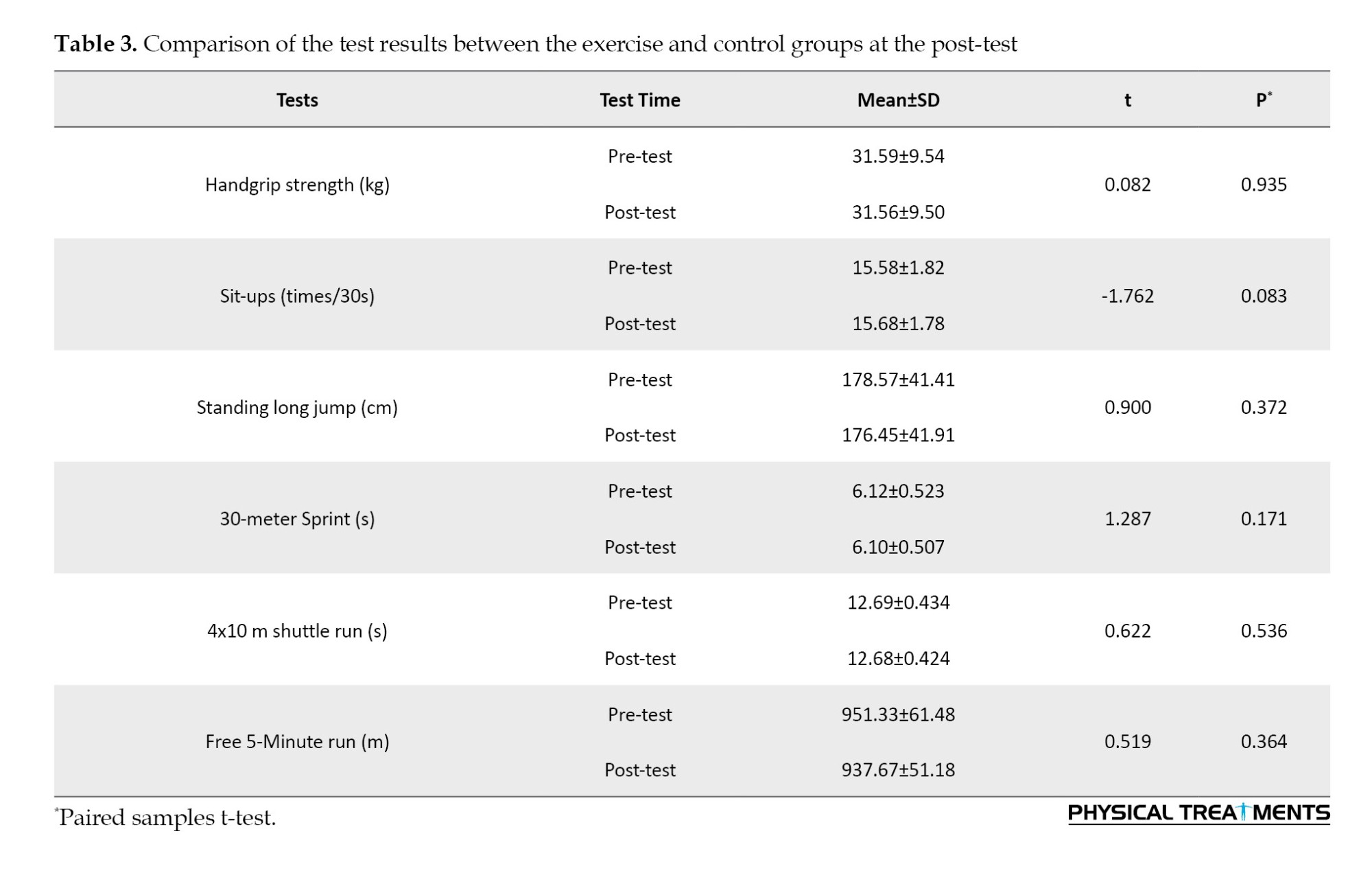
According to the paired samples t-tests, the control group showed no significant differences in any of the six physical fitness tests at the pre- and post-test (Table 3). These tests included handgrip strength (t=0.082, P=0.935), sit-ups (t=-1.762, P=0.083), standing long jump (t=0.900, P=0.372), 30-meter sprint (t=1.287, P=0.171), 4×10-meter shuttle run (t=0.622, P=0.537), and the 5-minute run test (t=0.519, P=0.364). These findings indicate no significant changes in lower and upper extremity strength, abdominal strength, speed, body control, or endurance within the control group over the testing period (P>0.05).
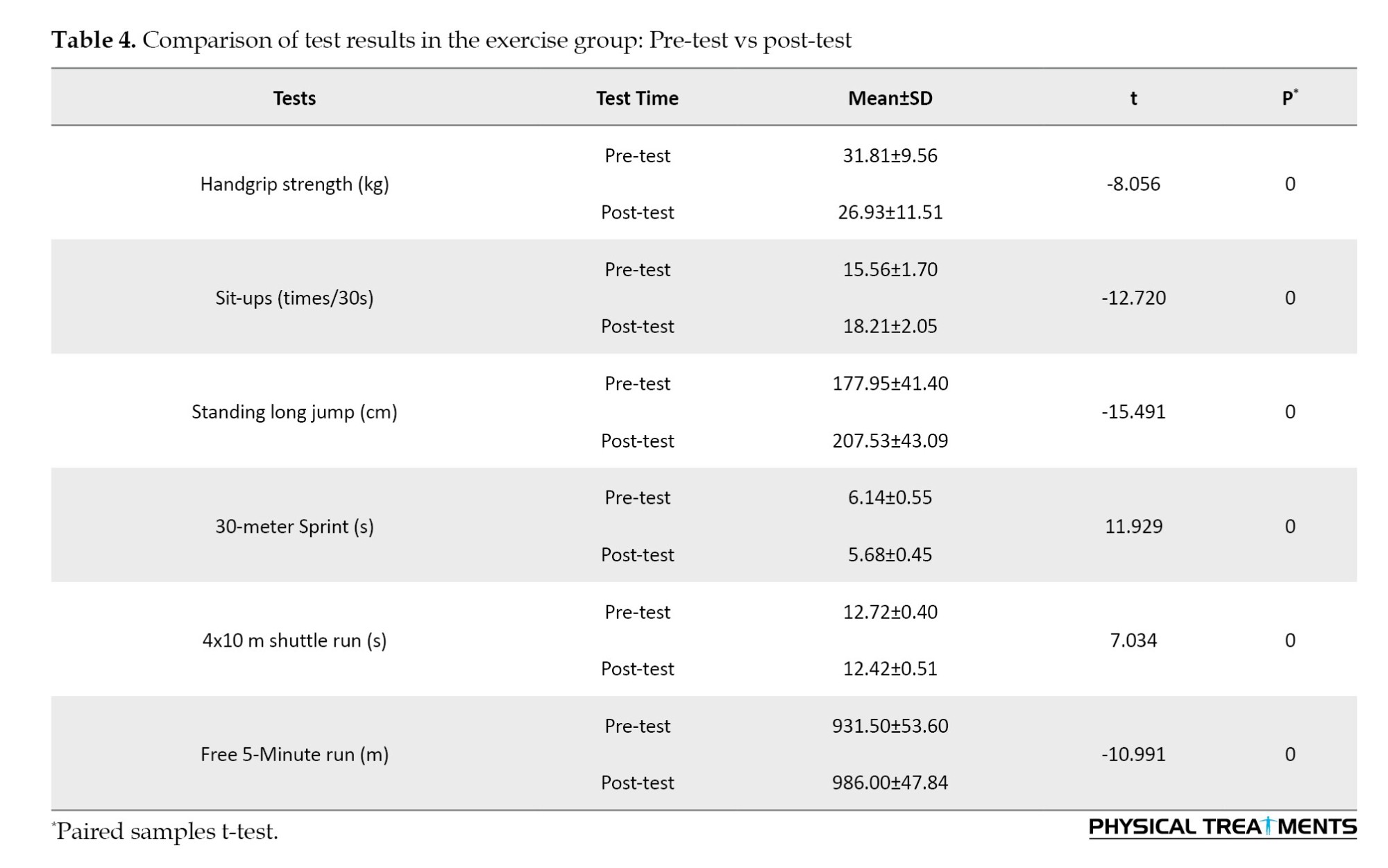
The result demonstrated significant improvements in six physical tests after a 12-week training program using selected intensive exercises in the experimental group (Table 4). Specifically, the scores of the tests, including handgrip (t=-8.056, P=0.000), sit-ups (t=-12.720, P=0.000), standing long jump (t=-15.491, P=0.000), 30-meter sprint (t=11.929, P=0.000), 4×10-meter shuttle run (t=7.034, P=0.000), and free 5-minute run (t=-10.991, P=0.000) showed significant differences between pre-test and post-test. These results collectively indicate significant improvements in lower and upper extremity strength, abdominal strength, speed, body control, and endurance within the group over the testing period (P≤0.05).
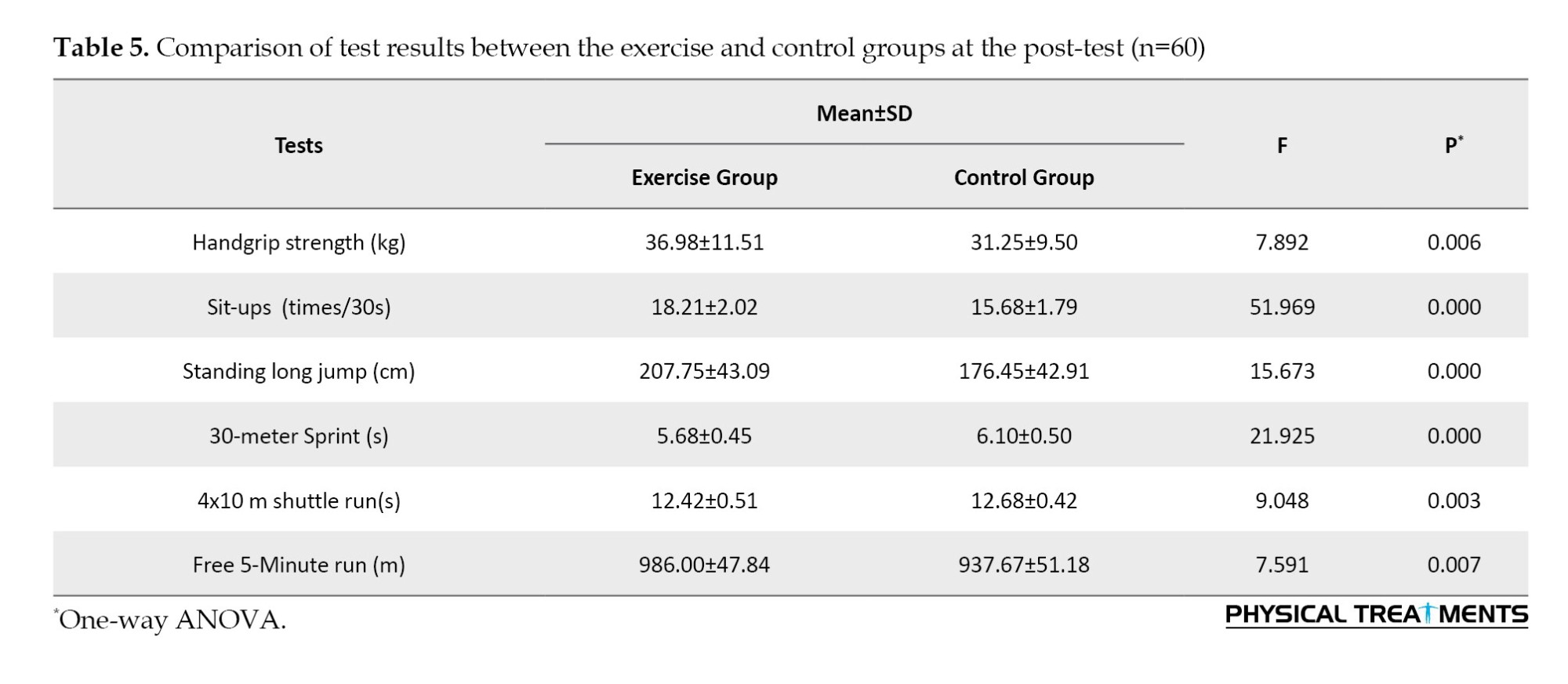
ANOVA results revealed significant between-group differences in six physical fitness tests (Table 5): Handgrip strength (F=7.891, P=0.006), sit-ups (F=51.969, P<0.001), standing long jump (F=15.673, P=0.006), 30-meter sprint (F=21.925, P=0.006), 4×10-meter shuttle run (F=9.048, P=0.003), and the 5-minute run (F=7.591, P=0.007). These findings indicate that after 12 weeks of training, the exercise group demonstrated significantly improved lower and upper extremity strength, abdominal strength, speed, body control, and endurance compared to the control group (P<0.05).
Discussion
This study evaluated the impact of physical exercise on students’ physical fitness. The findings revealed significant improvements in physical fitness following a twelve-week program of selected intensive exercises. This finding aligns with previous research demonstrating the numerous health benefits of regular physical activity [25]. Previous studies have consistently shown that regular physical activity is associated with improved quality of life, a reduced risk of chronic diseases [26-28], and significant enhancements in physical capacities, including coordination, balance, flexibility, strength, and aerobic capacity. Furthermore, regular physical activity plays a crucial role in weight management and reducing the risk of overweight and obesity [29]. Furthermore, scientifically and rationally designed muscle training programs with appropriate intensity can effectively improve college students’ physical quality, including muscle strength. These programs also contribute to the healthy and coordinated development of both their physical and psychological well-being [30].
This finding also aligns with previous research, demonstrating the multifaceted benefits of regular physical activity, including enhanced physical strength [31, 32], promotion of health-related physical fitness in young adults [33], and positive impacts on various aspects of health in female college students [34]. Moreover, studies have shown that physical exercise positively impacts overall physical quality in college students, including fitness indices and cardiopulmonary endurance [35]. In another study, Mendonça et al. conducted a randomized controlled trial comparing the effects of 12 weeks of moderate-intensity continuous training and high-intensity interval training, both combined with resistance training, on adolescent health-related fitness. Both training programs resulted in comparable improvements in fitness components [36].
Previous research has demonstrated a link between physical activity and academic performance [37, 38]. Furthermore, regular exercise offers numerous health benefits, including improved physical and mental health, reduced risk of chronic diseases, and enhanced cognitive function [39]. The results of this study are also consistent with previous research highlighting the numerous benefits of regular physical activity [40], including improvements in strength, endurance (VO2 Max), and agility [41]. Regular exercise facilitates effective problem-focused coping through the elicitation of positive emotions [42] and contributes to increased muscle strength [43]. Additionally, some previous studies have revealed that physical activity and exercise offer significant benefits for youth development, positively impacting physical, lifestyle, emotional, social, and cognitive domains [44, 45]. These activities improve physical condition, characterized by increased fitness, better health, and enhanced coordination, as well as improved cognitive functioning [46]. Furthermore, physical activity enhances mood and self-esteem while reducing stress, which can contribute to various mental and physical health issues [47]. It also promotes the development of healthy bones, muscles, and musculoskeletal fitness [48], and significantly impacts adolescent physical health, mental health, and cognitive function [49].
Conclusion
A 12-week intensive exercise program significantly improved student fitness (strength, speed, agility, and endurance), outperforming regular classes based on fitness test results. Therefore, schools should widely implement aerobic exercises, and physical education teachers should incorporate more exercises to improve student health.
Limitation
Though the study achieved its purpose, some limitations should be considered. The exercise group was assigned to follow a physical exercise regimen, whereas the control group was not. This may have caused biased results. Furthermore, future research should include more than two intervention groups and focus on the effects of exercise on mental health issues among students. Furthermore, both groups included a mix of male and female participants. Future studies should consider examining the potential impact of gender-specific training programs to gain a more comprehensive understanding of the effects of exercise.
While the study successfully met its objectives, certain limitations should be acknowledged. The study design may have introduced bias, as the exercise group was specifically instructed to engage in physical exercise, while the control group was not. Future research should investigate the effects of exercise on students, particularly those with physical health challenges, such as being overweight and obese. Studies should also incorporate more than two intervention groups.
Ethical Considerations
Compliance with ethical guidelines
Participants provided informed consent, understanding how their data would be used. They had the right to withdraw from the study at any time. No financial obligations were imposed on participants for their involvement in this research, and participant privacy was strictly protected. No identifiable information was shared without explicit permission. Data were accurately recorded and reported. Data analysis and confirmation were conducted without bias. The researcher assumes responsibility for covering the costs of treating any adverse effects that may occur during the study.
Funding
This research did not receive any grant from funding agencies in the public, commercial, or non-profit sectors.
Authors' contributions
Methodology, writing of the original draft, andSupervision: Hung Manh Nguyen; Conceptualization, review, and editing and investigation: All authors.
Conflict of interest
The authors declared no conflicts of interest.
Acknowledgments
The authors extend their sincere thanks to the students of Vinh University who volunteered to participate in this research and to the Physical Education Department for their invaluable support in data collection.
References
Physical education is a fundamental component of a comprehensive education, fostering healthy habits and attitudes through physical activity [1]. It promotes physical health, cognitive development, and social-emotional well-being [2]. Physical education also plays a crucial role in enhancing mental health [3-5] and improving body shape [6]. Regular exercise strengthens the musculoskeletal system for optimal growth and development and improves functional independence in the elderly by facilitating daily activities [7]. It also significantly reduces the risk of osteoporosis and hip fractures [8, 9]. Following physical activity guidelines is linked to lower mortality rates [10]. Notably, even limited physical activity can provide substantial health benefits, including reduced risk of death [10]. Regular physical activity fosters healthy growth and development in youth by supporting the development and maintenance of strong bones, muscles, and joints [11]. Furthermore, it may contribute to a reduced risk of cardiovascular disease by improving cardiovascular health, as evidenced by lower arterial stiffness and enhanced physical and cognitive abilities [12].
Research suggests that physical activity and exercise can mitigate aggressive behavior, alleviate psychological distress, and improve self-belief and self-regulation in university students [13]. Additionally, physical activity interventions have been shown to yield significant benefits for college students, including improvements in physical self-perception and functional movement [14, 15], enhanced mental health [16], and improved quality of public class teaching in physical education, as well as the promotion of healthy exercise habits, leading to better physical and mental health [17]. Physical activity and exercise can help alleviate certain psychotic symptoms and manage associated health conditions in individuals with mental health disorders [18]. They also play a crucial role in addressing the global obesity epidemic [19]. In addition, physical activity has been shown to positively impact body composition by reducing body fat and increasing muscle mass. Furthermore, it significantly improves overall physical fitness, enhancing various components, such as upper body strength, balance, and agility [20].
A report revealed that Vietnamese children and adolescents exhibit concerningly low levels of physical activity while demonstrating high levels of sedentary behaviors [21]. This alarming trend is further substantiated by previous research. A significant proportion of Vietnamese adolescents fall short of physical activity recommendations, with only 19.7% of 13-17-year-olds meeting the guideline of at least 60 minutes of daily physical activity on five or more days per week [22]. Furthermore, a concerning trend emerges: physical inactivity, along with poor dietary habits and excessive sedentary behavior, has been identified as the most prevalent lifestyle risk factors among Vietnamese adolescents [23].
While the broad health advantages of physical activity are widely recognized, a critical gap exists in our understanding of its specific impact on the physical fitness of Vietnamese university students. This demographic, undergoing significant lifestyle transitions and academic pressures, may experience unique barriers and facilitators to exercise adoption and adherence. Investigating this population is crucial, as their current fitness levels can significantly influence their long-term health trajectories and productivity. Therefore, this study aimed to address this notable research gap by specifically evaluating the effects of physical exercise interventions on the physical fitness profiles of Vietnamese university students, thereby providing targeted insights for promoting healthier lifestyles within this important group.
Materials and Methods
Participants
One hundred and twenty university students aged 18-19 from Vinh University were randomly assigned to two groups: An exercise group and a control group. Participants in the exercise group engaged in selected intensive physical exercises, while participants in the control group maintained their regular exercise routine as per the school’s schedule.
Individuals with serious medical conditions, such as angina, heart disease, and respiratory diseases, were excluded from the study. Data collection and exercise training were conducted on the Vinh University campus. Eligible participants were recruited by the research team (Figure 1).
Intervention
Subjects in the exercise group were instructed to engage in selected intensive physical exercises three times per week for 12 weeks, including both in-class and out-of-class sessions. Each training session incorporated warm-up and cool-down periods, with safety measures in place throughout the program. Qualified teachers and trainers provided comprehensive instruction on the proper execution of all exercises.
Outcome measurement and test protocol
To evaluate the effectiveness of selected intensive physical exercises, participants were divided into two groups and assessed at two time points: Pre-test and post-test. Physical fitness tests employed in this research were adapted from decision No.53 of the Ministry of Education and Training of Vietnam (METV) [24]:
Dominant hand grip test (kg): This test measures maximum isometric hand and forearm strength. While it is reliable when consistent technique and regular dynamometer calibration are applied, its validity as a general strength measure is limited, as forearm strength does not reflect overall muscle strength. Specific tests are recommended for assessing individual muscle groups.
30-second sit-up test (times): This test measures abdominal and hip flexor strength and endurance, which are crucial for core stability and back support. It is essential for assessing core stability and back support, allowing for monitoring of athletic training progress. Test validity indicates whether it accurately measures these qualities and whether conclusions drawn from the scores are meaningful. Test reliability reflects the consistency of the measurements, which depends on strict test administration and individual motivation.
30-meter sprint test: This test measures acceleration and speed, allowing for the monitoring of physical training progress. Validity concerns whether the test accurately measures what it intends to measure and whether interpretations are meaningful. Reliability refers to the test’s consistency, which depends on strict administration and participant motivation.
Standing long jump test (cm): This test assesses leg explosive power. Test validity indicates whether the test truly measures this quality and if conclusions drawn from the scores are meaningful. This test helps track an athlete’s physical progress. Test reliability means that the test consistently measures what it is supposed to measure, depending on strict procedures and the athlete’s effort.
4×10 m shuttle run test: This test assesses speed, agility, and body control, with good validity for measuring these abilities. It is widely used for motor fitness assessment. The test also demonstrates good to excellent test-retest reliability under consistent conditions.
Free 5-minute run test (m): This test measures endurance. It is a reliable and practical field test for estimating maximal aerobic velocity, particularly when standardized procedures are followed and participants are familiarized with the test. However, it has limitations in accurately predicting VO2max and may underestimate it compared to laboratory-based assessments. Its validity for VO2max estimation is considered fair to moderate.
Statistical analysis
One-way ANOVA was used to compare groups, and paired samples t-tests were conducted to assess within-group changes. Statistical significance was set at the 0.05 level.
Results
The exercises used in this study were selected through interviews with physical education instructors and experts (Table 1).
Prior to implementing the selected intensive physical exercise program, participants underwent a pre-test assessment using six physical fitness tests to determine any pre-existing differences between the groups.
Pre-test assessments revealed no significant differences between the groups in any of the six physical fitness tests (Table 2). Specifically, no significant differences were found in handgrip strength (F=0.016, P=0.900), sit-ups (F=0.003, P=0.959), standing long jump (F=0.007, P=0.935), 30-meter sprint (F=0.074, P=0.786), 4×10-meter shuttle run (F=0.172, P=0.679), or the 5-minute run test (F=1.170, P=0.282). These results indicate no significant differences between groups in terms of lower and upper extremity strength, abdominal strength, speed, body control, or endurance (all P>0.05).
According to the paired samples t-tests, the control group showed no significant differences in any of the six physical fitness tests at the pre- and post-test (Table 3). These tests included handgrip strength (t=0.082, P=0.935), sit-ups (t=-1.762, P=0.083), standing long jump (t=0.900, P=0.372), 30-meter sprint (t=1.287, P=0.171), 4×10-meter shuttle run (t=0.622, P=0.537), and the 5-minute run test (t=0.519, P=0.364). These findings indicate no significant changes in lower and upper extremity strength, abdominal strength, speed, body control, or endurance within the control group over the testing period (P>0.05).
The result demonstrated significant improvements in six physical tests after a 12-week training program using selected intensive exercises in the experimental group (Table 4). Specifically, the scores of the tests, including handgrip (t=-8.056, P=0.000), sit-ups (t=-12.720, P=0.000), standing long jump (t=-15.491, P=0.000), 30-meter sprint (t=11.929, P=0.000), 4×10-meter shuttle run (t=7.034, P=0.000), and free 5-minute run (t=-10.991, P=0.000) showed significant differences between pre-test and post-test. These results collectively indicate significant improvements in lower and upper extremity strength, abdominal strength, speed, body control, and endurance within the group over the testing period (P≤0.05).
ANOVA results revealed significant between-group differences in six physical fitness tests (Table 5): Handgrip strength (F=7.891, P=0.006), sit-ups (F=51.969, P<0.001), standing long jump (F=15.673, P=0.006), 30-meter sprint (F=21.925, P=0.006), 4×10-meter shuttle run (F=9.048, P=0.003), and the 5-minute run (F=7.591, P=0.007). These findings indicate that after 12 weeks of training, the exercise group demonstrated significantly improved lower and upper extremity strength, abdominal strength, speed, body control, and endurance compared to the control group (P<0.05).
Discussion
This study evaluated the impact of physical exercise on students’ physical fitness. The findings revealed significant improvements in physical fitness following a twelve-week program of selected intensive exercises. This finding aligns with previous research demonstrating the numerous health benefits of regular physical activity [25]. Previous studies have consistently shown that regular physical activity is associated with improved quality of life, a reduced risk of chronic diseases [26-28], and significant enhancements in physical capacities, including coordination, balance, flexibility, strength, and aerobic capacity. Furthermore, regular physical activity plays a crucial role in weight management and reducing the risk of overweight and obesity [29]. Furthermore, scientifically and rationally designed muscle training programs with appropriate intensity can effectively improve college students’ physical quality, including muscle strength. These programs also contribute to the healthy and coordinated development of both their physical and psychological well-being [30].
This finding also aligns with previous research, demonstrating the multifaceted benefits of regular physical activity, including enhanced physical strength [31, 32], promotion of health-related physical fitness in young adults [33], and positive impacts on various aspects of health in female college students [34]. Moreover, studies have shown that physical exercise positively impacts overall physical quality in college students, including fitness indices and cardiopulmonary endurance [35]. In another study, Mendonça et al. conducted a randomized controlled trial comparing the effects of 12 weeks of moderate-intensity continuous training and high-intensity interval training, both combined with resistance training, on adolescent health-related fitness. Both training programs resulted in comparable improvements in fitness components [36].
Previous research has demonstrated a link between physical activity and academic performance [37, 38]. Furthermore, regular exercise offers numerous health benefits, including improved physical and mental health, reduced risk of chronic diseases, and enhanced cognitive function [39]. The results of this study are also consistent with previous research highlighting the numerous benefits of regular physical activity [40], including improvements in strength, endurance (VO2 Max), and agility [41]. Regular exercise facilitates effective problem-focused coping through the elicitation of positive emotions [42] and contributes to increased muscle strength [43]. Additionally, some previous studies have revealed that physical activity and exercise offer significant benefits for youth development, positively impacting physical, lifestyle, emotional, social, and cognitive domains [44, 45]. These activities improve physical condition, characterized by increased fitness, better health, and enhanced coordination, as well as improved cognitive functioning [46]. Furthermore, physical activity enhances mood and self-esteem while reducing stress, which can contribute to various mental and physical health issues [47]. It also promotes the development of healthy bones, muscles, and musculoskeletal fitness [48], and significantly impacts adolescent physical health, mental health, and cognitive function [49].
Conclusion
A 12-week intensive exercise program significantly improved student fitness (strength, speed, agility, and endurance), outperforming regular classes based on fitness test results. Therefore, schools should widely implement aerobic exercises, and physical education teachers should incorporate more exercises to improve student health.
Limitation
Though the study achieved its purpose, some limitations should be considered. The exercise group was assigned to follow a physical exercise regimen, whereas the control group was not. This may have caused biased results. Furthermore, future research should include more than two intervention groups and focus on the effects of exercise on mental health issues among students. Furthermore, both groups included a mix of male and female participants. Future studies should consider examining the potential impact of gender-specific training programs to gain a more comprehensive understanding of the effects of exercise.
While the study successfully met its objectives, certain limitations should be acknowledged. The study design may have introduced bias, as the exercise group was specifically instructed to engage in physical exercise, while the control group was not. Future research should investigate the effects of exercise on students, particularly those with physical health challenges, such as being overweight and obese. Studies should also incorporate more than two intervention groups.
Ethical Considerations
Compliance with ethical guidelines
Participants provided informed consent, understanding how their data would be used. They had the right to withdraw from the study at any time. No financial obligations were imposed on participants for their involvement in this research, and participant privacy was strictly protected. No identifiable information was shared without explicit permission. Data were accurately recorded and reported. Data analysis and confirmation were conducted without bias. The researcher assumes responsibility for covering the costs of treating any adverse effects that may occur during the study.
Funding
This research did not receive any grant from funding agencies in the public, commercial, or non-profit sectors.
Authors' contributions
Methodology, writing of the original draft, andSupervision: Hung Manh Nguyen; Conceptualization, review, and editing and investigation: All authors.
Conflict of interest
The authors declared no conflicts of interest.
Acknowledgments
The authors extend their sincere thanks to the students of Vinh University who volunteered to participate in this research and to the Physical Education Department for their invaluable support in data collection.
References
- Wallhead TL, Buckworth J. The Role of Physical Education the Promotion of Youth Physical Activity. Quest. 2024; 56(3):285-301. [DOI:10.1080/00336297.2004.10491827]
- Cui L, Xing Y, Zhou H, Qian J, Li J, Shen F, et al. Physical activity promotes the development of cognitive ability in adolescents: The chain mediating role based on self-education expectations and learning behaviors. Frontiers in Psychology. 2024; 15:1383384. [DOI:10.3389/fpsyg.2024.1383384] [PMID]
- Li J, Wang L, Pan L, Hu Z, Yin R, Liu JF. Exercise motivation, physical exercise, and mental health among college students: examining the predictive power of five different types of exercise motivation. Frontiers in Psychology. 2024; 15:1356999. [DOI:10.3389/fpsyg.2024.1356999] [PMID]
- Cai L. Effect of physical exercise intervention based on improved neural network on College Students’ Mental Health. Computational and Mathematical Methods in Medicine. 2022; 2022:4884109.[DOI:10.1155/2022/4884109] [PMID]
- Maity M. Role of Physical Education in school Education: A critical observation. International Journal of Creative Research Thoughts. 2020; 8(1):101-6. [Link]
- Alkhateeb SA, Alkhameesi NF, Lamfon GN, Khawandanh SZ, Kurdi LK, Faran MY, et al. Pattern of physical exercise practice among university students in the Kingdom of Saudi Arabia (before beginning and during college): A cross-sectional study. BMC Public Health. 2019; 19(1):1716. [DOI:10.1186/s12889-019-8093-2] [PMID]
- Dhuli K, Naureen Z, Medori MC, Fioretti F, Caruso P, Perrone MA, et al. Physical activity for health. Journal of Preventive Medicine and Hygiene. 2022; 63(2 Suppl 3):E150-9. [PMID]
- Warburton DE, Charlesworth S, Ivey A, Nettlefold L, Bredin SS. A systematic review of the evidence for Canada's Physical Activity Guidelines for Adults. The International Journal of Behavioral Nutrition and Physical Activity. 2010; 7:39.[DOI:10.1186/1479-5868-7-39] [PMID]
- Young J, Angevaren M, Rusted J, Tabet N. Aerobic exercise to improve cognitive function in older people without known cognitive impairment. Cochrane Database of Systematic Reviews. 2015(4). [Link]
- Leitzmann MF, Park Y, Blair A, Ballard-Barbash R, Mouw T, Hollenbeck AR, et al. Physical activity recommendations and decreased risk of mortality. Archives of Internal Medicine. 2007; 167(22):2453-60. [DOI:10.1001/archinte.167.22.2453] [PMID]
- Kumar A. Importance of physical education in today’s schools. International Journal of Academic Research and Development. 2018; 3(1):589-90. [Link]
- Jagomast T, Mohr T, Axt PN, Mortensen K, Brinkmann F, Weckmann M, et al. Effects of physical activity in the high school curriculum on cardiovascular health, cognitive and physical performance. Journal of Functional Morphology and Kinesiology. 2023; 8(3):101. [DOI:10.3390/jfmk8030101] [PMID]
- Yu H, Ma Q, Sun Y, Jiang S, Hu S, Wang X. Analyzing the effects of physical activity levels on aggressive behavior in college students using a chain-mediated model. Scientific Reports. 2024; 14(1):5795. [DOI:10.1038/s41598-024-55534-3] [PMID]
- Yang Z, Yang Z, Ou W, Zeng Q, Huang J. Effects of physical activity interventions on physical self-perception in college students: A systematic review and meta-analysis. Journal of Physical Activity & Health. 2024; 21(10):990-1007. [PMID]
- Yang F, Sang P, Shen X, Yang S, Meng Y, Hu H. Association between physical activity and functional movement screening among university students in an adaptive physical course. Technology and Health Care. 2024; 32(S1):135-44. [DOI:10.3233/THC-248012] [PMID]
- Huang K, Beckman EM, Ng N, Dingle GA, Han R, James K, et al. Effectiveness of physical activity interventions on undergraduate students’ mental health: Systematic review and meta-analysis. Health Promotion International. 2024; 39(3):daae054. [DOI:10.1093/heapro/daae054] [PMID]
- Huang K, Liang N. Effective forms of physical exercise to promote the health of college students. Revista Brasileira de Medicina do Esporte. 2022; 28(5):402-4. [DOI:10.1590/1517-8692202228052021_0527]
- Mahindru A, Patil P, Agrawal V. Role of physical activity on mental health and well-being: A Review. Cureus. 2023; 15(1):e33475. [DOI:10.7759/cureus.33475] [PMID]
- Wiklund P. The role of physical activity and exercise in obesity and weight management: Time for critical appraisal. Journal of Sport and Health Science. 2016; 5(2):151-4. [DOI:10.1016/j.jshs.2016.04.001] [PMID]
- Marwat MK, Farah H, Nizami R, Ali MS, Adnan M, Saman S, Saba S. Impact of strength and endurance training on body composition and physical fitness of university students. Journal of Positive School Psychology. 2022; 6(5):9396-405. [Link]
- Nguyen P, Nguyen DX, Khanh-Dao Le L, Ananthapavan J, Na PD, Tang HK. Results from Viet Nam’s 2022 report card on physical activity for children and youth. Journal of exercise Science and Fitness. 2023; 21(1):52-7. [DOI:10.1016/j.jesf.2022.11.002] [PMID]
- World Health Organization. Global school-based student health survey 2013. Vietnam: World Health Organization; 2013. [Link]
- Long KQ, Ngoc-Anh HT, Phuong NH, Tuyet-Hanh TT, Park K, Takeuchi M, et al. Clustering Lifestyle Risk Behaviors among Vietnamese Adolescents and Roles of School: A Bayesian Multilevel Analysis of Global School-Based Student Health Survey 2019. The Lancet Regional Health. Western Pacific. 2021; 15:100225. [DOI:10.1016/j.lanwpc.2021.100225] [PMID]
- Ministry Education and Training. Promulgating REGULAtions on assessment and grading of physical education students. River Grand: Ministry Education and Training; 2008. [Link]
- Abou Elmagd M. Benefit, need and importance of daily exercise. International Journal of Physical Education, Sports and Health. 2016; 3(5):22-7. [Link]
- Kruk J. Physical activity in the prevention of the most frequent chronic diseases: An analysis of the recent evidence. Asian Pacific Journal of Cancer Prevention. 2007; 8(3):325-38. [PMID]
- Booth FW, Roberts CK, Laye MJ. Lack of exercise is a major cause of chronic diseases. Comprehensive Physiology. 2012; 2(2):1143-211. [DOI:10.1002/cphy.c110025] [PMID]
- Olutende OM, Kweyu IW, Sabiri E. Exercise and chronic diseases. International Journal of Science and Research. 2015; 6(10):588-99. [Link]
- Buriticá-Marín ED, Daza-Arana JE, Jaramillo-Losada J, Riascos-Zuñiga AR, Ordoñez-Mora LT. Effects of a physical exercise program on the physical capacities of older adults: A quasi-experimental study. Clinical Interventions in Aging. 2023; 18:273-82. [DOI:10.2147/CIA.S388052] [PMID]
- Lu W, Hua Z, Tailin W, Xuanxi W. Impact of muscle training loads on college student’s physical fitness. Revista Brasileira de Medicina do Esporte. 2023; 29:1-4. [DOI:10.1590/1517-8692202329012022_0736]
- Tram NQ, Van Hoa N. Select and apply exercises to develop physical strength for female students majoring in elementary education and kindergarten at Phu Yen university. International Journal of Physical Education, Sports and Health 2021; 8(3):370-73. [Link]
- Manh Hung L. Seleting physical exercises to develop physical strength for students of economy faculty of Open Univeristity [Master thesis]. Tu Son: Bac Ninh Sport University, 2015. [Link]
- Ye Y, Zhao F, Sun S, Xiong J, Zheng G. The effect of Baduanjin exercise on health-related physical fitness of college students: A randomized controlled trial. Frontiers in Public Health. 2022; 10:965544. [DOI:10.3389/fpubh.2022.965544] [PMID]
- Zhang Y, Jiang X. The effect of Baduanjin exercise on the physical and mental health of college students: A randomized controlled trial. Medicine (Baltimore). 2023; 102(34):e34897. [DOI:10.1097/MD.0000000000034897] [PMID]
- Liu A. Effect of aerobic training on physical fitness and cardiopulmonary resistance of univeristy students. Revista Brasileira de Medicina do Esporte. 2023; 29. [DOI:10.1590/1517-8692202329012023_0021]
- Mendonça FR, Ferreira de Faria W, Marcio da Silva J, Massuto RB, Castilho Dos Santos G, Correa RC, et al. Effects of aerobic exercise combined with resistance training on health-related physical fitness in adolescents: A randomized controlled trial. Journal of Exercise Science and Fitness. 2022; 20(2):182-9. [DOI:10.1016/j.jesf.2022.03.002] [PMID]
- Cid FM, Munoz HD. Physical execise and academic performance. MOJ Sport Medicine. 2017; 1(4):90-2. [DOI:10.15406/mojsm.2017.01.00021]
- Archer T, Garcia D. Physical exercise influences academic performance and well-being in children and adolescents. International Journal of School and Cognitive Psychology. 2014; 1(1):e102. [Link]
- Huge JT. Effects of exercise on mental and physical health. Erudite Journal of Music and Performing Arts. 2022; 3(1):76-83. [Link]
- Kirandi O.The effects of regular exercise on the physical fitness levels. International Journal of Environmental and Science Education. 2016; 11(16):9457-68. [Link]
- Senduran F. Effect of a 22-Week Strength- and Endurance-Based Physical Education Programme on Students’ Development. Journal of Education and Training Studies. 2019; 7(4):30-7. [DOI:10.11114/jets.v7i4.3968]
- Kim JH, McKenzie LA. The impacts of physical exercise on stress coping and well-being in university students in the context of leisure. Health. 2014; 6(19):2570-80. [DOI:10.4236/health.2014.619296]
- Mohammad Gholinejad P, Hojjati H, Ghorbani S. The effect of aerobic exercise on body composition and muscle strength of female students at elementary schools of Ali Abad Katoul in 2018. International Journal of School Health. 2019; 6(4):27-33. [DOI:10.30476/intjsh.2019.45892]
- Bailey R. Physical education and sport in schools: A review of benefits and outcomes. The Journal of School Health. 2006; 76(8):397-401. [DOI:10.1111/j.1746-1561.2006.00132.x] [PMID]
- Oberle E, Ji XR, Guhn M, Schonert-Reichl KA, Gadermann AM. Benefits of extracurricular participation in early adolescence: Associations with peer belonging and mental health. Journal of Youth and Adolescence. 2019; 48(11):2255-70. [DOI:10.1007/s10964-019-01110-2] [PMID]
- Mualem R, Leisman G, Zbedat Y, Ganem S, Mualem O, Amaria M, et al. The effect of movement on cognitive performance. Frontiers in Public Health. 2018; 6:100. [DOI:10.3389/fpubh.2018.00100] [PMID]
- Ghosh D, Datta TK. Functional improvement and social participation through sports activity for children with mental retardation: A field study from a developing nation. Prosthetics and Orthotics International. 2012; 36(3):339-47. [DOI:10.1177/0309364612451206] [PMID]
- Westcott WL. Resistance training is medicine: Effects of strength training on health. Current Sports Medicine Reports. 2012; 11(4):209-16. [DOI:10.1249/JSR.0b013e31825dabb8] [PMID]
- Hallal PC, Victora CG, Azevedo MR, Wells JC. Adolescent physical activity and health: A systematic review. Sports Medicine. 2006; 36(12):1019-30. [DOI:10.2165/00007256-200636120-00003] [PMID]
Type of Study: Research |
Subject:
General
Received: 2024/12/26 | Accepted: 2025/06/29 | Published: 2026/01/15
Received: 2024/12/26 | Accepted: 2025/06/29 | Published: 2026/01/15
Send email to the article author
| Rights and permissions | |
 |
This work is licensed under a Creative Commons Attribution-NonCommercial 4.0 International License. |

This is an open access article distributed under the terms of the Creative Commons Attribution-NonCommercial 4.0 (CC-By-NC 4.0), which permits use, distribution, and reproduction in any medium, provided the original work is properly cited and is not used for commercial purposes.
Contact Information